ELUSIVE TRUTH

A few months ago I wrote a blog expressing my concerns about the big guys in the news business gobbling up the little ones, and how the big guys get even bigger by merging.

The continuation of this process was brought home to me when I received notice that Time-Warner, my supplier of internet service, telephone, and TV cable, had merged with Comcast. As its name implies Time –Warner brought with them Time magazine, CNN, and other entities which they had acquired through mergers and acquisitions. Comcast contributed a few more assets they had accumulated in similar fashion, including NBC and its affiliates. I felt their new name, “Spectrum” was most appropriate as it seems as if they do cover all the bases.
There was some concern that this marriage of the giants was in violation of the antitrust laws, but we are lacking a Teddy Roosevelt, and the union was blessed by those who are charged with ensuring that we have access to more than one source for news. In the last two decades there have been hundreds of billions of dollars spent on similar mergers of media organizations throughout the country. Even small communities, such as mine, have not been immune from the effects of media conglomeration. There was a time when there was a family owned newspaper in our town, now it is owned by Gannett. The impressive two story building it once occupied is now vacant. It is printed in another town and maintains a small office in a strip mall which is open 4 hours per day. Gannett also owns papers in at least two adjoining counties. Our paper is now valued only for its obituaries and local sports reports. A former family-owned local radio station now identifies itself with the announcement: “Fox news, fair and balanced” (a description which some might call a stretch).

The Wisdom of our Forefathers

It is noteworthy that the guys who designed our democracy were very aware of the need for an independent and unencumbered vehicle to keep the citizens informed as to the government’s actions. With that in mind, the first addition they made to the Constitution was the first amendment. The importance of such institutions has been confirmed time and again, and is not lost on the dictators of the world who realize that control of information is an essential component of a repressive government. Consequently, the overthrow of a government is always accompanied by a takeover of news outlets.

Official Presidential portrait of Thomas Jefferson (by Rembrandt Peale, 1800).jpg

Jefferson famously said: “Our liberty cannot be guarded but by freedom of the press, nor that be limited without danger of losing it.” Is it reasonable to expect that the news we receive might not be limited by our dependence on a very few news outlets dominated by huge corporations that might have reasons to distort or withhold information? If it’s true that information is power, could concentration of information in the hands of a few multinational businesses with diverse interests result in instances of the proverbial tail wagging the dog? If they choose to exercise it, their power to influence the government could dwarf the effects of the “Citizens United” boondoggle. Without competition, freedom of the press could be turned on its head and used to diminish rather than enhance the democratic process.

Fortunately we still appear to have a cadre of journalists committed to seeking truth in the tradition of Woodward and Bernstein, who with the help of leaks from a concerned informant were able to uncover a plot by Nixon to compromise the electoral process. There is much smoke surrounding our recent election, and there is an urgent need to find its source. At a time when there is such extreme polarity between political parties and public opinion of Congress is at an all-time low, congressional investigations are apt to be greeted with a great deal of skepticism.

Today’s investigative reporters may find it more difficult to uncover those explanations. In politician school, those who aspire to holding office are well schooled in techniques that allow them to avoid answering questions. This is especially true with yes or no questions, for which monosyllable responses are absolutely forbidden. They are taught to respond in those instances with a litany of “talking points” which they must memorize to cover all subjects. That technique seems to work very well for I have yet to see an interviewer interpret such a response as a refusal to answer. Politicians do not like such simple inquiries and often call them “gotcha questions.”
Now that many reporters are employed by mega corporations for whom news gathering may be a minor activity when compared to their varied interests, it seems naïve to think that corporate interests will not filter down to those who decide what is newsworthy or worth investigating. In that vein, the February 24th issue of The Intercept quotes Leslie Moonves, the CEO of CBS, as follows: “The Trump campaign may not be good for America, but is damn good for CBS.” He also recently praised Trump’s choice of Mr.Ajit Pai for FCC chairman because he was convinced that Mr. Pai was in favor of revising regulations that limit the number of news outlets one company may own in a given area. He goes on to say “…..if the cap is lifted we would go on to buy some more stations” (sorry but those Mom and Pop stations have got to go, competition be damned).
Mr. Trump seems to be a big fan of a free press (i.e. freedom to say good things about himself but as for criticism not so much). To that end, he recently banned reporters from a press briefing whom he felt had not been complimentary. Fortunately, there was sufficient blow-back to result in the scuttling of that strategy. His accusations, criticisms, and threats against news organizations are never ending. In a Politico article one year ago he is quoted as saying that if elected he would “open up the libel laws” to make it easier to sue, and went on to say: “when I am elected they will have problems.”
This may not be as crazy as it sounds for Mr. Trump has apparently used frivolous law suits as a very effective weapon in the past. Perhaps that may account for the use of synonyms such as misspoke, out of context, or alternative facts instead of a less polite word like lying. As a matter of fact, I wonder how much jeopardy in which I place myself by writing all this stuff. Of course when intimidation doesn’t work one may always discredit, and of course our president has shown himself to be a master of that strategy. He uses words like fake news, dishonest, horrible, false, and disgraceful to describe papers such as the New York Times and Washington post. He has also told his audience that the press is “their enemy.”
When I previously expressed my concerns about the survival of a free press, I believe that I held out hope that the internet would become a source for news and diverse interpretations that might counter the disappearance of so many sources for news. Indeed, according to the Pew Research Center’s July 2016 report that is rapidly occurring.  Although 85% of us old folks continue to get much of our news on television; half of those 50 and under frequently use the internet as their news source. Half of the people 65 and over continue to read newspapers while only 5% of those 30 and under read traditional print papers. The trend toward online news will likely continue to increase as we old soldiers fade away.
The downside of the proliferation of Walter Cronkite wannabees, which will undoubtedly occur as readership increases, is that we may be deluged with so much information that fact checking will be impossible.  The ease which information can be transmitted on the internet, especially through social media is a mixed blessing.  Although it can readily used to transmit useful information by anyone, it can also be a conduit for the transmission of  so called “fake news”.  I find it interesting that the term “fake news” has now become an accepted part of our lexicon.  This term, originally coined by our President, is a non sequitur, for if it is fake it is a lie not news.  No matter its name, there seems to be a lot of it these days.  There appears to be no solution to this problem for a free press also leaves one free to tell lies unless they are libelous or slanderous.  It would also be nice if reporters could avoid the celebrity trap which in my opinion has sometimes colored their perspective.  In recent years the National press club roast of the President has looked more like the Academy awards ceremony than a celebration of journalism.

So called leaks to the news media have gained much attention lately.  Attempts to discover the identity of the informants at times seem to garner more attention than does the information they transmit.  The issue of informants presents us with a difficult conundrum.  The assurance of anonymity has freed up innumerable whistle blowers to expose corruption. has been an extremely valuable tool for journalists.  Some reporters have even gone to jail rather than reveal their sources.  Of course there have always been instances where disclosure of leaked information could do harm as for example when it could impede an on going investigation.  Now however the stakes are much higher in that some secrets are necessary for our defense in a hostile world where information is king.  On the other hand it is not unusual for documents and such to be classified secret in order to hide things which have nothing to do with national defense.  The problem is further aggravated by the availability of hacked information.  There seems little doubt that Assange, the Wiki-leaks guy is no friend of the United States.

In my profession as with many others we swear an oath to abide by certain principles. Those on whom we depend to keep us informed are  the guardians of our liberty, and no less important than doctors, clergy, judges, elected officials and such.  If journalists do not take such an oath, they should.  Should there not be any consequences for those who deliberately falsify?  Apparently not if the liar is the star of the most watched news program on TV as was the case with Bill O’Reilly.  I comfort myself with the thought that this was an aberration and that most are not unduly committed to maintaining their company”s bottom line.

The pursuit of truth is not without danger.  Many have died doing their jobs, and others imprisoned.  They should be honored for all they do.  I hope they realize the importance of their work.

TRUMP’S LABEL

The unconventional behavior exhibited by our President over the past 2 years has led many to question his mental state. Andrew Sullivan was the first mainstream journalist to suggest in writing, (The Madness of King Donald), that Mr. Trump was “mentally unstable”. There has been a lot said about his apparent narcissistic tendencies with many, myself included, who have suggested that he might satisfy the criteria for the diagnosis of narcissistic personality disorder. In the past there have been instances of harm done to famous people by those of us who should know better than to draw conclusions with incomplete data. This can happen when we violate the principal of never making a diagnosis without a personal examination. Consequently; there have been ethical caveats against such long distant evaluations.
Nevertheless; there is much in Mr. Trump’s behavior that tempts one to speculate about his sanity which led a group of mental health professionals to publish an open letter to the New York Times suggesting that he was unfit to be President due to mental illness. Most would agree that he is impulsive, erratic, insulting, and unpredictable, with an ego that knows no bounds. His supporters explain his numerous falsehoods and distortions as “alternative facts”, while others call him a damned liar. So the big question is: what makes this guy tick? Is he so dominated by his megalomania that he actually feels that his saying it will make it so?
For example, he talks almost exclusively in superlatives; consequently there can be only two kinds of people either the best or the worst. Since he is the best of the best it only makes sense that he would have won the popular vote so the only logical explanation is that there must have been fraudulent voting. Could it be these behaviors fulfill a pathological need for attention? Could it be a well thought out strategy to provoke his opponents into taking actions against him in order for him to continue to play the role of victim which was so successful in his campaign. Even more frightening is the idea that he might be downright delusional, or could it be that he is “crazy like a fox”? Either conclusion is very frightening for he occupies a very large henhouse.

In the midst of all this speculation, along comes Dr. Frances Allen with his own letter to the New York Times followed by an interview with CNN. Dr. Allen comes with impressive credentials, having written the criteria for the diagnosis of narcissistic personality disorder in the American Psychiatric Association’s Diagnostic and Statistical Manual of Mental Disorders. He is also Professor Emeritus at Duke University. He asserts that the Donald does not suffer from the diagnosis of narcissistic personality, or any other mental illness. Indeed he goes on to say that to excuse Mr. Trump’s behavior as mental illness is “an insult to the mentally ill”.
In lieu of a psychiatric diagnosis Dr. Allen asserts that Mr. Trump “can and should be appropriately denounced for his ignorance, incompetence, impulsivity, and pursuit of dictatorial powers”. Dr. Allen does describe him as a “world class narcissist” at the same time denies that he meets criteria for the diagnosis of narcissistic personality which probably accounts for the confusion as the distinction is likely lost on most people including myself.
Dr. Allen does make a good point in that when it comes to evaluating our president it only makes sense to focus on behavior rather than a label. As the Bard said “what’s in a name”? We Psychiatrists have always been fond of diagnoses. They have some important uses such as in demographic research and filling out insurance forms; however there are down sides: 1) labels can be stigmatizing, and are not easily removed, 2) When teaching, I cautioned my students to avoid focusing on diagnosis as I never saw a patient who fit perfectly in any category. In this case I agree with Dr. Allen that psychiatric verbiage does little to deal with the Trump problem. Crazy or not is irrelevant since he is obviously not committable.
Both people who I have quoted in this little ditty expressed concern about the effects this man may have on our democracy; feelings which I share. I was hopeful that after the election he would give up the disturbing comments and distortions which marked his campaign, but I have been sorely disappointed. I attempt to reassure myself that this democracy has survived many crises, and that I am overly pessimistic. This evening I watched portions of another post- election campaign speech, the tone and content of which was all too familiar. I was angry and scared.

Farm Life

While on my way to visit kids and grandkids recently, I passed through some of the most lush farmland in the country.  In western Ohio and eastern Indiana one can see for miles in all directions for the land is tabletop flat, and the soil is nearly black.  Early settlers must have concluded that they had indeed reached the promised land.  It is difficult to imagine an area on the planet more suitable for farming, and it has been utilized as such for two hundred years or more.

During the last forty years of traveling this route, there have been dramatic changes in the landscape for this is the age of corporate agriculture with its
“factory farms”.  Gone are the fences, farmhouses, barns, silos and houses that identified family farms.  In their place are huge expanses of unadorned land reaching almost to the horizon with a lone house and machinery shed surrounded by shiney metal granary bins visible in the distance.

On this trip, I noticed a bulldozer in one of those fields which was in the process of demolishing a house.  It had also attacked a group of trees surrounding the house and there was no evidence of the barn and silo which must have once resided there.   I wondered about the family who had lived in that house and worked that soil.  I wondered about how many generations had lived there and how many kids grew up there.  I wondered about what had led them to sell out.  Was it the amount of money offered, poor management, crop failure, or simply a lack of interest by the kids and their desire to pursue an urban life?

Whatever the history of that house, I felt sad to see that it would soon be obliterated for it provided further evidence that a way of life which had existed for thousands of years would soon be gone.  200 years ago more than 90% of people were involved in farming while today it is less than 2%.  Early on man learned that planting his own crops and domesticating animals was more efficient and less risky than hunting for food.  As he became more proficient he was able to barter and later sell what was left after he fed his family, a tradition which survived until recent times.  In the last century that system was turned on its head as farmers joined the evolving culture of specialization.  Rather than growing food for his family and selling what was left, he sold what he produced and bought food for his family with the proceeds.

During my adolescence I was fortunate enough to spend a year living on my Grandparents farm.  It was small, and operated primarily as a source of food for the family; consequently it was diversified with cows, chickens, pigs, a huge vegetable garden, and a field of corn large enough to feed the animals.  Although they did sell some eggs and milk the primary fruits of their labor was to provide food for the family.  To live there was to be in harmony with nature.  I found it very satisfying to eat what I had labored to help nature produce.  I have been a “city slicker” all my life, but I still cherish that year I spent learning the most important lessons of my life.

With the age of specialization such farms as my Grandad’s are seen as very inefficient.  Consequently we now have chicken farmers, turkey farmers, hog farmers, dairy farmers, grain farmers, fruit farmers, beef farmers, truck farmers (vegetable growers for you who are unenlightened) and even fish farmers.   Furthermore many of these may be even more specialized producing a particular species of animal or variety of vegetable or fruit.

After a group of investors buy several adjoining farms and clear them of obstructions like buildings and fences, one man on a huge air conditioned tractor can till, sow, fertilize, and reap more crops than could all of the previous occupants combined without even breaking a sweat.  The weed problem was long ago solved by soaking the ground with chemicals which prevent unwanted vegetation from appearing, so forget those long days in the hot sun hoeing a field of corn one stalk at time.

Much about these changes are laudable for in a world in which the World food Program reports 795 million people do not get enough to eat, food production needs to be done as efficiently as possible. Another statistic that floored me was that while we struggle with the problem of childhood obesity 100 million children in developing countries are underweight, and malnutrition is the norm.

There is much about the demise of the family farm, and proliferation of large corporate farms which causes concern for many of us.  Farm subsidy programs are a major source of contention which not surprisingly are popular with farmers, but not so much with others.  In these programs, crazy as it may seem farmers are sometimes paid for not growing crops.  This costs taxpayers 25 billion dollars a year, most of which according to an article in the February 14, 2015 issue of the Economist “goes to big rich farmers…..”.   As nearly as I can tell, this is designed to protect farmers from price fluctuations by limiting production.   What a comfort   to know your business is insured against losses by the federal government.  That type of business welfare appears to be even better than the type enjoyed by “big oil”, or Wall Street.  Little wonder that “agribusiness” has expanded rapidly.   I can’t help but wonder if that subsidy money might be better spent by paying farmers to grow stuff and using the surplus to feed those kids who go to school hungry.  25 billion dollars should buy a lot of corn flakes.

Environmentalists are also in a tizzy over modern farming techniques with good reason.  In 2015 there were 190.4 million tons of fertilizer used worldwide with its runoff causing all kinds of problems.  For example, in my area of the world it is deemed responsible for the pollution of Lake Erie with toxic algae affecting the fishing industry among other things.  There are reports of so called “dead zones” in streams where fertilizer run off is said to reduce oxygen levels to a level incompatible with the life of fish and other aquatic organisms.

The debate over other health issues which may be associated with fertilizers rages on between the environmental community and the major chemical companies.  There is also speculation about impurities such as heavy metals which could have a more long lasting effect on the soil.   However there seems little doubt these chemicals have had a major effect in increasing food production.

Even more contentious are the disagreements as to the effect of insecticides and herbicides.  These substances are after all powerful poisons which are spread over wide areas.  Many entomologists believe that one type of bug killer (neonicotinoids) is largely responsible for the demise of large numbers of bees which are so necessary to pollinate many of our fruits and vegetables. . Neonicotinoids are still widely used in the U.S. while they have been banned in Europe, enough for a cynical old tree hugger like myself to lose even more confidence in the EPA. It also seems logical that the widespread use of weed killers could adversely affect wildlife populations.  Once again, skeptical me does not find the reassurances of giant agribusiness companies that these substances are innocuous very comforting.

Livestock farms pose even more disturbing scenarios.   The December issue of Scientific American published an expose of the effects of antibiotic use in livestock “the looming threat of factory farm superbugs”.  Animal rights advocates have  long complained about the policy of close confinement of animals and chickens in order for them to require less feed and gain weight faster.  The author of this article visited a hog farm to find 1100 pigs housed in a 40 x 200 foot building, which allowed them little room to move or to avoid lying in their own excrement.  Such conditions raise the risk of infections which could decimate the herd, the solution for which is to give them antibiotics.

blog-pigs

Recently researchers have found evidence of drug resistant bacteria in these animals.  In one study 70% of pigs tested were positive for MRSA, the drug resistant staphylococcus which has become a major problem for hospitals nationwide, and now shows signs of entering the population at large.  They have also found those same organisms in workers on these farms.   In addition to the risk from undercooked pork, the bacteria can also be transmitted from handling raw meat from infected pork, chicken, or beef.  With that in mind it is important for those preparing meats to wash their hands thoroughly after handling them.

In most cases the format for the pork factories is different than for grain farms.  It appears that in most cases, the company does not own land, but pays a farmer to raise their pigs until they are old enough to butcher.  What is most disturbing about the Scientific American piece is their assertion that researchers who wish to investigate this problem have been denied access to these farms on orders by the corporations who own the pigs. This prompted Dr. James Johnson at the University of Minnesota to say “Frankly, it reminds me of the tobacco, asbestos, and oil industries”.  “We have a long history of industries subverting public health”.  The response to this potential epidemic by the U.S. Department of Agriculture has been tepid at best, while the Netherlands and Denmark outlawed such animal antibiotic use years ago.  The mantra that business is over-regulated in the U.S. does not seem to apply in this case.

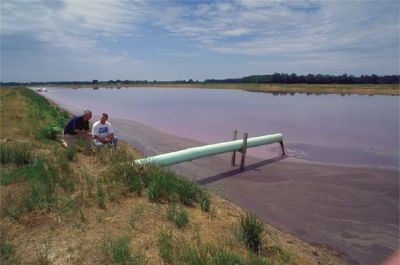
There is also the   problem especially in the pork business of what to do with the manure.  It doesn’t take much imagination to understand that raising 30 or 40 thousand pigs a year in one spot could result in a lot of pig poop.  The problem has been solved by building “lagoons” in which to dump it.  Believe me if any of you have ever had a whiff of pig shit, you will know that lagoon is not a very appropriate designation for these super cesspools.

blog-water

It does not take a high powered scientist to understand that odor might be the smallest part of the problem.  The leak into an aquafer for example could not be very healthy for those downstream.

Last but not least is the issue of genetically modified organisms (GMO) about which there does not seem to be a consensus.  There are those who think foods from these seeds may be unhealthy, and others who express concern over the dangers of tinkering around with DNA apparently concerned that some Frankenstein plant form might evolve.  Those on the other side of that fence point out that we have been doing genetic engineering for many years, by creating hybrids, selective breeding, or by grafting one part of a plant on to another.  They also suggest we look at dogs who exist in hundreds of varieties, who although genetically different from each other all have the wolf as their ancestor.

One very promising development of this science has been the ability to develop plants which are drought resistant.  It is also reported that it may be possible to produce plants which are unaffected by pests.  If that were to come to pass we might be able to eliminate the use of some of those pesticides which certainly would not be a bad thing.  On the other hand, once again we face that same old conundrum, forced to decide if the good resulting from the implementation of a new technology outweighs the bad.  Unfortunately, we are often unable to anticipate the bad.

At this point you may be thinking that many of these thoughts are colored by the nostalgic meanderings of an old man, and of course you would be correct.  Although I am saddened by the losses of a subculture, I am heartened and amazed at the scientific achievements witnessed during my lifetime.  One of these is how it has been made possible to yield so much food from our soil.  My grandfather would be amazed to learn that his one acre which had produced 50 bushels of corn could now yield three times that much.

So far innovations in farming have allowed us to increase food production to grow at a faster pace than the world’s  population; therefore refuting Malthus’s prediction of world -wide starvation.   The big question that remains open is whether such innovations will be able to keep up with a continued increase in world population especially while facing the challenges of climate change, if we will be able to do this without killing the goose that lays the golden egg.


HOW MUCH ARE KIDS WORTH?

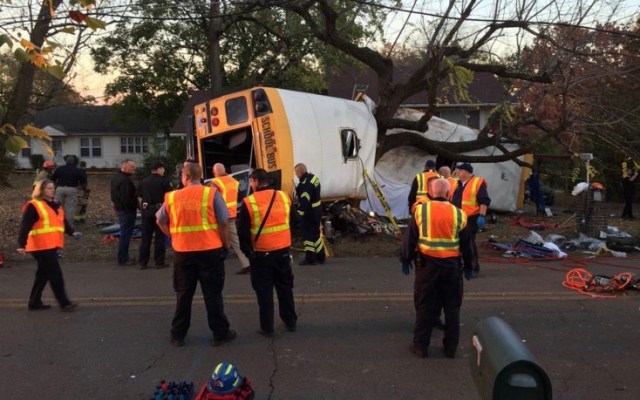
Tragedies involving children always get a lot of press, and the most recent example concerned a school bus accident in Tennessee in which six children were killed. In such cases, there is usually a search to determine who was at fault, and this was no exception. If an act of human negligence is found to be the cause, we can add outrage to our feelings of sadness and horror. The headlines become larger, and blaming reassures us that there is someone out their more careless and uncaring than ourselves.

busblog

NOT MY FAULT
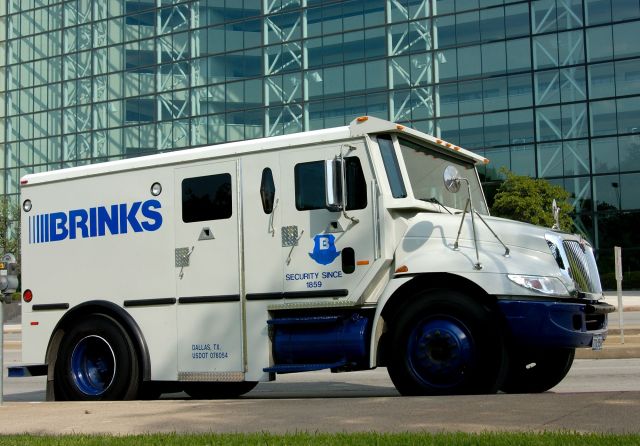
In such cases as this, we only need to look as far as the nearest mirror to see who is responsible. It is true that there were warnings about this driver, which should have been enough to prompt his removal from such an important job; however, no action was taken. In such cases, should responsibility not be shared by those who have the ability to prevent such a horrendous tragedy? We profess that these bus drivers carry our most precious cargo, so should they not receive the highest level of scrutiny? Qualifications for school bus drivers vary widely from state to state. Pennsylvania requires considerable classroom and on-the-road training, physical and mental evaluations, and extensive background checks, while my state (Ohio) requires only a commercial license with passenger designation. I suspect that Brink’s truck drivers may be more highly trained and investigated. After all, they are carrying money.

brink-s-truck
WHY?
There was a school bus accident in my county six years ago, and 7-year-old Kacey was killed. Video from the inboard surveillance seemed to show that the driver had lost consciousness. I was surprised to learn that in our state, school buses were not required to be equipped with seat belts. This made no sense to me then, nor does it now. Since 1968, I have been required by law to fasten my seat belt, yet our children are left to fend for themselves in a large, top-heavy, tin can mounted on a truck chassis. Following the accident, there was talk by our state legislators of requiring seat belts, but, as is often the case with politicians, they were long on talk but short on action. After reading that the bus in Tennessee did not have belts, I inquired at my local school board office to find out about the status of the seat belt issue and was told that our buses still do not have any physical restraints. When I asked why, I was told that the state had not mandated them yet (not an adequate answer in my opinion).

ARE YOU SERIOUS?
The latest information I could find on the subject was that only six states mandated seat belts on all school buses. The National Highway Traffic Safety Administration (NHTSA) does not require or recommend seat belts on all buses weighing more than 10,000 pounds. They concluded that “the crash forces experienced by occupants of (heavier) buses are much less than that experienced by occupants of cars, light trucks, or vans.” Could this mean that my 10th grade physics teacher was “full of it” when he gave us that force formula f=ma?

The NHTSA has initiated a concept they call “compartmentalization,” which they insist offers superior protection in crashes. Protection is offered by the use of high seatbacks which are highly padded, and designed to absorb the shock of a frontal crash. Crash tests confirm their effectiveness in head on crashes. NHTSA in 2002 testified in Congress that seat belts were unnecessary, pointing out that school bus travel was the safest form of ground transportation available. Indeed, their statistics are impressive when one considers 440,000 school buses travel 4.4 billion miles each year carrying 24 million kids with only six fatalities.

FOLLOW THE MONEY
Studies by the University of Alabama in collaboration with NHTSA concluded that “the cost of installing seat belts on every bus is prohibitive.” They estimated that it would cost $8,000 to $15,000 per bus. The studies also concluded that schools would need to increase their bus fleets by approximately 15% due to space requirements for belts with a total cost of $117 million per state. Their final opinion was “costs far exceed benefits.” That and similar statements undoubtedly lead a group like The National Coalition for School Bus Safety to say the issue is influenced by “an economically driven industry.” These statements also lead us to the question: how much are we willing to pay for a few kids’ lives?

DAD DESERVES A MEDAL
In December 2010, Today.com reported an accident in Texas similar to both the recent one in Chattanooga and the one that happened in my town. In 2006, a Texas school bus carried a high school girls’ soccer team when it was forced off the road into a ditch and rolled over. One girl was thrown through the window, and her arm was pinned under the bus, resulting in serious injury. Two other girls were killed, and there were other less serious injuries.

One of the fathers was convinced that a seat belt would have saved his daughter’s life, and he vowed to do all he could to see that all school buses would be equipped with seat belts by law. The Texas A&M Transportation Institute reached the same conclusions as had the University of Alabama, but, in spite of those objections, the law passed largely due to four years of continuous lobbying by the victim’s father. There must have been some buyer’s remorse, for the funds designated for the project were immediately cut by two thirds. I have no recent information about the status of the law’s implementation.

THEY ARE TOP HEAVY
The thing these nine children have in common is that they all died in a school bus that flipped. The design engineers who invented the “compartmentalization” strategy to prevent injury must realize that Ike Newton was right about that gravity thing; therefore, if a “compartment” does not have a lid on it, the contents are likely to fall out and scatter every which way when it is turned upside down.

0709prochoice06

We will never know if seat belts would have saved Kasey or any of those other kids, but we do know that compartmentalization did not work for them. There are instances recorded that imply lives would be saved with seat belts. School administrators in districts where seat belts are used also report fewer problems with driver distraction, bullying and disciplinary problems.

Another unanswered question is to what effect the addition of seatbelts could have on reducing non-fatal injuries. The Ohio Department of public safety reported 1,590 school bus accidents last year, resulting in 282 injuries. I could find no information as to the seriousness of those injuries.

SIX DEATHS TO SEE A PROBLEM?
The only good news resulting from the Tennessee tragedy is that it has reawakened the debate about school bus seat belts. The NHTSA has reversed their position and now favor seat belts for school busses. Administrator Mark Rosekind is quoted in an Associated Press release that, even though school busses are the safest means of transport to and from school, “they could be safer.” The good news is that he has strongly recommended a national initiative to require lap and shoulder seat belts since November 2015; the bad news is that no action has been taken in that regard.

The last directive by the NHTSA regarding seat belts was in 2013, when a policy was implemented requiring new buses be equipped with seat belts with two exceptions: namely, transit busses and, you guessed it, school buses. I, for one, was incensed to read that the powers that be prioritize the safety of passenger buses above that of children, but, in spite of the good words by Mr. Rosekind, that policy appears to still be in place.

MORE TALK
Just a few days ago Mr. Rosekind once again voiced his unequivocal support for seat belts. He was convinced that school bus seat belts had saved lives and that others could have been saved if protected by belts. He went on to estimate that 70% of school bus deaths could have been prevented by seat belts. Nevertheless, despite the mountains of data that have been collected, he declined to issue a directive and planned more study of the subject. A major concern was how to finance such a program, and he even suggested that some school districts might need to be exempted from the requirement for financial reasons. Once again, money appears to factor in to a life-or-death decision.

According to a report in the November 28 issue of People/Crime, five days before the Chattanooga accident, one of the elementary student survivors wrote the following: “the driver was doing sharp turns and he made me fly over the next seat. We need seat belts.”

Out of the mouths of babes!


Note from the editor:

I found this topic particularly interesting, so Eshrink and I compiled a list of some articles for further reading.

Data and Statistics of School Bus Fatalities Over Ten Years

USA Today Article


SEARCHING FOR PATRIOTS:

PEOPLE WHO LOVE, SUPPORT, AND DEFEND THEIR COUNTRY AND ITS INTERESTS

The fat lady has sung and it is finally over. Hillary won the battle (most votes) but lost the war. It’s time to wipe away the tears and take off the black arm band. The center of the universe has been relocated to the lobby of Trump tower, where supporters arrive hoping to take the elevator to the top and be rewarded by the great one. We were wrong about so many things. We expected this to be a landslide victory for the Democrats, but we were also wrong about Mr. Trump. From the very beginning of this crazy campaign, he had been telling us that he was the greatest, and now here he sits at the top of his tower dolling out goodies to the faithful as he becomes the most powerful person in the world. It doesn’t get much greater than that.


THE NASTIER THE BETTER
Conventional wisdom says that negative campaigning works, and this election has set new records for the use of that strategy with name calling, character assassination, unproven accusations, misquotes and even threats. In most any other situation, such discourse would be labeled slanderous. There has also been a great deal of scapegoating, divisiveness, and fear mongering. I, for one, can see no benefit to my country by the use of such tools by our leaders, which inspired me to ask the question: “Where are the Patriots?”

We hire our leaders in jobs all the way from school boards to presidents to run things and look out for us. We expect integrity, and we hope for wisdom. It seems to me that both are too often lacking. The size and complexity of the operations of the federal arm of our government must make for endless opportunities for corruption. When those we have hired make self-serving decisions rather than for the common good, we are betrayed. Rude and disrespectful behavior by our leaders cheapens us all. Those who promote hatred between groups of citizens weaken our country, for as one of our most famous Patriots said, “We must all hang together or we shall all hang separately.”


IF YOU CAN’T BREAK IT, GO AROUND IT
The separation of powers principal was wisely developed by the founders to hopefully eliminate the effect of the lust for power that is so common in many job seekers. Congress is charged with the making of laws, the Supreme Court with deciding on their legality, and the president with the power to veto. Initially those selected to govern considered it a sacrificial duty to serve, and there were not many clamoring to leave their farms to spend time in Washington. However, it was not long until debates in the halls became a bit rancorous, factions developed, and eventually the two party system evolved. Nevertheless, issues continued to be debated. Recently, however, congressional rules have been used to stifle debate, and the majority leader in the senate not only refused to bring up for vote bills unpopular with his party, but shamelessly announced in public that his first priority was to prevent the president from having a successful term. This was said without any apparent regard as to the effect such obstructionism would have on the country.


NAÏVE ME
This statement floored me, for, despite my inherent cynicism, I still believed that those whom we had employed were more concerned about their country than their political party, or their reelection. The idea that 250 or so people could all sit in the same room and have the same opinion about anything flies in the face of anything we know about people, yet the party proceeded to vote in lock step against every issue proposed by their congressional opponents, or the President. There were record numbers of filibusters. Compromise became a dirty word, analogous to the N word to describe our President. Of course, Democrats were not entirely blameless. The dislike each side had for the other reached an intensity bordering on outright hatred. I ask you, how could these guys call themselves patriots?

This level of dysfunction virtually guaranteed that little work would get done. There was more time and money spent on investigating each other than legislating. As a matter of fact, they passed fewer bills than at any time in recent history. People were fed up, and Congress’ approval ratings fell dramatically to record lows. Congress was judged to be even worse than the President, who was very near the bottom himself. Rather than having rational, adult discussions in search of solutions to the country’s problems, they chose to blame each other.  Much time was wasted, and there was little time to waste. After all, this had become a part time job. Some of these guys admitted that they spent more time raising money than on governing.


PARTY LOYALTY
The people were angry and were looking for someone different to run things, and they found such a person in Donald Trump. Oh was he different. In fact, many in his own party scoffed at him for entering the race. They refused to endorse him and cited a number of reasons why they judged him unfit to be president, yet, after he was nominated, they said they would vote for him. They gave no reason for their vote, and few indicated their opinion of his competence had changed. I was appalled at the thought that elected officials would vote for a leader who they were convinced was unfit. Anyone who believed Mr. Trump was unfit to be President would obviously believe that such a presidency would put our country at risk. How could anyone put party politics ahead of their country? I was also disappointed that no one seemed to take note of this behavior, which I thought was, if not treasonous, certainly unpatriotic in the extreme. I am sure that if questioned about this decision to vote, we would hear that the other choice was worse, but that doesn’t excuse it in my opinion.


IS ANYBODY OUT THERE?
It would be reasonable to expect to find a lot of patriots in the halls of our government, and I am sure there are many who satisfy the criteria as defined in the subtitle of this paper; although at times they are not very visible.  It seems to me that patriotism should be a requirement to be considered for the job and that applicants should understand what that word entails. An American flag behind a desk doesn’t guarantee its occupant is a patriot.  That can be known only by his deeds. Although this country screws up occasionally, we have much for which we can feel proud and grateful. One of such things is the freedom to say most anything, and even to be a jerk, but civility is probably more effective as a strategy to get things done. That freedom has been paid for with the blood of patriots. It demands our respect and should never be abused. Let’s hope patriots  prevail, and our leaders read their job descriptions carefully.

WORK (Part 3)

In the second post of this series, I attempted to enumerate only a few of the pros and cons of technology with an emphasis on Artificial Intelligence, the current hot button issue for those knowledgeable about this high tech stuff. It all began with my speculations as to the effect the total absence of work would have on people and culture. Granted, the idea of a culture where there is no work is hypothetical, but as I mentioned previously, there is some evidence that we are headed in that direction.  

WHY DO WE DO THIS STUFF?

We ordinarily think of work as an activity used to gain some kind of reward. Compensation of some type is the first kind which comes to mind, yet there are obviously some emotional or spiritual needs that are satisfied by our labors. In this regard I am frequently reminded of an incident from about 60 years ago when I was working on the “yard gang” at a local factory during the summer. I may have mentioned this in a previous blog; it was one of those trivial but unforgettable experiences, which addresses some of our less negative feelings about work.

Orrie was an amiable fellow in his late sixties, and he and I had been assigned to clean out a boxcar that had carried potash.  I can attest to the fact that the inside of a boxcar that has sat in the sun on a 90 degree day is not a very pleasant place to be, especially when one is soon enveloped in potash dust mixed with sweat.  I can also assure you that placement of a bandana over one’s mouth is not a very effective way to keep  the stuff out of your lungs.  After what seemed like hours of shoveling and sweeping, the last vestige of potash had been disposed of, and Orrie stood in the door of the car, reached in his pocket for a fresh cud of chewing tobacco, surveyed our handiwork and said, “A mighty pretty piece of work Doc.” (The guys all called me Doc, as they knew I was a pre-med student.)

As you might imagine, an overgrown, snot-nosed kid like me thought that was about the stupidest thing I had ever heard. It certainly was not analogous to the creation of some marvelous piece of art. On the contrary, I thought that boxcar was the ugliest thing I had ever seen, and I was convinced that it was the closest thing to hell one could experience while still alive. If work is defined as an activity seeking a reward, the only reward that I can imagine for Orrie was the satisfaction he felt as he savored his accomplishment. I suspect that this same need to achieve is the opiate which motivates us to build sky scrapers and clean boxcars.  If such is the case, then the term “workaholic” may describe another form of addiction.    

LET’S HEAR IT FOR THE GOOD OLD GUYS

Now that I have become older and hopefully a little wiser, I have come to realize that it was men like Orrie with their incredible work ethic who have made it possible for me to sit here in relative luxury.  In my opinion, “trickle drown” economics is not what makes things work, but that the “trickle up” factor is even more important.  The wondrous plans of our great thinkers and planners would have had little chance of success without the sweat equity of the Orries of the world.   

Throughout recorded history and beyond, we seem to have been ambivalent about work. We often praise its value but at other times say we hate it.  We look forward to retirement, but when it comes, we start to look for something to do, as there are no 12-step programs to help us gain remission from this compulsion.  It has often been said that in order to have a successful retirement, one should remain active. Consequently, many of us end up engaged in activities such as volunteerism, gardening, woodworking or blog writing, which, under different circumstances, would be seen as work. In my own case, I looked forward to retirement, but I found I missed working. Since there was a nationwide shortage of psychiatrists, I had no problem finding a job and went back to work until senescence caught up with me 12 years later.  It is amazing how goofing off feels so good when you are working, but is so boring when you don’t have a job to do.

BORING!

Of course there have been enormous changes in the nature of work over the last century.  We have become much more specialized especially in manufacturing. Henry Ford’s introduction of the assembly line introduced a new level of efficiency in production at the cost of massive levels of boredom among the employees, who found themselves performing the same action hundreds of times every day. I can speak of this from experience, for I once worked in a glass bottle factory where a river of glass bottles came at me from a conveyor belt as I attempted to pack them in boxes. It was a position I felt was sorely lacking in job satisfaction. The good news is that these kind of jobs are the type which robots can do more efficiently and with fewer mistakes than can humans, but the bad news is it eliminates a lot of jobs held by those with limited training.  

The automobile industry, which has long been a major component of our economy, is a good example of the changes wrought by technology on employment.  According to a study by Washington University, the number of people employed in auto manufacturing decreased from 1.1 million in 2004 to 670,000 in 2011, presumably due largely to the introduction of robotics.  Now with the introduction of artificial intelligence to these machines, the game is changed drastically.  Fewer and eventually no people may be needed to make cars and trucks.

As mentioned in a previous blog, this work thing had its origin when Joe Caveman discovered he could make a spear point or axe from a piece of rock, which helped him to procure food for himself and his family. It wasn’t long until he found he could make other stuff, which eventually led to my being able to sit here in my nice warm house and peck away at a machine. With the development of group work, people depended upon each other to “carry their own weight,” work was highly valued by society, and slackers were looked down upon and even shunned.

A BOXCAR MICHELANGELO

However, it seems unlikely that Orrie’s motivation in cleaning out that boxcar had anything to do with social pressures, for he appeared not to be pleased until he surveyed his handiwork after the job was done. For me, though, it was all about the money. The only satisfaction I felt came from being able to get the hell out of that boxcar.  This would lead one to believe that Orrie’s sense of accomplishment was the primary source of that mildly euphoric feeling.  I doubt that it was much different than the emotions an artist would feel upon completing a painting or sculpture. As a matter of fact, I find it interesting that Orrie used the word “pretty” to describe his accomplishment, and I suspect that when Joe Caveman turned that piece of rock into an axe he might have thought it to be a pretty piece of work, too.  

THE EQUIPMENT

The human body has evolved to make us particularly suited to do things and make stuff.  When we learned to stand upright and developed fingers with an opposing thumb, we were equipped to do all kinds of things, and an enlarged cerebral cortex allowed us to learn how to do them. In answer to the question of why we work, it would seem there are multiple factors involved, including: as a means to supply our basic needs of food, shelter and the like; because of cultural influences; as a tool to ward off depression; because it is an addiction; and perhaps even because it’s simply part of our genetic makeup.

I DO, THEREFORE I AM

Since we ordinarily spend at least half of our waking hours at work, what we do contributes in large measure to our identity, e.g. who we are.  For example, if I am asked who I am, I likely will reply that I am a retired psychiatrist. Work is so important that it tends to define us.  It is difficult to imagine how different I would be had I grown up in a world in which there was no work to be done.  Would I still be competitive?  If so, for what would I compete, and how would I do it?  Would we need to have a monetary system?  If not, what tools could we use to distribute resources?  What would we do with all that extra available time?  We couldn’t all be bloggers.  There are already too many of them.  With no need to train for a career, would education be needed?  Would we become even fatter and lazier? Would our native curiosity remain intact?  Would our brains atrophy?  Would we be dumbed down?  

Those are only a few of the questions raised as one contemplates a workless society.  As discussed in a previous blog the total absence of work could only happen with the development of robotics endowed with Artificial Intelligence.  As computers store more knowledge and learn more, they become more intelligent and in some ways have already become smarter than us.  Their decision making is not influenced by emotion, they are always logical, and they never forget.

THE DIGITAL ROLODEX

We all participate in the transfer of power to machines.  For example, in the past I carried a few phone numbers in my head as a matter of convenience. Now I have no need to bother as those numbers are all programmed into my phone. After relieving my brain from the job of memorizing those numbers, I found myself doing exercises to improve my cognition and memory.  How crazy is that?  A recent drive to another state would have involved studying road maps and planning a route, but now I only need to tell Siri where I want to go. I have always taken pride in my ability to spell and had even won some spelling bees as a kid, but now I am dependent on spell check and Google.  

As computers become more intelligent, we will undoubtedly become more dependent on them for more important things than directions or spelling. We will be perfectly willing to turn over more and more responsibility to robots, and to enjoy the fruits of their labors, which is certainly not all bad. Lest you think I am an anti-robotic bigot let me assure you that I feel they have the potential to eliminate much suffering in this world. Unfortunately, as Bill Gates has said, there is also a very frightening, largely ignored, possible down-side. As we cede more power to technology, we risk losing control of our world. You might think this not such a bad idea considering how we have screwed it up, but I suspect it wouldn’t be a fun place to live. I doubt many robots would be lovable little guys like R2-D2 in Star Wars.

SORRY, NO ANSWERS

With no frame of reference, we can only make guesses as to what it would be like to live in a world without work, but I feel certain it would be much different than just taking time off for vacation. IBM’s Watson and his buddies would personify the spectacle of tail-wagging dogs as robots became our masters. Speaking of dogs, perhaps robots could domesticate us as we did the wolves, and teach us to sit, stay, and roll over.

THE DONALD

My new editor has suggested I comment about our imminent election from a shrink’s point of view, so I interrupt my series of wondrous insights about work to follow her directions.

The American Psychiatric Association has determined that it is unethical and unprofessional for psychiatrists to attempt to make diagnoses without doing a face-to-face examination; consequently, I will confine my comments to what I have observed, although some of the mental mechanisms involved are hard to ignore. Psychiatrists are taught to be aware of their feelings towards their patients in order to be reasonably objective in their analyses. With that in mind, I need to confess that I am not only a wild-eyed liberal (a term most democrats are afraid to use these days), but I am convinced that Mr. Trump is a jerk of the highest order.

With these biases out of the way, I now feel I can be a bit more objective in my analysis of his behaviors, to which we have been exposed continuously throughout this ridiculously long campaign. While most of the obscenely rich avoid the limelight, the Donald appears to relish it. He has a long history of self-promotion beginning long before his foray into politics. This has prompted some to label him as the possessor of a narcissistic personality disorder.

There are other behaviors which lend support to this impression. For example:

  1. He states repeatedly that he is the only one capable of solving whatever problem is mentioned
  2. He does not admit to mistakes
  3. He does not apologize
  4. He blames others when he loses
  5. He denigrates others in order to magnify his own achievements and self-worth.

Others look at the business dealings where he has been accused of failing to pay those who did work for him, his escape from a failed venture with a huge profit while investors lost money, and his use of bankruptcy on more than one occasion to line his own pockets while others lost. However, to me, the most egregious of all was how he was able to extract large sums of money from those who could ill afford it with the formation of the so-called university which bears his name. Those who feel victimized don’t find legal recourse a realistic option, for few have the resources to take on Trump’s army of lawyers. Mr. Trump is not the least bit apologetic concerning any of this, nor does he demonstrate any remorse, but rather describes these strategies as evidence of his outstanding talents as an astute business man. These characteristics undoubtedly contribute to the judgement by some non-professionals that sociopathy is the hallmark of Mr. Trump’s character, but of course, the two diagnoses are not mutually exclusive.

There are also those sexist comments and allegations which do little to polish his image. Those women who have accused him of sexual assault have apparently been silenced since he threatened to turn his platoon of junkyard-dog attorneys loose on them. While professing to be champion of the people, he uses his power to intimidate people by threatening to bring suit against those who do not have the resources to fight a court battle. He has even promised to appoint a special prosecutor to investigate Hillary Clinton in order to “put her in jail.” So much for the peaceful transfer of power.

One should not make the mistake of thinking that Mr. Trump is stupid just because he says stupid things. I am convinced that his outrageous behavior is all part of his game plan. First of all, he needed to get attention, a process in which he was well versed, having spent much of his life working to be noticed. He was wildly successful and totally dominated the news cycles. The more outrageous he became, the more press he received, all without cost to him or his campaign. His pugnacious attitude, name-calling, ridicule, and character assassination was well received by a large segment of the population, who felt they were not well represented and had been left behind.

He validated and even encouraged the anger these people felt. He promised to wipe away all their grievances and take them back to a better time. The “never Trump” crowd called him a bully and predicted that he would eventually implode, but they underestimated the depth of that anger. His followers cheered when he promised to resume water boarding when necessary and to “bomb the hell out of ISIS.” There was the famous wall he would build and force Mexico to pay for (hopefully not by bombing the hell out of them).   I also
Tyrants such as Hitler or the little dude Kim Jong-un  in North Korea have long used the technique of finding a common enemy, e.g. a person or group of people on which to blame the country’s problems as a means to unify them. For Trump, it began with his rant about the undocumented, and later he would incorporate Muslims. Although very effective, such tactics promote bigotry and even persecution, which help explain his endorsement by skinheads and the like. It also provides simplistic solutions to complex problems.

As we might expect from the previous comments, Mr. Trump is not one whom one would expect to be very gracious in defeat, and he has provided himself with insurance to guard against the “agony of defeat.” Whenever he has seen himself slipping in the polls, he insists that “the system is rigged.” He declares there are thousands, if not more, fraudulent votes counted each year, just one of many untruths delivered in his rants.

He also presented the FBI director’s decision to not recommend prosecution of Hillary as further evidence of “crooked Hillary’s” influence. He vilified the FBI and labeled the entire department and its director corrupt. When FBI director James Comey recently announced the discovery of emails which might be pertinent to Hillary’s case, Trump quickly switched gears, and extoled the virtues of the FBI and its its director in glowing terms.

Comey’s announcement violated a long-standing policy of withholding any information concerning an ongoing investigation. Pundits concluded that this was a C.Y.A. on the part of Comey so that he would not be embarrassed if a prosecutable offense was found in the emails after Hillary became president. Nevertheless, the timing, with only a week to go before the election, can’t help but make one wonder if some of Trump’s ramblings have intimidated Comey. It is also true that Comey, who was appointed by President Bush, is a Republican. Maybe the Donald was right all along, and it is rigged. But not in the direction he thought it was. How is that for ending with a tad of paranoia?

Be sure to vote on Tuesday, even if you are convinced both candidates suck, and remember: if Trump wins, we may need that wall to keep Americans from migrating to Mexico.

WORK (PART 2)

In the sixties, with the so-called liberation from state psychiatric institutions, there was a successful movement to shut down the farms associated with these hospitals. It was felt that the patients were being taken advantage of by having to work on those farms without being properly remunerated. But surprise, surprise: a few years later someone came up with a brand new progressive idea called work therapy, where patients suffering from disabling psychiatric illnesses were taught marketable skills with the goal of moving on to full-time employment. I have witnessed some of my own patients achieve dramatic improvements from participation in such a program, despite receiving only token pay.

WHO STARTED THIS WORK THING?
This change would seem to confirm the opinion espoused by my grandmother: “Work is good for the soul.” Yet, it begs the question as to whether this need to work is conditioned by social pressures or is encoded on our DNA. Presumably, this insatiable drive to produce was necessary for the survival of prehistoric man. The provision of food, shelter and protection from predators must have required a great deal of hard work. These hunter-gatherers soon learned that the sexes complimented each other. The upper-body strength of the male made him a better choice as hunter, while the superior manual dexterity of the female suited her to gathering and preparation of foods and making clothing. Her need to nurse her children would also have been an impediment to hunting.  Now technological advancements do the heavy work in many jobs, which has opened the door for females to participate in more types of jobs.

NOT FUN THEN, EITHERImage result for stone age tool makers
These people had a larger brains than other critters, and decided to use it to develop labor saving devices, an activity which continues to the present day with no sign of slowing. Initially, they learned to shape stones into tools, such as spear points, knives and axes.

Meanwhile, the lady of the house–or cave in some instances–would learn to use stones to grind grain into something edible. After learning to control fire, they were able to make pots in which they could transport, store, and cook essentials. The ability to make a vessel in which to carry and store water would have brought about a revolutionary change in their lives, as it would no longer be necessary for them to live near a source of water.

IT NEVER ENDS
Eventually, man would learn to smelt metals, which could be used to make more efficient and durable tools. Thus, he entered the Bronze Age, followed a few hundred years later by the Iron Age, from whence the pace of change towards modernity accelerated. As mentioned in my previous blog, nothing has affected the nature of work and, indeed, the whole of society, more than the invention of the computer. One could rightfully argue that such things as aviation, automobiles, modes of communication, electricity, and space exploration were agents of change; however, they pale in comparison to the power unleashed by the digital age. Computerization has become such a routine part of our daily lives that it is taken for granted as much as indoor plumbing.

JUST LIKE ROCKY
As was the case with Rocky–our stone age ancestor who made life easier for himself by fashioning an axe from a piece of stone–we continue in the same manner to develop tools to lessen our workload. Unfortunately, these same tools both then and now have enhanced our ability to kill others more efficiently, which has been the case ever since Rocky learned he could use his axe to eliminate competition. Although there are still many crappy jobs out there, technology appears to be moving in the direction of the elimination of jobs for humans, an issue previously brought to my mind by the sight of an automated garbage truck in action.

NOT ALL GOOD
This labor-saving business obviously is very attractive, but when we are able to develop machines that can think, we enter a whole new dimension. Stephen Hawking, the renowned theoretical physicist, opined in a 2014 interview with the BBC that the development of Artificial Intelligence was “the greatest event in human history.” He went on to say it could be the last event for humanity. He believes this could lead to the extinction of the human race if it goes unchecked. Elon Musk, the founder of Tesla and Space-X, describes artificial intelligence as “our greatest existential threat.” Bill Gates, the computer guy, echoes these concerns and wonders why others don’t share his worries. They all seem to be saying that some of our si-fi atlas.jpgflicks and literature could be prophetic. Artificial Intelligence has already been used to develop weapons systems such as smart bombs, drones, and who knows what else? Boston Dynamics has a prototype soldier robot called Atlas (pictured right) that is currently being taught to act independently.

It sounds like a great idea to have robots do our killing for us just as much as it sounds like a great idea to have those who operate our drones in the comfort of their office do our killing for us, thus insulating them from the horrors of war. In his interview, Musk noted his concerns about economic and psychological effects due to the loss of jobs resulting from the application of artificial intelligence. In my previous blog, I speculated that we were moving towards a push-button society, but with the application of Artificial Intelligence, we won’t even need to push the button. In such a case, the question is: would we be able to retain control?

SERENDIPITY?
As with many other pseudo-scholars, I get much of my information from television, and on Sunday, in the midst of writing these musings, I took a break and tuned into Fareed Zakaria’s show on CNN. Since his broadcasts are nearly as important as Ohio State football, I always try to catch his program. Talk about serendipity, he was in the process of interviewing Ginni Rometty, the CEO of IBM, about Watson, IBM’s super computer. I find it interesting that there appears to be an attempt to humanize these machines by giving them names. Not surprisingly, she was extolling the virtues of Watson, and indeed there are many. Her main purpose was to convince us that Artificial Intelligence could never replace us, only assist us. This super computer has received the most press for winning the game show Jeopardy and beating geniuses at chess; however, its more important feats are those which could only have been dreamed of a few years ago. It has been said that information is power, and if that is true, Watson is one powerful dude.

ImageARCHEOLOGY 101
Archeologists agree that one of early man’s major achievements was the development of language. This must have had its beginnings when he learned to make distinctive sounds to communicate. The ability to transmit complex bits of information verbally would have made it possible for Rocky to teach Rocky Jr. how to make his own axe, how to stalk prey, how to avoid vegetation , how to start a fire, and to stop teasing his sister. As subsequent generations continued to collect knowledge, symbols were used to represent words, and a visual means to communicate and store information was  born.

Such writings soon outgrew the capacity of cave walls, and a few thousand years later we  have huge buildings full of books, the content of which far exceed the capacity of the human brain. One of the largest of these is the Library of Congress, which contains more than 16 million books housed in three buildings. The folks at IBM insist that Watson has the capacity to store every page of all those books in his memory and, unlike us, never forget anything. It is predicted that eventually all the information ever written will be stored, sorted as to its veracity, and made instantly available. As previously mentioned, knowledge is power, but Watson is able to independently access that knowledge, analyze it, and make decisions. He is even able to learn from his own experiences. Watson turns out to be much more than just a memory bank, and this Artificial Intelligence business is starting to sound less artificial

WATSON BOOSTERS EVERYWHEREImage result for ibm watson images
IBM must be a bit anxious about all these Artificial Intelligence naysayers, for later in the day, after watching my guru Fareed, Sixty Minutes featured Watson’s work in the diagnosis and treatment of cancer, which was indeed impressive. Oncologists from leading academic cancer centers were in love with Watson, who was programmed to commit to memory all the scientific literature ever written about cancer. The computer learned to interpret laboratory reports, read scans, interpret symptoms, and return a diagnosis along with recommendations for treatment, all with fewer mistakes than when done by conventional methods. With Watson on the job, who needs doctors? This could allow cancer doctors to play golf full time.

The contributions of Artificial Intelligence have enormous potential, not only for treating cancer, but in all of medicine. The unraveling of the human genome has opened up the ability to find, and in some cases correct, mutations, which are responsible for many illnesses including some types of cancer. Although there have been marvelous achievements in medicine, future generations will undoubtedly look back on our efforts as crude and ineffective much as we demean such things as the blood-letting done as treatment by our predecessors.

THE GOOD STUFF
The list of benefits which could be provided by Artificial Intelligence is nearly endless. Self-driven vehicles would eliminate the problem of human error and would undoubtedly greatly reduce the number of traffic accidents. Dangerous or unhealthy jobs could be eliminated. Information could not only be provided, but sorted, verified, and implemented. Robots could learn from their own experiences, and thus they would be able to make rational decisions. We are already at a point where we use and take this ultra-high tech stuff for granted. I rely on my good friend Siri to tell me how to get from point A to point B, how long it will take and where I can stop for a hamburger. Soon, she will be able to take me where I want to go while I read a book or take a nap. The more one thinks about this stuff, the weirder it becomes, and there seems to be no end to the possibilities. There must be grist here for a hundred sci-fi movie scripts.

NOT ALL GOOD
Our technological advancement has already provided the means by which we can destroy human life on this planet. Nuclear war is the most obvious, but climate change could also be fatal, especially if it continues to be widely ignored. As I pointed out in a previous blog, we are also vulnerable to pandemic diseases and do little to prevent them. Now, here we go with more progress, which some pretty smart guys tell us can do good stuff, but it also has the potential to eliminate the human race.

Hawking has predicted that our survival depends on how we handle these existential threats over the next one hundred years. He acknowledges that Artificial Intelligence is here to stay and that further development could not be halted even if we wanted it to be. He does suggest there is great urgency in regulating the process. One phenomenon that caught my eye was an article in Scientific American about a group who is attempting to teach robots to feel emotions. It occurred to me that I would not like that robot, Atlas, to be pissed off at me, so maybe it would be a good idea to cool it with the emotion stuff. It also makes sense that we follow Hawking’s recommendation that there be a ban on the production of military robots like there was with poison gas. In another issue, I hope to expand more on the effect Artificial Intelligence might have on work.

ENOUGH ALREADY
This essay has violated both tenets of the Maggie rule about blogging: keep it short and write about subjects you know something about. I have solved the problem of dealing with that rule by firing Maggie and hiring Caroline, who I am hoping will be more permissive than her mother. Maggie took her dismissal well, but then jobs without pay are probably easier to leave. I am looking forward to working with Caroline who is very intelligent, and I believe could give Watson a run for his money.

To read the final post of this series, click here.

WORK? WHAT’S THAT?

Recently, during a visit to one of my daughters, I happened to see something that started me thinking (always dangerous). A waste removal vehicle (I don’t think garbage truck is any longer acceptable in polite company.) pulled up alongside two large plastic trash containers, which my son in law had placed at the end of his driveway. There was no one standing on the little step on the back of the truck prepared to jump down and empty the cans, as is the case with my trash guy. As I was thinking, how terribly inefficient for the driver to get out of the truck to dump the garbage can, a giant set of tongs miraculously reached out from the side of the truck, snatched the cans, and dumped them in the top of the truck.

TALK ABOUT A WORK ETHIC
This display of high tech stuff in action prompted me to wonder what might have happened to the guy who lost his job to that robot. Granted, this job, involving hanging to the back of a truck; being vulnerable to being killed by someone looking at his cell phone; and being exposed to all kinds of weather, not to mention the physical labor involved and not knowing if the can to be picked up is full of feathers or bricks, would not appeal to most people. If that is not enough, imagine what it would be like to spend every day enveloped in eau de garbage.

A BETTER MAN THAN I
Nevertheless, whenever I happen to be in my yard as my guy picks up my trash, he waves, smiles, and asks me how I am doing. He is very efficient and alights from that little step on the back of the truck before it is completely stopped with the grace of a ballet dancer. I think he must be very good at his job, and from just watching him, one might even conclude that he liked what he was doing. Like it or not, I could attest to his having worked at this job for the many years I have resided here, and I wonder what he would do if his boss purchased one of those new trucks with the monstrous steel arms.

LAZINESS ENCOURAGED
This made me wonder if technology would eventually replace work. That may seem far fetched, yet look around and you will see that all over the place, machines replace people. With driverless cars on the way, could driverless trucks or trains be far behind? It is said that there is little for an airline pilot to do on his flight these days, and it is common for the controls to be untouched by human hands from takeoff to landing. As a matter of fact, I find it difficult to imagine many jobs in the transportation industry that could not be automated.

Perhaps manufacturing is where automation has had the most effect on employment. Robots have replaced many people on the assembly lines of automobile factories. Many highly skilled positions have been eliminated by computer operated machinery, which can produce more for less, often with more precision. In my day, machinists were among the most highly skilled and respected of all the tradesmen. They could produce objects with tolerances within thousandths of an inch. Those same products can now be produced with the push of a button. Daughter/editor Maggie is the marketing manager for a company that manufactures such machines. Three-dimensional printing has gone from a concept to a way to produce objects without human interference.

Retail businesses have also felt the effect of technology. Online shopping grows exponentially, apparently contributing to the demise of not only Mom-and-Pop stores but some of the big box chains. Walmart, always ahead of the curve, has expanded its online capability. Even groceries can be bought online. Amazon builds distribution centers all over the country, which are said to be fully automated and capable of storing, processing, and sending purchases without any hands-on involvement. Its research into the possible use of drones to deliver its products has been well publicized—look out postal service, UPS, and FedEx.

Not even agriculture has escaped from that phenomenon we call progress. Family farms are rapidly disappearing because they find they can no longer compete with the very large, highly mechanized corporate farms where, with the aid of technology, one man can plant and harvest hundreds of acres of crops. It is not hard to imagine that, as this driverless thing progresses, he might also become expendable. Likewise, livestock farms require automation beyond the reach of the little guy. It is true that some crops are still harvested by people, but I wager when the cost of employing migrant workers goes up, there will be machines invented to pick those fruits and vegetables. I have been told that a tomato with thick skin has already been developed via genetic engineering so that it can be picked by a machine, but I can’t vouch for the veracity of that bit of info.

NO WHITE COLLARS NEEDED
At first glance, it might appear that those in what we refer to as the “professions” might be immune from the effects of this burgeoning technology, yet, if we look harder, we can see many potential threats to their job security, also. It is now possible to invade legal barriers with the help of all kinds of forms and instructions from the internet. There seems to be some agreement that there are already too many lawyers; consequently, more digital competition could make things worse.  Many lawyers escape into politics, and I am of the opinion that if robots were to take over those positions there would likely be an improvement in government.  Computers are good with numbers, and there are already multiple accounting programs. It seems only a matter of time until accountants would join the ranks of blacksmiths and other virtually extinct professions.

As with other professions, medicine has not escaped the avalanche of technological know how. Physicians have become much more reliant on machines to make diagnoses, and physical examinations tend to often be cursory. Robotic surgery is already used, and there are programs in which computers take the place of psychiatrists. Could we someday walk into a scanner that makes the diagnosis and dispenses a pill, then be cured, as was the case in “Star Wars?”

YOU THINK THAT’S CRAZY?
You may be thinking that we will always need human intelligence to design, build, and program those robots; however, the artificial intelligence of computers seems to be evolving as less artificial with many of the attributes of human intelligence. For example, an IBM computer has managed to defeat some of the world’s best chess players, and Siri can tell me how to get to Podunk before I can get the map from my glove compartment. If the super geeks who build these things are correct, it will not be long until robotic machines will be able to act independently. With those capabilities, one can imagine that robotic machines would not only do the job by themselves, but also be able build more robots. If that all seems ridiculous, consider how our great-great-grandparents would have scoffed at the idea that someday soon it would be possible to talk with someone thousands of miles away.

POOR SUSIE HOMEMAKER
Archaeologists seem to agree that the development of tools was a major factor in man’s ability to become the dominant creature on the planet. Tools are essentially labor saving devices. Could it be that we are heading toward the development of labor eliminating devices and eventually to a state in which there is no work to be done at all? If that were the case, and we all were unemployed like my fictional guy from the trash truck, what would life be like? Barb and I are both retired, yet we are sometimes heard to say that we can’t do this or that because we “have work to do,” when we are actually referring to routine household chores. We already have vacuums that clean floors automatically, and futurists predict that soon there will be robots available to do all routine household jobs.

The implications of a jobless society are almost unimaginable. What about the effects on the economy where the basic needs and luxuries of the populous have always been based on productivity? Would we still need money? If so, how would it be distributed? How about governance? If artificial minds could make better decisions, would we turn everything over to them? The more I think about it, the weirder it sounds. The brave new world concept seems tame in comparison.

STAY TUNED
As you might expect, an old retired psychiatrist like me is more interested in what effect a world without work would have on individuals and their relationships than in economics or politics. To that end, I have much more to say about the topic, but daughter/editor Maggie (I am considering firing her, by the way.) insists that people can only tolerate my words of wisdom in small doses; consequently, I plan to elaborate on the subject in a follow-up blog.