
Being deeply loved by someone gives you strength.
While loving someone deeply gives you courage.
Lao Tzu
Editor’s Note: Above is a quote Eshrink found while doing research for this series of blog posts: The Way It Was (a glimpse into how he saw life growing up during The Depression and WWII). He said it might be his all time favorite quote so I decided to put it at the top of each post in this series as a reminder of the power of words and the power of love. Eshrink’s writing illustrates the power of both! In case you missed earlier posts in this series, I’ve provided links below.
- The Way It Was: Part 1
- The Way It Was: Part 2
- The Way It Was: Part 3
- The Way It Was: Part 4
- The Way It Was: Part 5
- The Way It Was: Part 6
- The Way It Was: Part 7
- The Way It Was: Part 8
- The Way It Was: Part 9
EDITOR’S Note:
Welcome to Part 10, the final installment of “The Way It Was” (Eshrink’s memories of WWII from his perspective as a young boy growing up in Ohio).

President Franklin D. Roosevelt (FDR) signing the G.I. Bill in June 1944.
Our conquering heroes were treated as such. Many would return to their old jobs and families. But colleges, universities and trade schools were flooded with students as nearly 8 million veterans took advantage of the GI bill which paid for tuition, and living expenses for any approved college, high school, technical, or vocational school. Many universities found it necessary to erect quonset huts to handle the influx, while others opened branches in enabling some vets to commute (the latter allowed me to start college).
Low interest mortgages and business loans were made available, along with one year of unemployment compensation if needed. There were some who objected to the policy as being socialistic along with the prediction that it would encourage laziness. It turned out that this time the unintended consequences of a government policy were positive. Teachers and professors almost unanimously applauded the GI’s for their discipline, and dedication to their studies. Employers were recruiting rather than shunning veterans.
Sociologists and economists mostly agree that this massive educational effort contributed in a big way to the post war era of prosperity and to our becoming the dominant force in the world. We gained respect for not only our military prowess, but intellectual and artistic pursuits. For example, It would no longer be advantageous to study medicine in Europe, rather Europeans would now line up to study in the US. The ready availability of an educated workforce allowed us to move ahead of other countries in industrial and scientific research, and to mold our “swords into plowshares.”
Learning from History
Of course, we had a head start in the race for supremacy considering the fact that the rest of the industrial world was in shambles having suffered the brunt of the war’s devastation. In a rare display of good judgement, we seemed to have learned from past mistakes and decided to use our new-found prosperity to create the “Marshall Plan” which was designed to help rebuild and revitalize Europe including Germany and Italy.
This was in marked contrast to the treatment of Germany after the first World War, when they were severely punished. This was undoubtedly a major factor in causing WWII a mere 20 years later. The Marshall Plan, i.e., the general strategy of helping the countries we had just defeated, was roundly criticized by many who felt we were rewarding bad behavior. However, the rebuilding of Europe combined with a similar program for Japan has resulted in the establishment of democratic governments and prosperity for all, but most of all peaceful relations which have lasted for 70 years.
Those postwar years were full of the promise of peace and prosperity. The boys had come home, were going to school, or working better jobs. My Brother and my uncle as beneficiaries of the GI bill were the first in our family to have ever gone to college. As with millions of others, they were soon starting families, and the baby boom began. In 1948 I graduated from high school and worked briefly as a go-fer at an automobile agency, where there was a long list of people waiting to buy a new car. This was true of all kinds of items which had not been produced during the war. There was building everywhere, the economy was booming, and the future looked bright, but that euphoria was short lived when Joseph Stalin entered the picture.
War Makes Strange Bed Fellows
Stalin was at least as ruthless as Hitler, and is said to have executed millions of his political adversaries with even more dying in his gulags as his concentration camps were called. Nevertheless, he had been welcomed into the fold as an ally after he declared war on Germany. He called himself a communist but his definition of communism involved the presence of an all-powerful dictator.

Left to Right: Churchill (PM of England); Roosevelt (President of the USA); Stalin (Leader / United Socialist Soviet Republic-aka: Russia)
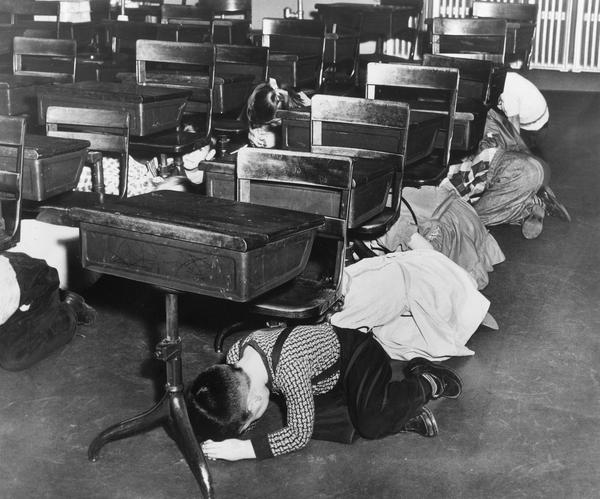
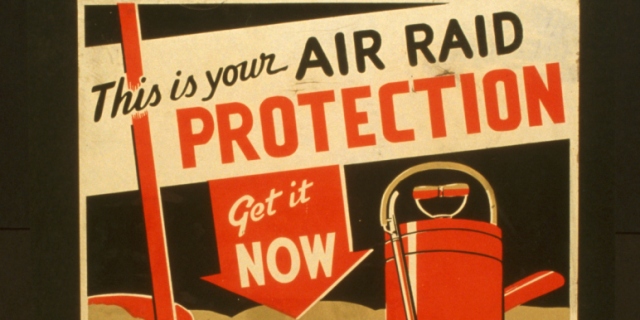
At the famed Yalta conference called to decide the fate of post war Europe, Stalin was granted control of Eastern Europe after suckering FDR and Churchill into believing he would keep his word about establishing democratic governments in those countries. His duplicity marked the beginning of the Cold War which would become more frigid with Russia’s development of a nuclear bomb in 1949. This led to the policy of “mutually assured destruction” (a.k.a., a Mexican standoff) and the construction of backyard bomb shelters, air raid drills in schools, and teaching kids to sit under their desks…as if that would do any good in an atomic bomb attack.

Why?
It should come as no surprise that since I am a psychiatrist I might have some interest in human behavior, Although you could legitimately question if some of our world’s worst tyrants mentioned in this paper are really human. As a teenager during that great war I was subjected to a lot of news of the atrocities carried out under the direction of these people who at first glance would seem to be free of a mental illness. One of my friends had occasion to spend a great deal of time with Saddam Hussein following his capture. He was surprised to find him quite personable. In one of their conversations Saddam stated that he acted as he did because it was necessary to save his country. I am left to wonder if he really believed that, and if is such a rationalization is common among Tyrants.
After endless years of speculation as to what makes these guys tick, they remain a mystery to me. We psychiatrists are well versed in labeling various conditions, but not so good at finding causes. I am aware and concur that power corrupts, but still after those years of mental gymnastics I remain perplexed as to how these otherwise apparently normal people can do such evil deeds. Even more puzzling is how they are able to convince masses of people to follow their lead and participate in the torture and murder of others.
Nuremberg Trials
 With the end of the war members of the Nazi hierarchy were rounded up and charged with “crimes against humanity.” I was 16 years old and found time to follow the trials in Nuremberg in spite having recently found the love of my life.
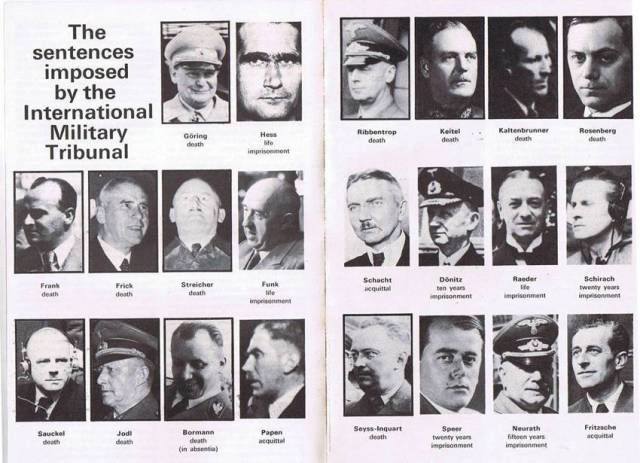
There apparently was some effort to learn something about these guys for I recently found they were all given Rorschach tests (these tests are now discredited by many). Herman Goering was second in command in Germany under Hitler, and I recently found a transcript of his testimony. He was surprisingly open about the operation of his government and freely discussed the operation of the concentration camps and how adversaries were ordered to be killed by the SS or Gestapo. He was sentenced to be hanged, but managed to have cyanide smuggled in and killed himself.
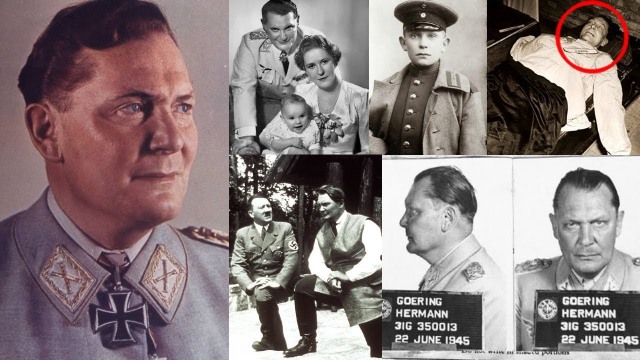
Although, I knew the story of Goering’s suicide it was only recently that I learned there was a very interesting and strange sequel to the story. Goering had been examined by an Army psychiatrist by the name of Lt. Col. Douglas Kelly. He apparently shared some of my curiosity as to what made these guys the way they were. He is said to hope he would be able to identify what he called a “Nazi personality” which could be identified before such bad guys could come to power. From the story it sounds as if he was suffering from a serious mood disorder, which must have gone undetected by the army. In any event, after a minor disagreement with his wife he ingested cyanide and killed himself in front of his wife and children a la Goering.
True to the Biblical prophecies we have continued to “hear of wars and rumors of wars.” I was one of the lucky ones for my brief stint in the Navy was in between wars. It seems I will go to my grave with no understanding of why we do what we do to our own species. I have some ideas, but none seem to make sense. Perhaps we should add another diagnostic category called evil people to our diagnostic manual.
Thanks for the Memories
On this cheery note I leave you all to ponder those ways of the world which are beyond my understanding. I do want to thank Peter for suggesting this topic. The reminiscences have been fun, and as I have mentioned before that is the thing we old folks do best. It has also reminded me to be grateful for having been born in a time and place where I was loved, and for the good fortune that has accompanied me all these years.


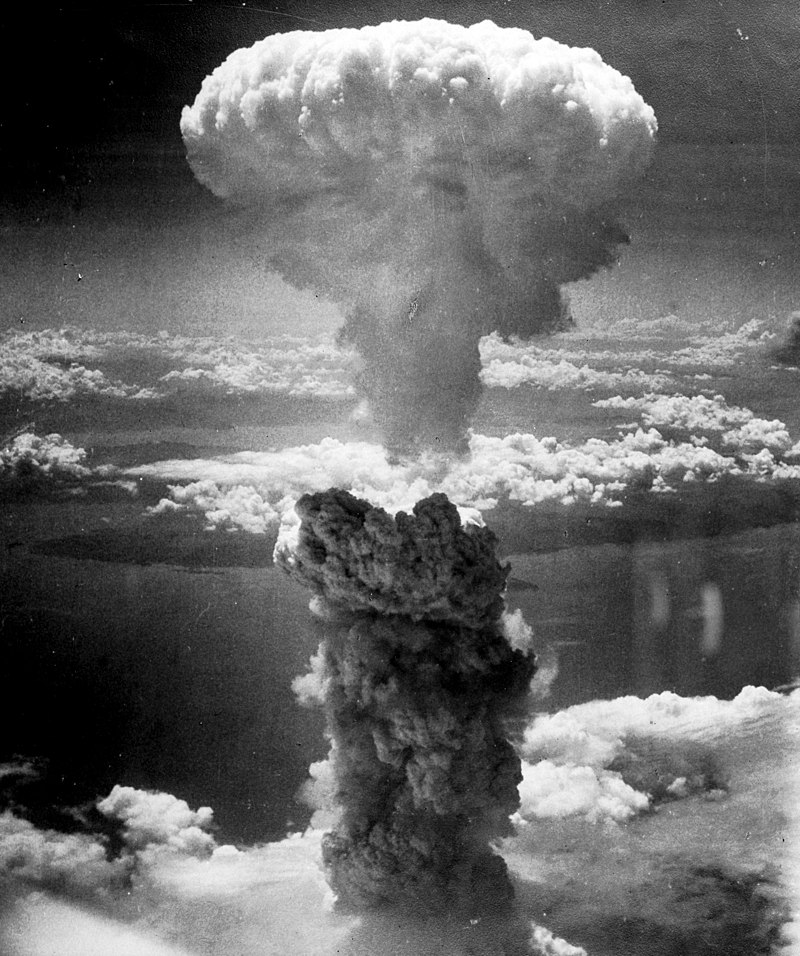


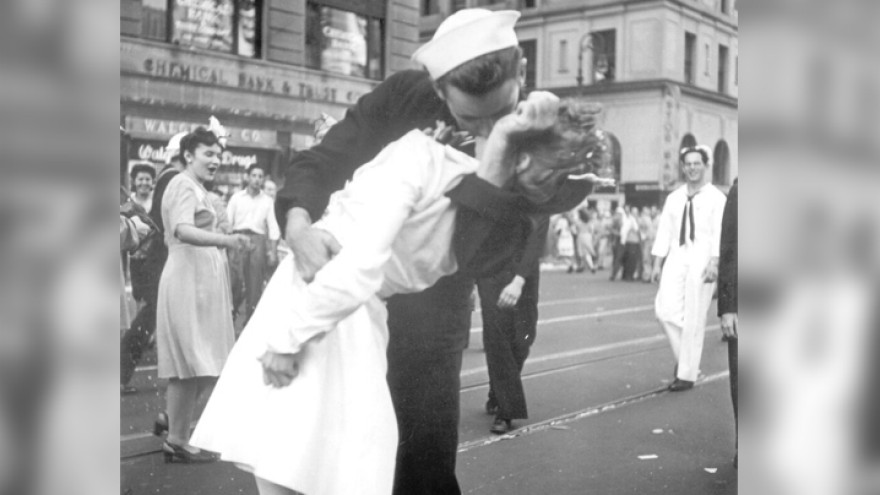

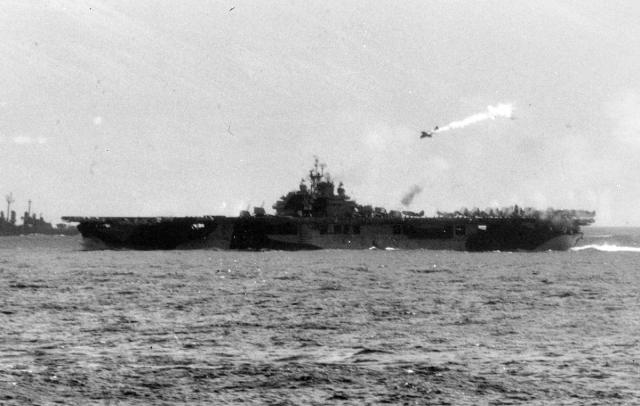
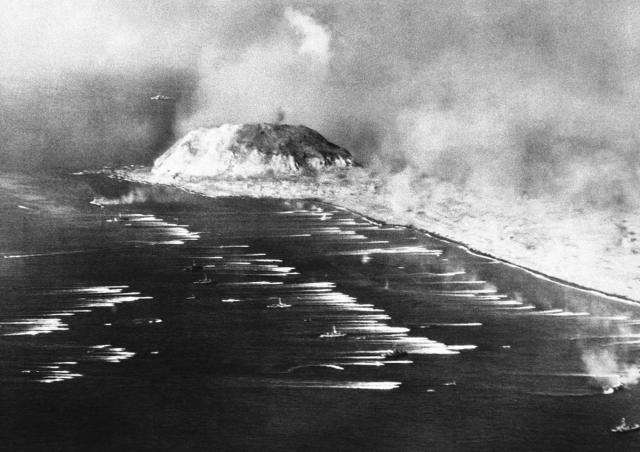
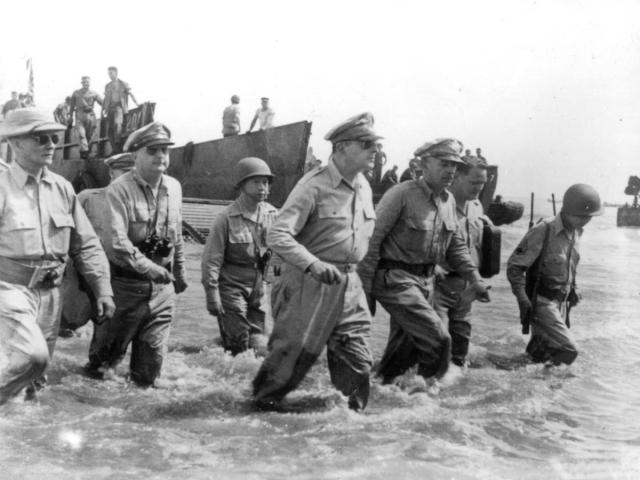
 We heard much about unfamiliar places like Guam, Iwo Jima, and Okinawa. The fighting was fierce, often hand to hand. In Okinawa, for example, 12,500 Americans were killed, an estimated 100,000 Japanese and at least that many civilians. There must have been more newsmen imbedded in the Pacific as I recall viewing more footage in the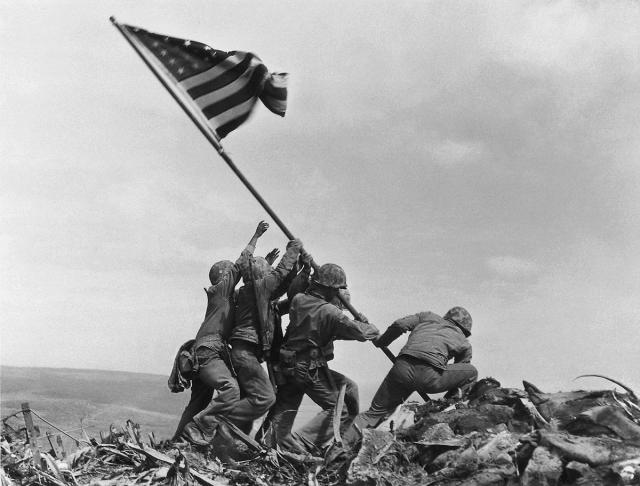
 There is little doubt in my mind that the war was an additional impetus for opening up opportunities for women. After all, it had been barely 20 years since women were granted the right to vote. Although they continued to be treated unfairly in many ways, they were at least given the opportunity to demonstrate their ability to do “man’s work.” It was inevitable that with the incredible expansion of manufacturing for the war effort coupled with the problem of 16 million men serving in the armed forces, there would be a shortage of manpower. One answer to the problem lay in the attempt to recruit women to leave the kitchen and go to work to support the war effort. There were posters glorifying “Rosie the Riveter” showing an attractive young woman working on an airplane assembly line. As I mentioned previously, my mother was a Rosie who seemed happy to return to her kitchen after the war.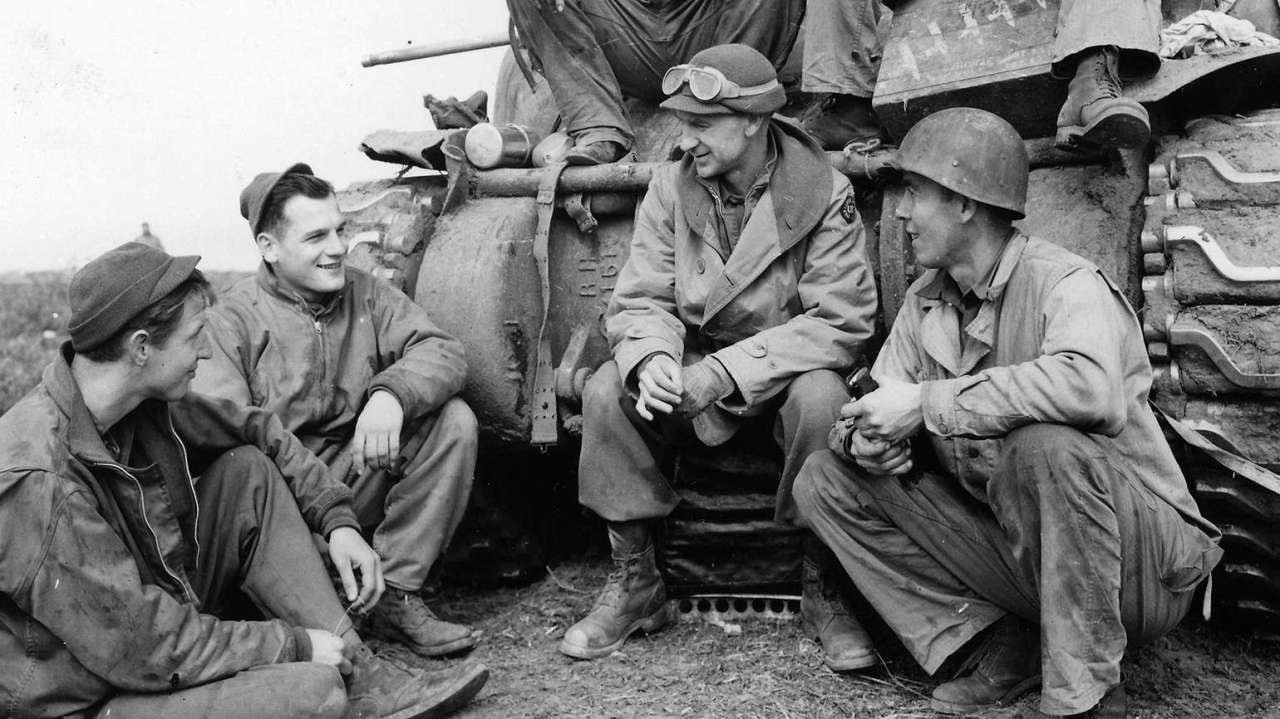
 Several of our ships had been sunk, but there was no accounting yet of the number of casualties. I went upstairs and laid across the bed aiming my brother’s 44-40 Winchester at our backyard vowing to take out any of those slant-eyed devils who might show up.
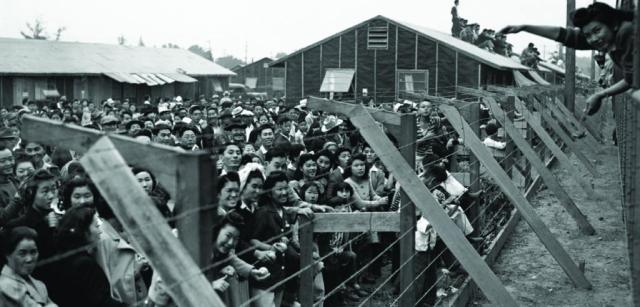 Many years later, I would come to know a fellow physician who had begun his life in one of the internment camps. He had little memory of the experience, but told how his parents and grandparents had owned valuable land in California that was sold for taxes while they were interred. They came out of the camp destitute.
 “Rosie the Riveter” was hailed as a heroine. Factories were in need of more employees as most began running three shifts. The word was that there was big money to be made in the defense plants sometimes as much as a dollar an hour. This got Dad’s attention besides, they needed him in the war effort since he was too old to serve so he quit his man killing job, and went to Akron where he went to work the second shift at the recently built (in record time)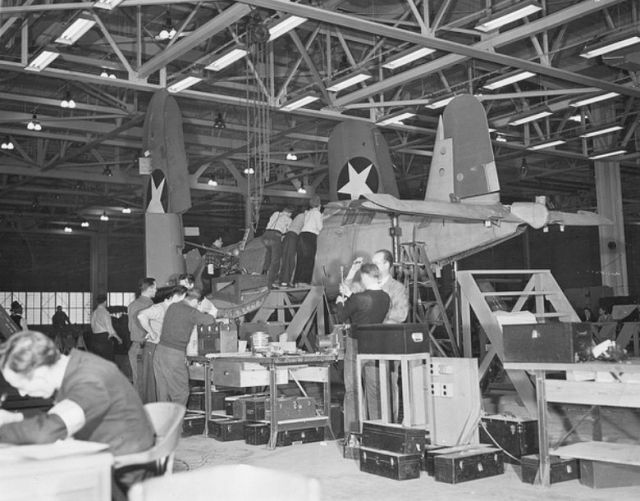

 Many had the same idea as Dad and housing was very scarce, but he found two rooms behind a barber shop on the south side of Akron (not exactly a posh neighborhood) and called for us to come join him. Mom got a job on the same shift doing some clerical work, and even my brother, who had just turned 16, worked there filling vending machines throughout the plant. Schools were so crowded that classes were only held in two four-hour shifts per day. Initially, I enjoyed the solitude of being home alone. I was able to spend my evenings in the darkened barber shop watching the occasional fights outside the beer joint across the street. I even had free reign to sample the many hair tonics. School in Akron was a bummer. There was a lot of racial tension largely due to a an unusual number of southerners who had migrated north to cash in on those high wages, and were unaccustomed to dealing with uppity black folks.
 After covering the European theater, he moved on to The Pacific and was killed by Japanese machine gun fire. Of those who commanded our rapt attention on the radio, the most famous was Edward R. Murrow, who broadcast from London during the Blitz.
  He recorded his experiences on multiple bombing missions over Europe, and at times one could hear the sound of anti-aircraft. These flights were not without danger…over 2,000 planes were lost prior to D-Day, according to war department records. After the war, Murrow made the switch to television once that new medium was introduced.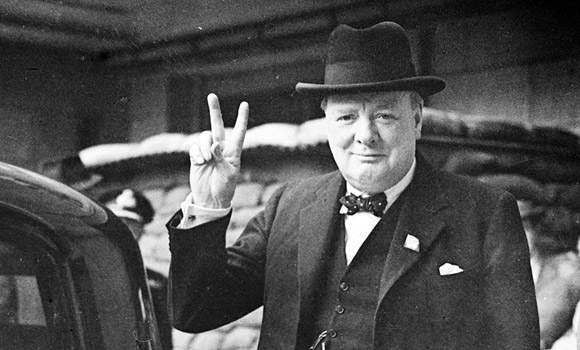
 Editor’s Note: THANKS for reading! Stay tuned for the next installment where Eshrink walks us through the turning point of the war…spoiler alert (the good guys won!)
 eshrinkblog