WHO’D A THUNK IT?

REFLECTIONS

Reunions are times for reflection, and my medical school class reunion is soon. There has been much to reflect upon, as 60 years is a long period in one’s life even though it is a microdot in the history of mankind. There have been hundreds of thousands of personal experiences during that time, all of which have enriched my life, and indeed I have been blessed.

In addition to those times with patients, I have witnessed momentous changes in all aspects of medicine. Things that were undreamed of during our student days are now routine and taken for granted. Newly invented diagnostic procedures are more efficient and precise. Scans have replaced many previously unreliable and time consuming tests. Antibiotics were invented. Vaccines virtually eliminated many serious illnesses. Now, no mother would hold her child in her arms while watching it die of diphtheria as did my grandmother, and there are few doctors left who have ever seen diseases so common in our day that they were accepted as a normal part of life.

While we were still in medical school, anti-depressant and anti-psychotic drugs were marketed, and within two years, 70% of state hospital patients, many of whom would have otherwise spent the rest of their lives in institutions, were discharged. Cardiologists who were limited in their treatments by very few medications now actually are able to visualize occluded coronary arteries and unplug them by sticking a catheter through the heart and into the coronary arteries, much as your plumber opens a clogged drain. Even more unbelievable was the idea that organs, especially the heart, could be transplanted. If that isn’t ghoulish enough, now there is talk of manufacturing organs from stem cells. And we must not forget, like it or not, this is the digital age, and computers have become an indispensable tool in all aspects of medicine, with even robots now entering the picture.

One day many years ago, during my internship, I found myself assisting in surgery to repair an abdominal aortic aneurysm, the first such surgery to be performed in the state of Ohio. The body’s largest blood vessel was in the process of bursting, and the patient was brought into the OR literally screaming in pain for which massive doses of morphine had no effect. One of the nurses was kept busy wiping the sweat from the surgeon’s brow to prevent it from dripping into the abdominal cavity as he worked. After 6 hours and gallons of blood, the patient died on the table, and the surgeon was barely able to make it to the dressing room, totally exhausted. Today, that procedure is routine and can sometimes be done without even opening the abdomen.

IS IT ETHICAL?

As is the case with most major scientific achievements, there have been many unintended consequences, and we are confronted with ethical questions, most of which have no acceptable answers. There are all those end-of-life dilemmas such as when to “pull the plug.” In my day, death was the enemy, and we considered ourselves ethically-bound to preserve life at all costs. Death was defined as lack of a heart beat, but with life support systems now in general use, it is possible to keep a heart beating indefinitely. Today, families are faced with the heart rending chore of agreeing to the withdrawal of such support. I have seen family members whose grief is compounded by the irrational belief that they were complicit in their loved one’s death. This problem has found a solution through asking patients to sign notarized documents promising to die appropriately and in a timely manner.

On the other hand, our newly found technology may preserve a life of pain and suffering and leave the physician to question the preserve-life-at-any-cost dictum. This has contributed to a newfound focus on “quality of life.” As a consequence, there are now five states permitting physician assisted suicide. We old fashioned guys and gals were bound by oath and a code of ethics to always do our utmost to save lives and never, under any circumstances, to end them. Although, there were undoubtedly occasions when a physician may have been overly generous with his doses of morphine for a patient who was finding it difficult to die. I suspect a similar treatment plan is often used in the terminal stages of hospice care today.

It is not surprising that these changes have generated controversy. There are those who feel dying should remain in the hands of God, and to violate the sanctity of life, no matter the rationale, is a most grievous sin and should be illegal. Strangely, some of those same people may feel that capital punishment is justified. There is also the argument that to accept assisted suicide is to go down a slippery slope from which there may be no return. Proponents of that position are not impressed with the safeguards put in place to prevent it being misused e.g. for depressed mental patients or for those elderly infirm people who are made to feel they are a burden.

MO’ LIFE MO’ PROBLEMS

The successes of medicine have also been responsible for cultural and political problems. There have been remarkable increases in longevity. During my lifetime, life expectancy has increased nearly 20 years in spite of the adoption of unhealthy lifestyles by many of us. This longer lifespan has contributed much to the current problems with social security as the actuarial tables, used at its inception in 1935, grossly underestimated the increase in lifespans. A longer lifespan allows some to outlive their savings, resulting in the creation of “sandwich families” where parents find themselves caring for both their children and their parents.

It has been well documented that healthcare expenses increase drastically as a population ages. A Kaiser Foundation study reports that the average person’s medical expenses double at age 70, triple at 80 and increase five times at 90. It seems likely that the future will see the average person living even longer, and the problem will be compounded by all those baby boomers joining the ranks. It is little wonder that the bean counters are predicting a major crisis for Medicare. It is enough to make an old person like me apologize for living so long.

OUR MOST COMPLICATED FIELD

Of all the accomplishments in medicine, none holds more potential for raising ethical, moral, and religious questions, while at the same time promising the elimination of some of our most terrible diseases as does the field of genetics. The sequencing of the human genome was completed in 2003 after a 13 year period of collaboration by scientists worldwide. It was made possible by the development of extremely powerful computers, which were able to compile the huge amounts of data needed to identify and catalog the billions of DNA connections present in our genes. This has been hailed by many as the greatest scientific achievement of all time with the promise to unlock many of the secrets of life.

586fcd1d9a668_genoma

This research has made it possible to identify the location of mutations responsible for many of the inheritable diseases, and now, even more remarkable, a procedure called CRISPR (an acronym for a string of big words that I couldn’t remember even if I tried) makes it possible to actually remove a portion of DNA from a gene and replace it with DNA which has not been corrupted by mutation. With the repair completed, the condition can no longer be passed on to the progeny. The unraveling of the make-up of the genome promises to result in discovery of many genetically influenced diseases and further our understanding and elimination of those illnesses that “run in the family.”It is also possible to use CRISPR to modify the genetic make-up of bacteria and trick them into becoming friends rather that attackers. There seems little doubt that these discoveries will revolutionize the practice of medicine and further increase human longevity.

MORE THAN MEDICINE

Genetic manipulation of this sort has been found to be useful in a variety of areas other than medicine, including chemistry, biotechnology, and the life sciences, but the development of genetically modified foods seems to have gained the most attention and criticism. Nineteen European countries have banned GMOs, apparently out of fear that some botanical Frankenstein monster might be created, thereby refuting scientists’ reassurances of their safety. Other experts insist no danger exists and point out that we have made changes to the nature of living things for a long time with a methodology both cumbersome and lengthy.

Since the Stone Age, man has used selective breeding to modify the genetic make-up of both plants and animals. Witness the number of breeds of dogs we have, all of whom are direct descendants of wolves. On the botanical side, it is said that corn evolved from a Mexican weed with a seed pod smaller than your finger, which, thanks to the selective breeding initiated by Aztec farmers 9,000 years ago, we now have a plant which is said to provide 21% of the world’s food. Production of desired changes by this process is time consuming, often requiring hundreds or even thousands of years. Now, there is the potential to produce those changes in a single generation. There are already instances in which resistance to drought, disease, and pests have been accomplished.

LOOK OUT SEX ED

Many say that the genome is a “blueprint of life,” and as such it does seem that caution is in order before beginning to tinker with it. It is theorized that it will soon be possible to have “designer babies,” who can be ordered with whatever characteristics that are important to the parents. Imagine what Hitler could have done with the help of CRISPR in his zeal to develop a master race. Since there is no aspect of a person that is not designed and controlled by genes, the changes which could be accomplished are limitless. An even spookier thought is the possibility that life could be created by man. After all, DNA has been synthesized and is readily available, and it is deemed possible to construct a synthetic gene. If the construction of one synthetic gene is possible, why not an entire genome?

TECHNOLOGY AGE

As with almost everyone else, I have dived headlong into this “Brave New World” of digital bliss. In a previous blog, I commented on warnings about artificial intelligence by a few guys who know about that stuff, and I also wrote about the replacement of people by machines. There has been speculation as to the effect of prolonged viewing of violent video games on kids, and recently evidence has been collected that kids’ attachment to their cell phones has all the qualities of addiction. I have also witnessed the birth of satellites, the internet, social media, space travel, atom bombs, jet airplanes, GPS systems, robots, television, and computers, to name few of the awesome things developed in the relatively brief time I have taken up space on this planet. Those few years have produced more advances in science and technology than happened through all of history. I am impressed and a little scared.

The ability for society to take advantage of all the marvelous achievements of our day without destroying itself, in my opinion, should be job one. It appears to me that our young people are strongly encouraged to learn technical skills and seek an education focused on math and science. Granted, there is great need for such occupations. Consequently, they are lucrative, but there is an even greater need for those who can view these changes from a distance. In that vein, I believe there has never been a greater need for a liberal arts education, yet it seems few share that view. We need philosophers, theologians, historians, artists, poets, writers e.g. professions not directly immersed in high tech stuff. I believe it is more important to know where we are going than how to get there. This is especially true during this time when events are changing so rapidly that there is hardly time to contemplate unintended consequences.

In medicine, when a new procedure or treatment is prescribed, physicians are taught to do a risk-benefit assessment. That is based on the premise that body parts are all linked together, so any changes in one organ are apt to result in changes somewhere else. In the case of the burgeoning technology which threatens to overwhelm us, I believe that it is important for those knowledgeable, but not directly involved in the research, to do risk assessments, also, in order to predict some of the side effects of technology. These ideas should be debated and become “Breaking News,” and perhaps even receive as much coverage as the rescue of a dog who fell into a well. In medicine, we have the FDA, which regulates drug and equipment development, but all that digital stuff, which I don’t understand, garners no press until it is out there, undoubtedly doing both good and bad.

Perhaps the greatest challenges facing generations to follow lays not in developing new technologies, but in learning to control those from mine.


Note from the editor: In case you were wondering, CRISPR stands for Clustered Regularly Interspaced Short Palindromic Repeat.
THE HERD MENTALITY PARADOX

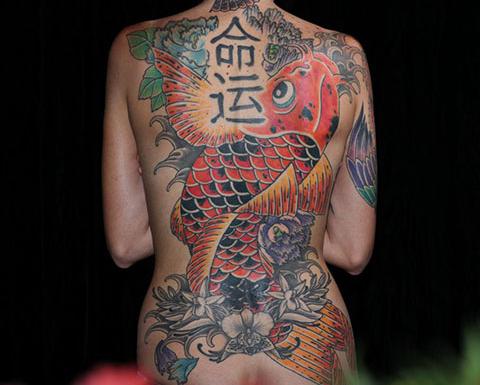
Tattoos have become quite popular lately. The pallet available to the artists is rather limited. Since blue is not my favorite color, the products I have seen of their labors are not things I would want to hang on my wall or my body. Nevertheless, some of these guys produce remarkable drawings. I am not familiar with the tattooing process so I don’t know if the images are sometimes traced, but it is obvious that some are drawn freehand by people with talent.

THE HISTORY OF TATTOOS

My extensive research into this subject consisted of a brief look at Wikipedia, where I was surprised to learn that tattoos were found on the body of “the Iceman” (the five thousand year old mummy discovered in a glacier). I don’t have a tattoo; although it might not be a bad idea for we old codgers on the brink of senility to have our names, addresses and phone numbers tattooed on our person. It works for cows. A similar system was used on victims of the holocaust, i.e. an ID number was tattooed on their forearms, so even their identity was taken from them.

WHAT DO CRIMINALS AND SAILORS HAVE IN COMMON?

In my earlier days, tattoos were not cool nor even respectable. They were mostly associated with sailors and criminals. I have no idea how the tradition came about with sailors, but it was common for their visits to a foreign port to be immortalized by getting a tattoo, although body art was taboo for naval officers. When I was in the Navy many years ago, one of my patients with tattoos on both forearms approached me about having them removed. He had enlisted when young, had progressed through the ranks and had eventual become a commissioned officer. Summer whites had recently become less formal with short sleeves, and he was desperate to have his tattoos removed, a nearly impossible task in those days.

I wonder how today’s tattooed will feel when the fad runs its course, and they are stuck with unfashionable drawings on their bodies. I understand that there are now procedures to remove tattoos via lasers, but the process is slow, painful, and expensive. The good news is there should be job security for dermatologists in the post-tattoo era.

THE HISTORY OF PIERCINGS

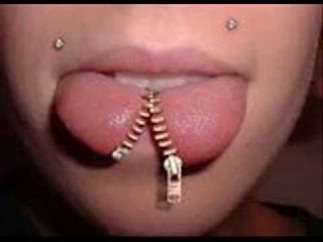
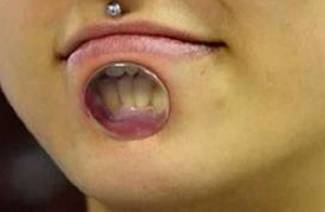
The idea of punching holes in one’s skin in order to hang jewelry on one’s body is likewise an ancient practice, as Ötzi the Iceman was also found to have pierced ears in addition to his tattoos. Earrings were also found on a few several thousand year old mummies. The practice of piercing ears was resurrected in the middle of the last century, and is now perfectly acceptable having previously been seen as barbaric. Throughout history, there have been piercings of protruding body appendages for various reasons, including religious or spiritual.

cropped-cropped-kolo

They also may represent a need to conform to one’s culture, or to rebel against it, as seems to be the case with many of our younger generation. Contrarians may actually think a ring hanging from a nose, lip, tongue, navel or other less visible structure may have an aesthetic value, but an old fogy like me is likely to be repulsed.

WHY?

Whenever I see a body adorned with drawings, writings or hardware, the first question that comes to mind is….


hqdefaultteeth-view-piercings


WHY? WHY? WHY? WHY?

If the purpose is to gain attention, it is effective as I find my gaze fixed on the body art, but not the rest of the person. Could it be that rather than drawing attention toward themselves, they are actually diverting it away? Is the message “look at me” or “look at what I have done?” Prison tattoos are recognizable by their crudely drawn images often announcing to the world that they are a “mean motherf*****.” Others may be sending a message as to who or what they are or what they believe. Perhaps there are as many reasons for this need for body decorations as there are people who do them. Whatever the reasons, it must satisfy some basic human need as it has been embodied in cultures throughout history and beyond.

MAKEUP: THEN AND NOW

Some cultures have been able to satisfy their longings for ornamentation by using less permanent procedures by simply painting the surface of their skin. Makeup, like other ways to change or enhance appearances, has been in evidence for at least three thousand years; although, there appears to have been something of a hiatus during the Elizabethan years. With the arrival of the Flapper Girl in the 1920s, modesty took a hit, and the sexy look was in. You may recall that your Grandmother (OK you young whippersnappers think Great Grandmother) did not use any makeup.

019216f9174669b3322a4453b5cf7831-flapper-makeup-makeup-s
I recall our family being visited by an aunt from the big city when I was a kid. I noticed right away that her lips were very red, cheeks were pink, her eyelashes long, and when she sat I could see her knees. I thought she looked great (had I known what it meant I would have thought sexy), but her brothers and sisters all said she looked like some kind of “floozy.” Today floozies must abound, for the US cosmetic and beauty products industry raked in 64 billion dollars last year.

Although women seem to be concerned about their body image and prefer an idealized weight and form, their primary focus seems to be on integument (hair, skin, and nails). I recall my shock the first time I saw a woman with painted toe nails. I was accustomed to painted fingernails since they had been common since the nineteen twenties, but to paint one’s toenails was really far out and innovative. Now, I find the Chinese had been painting theirs for at least three thousand years. That scenario seems to characterize the circular nature of fashion trends, and it lends credence to the idea that “there is nothing new under the sun.”

THE BUSINESS OF BEAUTY

There is little doubt that when it comes to personal appearance, women spend the most time and resources on hair, either grooming or removing it. The hair salon industry brings in 20 billion dollars per year. The phonebook in my town of less than 30,000 people lists 45 beauty salons. In addition to maintaining an acceptable coiffure, there is also the removal of unwanted body and facial hair. In the sixties, some of the more dedicated feminists refused to shave their legs. Until then, I had no idea that women grew hair on their legs; although I should have realized that pink razor in the shower was used for something. Waxing assures that even stray strands of fuzz on the face is eliminated (for some reason, it is OK to shave legs but never the face).

The female perception of the status of her scalp hair appears to effect drastically her sense of self, mood, and confidence, consequently requiring her rapt attention. A bad hair day can mess up everything; conversely, the standard comment, “I love your hair,” is the ultimate compliment. Today’s long hair styles must require even more time and effort in order to remain beautiful and preserve self-esteem. In some cultures, hair seems to have some sexual connotations, for women are required to cover their heads in much the same manner as we insist women cover their breasts.

MEN’S “BEAUTY” PREOCCUPATION

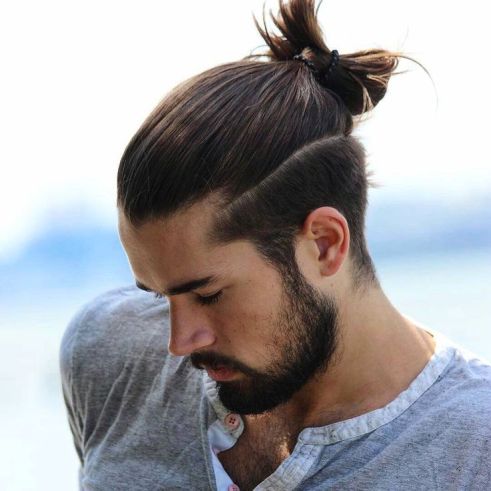
Contrary to conventional wisdom, it may be that men are more preoccupied with hair than the opposite sex. Perhaps it is a sign of our country’s disarray that there are so many ways for men to deal with the hair on their heads.

man-bun-shaved-sides

There is long hair, short hair, no hair, dreadlocks, ponytails, pigtails, and the most recent version of the obnoxious: the so-called “man bun.” There are also those deliberately designed to wig us out like the mohawk or spiked versions. Shiny hair is out, but in my day no man’s closet was complete without a bottle of Brilliantine. The recent trend of shaved heads should offer an honorable solution for those troubled by male pattern baldness, certainly more sensible and convenient than wearing one of those awful looking rugs.

In my day a hairy chest was something of which to be proud, signifying masculinity, now I am told some men actually shave their body hair. What could this world be coming to?

FACIAL HAIR HAS ALWAYS PRESENTED A PARTICULAR PROBLEM FOR MEN

A full beard could become a repository for the part of lunch which missed his mouth. In times of hand to hand combat, it could also put one at a disadvantage by providing another object to grapple. There seems to have always been some indecisiveness about how much to remove.

In 1901, Mr. Gillette marketed the safety razor, which greatly simplified the process of shaving. Though some, including my grandfather, still preferred the straight razor. Every Sunday afternoon grandad stroked that wicked looking instrument several times over the leather strop, which hung in the kitchen over a wash pan, and he proceeded to lather his face with a soft bristle brush. I was old enough to realize what the phrase “sharp as a razor” meant, so I was transfixed as he deftly scraped a week’s growth of whiskers from his face.

808c8e23f8834c8a8f18ee0ac71f3007

These days, I note some men sport a few days of “scruff” much as did grandad, but then 16 hour days left little time to work on being pretty. Even so, beards were uncommon in those days.

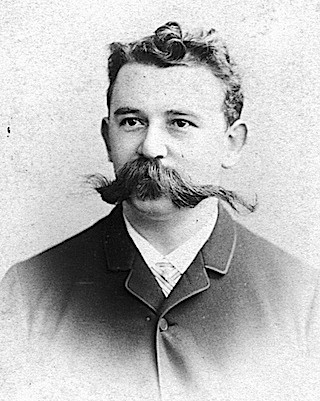
My great uncle had a magnificent handlebar mustache which sagged sorrowfully at the ends during the week when it was saturated with sweat, but perked up with his Saturday night bath, and a tad of beeswax. Now, there seems to be much less consensus as to dealing with facial hair. Just about any type of hirsute sculpting seems to be in play these days. Maybe there aren’t enough role models available these days, or could it be that some are feeling more comfortable risking escape from conformity. I tried a mustache several years ago, but Barb threatened dire consequences if I didn’t remove it. Since retirement, I have become a devotee to the scruff movement of sartorial splendor which she tolerates, unless we go someplace where I will be seen. I have always disliked the idea of shaving every morning, but, like grandad, I still shave at least once a week whether I need it or not.

FASHION POLICE

Since I have already violated the Maggie rule to “keep it short” (I suspect this is particularly applicable to the stuff I write), I will not attempt to take on the subject of women’s clothing fashions. Suffice it to say I have witnessed hemlines rise and fall with great regularity through the years. Likewise, I have seen cleavages appear, disappear, then reappear, and I am still amazed at the ingenuity of those who have been able to produce so many different breast profiles. There have been corsets, nylons, pantyhose, bobbysocks, saddle oxfords, short heels, long heels, extralong heels, shoes of thousands of different designs, and even knee-high boots. There are an infinite number of ways they have found to cover their bodies, and conversely to exhibit their bodies. There is the bikini bathing suit (named after the atoll which was used to test the hydrogen bomb), and as a gift to we lecherous old men we now have skin tight everything. Unfortunately, short shorts have now become short enough to nearly reach the danger zone. Some women even cut holes in their jeans apparently in order to show some skin. I recall reading somewhere that women dress to impress other women rather than men. If that is the case there are some unintended consequences, for they certainly get this old man’s attention.

Although men also get sucked into being told what they should or should not wear, changes in men’s fashion do not occur as rapidly as they do with women. For the past 40 years, a box of neckties has resided on the top shelf of my closet, waiting to be resurrected when wide ties once again become fashionable. Hope is waning as ties seem to have changed little in recent years. I seldom wear a tie anymore, and more guys are going barenecked. If neckties are on their way out, it is not a great loss, as they were not very good at keeping necks warm anyway. Our dear President has introduced a new style of necktie which, although of standard width, is long enough to obscure his fly. I see no signs that it is catching on so far.

In my lifetime, I have witnessed the rise and fall of zoot suits, leisure suits, bell bottoms, white bucks, wingtips, loafers, argyles, suspenders, felt hats, paisley prints, madras shirts, knickers, car coats, pea coats, and trench coats to mention a few things absolutely necessary in the wardrobe of any well dressed man at various times. I recall the time when I would not dream of leaving the house without a key chain fastened to my belt which was draped down to my groin and into my right front pocket. It mattered little what was on the end of that chain if anything, but no thinking man could consider himself fully dressed without it.

WHEN THE DESIRE TO BE DIFFERENT TURNS INTO A FAD

(HATE IT WHEN THAT HAPPENS)

Of course my original question, “Why do we do all this?” does not have a ready answer. In some cases, hero worship or a desire to emulate someone admired probably plays a part. It may be to separate oneself from the herd in order to be noticed or to protest its rules.

stop-wearing-backwards-hats

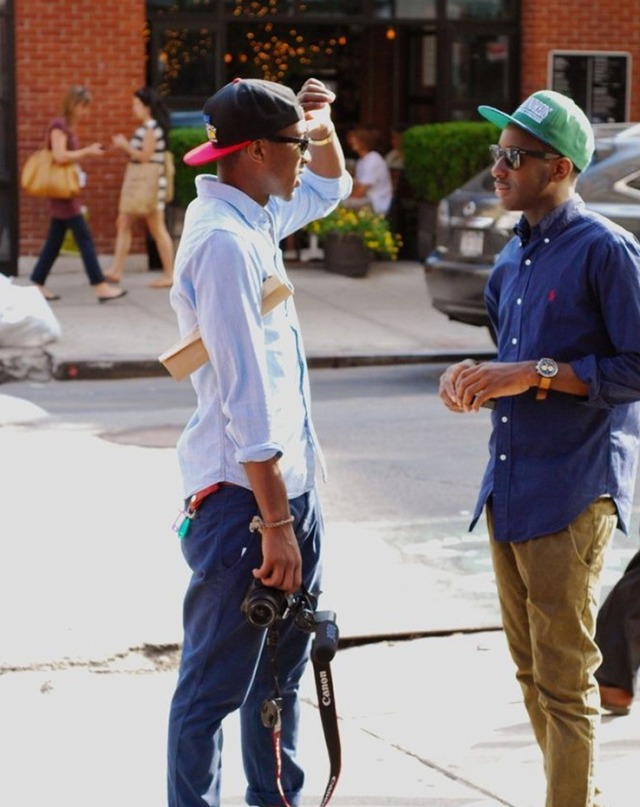
A recent example I have noticed is with the issue of baseball caps worn backwards. Baseball caps are a uniquely American invention devised to keep the sun from player’s eyes. To wear them backwards obviously defeats their purpose, but this was also initially seen by many as a defiant gesture. It is true that with the invention of the catcher’s mask it was necessary for the catcher to turn his cap around; however, it seems unlikely that our unwitting trendsetter who was the first to turn his cap around identified with baseball players. Little did he know that this simple gesture would be copied by millions of young people, thus a trend came into being which had nothing to do with its original meaning. Perhaps as backward facing ball caps no longer attracted attention, he was forced to move on to extremely baggy pants riding low on his hips and poised to drop to his ankles.

A friend who grew up in Africa and was educated in England told me that his first impression of the U.S. upon moving here was the rate of change. He felt that we were never satisfied or content, and that as soon as we achieved something we promptly set out to change it. It seems to me that this is even more true now that our digital world functions at warp speed. This may have some positive if it is responsible for fads like baggy pants to pass quickly.  This characteristic would also seem to benefit the fashion industry, allowing them to cycle from being in style to obsolescence rapidly.

We are by nature herd animals. We have survived and thrived by banding together in groups large and small.

As a member of our species, we face an existential dilemma. We have a basic need to conform in order to remain a member of the herd, while at the same time retain our individual identity. We want to be included, but we want to be noticed, to be the same but different. This is exemplified by the woman who, when choosing what to wear, wants something which is “in” but would be mortified were she to attend a social function and find someone wearing the same dress as hers.  We have an idealized image of what is a beautiful body which few of us inhabit; consequently, we attempt to hide our flaws and display our assets. When one is able to achieve those goals without violating societal norms, she is deemed fashionable.

BEAUTY IS IN THE EYE OF THE BEHOLDER

I am of the opinion that the human body is beautiful, that is before we set out to defile it with our bad habits. It is true that beauty is in the eye of the beholder, but this beholder sees much of attempts to enhance its appearance as a travesty resulting in things which are unattractive or even repulsive. I am left wondering if the cute little girl with the ring in the septum of her nose who served me coffee the other day is convinced that hardware enhances her beauty. There is something to be said for accentuating the fine points of that which is beautiful. One of my avocations has been to frame pictures, paintings and such. There were times when the mat and frame chosen brought the subject to life and it was transformed to something one wanted to look at. That was very satisfying. The ring in that little girl’s nose didn’t do that for me. There is no way for us to know what she saw in her mirror. It could be that she saw something beautiful, so who am I to judge?

CONFESSIONS OF A RECOVERING MALE CHAUVINIST

Much of my life has involved trying to understand people.  Since more than half of my patients were females, it follows that I should know something about women by now.   Unfortunately there is that gender barrier which makes it difficult for me to put myself in their shoes, both literally and figuratively.  Even though I feel I must have learned something after all those years, I identify with Freud, who allegedly said that after all his years of study, women still remained a mystery to him.

In my case, the problem was made more difficult because I had no sisters. As a child, I viewed girls as fragile little flowers who must be protected by those of the opposite, stronger and more sensible sex.  Although some admittedly showed signs of intelligence, I thought their inherent sentimentality impaired their ability to make rational decisions.  At that time, there were already signs that this societal norm was fracturing in spite of a great deal of male resistance.  For example, the right for women to vote was still viewed as a big mistake by many.

RESPECTED OR DEVALUED?

Since I grew up as a compliant, conservative midwesterner, I was naturally compliant with the rules I was taught about girls.  Consequently, I learned to open the door for them, not to swear in front of them, and never ever to strike or physically harm them in any way. This latter admonition was considered to be not only unfair due to man’s superior strength, but unmanly, and manliness was all important for almost all boys, and still is for most of us.

At about the age of five, I learned all about the anatomical differences between girls and boys from a very worldly 12 year old distant cousin.   Detailed exploration of her physique proved beyond a shadow of a doubt that we were anatomically different.  The experience did explain why my mother frequently chastised my brother and I for not lowering the toilet seat.

In the old days, boys got most of their sex education from locker room banter, which was, as you might suspect, not always accurate; needless to say, I entered medical school not nearly as sophisticated in such matters as I pretended to be.  We learned a lot about the anatomy and physiology of women but not much about the experience of being a woman.  During our clinical rotations, we were privileged to participate in the treatment of women, the treatment of their family members, and the birth of the women’s children.  It was heady stuff.  From there, it was on to a stint in family practice and eventually to psychiatry, where there was not much emphasis on the study of the differences between the male and female psyche.

WHERE THE RUBBER HITS THE ROAD

It was by living with a spouse and three daughters that I began to understand a bit about how female brains work.  From the beginnings of their lives, it was clear that the girls were more prone to outward displays of emotion than their brother.  Based on a totally unscientific study of these four kids, I remain convinced that the differences were present at birth.

Some have suggested that the female’s nurturing instinct is simply a learned behavior, for one would not expect to see significant hormonal influences in toddlers. Yet I believe I have seen evidence of such behaviors very early in my daughters’ lives, which leads me to believe female brains are hardwired for nurturing.  Indeed, the job of nurturing is done without training by females throughout the animal kingdom, so why would we expect Homo sapiens to be any different?

NO WONDER I AM A SUCKER FOR GADGETS

In his book, The Essential Difference: Male and Female Brains And The Truth About Autism, psychologist Simon Baron-Cohen concluded that boys and girls exhibit different behaviors at birth.  Female babies were noted to pay more attention to social stimuli, such as human faces or voices; while boys were attracted more to nonsocial, or spatial, stimuli, such as the movement of a mobile above his crib. Baron-Cohen concluded that these traits will persist as these babies grow into adulthood because male and female brains are wired differently.  Additionally, the use of modern scanning technologies shows great promise toward the enhancement of our understanding of such differences.

REAL MEN DON’T CRY

It has long been said that females are more sensitive to others’ feelings and, therefore, are more empathic than men.  This does not mean that men are devoid of empathy, but that their empathy is perceived differently.  Researchers have identified two different kinds of empathy which they call affective and cognitive.  Affective empathy actually involves experiencing another person’s feelings and is more common in women, while cognitive empathy, characteristic of men, is triggered by imagining oneself in the same situation.  To feel sorry for another’s misfortune is different from actually experiencing his or her sadness.  In light of this, it is safe to say that when a woman says “I feel your pain,” she actually means it.  Likewise, she will also be capable of sharing in your joy.  A survey of the women in my life has confirmed this phenomenon exists, and they gave examples of situations in which their ability to function was affected from sharing a friend’s grief.

As women strive for equality, there has been an effort to minimize the differences between genders, which has led to serious debates and questioning of conventional wisdom.  It could be characterized by the lyrics of that song in the 1950 musical film Annie Get Your Gun: “Anything thing you can do, I can do better.”  In one definitive study, a large group of students in the grades 2 and 3 were given tests designed to measure empathy, then retested when they had reached an average age of 14.   The results verified the hypothesis that the girls were more empathic than the boys, especially on the affective scales.  Moreover, the difference that was present at the younger age increased as the children grew older.

FOLLOW THE MONEY

These days, if one wants to learn about human behavior, he needs only to look at marketing research, for these people know more about us than we know about ourselves.  The power of the internet has allowed them to accumulate massive amounts of data which has been used to chronicle much information about both individuals and groups.  One such treatise on the subject confirms “that there are inherited differences between… the way men and women think, perceive, and remember information.”  It goes on to say, “Girls watch faces. Boys watch objects.”

The authors conclude that “segmenting by gender is crucial if businesses are to make their websites more enjoyable and profitable.”  One might conclude that if the bean counters think it, then it must be true that men are really from Mars and women from Venus.

IT MIGHT GET STICKY

That these differences exist makes perfect sense from an evolutionary point of view since the talents of both sexes allow them to function at a high level when performing the specialized functions required of members of traditional families.  Nevertheless, it is true that times are changing, and those roles could change as technology turns us on our heads.  We undoubtedly will see dramatic changes in our world, which will require many different kinds of talents.  In many ways, it is conceivable that these changes may result in role reversals that we now find difficult to imagine.  Many changes are already occurring, and I plan to ruminate further on the subject in my next blog.

Meanwhile, I very much agree with French experts who respond to comments about the disparities between the sexes with the phrase: “vive la difference.”

Conspiracy Theories

Throughout history there has been no shortage of conspiracy theories.  There appears to be no group of people who are immune to the acceptance of unproven explanations and stories which are often passionately embraced.  The theory that UFOs have made contact with us and that our government has kept it secret to avoid alarming the populace has remained intact for more than half a century.  Charismatic cult leaders have often used conspiracy theories as recruiting tools.  Imagined conspiracies can be used to excuse failures of all kinds, or as weapons to discredit or harm others.  Though most could be categorized as harmless gossip, some can have devastating consequences.

THIS STUFF IS NOT NEW

During World War II thousands of American citizens of Japanese and German ancestry were incarcerated due to an unfounded theory  that many had immigrated to the U.S. in order to become spies or saboteurs.  In the infamous hearings orchestrated by Sen. Joe Mccarthy in the 1950s, he insisted there was a vast communist conspiracy afoot to overthrow the government.  Many were accused of treason, which although unproven, left many lives in ruin.

The assassination of President Kennedy spawned a host of conspiracy theories.  Those named as responsible for the shooting included, Russia, Mexico, Fidel Castro, the Mafia, the CIA, and even President Johnson.  There was a successful movie rife with complex plots which legitimized the conspiracies in some minds.  The Warren Commission, which was assembled to investigate, was widely discredited by those with their own conclusions as simply another attempted cover-up.   The commission was appointed by Johnson, which raised the question as to their possible involvement in the assassination.  In such manner conspiracy theories spread and grow.

THE LATEST POLITICAL TALENT

Our new President is no stranger to conspiracy theories having served as the self- appointed promoter of the birther movement.  His continued drum beat that Obama was born in Africa, and therefore an illegal president provided him with a great deal of free publicity and support from the Obama haters.  He spiced up his climate change denials by adding the whole thing was a Chinese conspiracy.  During the campaign, he alluded to allegations of Clinton misdeeds of many years ago even mentioning the theory that they may have arranged for the murder of Vince Foster whose death had been ruled a suicide. He resurrected the old birther mantra when he learned Cruz was born in Canada, and when that did not gain traction, suggested that Cruz’s father may have been implicated in the Kennedy assassination.

His assertions that the entire democratic process was rigged, that the media were “all crooked” and should not be believed, and his questioning of the integrity of the justice system did little to “make America great again” but rather undermined his believers’ faith in our government.  We can only hope that their disillusionment did not extend to the questioning not only our government, but also our form of government for that type of thinking is what has led other countries down the path toward authoritarianism.

BELIEF MAKES IT TRUE

In politics, such stories are common, but in this election we have been bombarded with them.  In a previous blog I made mention of the phenomenon of confirmation bias which results from our tendency to accept as true, information which is consistent with our own beliefs.  I have since happened onto an article that addresses the problem in great detail.  A study by a group  of Italian sociologists led by a Dr.  Quattrociocchi (no I can’t pronounce it either) followed the Facebook reading habits of over 1 million of their countrymen, and their paper confirmed what had always been suspected, but with some interesting twists.

The results of their study titled ‘Inside the Echo Chamber” was published in the April issue of The Scientific American.  In this innovative study, they were able to separate readers into two groups – those who read scientific material versus those who were regular conspiracy theory consumers.  There appeared to be very little interaction between the groups i.e. the ones who read science rarely read any of the conspiracy theory material while the conspiracy theory aficionados likewise avoided the science websites, whereas both groups tended to communicate only with those of like mind.  It should not be surprising that those of a more scientific bent would be more skeptical of unsubstantiated theories.

Those of both groups were found to have wide ranging social networks in which opinions generally conformed to their own, but those who consumed conspiracy news spread it more widely, which may help explain how such stories go viral.  Of more concern was the authors’  conclusion, based on a yet unpublished study, that the so called debunking of a conspiracy theory actually reinforces one’s belief in it.  Such a conclusion does not bode well for the effectiveness of fact checkers in their job of correcting misinformation foisted on the masses.  As a matter of fact, attempts to correct “fake news” especially when pursued vigorously may simply convince the theorist that the conspiracy is wider than he thought since he knows that ordinary news sources cannot be trusted.

PARANOIA COMES IN ALL SIZES

This refusal, or perhaps inability, to question one’s beliefs is also seen in an extreme form in the minds of patients who are delusional and/or paranoid.  I do not suggest that all conspiracists are psychotic; however, any psychiatrist will confirm that it is useless to try to change the mind of those suffering from delusional thoughts.  Such efforts are likely be interpreted by the patient as due to your having been duped or that you are a participant in the imagined conspiracy.  That latter phenomenon is probably at least partially responsible for the relatively high risk of assaults and worse on mental health professionals.  The same phenomenon in milder form may also account for the difficulty of fact checkers to change minds.

IF JOE SAYS IT, IT MUST BE TRUE

The Media Insight Project  http://www.mediainsight.org/Pages/%27Who-Shared-It%27-How-Americans-Decide-What-News-to-Trust-on-Social-Media.aspx, a collaboration between the Associated Press NORC and the American Press Institute, did a well controlled study  that indicated people were more likely to accept information passed on by a friend as truth than if the same story came directly  from its original source.  This factor seems also to promote more rapid spread of information and its companion, misinformation.  They also note that Facebook was second only to TV as a source of news about our recent election. They state  Facebook is closing fast and predicted soon to occupy the number one spot.

Dr.  Quattrociocchi  states “conspiracy thinking arises when people find themselves unable to determine simple causes for complex adverse circumstances,” which I am convinced is too simple an answer.  People are curious by nature which has served us well in our quest to dominate the planet; however can also make us vulnerable to absorbing unproven explanations.  Oft times the mere mention of a half-truth may be enough to encourage us to fill in some blanks and come up with a plausible theory.   We like to know secrets about others but to divulge them is even more pleasurable.  Some call this gossip, and at times the process can be quite competitive.  Remember the school yard chant: “I know something you don’t know!” We pass on the information after securing promises that it will be kept secret knowing full well that it is likely to be passed on at the first opportunity.  The juicier the better for the more outrageous the more superior we feel.

GREAT SPORT

It is also true that conspiracies are interesting, sometimes even fascinating.  I for one am a voracious reader of spy novels and mysteries which of course are always rife with conspiracies, and I am certainly not alone in that.  Conspiracy theories are an excellent excuse for failure, and it is also useful to put them in play in anticipation of possible failure as in “the system is rigged”.  This strategy can not only help save face, but if one can actually convince himself it is true will leave his self- esteem undamaged in the event of failure.

Events surrounding our most recent election campaign have generated a great deal of interest in the use of such stories.  In a previous blog I talked a bit as to how the Russians and perhaps others have been able to use the internet as a tool to attempt to influence the outcome, and how its ease of access allows information of all kinds, real and  unreal, to be promulgated at little expense to large groups of people.  Although his participation  in those nefarious activities are unproven, we do know that our President has demonstrated considerable talent making use of stories about people, groups and institutions which are later proven to be without substance.

WHERE ARE THEY WHEN WE NEED THEM

People are by nature curious, and curiosity makes for fertile ground in which explanations real or imagined can be sown.  One would think that our President’s failure to be more forthcoming would elicit conspiracy theories galore.  Issues such as his tax returns , foreign business dealings,  the alleged Russian connection, etc., would leave one needing only to fill in the blanks left between what is known to produce juicy conspiracy theories of the highest order, yet surprisingly the opposition hasn’t to my knowledge come up with any Manchurian Candidate type conspiracy theories.

Will Rogers quoteWhile writing this rambling essay I happened on to a website featuring the political satire of Will Rogers, and was amazed to see how timely they are 100 years later. His comments about the effect of money, and untruths in politics lead one to believe that little has changed.   The quote in the picture I thought particularly apropos.  We could use the genius of a guy like Will Rogers today.

It seems clear that conspiracy theories will always be with us, for they appeal to many for a variety of reasons.  We can only hope that they will not be routinely fabricated in order to discredit a candidate for office.  The information highway is already fraught with so much misinformation that the ordinary voter finds it difficult to know the truth about a person or an issue. To paraphrase Jefferson, democracy cannot survive without an informed electorate.


PANTS ON FIRE: the truth about truthfulness

Since our fearless leader arrived on the scene, there has been much debate over the matter of truthfulness. Though the word truth may not be as fashionable as it once was, it is still used a great deal in everyday language. I have my own ideas about the definition of the word, but etymologists tell us language is in a constant state of flux. With that in mind I decided to look up the definition of the word to see if its meaning had changed during the past 80 or so years. It seemed to not have changed appreciatively since the day a few decades ago when I lied about throwing a hatchet at my brother.
The definitions of the word “truth” I found confusing in most cases; for example, one was “the quality or state of being true,”  which I did not find to be helpful. It reminded me of the meaningless cliche “it is what it is.” However, I was pleased to learn that some of the synonyms used george-washington-cherry-treefor truth, such as candor, honesty, and sincerity, are still associated with the word. Along with a few million other kids I was indoctrinated with the fable of George Washington and the cherry tree. The moral of that story was very clear that lying about the deed was as bad or worse that the deed itself. To that end when my father confronted me about a misdeed, and said “don’t lie to me” I soon learned that I was more likely to escape corporal punishment if I confessed.
 

Truthfulness in the “good ole days”

According to my recollection, truthfulness was highly regarded in those days; although there were situations in which lying was condoned. For example, horse traders, much as the used car salesmen of today, were famously expected to lie. In those days I am told that transactions involving horses were seen as a competition testing the ability of the buyer or trader to judge horses, and the rules about truthfulness were suspended. In most situations however; truthfulness was considered a virtue and liars were regarded as on the same level as wife beaters.
My indoctrination into those ideas about truth was successful, and I value them even today, although I must confess that I have transgressed a few times. In most cases I have rationalized by telling myself they are only white lies, minor exaggerations, or embellishments, and that there are times when truth can be hurtful. As a consequence, I tend to classify lies as to their size in order to excuse my behavior. However, according to the Smith classification, any prevarication uttered by the most powerful man in the world is a whopper with the potential of dire consequences for the entire world.

I Don’t Care if Trump Lies

With all that in mind, you can imagine my chagrin when I ran across an article in the January 23 issue of “The Daily Wire” titled 5 REASONS I DON’T CARE IF TRUMP LIES. It was written by John Nolte who had previously been editor of the far right web based Breitbart News which was also the former home of Steve Bannon, Mr. Trump’s advisor. Mr. Nolte justifies the lying by using “the old everybody does it” strategy we used in grade school by saying: “Politicians lie. That is what they do.” He goes on to say “In politics lying is a tactic, and if you don’t use that tactic, you’re screwed.” 19c05de8e57fda9170ee3a1e7a95e269How many times in history have we heard that. If indeed the most talented at lying have an advantage at the polls, it might explain why there appears to be so much dissatisfaction about the performance of our elected officials. Nolte is not so charitable with the major news outlets that he describes as “evil” due to their dishonesty, but assures us that “I will not lie.” Yes, I am sure George Washington would be pleased to know someone is following in his footsteps.

Fake News. Confirmation Bias. The Internet Conundrum.

4e6661deeb79365cf2ad34752f12c3f7The term “fake news” has been bandied about a lot lately, but that seems to me an oxymoron. If it is fake, it is simply a lie, certainly not news. No matter what it is called, the internet has become a fertile field for its growth. It allows any individual to send whatever lie he chooses with impunity to large numbers of people who are then capable of spreading it to others like an epidemic. The more outrageous or unusual the story, the more likely it is to be widely dispersed. The volume of such misinformation is such that there is something for everybody so that a person is more likely to believe something if it supports his own beliefs or prejudices, and discard that with which he disagrees. This has been called the confirmation bias.
As he continues to surf the web, he will be drawn to those sites, truthful or not, which confirm his beliefs. So armed, he becomes even more entrenched in his opinions and more unlikely to listen to alternative ideas. In my opinion this is one of the major contributors to our divisiveness. Unfortunately his conclusions may have been influenced by faulty evidence.

In an optimistic essay in the December 29, 2011 issue of the Atlantic, by Rebecca Rosen titled TRUTH, LIES and the INTERNET, she acknowledges that the internet is a repository for much misinformation, but comforts us by insisting “the internet has brought a golden age of Fact Checking,” and goes on to say “…..the good news is that the Internet is nurturing accuracy.”

So much for prophecies: here we are six years later with the development of wonderfully complex lie machines, which are not only capable of reaching millions of people, but can actually tailor their lies to appeal to certain groups or even individuals. In the face of such onslaughts, all the fact checkers in the world could not keep up with their output.
Not only has the internet provided a convenient platform for the delivery of lies, new techniques such as the twitterbot are now used to overwhelm and prevent access by competing messages.

In contrast to the Atlantic article, Richard Clarke’s book, Cyber Warfare has turned out to be prophetic. He had warned in his book that the US was sorely lacking in preparedness for cyberattacks. Russia has proven him correct in his assessment by their role in attempting to undermine our electoral process. I have heard several comments on TV which attempt to assure us that the outcome of the election was not affected by these cyberattacks; however I find it hard to believe that anyone could be certain of that since there are so many intangibles which may affect such outcomes.

Whatever the effects they may have had on the outcome of the election, the specter of even the possibility of an illegitimate presidency or treasonous staff members is a win for the Russians due to the loss of confidence in the process. Slanderous comments about various politicians are accepted as fact by some which further undermines the trust in our system. Attitudes so developed may also result in a cynicism about our government which may discourage our brightest and most dedicated from a career in public service.

Facts. The truth. The whole truth. And nothing but the truth.

When testifying in a court of law all people must swear to tell “the truth, the whole truth, and nothing but the truth”. This oath is said to have been traced to the 13th century. Those guys must have been pretty smart, for they already were aware of how one could make a lie appear to be the truth. Unfortunately, counterfeit truth tellers are not required to take such an oath in ordinary situations. They can avoid telling the “whole” truth by taking something out of context, usually a word or modifying phrase that changes the meaning of what is said. The “nothing but the truth” phrase forbids the mixing in a lie or two which can also change the gist of the message. Such strategies seem to me to be used more frequently now than in days past.

190583Beliefs and opinions are not facts. Facts are a necessary component of truth; however truth is more than that. Truth requires an understanding of the meaning of the facts, their relevance to the issue at hand, and their context. Truth is necessary for our survival. Truth is essential for development of trust. Without trust, chaos reigns and society disintegrates. Truth is honest, sincere, and respectful. Truth is especially important in today’s messy world, but currently seems to be in short supply.
Since I began this essay, I noted that Time Magazine featured a lead article on truthfulness. Although I was initially dismayed to have been scooped, I was nevertheless heartened that the issue is getting the attention it deserves. Of course lying is not a recent development.  It has been said that THE TRUTH WILL SET YOU FREE which leads one to ponder the question of the effect of its absence.   Plato addressed its seriousness a bit before my tenure when he said:
“FALSE WORDS ARE NOT ONLY EVIL IN THEMSELVES, BUT THEY INFECT THE SOUL WITH EVIL.

ELUSIVE TRUTH

A few months ago I wrote a blog expressing my concerns about the big guys in the news business gobbling up the little ones, and how the big guys get even bigger by merging.

The continuation of this process was brought home to me when I received notice that Time-Warner, my supplier of internet service, telephone, and TV cable, had merged with Comcast. As its name implies Time –Warner brought with them Time magazine, CNN, and other entities which they had acquired through mergers and acquisitions. Comcast contributed a few more assets they had accumulated in similar fashion, including NBC and its affiliates. I felt their new name, “Spectrum” was most appropriate as it seems as if they do cover all the bases.
There was some concern that this marriage of the giants was in violation of the antitrust laws, but we are lacking a Teddy Roosevelt, and the union was blessed by those who are charged with ensuring that we have access to more than one source for news. In the last two decades there have been hundreds of billions of dollars spent on similar mergers of media organizations throughout the country. Even small communities, such as mine, have not been immune from the effects of media conglomeration. There was a time when there was a family owned newspaper in our town, now it is owned by Gannett. The impressive two story building it once occupied is now vacant. It is printed in another town and maintains a small office in a strip mall which is open 4 hours per day. Gannett also owns papers in at least two adjoining counties. Our paper is now valued only for its obituaries and local sports reports. A former family-owned local radio station now identifies itself with the announcement: “Fox news, fair and balanced” (a description which some might call a stretch).

The Wisdom of our Forefathers

It is noteworthy that the guys who designed our democracy were very aware of the need for an independent and unencumbered vehicle to keep the citizens informed as to the government’s actions. With that in mind, the first addition they made to the Constitution was the first amendment. The importance of such institutions has been confirmed time and again, and is not lost on the dictators of the world who realize that control of information is an essential component of a repressive government. Consequently, the overthrow of a government is always accompanied by a takeover of news outlets.

Official Presidential portrait of Thomas Jefferson (by Rembrandt Peale, 1800).jpg

Jefferson famously said: “Our liberty cannot be guarded but by freedom of the press, nor that be limited without danger of losing it.” Is it reasonable to expect that the news we receive might not be limited by our dependence on a very few news outlets dominated by huge corporations that might have reasons to distort or withhold information? If it’s true that information is power, could concentration of information in the hands of a few multinational businesses with diverse interests result in instances of the proverbial tail wagging the dog? If they choose to exercise it, their power to influence the government could dwarf the effects of the “Citizens United” boondoggle. Without competition, freedom of the press could be turned on its head and used to diminish rather than enhance the democratic process.

Fortunately we still appear to have a cadre of journalists committed to seeking truth in the tradition of Woodward and Bernstein, who with the help of leaks from a concerned informant were able to uncover a plot by Nixon to compromise the electoral process. There is much smoke surrounding our recent election, and there is an urgent need to find its source. At a time when there is such extreme polarity between political parties and public opinion of Congress is at an all-time low, congressional investigations are apt to be greeted with a great deal of skepticism.

Today’s investigative reporters may find it more difficult to uncover those explanations. In politician school, those who aspire to holding office are well schooled in techniques that allow them to avoid answering questions. This is especially true with yes or no questions, for which monosyllable responses are absolutely forbidden. They are taught to respond in those instances with a litany of “talking points” which they must memorize to cover all subjects. That technique seems to work very well for I have yet to see an interviewer interpret such a response as a refusal to answer. Politicians do not like such simple inquiries and often call them “gotcha questions.”
Now that many reporters are employed by mega corporations for whom news gathering may be a minor activity when compared to their varied interests, it seems naïve to think that corporate interests will not filter down to those who decide what is newsworthy or worth investigating. In that vein, the February 24th issue of The Intercept quotes Leslie Moonves, the CEO of CBS, as follows: “The Trump campaign may not be good for America, but is damn good for CBS.” He also recently praised Trump’s choice of Mr.Ajit Pai for FCC chairman because he was convinced that Mr. Pai was in favor of revising regulations that limit the number of news outlets one company may own in a given area. He goes on to say “…..if the cap is lifted we would go on to buy some more stations” (sorry but those Mom and Pop stations have got to go, competition be damned).
Mr. Trump seems to be a big fan of a free press (i.e. freedom to say good things about himself but as for criticism not so much). To that end, he recently banned reporters from a press briefing whom he felt had not been complimentary. Fortunately, there was sufficient blow-back to result in the scuttling of that strategy. His accusations, criticisms, and threats against news organizations are never ending. In a Politico article one year ago he is quoted as saying that if elected he would “open up the libel laws” to make it easier to sue, and went on to say: “when I am elected they will have problems.”
This may not be as crazy as it sounds for Mr. Trump has apparently used frivolous law suits as a very effective weapon in the past. Perhaps that may account for the use of synonyms such as misspoke, out of context, or alternative facts instead of a less polite word like lying. As a matter of fact, I wonder how much jeopardy in which I place myself by writing all this stuff. Of course when intimidation doesn’t work one may always discredit, and of course our president has shown himself to be a master of that strategy. He uses words like fake news, dishonest, horrible, false, and disgraceful to describe papers such as the New York Times and Washington post. He has also told his audience that the press is “their enemy.”
When I previously expressed my concerns about the survival of a free press, I believe that I held out hope that the internet would become a source for news and diverse interpretations that might counter the disappearance of so many sources for news. Indeed, according to the Pew Research Center’s July 2016 report that is rapidly occurring.  Although 85% of us old folks continue to get much of our news on television; half of those 50 and under frequently use the internet as their news source. Half of the people 65 and over continue to read newspapers while only 5% of those 30 and under read traditional print papers. The trend toward online news will likely continue to increase as we old soldiers fade away.
The downside of the proliferation of Walter Cronkite wannabees, which will undoubtedly occur as readership increases, is that we may be deluged with so much information that fact checking will be impossible.  The ease which information can be transmitted on the internet, especially through social media is a mixed blessing.  Although it can readily used to transmit useful information by anyone, it can also be a conduit for the transmission of  so called “fake news”.  I find it interesting that the term “fake news” has now become an accepted part of our lexicon.  This term, originally coined by our President, is a non sequitur, for if it is fake it is a lie not news.  No matter its name, there seems to be a lot of it these days.  There appears to be no solution to this problem for a free press also leaves one free to tell lies unless they are libelous or slanderous.  It would also be nice if reporters could avoid the celebrity trap which in my opinion has sometimes colored their perspective.  In recent years the National press club roast of the President has looked more like the Academy awards ceremony than a celebration of journalism.

So called leaks to the news media have gained much attention lately.  Attempts to discover the identity of the informants at times seem to garner more attention than does the information they transmit.  The issue of informants presents us with a difficult conundrum.  The assurance of anonymity has freed up innumerable whistle blowers to expose corruption. has been an extremely valuable tool for journalists.  Some reporters have even gone to jail rather than reveal their sources.  Of course there have always been instances where disclosure of leaked information could do harm as for example when it could impede an on going investigation.  Now however the stakes are much higher in that some secrets are necessary for our defense in a hostile world where information is king.  On the other hand it is not unusual for documents and such to be classified secret in order to hide things which have nothing to do with national defense.  The problem is further aggravated by the availability of hacked information.  There seems little doubt that Assange, the Wiki-leaks guy is no friend of the United States.

In my profession as with many others we swear an oath to abide by certain principles. Those on whom we depend to keep us informed are  the guardians of our liberty, and no less important than doctors, clergy, judges, elected officials and such.  If journalists do not take such an oath, they should.  Should there not be any consequences for those who deliberately falsify?  Apparently not if the liar is the star of the most watched news program on TV as was the case with Bill O’Reilly.  I comfort myself with the thought that this was an aberration and that most are not unduly committed to maintaining their company”s bottom line.

The pursuit of truth is not without danger.  Many have died doing their jobs, and others imprisoned.  They should be honored for all they do.  I hope they realize the importance of their work.

TRUMP’S LABEL

The unconventional behavior exhibited by our President over the past 2 years has led many to question his mental state. Andrew Sullivan was the first mainstream journalist to suggest in writing, (The Madness of King Donald), that Mr. Trump was “mentally unstable”. There has been a lot said about his apparent narcissistic tendencies with many, myself included, who have suggested that he might satisfy the criteria for the diagnosis of narcissistic personality disorder. In the past there have been instances of harm done to famous people by those of us who should know better than to draw conclusions with incomplete data. This can happen when we violate the principal of never making a diagnosis without a personal examination. Consequently; there have been ethical caveats against such long distant evaluations.
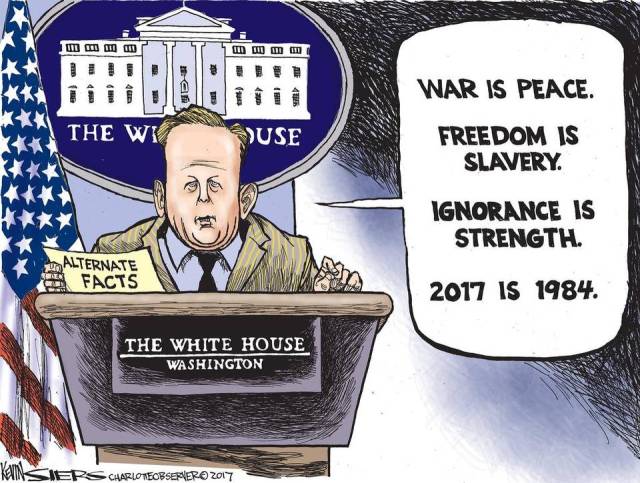
Nevertheless; there is much in Mr. Trump’s behavior that tempts one to speculate about his sanity which led a group of mental health professionals to publish an open letter to the New York Times suggesting that he was unfit to be President due to mental illness. Most would agree that he is impulsive, erratic, insulting, and unpredictable, with an ego that knows no bounds. His supporters explain his numerous falsehoods and distortions as “alternative facts”, while others call him a damned liar. So the big question is: what makes this guy tick? Is he so dominated by his megalomania that he actually feels that his saying it will make it so?
For example, he talks almost exclusively in superlatives; consequently there can be only two kinds of people either the best or the worst. Since he is the best of the best it only makes sense that he would have won the popular vote so the only logical explanation is that there must have been fraudulent voting. Could it be these behaviors fulfill a pathological need for attention? Could it be a well thought out strategy to provoke his opponents into taking actions against him in order for him to continue to play the role of victim which was so successful in his campaign. Even more frightening is the idea that he might be downright delusional, or could it be that he is “crazy like a fox”? Either conclusion is very frightening for he occupies a very large henhouse.

In the midst of all this speculation, along comes Dr. Frances Allen with his own letter to the New York Times followed by an interview with CNN. Dr. Allen comes with impressive credentials, having written the criteria for the diagnosis of narcissistic personality disorder in the American Psychiatric Association’s Diagnostic and Statistical Manual of Mental Disorders. He is also Professor Emeritus at Duke University. He asserts that the Donald does not suffer from the diagnosis of narcissistic personality, or any other mental illness. Indeed he goes on to say that to excuse Mr. Trump’s behavior as mental illness is “an insult to the mentally ill”.
In lieu of a psychiatric diagnosis Dr. Allen asserts that Mr. Trump “can and should be appropriately denounced for his ignorance, incompetence, impulsivity, and pursuit of dictatorial powers”. Dr. Allen does describe him as a “world class narcissist” at the same time denies that he meets criteria for the diagnosis of narcissistic personality which probably accounts for the confusion as the distinction is likely lost on most people including myself.
Dr. Allen does make a good point in that when it comes to evaluating our president it only makes sense to focus on behavior rather than a label. As the Bard said “what’s in a name”? We Psychiatrists have always been fond of diagnoses. They have some important uses such as in demographic research and filling out insurance forms; however there are down sides: 1) labels can be stigmatizing, and are not easily removed, 2) When teaching, I cautioned my students to avoid focusing on diagnosis as I never saw a patient who fit perfectly in any category. In this case I agree with Dr. Allen that psychiatric verbiage does little to deal with the Trump problem. Crazy or not is irrelevant since he is obviously not committable.
Both people who I have quoted in this little ditty expressed concern about the effects this man may have on our democracy; feelings which I share. I was hopeful that after the election he would give up the disturbing comments and distortions which marked his campaign, but I have been sorely disappointed. I attempt to reassure myself that this democracy has survived many crises, and that I am overly pessimistic. This evening I watched portions of another post- election campaign speech, the tone and content of which was all too familiar. I was angry and scared.

WORK (PART 2)

In the sixties, with the so-called liberation from state psychiatric institutions, there was a successful movement to shut down the farms associated with these hospitals. It was felt that the patients were being taken advantage of by having to work on those farms without being properly remunerated. But surprise, surprise: a few years later someone came up with a brand new progressive idea called work therapy, where patients suffering from disabling psychiatric illnesses were taught marketable skills with the goal of moving on to full-time employment. I have witnessed some of my own patients achieve dramatic improvements from participation in such a program, despite receiving only token pay.

WHO STARTED THIS WORK THING?
This change would seem to confirm the opinion espoused by my grandmother: “Work is good for the soul.” Yet, it begs the question as to whether this need to work is conditioned by social pressures or is encoded on our DNA. Presumably, this insatiable drive to produce was necessary for the survival of prehistoric man. The provision of food, shelter and protection from predators must have required a great deal of hard work. These hunter-gatherers soon learned that the sexes complimented each other. The upper-body strength of the male made him a better choice as hunter, while the superior manual dexterity of the female suited her to gathering and preparation of foods and making clothing. Her need to nurse her children would also have been an impediment to hunting.  Now technological advancements do the heavy work in many jobs, which has opened the door for females to participate in more types of jobs.

NOT FUN THEN, EITHERImage result for stone age tool makers
These people had a larger brains than other critters, and decided to use it to develop labor saving devices, an activity which continues to the present day with no sign of slowing. Initially, they learned to shape stones into tools, such as spear points, knives and axes.

Meanwhile, the lady of the house–or cave in some instances–would learn to use stones to grind grain into something edible. After learning to control fire, they were able to make pots in which they could transport, store, and cook essentials. The ability to make a vessel in which to carry and store water would have brought about a revolutionary change in their lives, as it would no longer be necessary for them to live near a source of water.

IT NEVER ENDS
Eventually, man would learn to smelt metals, which could be used to make more efficient and durable tools. Thus, he entered the Bronze Age, followed a few hundred years later by the Iron Age, from whence the pace of change towards modernity accelerated. As mentioned in my previous blog, nothing has affected the nature of work and, indeed, the whole of society, more than the invention of the computer. One could rightfully argue that such things as aviation, automobiles, modes of communication, electricity, and space exploration were agents of change; however, they pale in comparison to the power unleashed by the digital age. Computerization has become such a routine part of our daily lives that it is taken for granted as much as indoor plumbing.

JUST LIKE ROCKY
As was the case with Rocky–our stone age ancestor who made life easier for himself by fashioning an axe from a piece of stone–we continue in the same manner to develop tools to lessen our workload. Unfortunately, these same tools both then and now have enhanced our ability to kill others more efficiently, which has been the case ever since Rocky learned he could use his axe to eliminate competition. Although there are still many crappy jobs out there, technology appears to be moving in the direction of the elimination of jobs for humans, an issue previously brought to my mind by the sight of an automated garbage truck in action.

NOT ALL GOOD
This labor-saving business obviously is very attractive, but when we are able to develop machines that can think, we enter a whole new dimension. Stephen Hawking, the renowned theoretical physicist, opined in a 2014 interview with the BBC that the development of Artificial Intelligence was “the greatest event in human history.” He went on to say it could be the last event for humanity. He believes this could lead to the extinction of the human race if it goes unchecked. Elon Musk, the founder of Tesla and Space-X, describes artificial intelligence as “our greatest existential threat.” Bill Gates, the computer guy, echoes these concerns and wonders why others don’t share his worries. They all seem to be saying that some of our si-fi atlas.jpgflicks and literature could be prophetic. Artificial Intelligence has already been used to develop weapons systems such as smart bombs, drones, and who knows what else? Boston Dynamics has a prototype soldier robot called Atlas (pictured right) that is currently being taught to act independently.

It sounds like a great idea to have robots do our killing for us just as much as it sounds like a great idea to have those who operate our drones in the comfort of their office do our killing for us, thus insulating them from the horrors of war. In his interview, Musk noted his concerns about economic and psychological effects due to the loss of jobs resulting from the application of artificial intelligence. In my previous blog, I speculated that we were moving towards a push-button society, but with the application of Artificial Intelligence, we won’t even need to push the button. In such a case, the question is: would we be able to retain control?

SERENDIPITY?
As with many other pseudo-scholars, I get much of my information from television, and on Sunday, in the midst of writing these musings, I took a break and tuned into Fareed Zakaria’s show on CNN. Since his broadcasts are nearly as important as Ohio State football, I always try to catch his program. Talk about serendipity, he was in the process of interviewing Ginni Rometty, the CEO of IBM, about Watson, IBM’s super computer. I find it interesting that there appears to be an attempt to humanize these machines by giving them names. Not surprisingly, she was extolling the virtues of Watson, and indeed there are many. Her main purpose was to convince us that Artificial Intelligence could never replace us, only assist us. This super computer has received the most press for winning the game show Jeopardy and beating geniuses at chess; however, its more important feats are those which could only have been dreamed of a few years ago. It has been said that information is power, and if that is true, Watson is one powerful dude.

ImageARCHEOLOGY 101
Archeologists agree that one of early man’s major achievements was the development of language. This must have had its beginnings when he learned to make distinctive sounds to communicate. The ability to transmit complex bits of information verbally would have made it possible for Rocky to teach Rocky Jr. how to make his own axe, how to stalk prey, how to avoid vegetation , how to start a fire, and to stop teasing his sister. As subsequent generations continued to collect knowledge, symbols were used to represent words, and a visual means to communicate and store information was  born.

Such writings soon outgrew the capacity of cave walls, and a few thousand years later we  have huge buildings full of books, the content of which far exceed the capacity of the human brain. One of the largest of these is the Library of Congress, which contains more than 16 million books housed in three buildings. The folks at IBM insist that Watson has the capacity to store every page of all those books in his memory and, unlike us, never forget anything. It is predicted that eventually all the information ever written will be stored, sorted as to its veracity, and made instantly available. As previously mentioned, knowledge is power, but Watson is able to independently access that knowledge, analyze it, and make decisions. He is even able to learn from his own experiences. Watson turns out to be much more than just a memory bank, and this Artificial Intelligence business is starting to sound less artificial

WATSON BOOSTERS EVERYWHEREImage result for ibm watson images
IBM must be a bit anxious about all these Artificial Intelligence naysayers, for later in the day, after watching my guru Fareed, Sixty Minutes featured Watson’s work in the diagnosis and treatment of cancer, which was indeed impressive. Oncologists from leading academic cancer centers were in love with Watson, who was programmed to commit to memory all the scientific literature ever written about cancer. The computer learned to interpret laboratory reports, read scans, interpret symptoms, and return a diagnosis along with recommendations for treatment, all with fewer mistakes than when done by conventional methods. With Watson on the job, who needs doctors? This could allow cancer doctors to play golf full time.

The contributions of Artificial Intelligence have enormous potential, not only for treating cancer, but in all of medicine. The unraveling of the human genome has opened up the ability to find, and in some cases correct, mutations, which are responsible for many illnesses including some types of cancer. Although there have been marvelous achievements in medicine, future generations will undoubtedly look back on our efforts as crude and ineffective much as we demean such things as the blood-letting done as treatment by our predecessors.

THE GOOD STUFF
The list of benefits which could be provided by Artificial Intelligence is nearly endless. Self-driven vehicles would eliminate the problem of human error and would undoubtedly greatly reduce the number of traffic accidents. Dangerous or unhealthy jobs could be eliminated. Information could not only be provided, but sorted, verified, and implemented. Robots could learn from their own experiences, and thus they would be able to make rational decisions. We are already at a point where we use and take this ultra-high tech stuff for granted. I rely on my good friend Siri to tell me how to get from point A to point B, how long it will take and where I can stop for a hamburger. Soon, she will be able to take me where I want to go while I read a book or take a nap. The more one thinks about this stuff, the weirder it becomes, and there seems to be no end to the possibilities. There must be grist here for a hundred sci-fi movie scripts.

NOT ALL GOOD
Our technological advancement has already provided the means by which we can destroy human life on this planet. Nuclear war is the most obvious, but climate change could also be fatal, especially if it continues to be widely ignored. As I pointed out in a previous blog, we are also vulnerable to pandemic diseases and do little to prevent them. Now, here we go with more progress, which some pretty smart guys tell us can do good stuff, but it also has the potential to eliminate the human race.

Hawking has predicted that our survival depends on how we handle these existential threats over the next one hundred years. He acknowledges that Artificial Intelligence is here to stay and that further development could not be halted even if we wanted it to be. He does suggest there is great urgency in regulating the process. One phenomenon that caught my eye was an article in Scientific American about a group who is attempting to teach robots to feel emotions. It occurred to me that I would not like that robot, Atlas, to be pissed off at me, so maybe it would be a good idea to cool it with the emotion stuff. It also makes sense that we follow Hawking’s recommendation that there be a ban on the production of military robots like there was with poison gas. In another issue, I hope to expand more on the effect Artificial Intelligence might have on work.

ENOUGH ALREADY
This essay has violated both tenets of the Maggie rule about blogging: keep it short and write about subjects you know something about. I have solved the problem of dealing with that rule by firing Maggie and hiring Caroline, who I am hoping will be more permissive than her mother. Maggie took her dismissal well, but then jobs without pay are probably easier to leave. I am looking forward to working with Caroline who is very intelligent, and I believe could give Watson a run for his money.

To read the final post of this series, click here.

WORK? WHAT’S THAT?

Recently, during a visit to one of my daughters, I happened to see something that started me thinking (always dangerous). A waste removal vehicle (I don’t think garbage truck is any longer acceptable in polite company.) pulled up alongside two large plastic trash containers, which my son in law had placed at the end of his driveway. There was no one standing on the little step on the back of the truck prepared to jump down and empty the cans, as is the case with my trash guy. As I was thinking, how terribly inefficient for the driver to get out of the truck to dump the garbage can, a giant set of tongs miraculously reached out from the side of the truck, snatched the cans, and dumped them in the top of the truck.

TALK ABOUT A WORK ETHIC
This display of high tech stuff in action prompted me to wonder what might have happened to the guy who lost his job to that robot. Granted, this job, involving hanging to the back of a truck; being vulnerable to being killed by someone looking at his cell phone; and being exposed to all kinds of weather, not to mention the physical labor involved and not knowing if the can to be picked up is full of feathers or bricks, would not appeal to most people. If that is not enough, imagine what it would be like to spend every day enveloped in eau de garbage.

A BETTER MAN THAN I
Nevertheless, whenever I happen to be in my yard as my guy picks up my trash, he waves, smiles, and asks me how I am doing. He is very efficient and alights from that little step on the back of the truck before it is completely stopped with the grace of a ballet dancer. I think he must be very good at his job, and from just watching him, one might even conclude that he liked what he was doing. Like it or not, I could attest to his having worked at this job for the many years I have resided here, and I wonder what he would do if his boss purchased one of those new trucks with the monstrous steel arms.

LAZINESS ENCOURAGED
This made me wonder if technology would eventually replace work. That may seem far fetched, yet look around and you will see that all over the place, machines replace people. With driverless cars on the way, could driverless trucks or trains be far behind? It is said that there is little for an airline pilot to do on his flight these days, and it is common for the controls to be untouched by human hands from takeoff to landing. As a matter of fact, I find it difficult to imagine many jobs in the transportation industry that could not be automated.

Perhaps manufacturing is where automation has had the most effect on employment. Robots have replaced many people on the assembly lines of automobile factories. Many highly skilled positions have been eliminated by computer operated machinery, which can produce more for less, often with more precision. In my day, machinists were among the most highly skilled and respected of all the tradesmen. They could produce objects with tolerances within thousandths of an inch. Those same products can now be produced with the push of a button. Daughter/editor Maggie is the marketing manager for a company that manufactures such machines. Three-dimensional printing has gone from a concept to a way to produce objects without human interference.

Retail businesses have also felt the effect of technology. Online shopping grows exponentially, apparently contributing to the demise of not only Mom-and-Pop stores but some of the big box chains. Walmart, always ahead of the curve, has expanded its online capability. Even groceries can be bought online. Amazon builds distribution centers all over the country, which are said to be fully automated and capable of storing, processing, and sending purchases without any hands-on involvement. Its research into the possible use of drones to deliver its products has been well publicized—look out postal service, UPS, and FedEx.

Not even agriculture has escaped from that phenomenon we call progress. Family farms are rapidly disappearing because they find they can no longer compete with the very large, highly mechanized corporate farms where, with the aid of technology, one man can plant and harvest hundreds of acres of crops. It is not hard to imagine that, as this driverless thing progresses, he might also become expendable. Likewise, livestock farms require automation beyond the reach of the little guy. It is true that some crops are still harvested by people, but I wager when the cost of employing migrant workers goes up, there will be machines invented to pick those fruits and vegetables. I have been told that a tomato with thick skin has already been developed via genetic engineering so that it can be picked by a machine, but I can’t vouch for the veracity of that bit of info.

NO WHITE COLLARS NEEDED
At first glance, it might appear that those in what we refer to as the “professions” might be immune from the effects of this burgeoning technology, yet, if we look harder, we can see many potential threats to their job security, also. It is now possible to invade legal barriers with the help of all kinds of forms and instructions from the internet. There seems to be some agreement that there are already too many lawyers; consequently, more digital competition could make things worse.  Many lawyers escape into politics, and I am of the opinion that if robots were to take over those positions there would likely be an improvement in government.  Computers are good with numbers, and there are already multiple accounting programs. It seems only a matter of time until accountants would join the ranks of blacksmiths and other virtually extinct professions.

As with other professions, medicine has not escaped the avalanche of technological know how. Physicians have become much more reliant on machines to make diagnoses, and physical examinations tend to often be cursory. Robotic surgery is already used, and there are programs in which computers take the place of psychiatrists. Could we someday walk into a scanner that makes the diagnosis and dispenses a pill, then be cured, as was the case in “Star Wars?”

YOU THINK THAT’S CRAZY?
You may be thinking that we will always need human intelligence to design, build, and program those robots; however, the artificial intelligence of computers seems to be evolving as less artificial with many of the attributes of human intelligence. For example, an IBM computer has managed to defeat some of the world’s best chess players, and Siri can tell me how to get to Podunk before I can get the map from my glove compartment. If the super geeks who build these things are correct, it will not be long until robotic machines will be able to act independently. With those capabilities, one can imagine that robotic machines would not only do the job by themselves, but also be able build more robots. If that all seems ridiculous, consider how our great-great-grandparents would have scoffed at the idea that someday soon it would be possible to talk with someone thousands of miles away.

POOR SUSIE HOMEMAKER
Archaeologists seem to agree that the development of tools was a major factor in man’s ability to become the dominant creature on the planet. Tools are essentially labor saving devices. Could it be that we are heading toward the development of labor eliminating devices and eventually to a state in which there is no work to be done at all? If that were the case, and we all were unemployed like my fictional guy from the trash truck, what would life be like? Barb and I are both retired, yet we are sometimes heard to say that we can’t do this or that because we “have work to do,” when we are actually referring to routine household chores. We already have vacuums that clean floors automatically, and futurists predict that soon there will be robots available to do all routine household jobs.

The implications of a jobless society are almost unimaginable. What about the effects on the economy where the basic needs and luxuries of the populous have always been based on productivity? Would we still need money? If so, how would it be distributed? How about governance? If artificial minds could make better decisions, would we turn everything over to them? The more I think about it, the weirder it sounds. The brave new world concept seems tame in comparison.

STAY TUNED
As you might expect, an old retired psychiatrist like me is more interested in what effect a world without work would have on individuals and their relationships than in economics or politics. To that end, I have much more to say about the topic, but daughter/editor Maggie (I am considering firing her, by the way.) insists that people can only tolerate my words of wisdom in small doses; consequently, I plan to elaborate on the subject in a follow-up blog.