WHO CRITIQUES THE CRITICS?

The critics of the world are puzzling to me. I am puzzled not only by what they say, but how they become experts in the particular activities they critique. I have always seen myself as the possessor of normal intelligence and on good days think I may even belong on the plus side of that bell-shaped curve. But when I read some of the reviews of music, books, movies, art and even scientific articles, I realize how really stupid I must be. I often have no idea what they are talking about, and wonder if I am on the wrong page.
It reminds me of something one of my patients said when describing his former psychiatrist’s intelligence. His assessment was: “He was so smart that I could hardly understand a word he said.” I admit that I have used the big word tactic in the past hoping to impress people of my superior intellect, and with that in mind have accumulated several multi-syllabic ones which I keep in reserve for special occasions, but I could never compete with these guys in the weird word department.
Most of my exposure to critics comes from the several publications to which I subscribe (and sometimes even read). Much of human behavior can be explained in my opinion by our origins as herd animals, and to be a good member of the herd one must follow the leader or in this case the expert. As a relatively compliant human I tend to take seriously the critics’ recommendations, but often find their assessment so far from mine that I have difficulty touting it to others. All is not lost in those situations for it gives me the opportunity to let my audience know that I am well read and something of a connoisseur myself. If that is well received I may even launch an attack on the critic.
Their in-depth analyses especially of artistic stuff runs so deep that I often find myself drowning. It has been said that beauty is in the eyes of the beholder, and I suppose that also applies to ugliness. For example, the music that is pleasing to my grandchildren is experienced by me as simply loud and irritating noise. This would not likely result in an objective review by me of the latest hip hop or rap song. In like fashion, my parents were turned off by the swing music of the ’40s and ’50s with which I grew up.

Art: Ugly or Genius?

Nowhere is the critic more likely to wax poetic than when reviewing visual art. For me a painting for example is either pleasing or not, but these guys find hidden meanings which continue to be invisible to me even after they point them out. I am very fond of the impressionists who were the “Polly-Annas”  of the art world in that they chose to enhance the beauty of things they portrayed. I do realize that ugly has a legitimate placed in the art world. If the purpose of art is to elicit emotions, then art can be a powerful tool which forces us to face the world’s ugliness. Unfortunately, it appears to me that much art that is ugly was not intended to be so, nevertheless it may be taken by some critics to be a mark of genius. It has occurred to me that were Picasso to have shown up in an art therapy session in my hospital and do his cubism thing, I would have set about forming a plan of treatment for his psychosis.
Could this be yet another example of the “Tail Wagging the Dog?”

The better-known critics have a great deal of power. A favorable review from a big-time critic can put a starving artist into a much higher tax bracket, or conversely send him looking for a low paying day job. Many critics become celebrities in their own right. I can only imagine how many wannabes would gladly suck up to an art critic from the New York Times. Likewise, a visit from one of these gurus must be a major coup for a gallery owner. With all this influence available could it be that this is another example of the tail wagging the dog? Are the ever-changing fads in art due to boredom with the status quo or simply another instance of follow the leader?
Poetry: Schizophrenic Word Salad or Genius?

Perhaps the most glaring example of my literary deficiency lies in the inability to understand much of contemporary poetry. Admittedly, when it comes to poetry, I am a simple-minded person of the roses are red, violets are blue category. However, I recently inadvertently read a rave review of a book of poetry and subsequently happened on one of the poems in that collection. It reminded me of the “word salad” sometimes heard from those who suffer from a severe form of schizophrenia. The alleged profound thoughts these words were to elicit never reached my brain. It probably sounds heretical to many, but I can’t help wondering if I am really missing something or if these guys are just blowing smoke.
Art: The Language of Feelings

As you might expect, an old-fashioned guy like me is a big fan of Robert Frost. I must have been in junior high school when I first read his classic “Stopping by Woods on a Snowy Evening.” After all these years I am amazed at how it still takes me to that place and time, and leaves me in that snowy place for a minute or so. Were I a critic, I might describe the last three lines of the poem (“I have promises to keep, and miles to go before I sleep, and miles to go before I sleep “) as a metaphor for life, but I choose to simply luxuriate in the feelings the poem elicits. When I attempt to define those feelings, I am at a loss for words, but perhaps that is what art is all about i.e. the language of feelings.


Music

Music is another category of which I am blissfully ignorant. Having flunked out of a couple of attempts to learn to play a musical instrument, I am vaguely aware of the complexities involved, and have the greatest respect for musicians of all stripes not only for their talent but dedication and work ethic. Nevertheless; since I am unencumbered by enough knowledge to analyze music I am left free to either enjoy or abhor it

Movies

When it comes to movie critics, my favorite hands down was the Siskel and Ebert TV show which lasted nearly 25 years. These two guys who must have spent most of their waking hours watching movies presented their opinions of current movies. The interesting part was that they frequently and sometimes violently disagreed in their critiques. Their debates demonstrated that pronouncements by experts are by definition subjective.
Where the Critics Really Shine: Scientific Literature

None of this is meant to diminish the value of critics for we are in need of those who can sort through the massive amounts of information dumped on us, and make recommendations. Nowhere are critics not only important but essential than in scientific literature.  Studies are often very complex and beyond our ability to understand.  Fortunately, there are always other scientists familiar with the subject at hand who are passionate about the pursuit of truth, eager to examine the data, and study the design and conclusions.

The Undiscovered Geniuses are Waiting…

No matter the subject scrutinized, it behooves us to remember that that in most cases such critiques are only opinions, and one should not close their mind to other possibilities. Undoubtedly, there are many undiscovered geniuses among us. What a tragedy if there were a Michelangelo or Shakespeare out there somewhere lost in the crowd.

P. S.To the best of my knowledge there are no blog critics active as yet, but if you happen to be one please be merciful.

LOOK AT ME

Daughter Trudy is one of my most loyal fans, but has difficulty dealing with our differing political orientations. On occasion our discussions of politics have even become a bit rancorous consequently; we have agreed to limit our conversations to apolitical topics. I have failed in spite of my best efforts to convert her to a more liberal point of view. She says I am brainwashed by CNN and MSNBC and I accuse her of being rigid (must have gotten that from her Mother). As a closely held critic, she has encouraged me to avoid political topics and stick to more pleasant subjects. She also admits to suffering Trump fatigue, a malady for which I can empathize. Nevertheless; as I expressed in a previous blog, I seem to be hopelessly addicted to this stuff, and in the tradition of addicts of all stripes feel compelled to “just do it one more time.”

Disclaimer + My View of POTUS’s Motivation
All this leads me to provide readers with the disclaimer that opinions expressed here are mine and mine alone. In my last lambaste of the President I opined that he was not unpredictable, rather that his behaviors were consistent therefore foreseeable. Today, as the coverage of his latest barrage of misdeeds at the NATO conference were covered non-stop, I heard the experts on TV question why he does and says such outrageous things as they are clearly unproductive. The only coherent speculation was that it was to please his base. I have a different idea, i.e., he may be playing to his base, but his major motivation is to please himself and what is most pleasing to him is attention.

Attention at any cost
The NATO thing was a glorious opportunity for Trump. It is hard to imagine a stage with a larger audience and he was ready to deliver a masterful performance. To be seen as predicted, front row and center, in the class photo was only exceeded by the video of him insulting the German government. I couldn’t help but wonder if he had arranged for the camera to be there for him as he kicked ass. After all, what good is it to be the toughest kid on the playground if no one knows it? I can imagine some of his more vociferous followers with comments like: “He sure put that Kraut in his place. He ain’t gonna take no shit from nobody” and other raves of adulation.

Cracks in the Trump Wing
This all seemed too much for even his ardent followers and hangers on in the Senate for in anticipation of his rant, they passed a resolution with a vote of 97 to 3 in support of NATO. To me this was the first inkling that Trumpsters in the Senate realizing the very serious consequences of alienation of our NATO allies were willing to put country ahead of domestic politics. It gave me hope that the democratic process has not been entirely subverted. The most frightening aspect of Trump’s performance is that it was carried out despite warnings as to the possible consequences by his advisors and practically everyone else. He was undeterred however and proceeded to show the world his unparalleled negotiating skills which some might deign to call bullying. Unfortunately, in this instance there were no children whom he could lock up to use as bargaining chips.

Danger Zone
If my thoughts on this matter have any validity, we are in great danger. If decisions affecting the country, and indeed the whole world, are based on the status of one man’s ego, we are already in trouble for this one’s is likely a bottomless pit. Theodore Roosevelt’s mantra was “Speak softly and carry a big stick.” Such advice is not likely to ever be heeded by our current President.

HAIL TO THE CHIEF

This morning as is my usual bent, I proceeded to the kitchen TV and my coffee in order not to miss the morning tweets and learn about the progress towards getting those Thai kids out of the cave. In spite of the worldwide interest in the kids, the major news (not exactly “breaking”) concerned the pending appointment to the Supreme Court. Our former President had been referred to as “no drama Obama” while our Mr. Trump’s moniker could well be “the show must go on, and on, and on ad infinitum”. It is not surprising that the sudden supreme court vacancy would be seen as an opportunity to milk the media for all the coverage, not taken up by some silly story about a bunch of kids who were in imminent danger of dying.
The mechanism to exploit the resignation of Kennedy was set in motion with even greater speed than Pruitt’s dismantling of those silly regulations regarding clean air, water, CO2 emissions and all that climate change stuff. It began with a barrage of tweets touting the wonderful opportunity to appoint a justice for whom the country would be proud. He acknowledged he had a list of potential candidates all of whom “were very smart” were imminently well qualified, and who would do a “great job.” In spite of some huffing and puffing among the democrats, it seems likely that Trump will have his way and confirmation will occur. Mr. Trump has turned out to be very adept at utilizing his marketing and showmanship skills to have his way. Who would have thought such tactics would take him all the way to the Presidency?
You may have noticed that Mr. Trump is very fond of superlatives and judges people as either the greatest or the worst the world has ever known and is certain to nominate “the greatest” candidate. Of course, in the all-around category that title would be reserved for himself.  Nevertheless, he announced he would give careful consideration as to his choice, and as planned, the speculation began. There has been a procession of experts speculating on which lucky person would be crowned. The world is now awaiting the roll of drums and the blaring of trumpets as the great, no the greatest one announces his choice.
When the curtain goes down, attention is soon diverted. Fortunately, he will finish the week with a trip designed to piss off our NATO allies and suck up to his buddy Putin providing worldwide attention as he remains bathed in the spotlight at center stage. This may require him to shove others out of the way in order to be front and center in the traditional photograph at the NATO meeting as he has done at other such get-togethers. Perhaps he could receive even more attention by once again expressing his admiration for some of the world’s dictators or by doubling down on his pronouncement that those reporting the news are enemies of the people. There is also the notoriety associated with his single-handed initiation of a trade war.
Even Trump supporters will acknowledge that humility is not one of his strong suits, and others, myself included, have labeled his ego needs so extreme as to be pathological. Is it an accident that these outrageous behaviors have appealed to so many people, or is it an example of Machiavellian genius? There seems to be no consensus on this point. If he believes a fraction of the untruths he tells he is indeed a sick man, if he knows they are all lies, how could he ever be trusted.
As I mentioned in a previous blog, I have long been concerned as to the mental stability of our President. Those whose egos require such constant attention are usually found to be fragile, and subject to decompensation under stress. In the event some of the investigations underway result in serious charges, the stresses could be overwhelming, and responses unpredictable. I am heartened by the fact that some in my profession have seen fit to attack the so-called Goldwater Rule which forbids psychiatrists from attributing diagnostic categories to public figures. One such protestor has resigned from a position in the American Psychiatric Association in protest of that rule. It has been pointed out this not only impedes free speech but denies those who are the most knowledgeable the opportunity to warn the public of potential dangers.
It is true that knowledge of any kind of emotional problems could be used against a politician as was the case with Tom Eagleton who was forced to leave his candidacy for Vice President in 1972 when it was learned he had been treated with Electric Shock Therapy for depression. It is also true that some of our most successful presidents have had significant problems with mood disorders including Abraham Lincoln and both Roosevelts. But there was also the case of Richard Nixon, who reacted to the stresses of office by becoming paranoid which undoubtedly contributed to his demise. We now know that Reagan was suffering the early stages of an Alzheimer’s type dementia during at least his last year in office. I am sure Nancy was a very nice person, but was she equipped to be an acting president. Should that information have been as available as that of his physical health?
You have probably noted that I am worried about the mental stability of Mr. Trump. I can only hope that in the event my dire predictions come true, the Vice President and cabinet would have the fortitude to initiate procedures to remove him from office as outlined in the 25th amendment.

LEST WE FORGET

In a previous blog I mentioned our local newspaper, and recounted “the good old days” when our small town had three competing daily papers. I subsequently made a number of disparaging remarks about our one remaining paper which was purchased some time ago by Gannett. Nevertheless, my day usually begins with a cup of coffee and a perusal of the Times Recorder. It doesn’t take long. The front page usually has some local human-interest story which I don’t find very interesting so I usually proceed to page 2 and the obituaries which is the real reason I continue to subscribe to the thing.

WHY THIS SUBJECT?
Barb insists that it is absolutely morbid that I choose obituaries as the subject of this blog, but I feel it is both important and timely. Long before he had reached my present age, my Father wrote his and my Mother’s obituaries. He was always one who liked to be in control and I am sure he did not have much faith in anyone getting it right. Regardless of his motivation, it turned out to be a blessing for we survivors.

As you may have surmised motivation for my daily obituary searches has much to do with the fact that at my age I now see more familiar names on page 2 than I have in the past. Indeed, my contemporaries are dying at an alarming rate. I have no plans to write my obituary as we have an experienced obituary writer in the family. Before leaving for less green but more lucrative pastures in the big city, Maggie was in charge of obituaries for the TR (don’t you hate acronyms?). She tells me it is standard practice to assign that job to cub reporters, which says much about journalistic priorities.

BORING!!!
Sadly, most obituaries are boring recitations which are little more than death notices which say little more than when and where he or she was born and died along with a brief chronicle of their life with a focus on their occupation. This is followed by a list of family members living and dead, and information about funeral arrangements. It does appear to me that those traditions are gradually being swept away as I see many instances in which there is only a graveside service restricted to family members, but that’s another story. For many families cost may be a factor in the length of obituaries as they usually charge per line of type. In larger cities it is much more expensive. For example, the New York Times charges $263 for the first 4 lines and $52 for each subsequent line. Each line contains only 28 characters and is printed in very small (7 point type).
WORTH REMEMBERING
In spite of the brevity of the average obituary in our paper there are some which give hints as to the nature of the subject’s life. Just this morning I read the obit of a 96 year old woman and found the loving portrait inspiring. She was said to have had a “long well-lived life.” She was described as a “feisty woman who lived life to the fullest and enjoyed the thrill of playing slot machines.” She also enjoyed her grandchildren, great grandchildren and great great grandchildren. She had worked in a factory all her adult life and attended church which was “just up the road from where she was born.” Most important was the statement “She was a loving woman who will be missed by family and friends throughout Morgan and Perry counties.” In my opinion, to be missed allows one’s life to continue in others’ thoughts; consequently no one wants to be forgotten.

FORGETTABLE
Throughout history it has been important to immortalize our heroes with statues and other icons so they will continue to inspire us, and not be forgotten. It is also not unusual for the living to build their own monuments. Likewise, it is common for people to prescribe in detail the hymns to be sung, the burial method and even the entire process of the funeral with the possible exception of the eulogy. This is done in spite of the realization that they will not be a witness to the festivities. In the old days one could easily identify the most affluent buried in the graveyard by the size of their gravestone. Now modern cemeteries are devoid of monuments expressly to be more egalitarian, but coincidently eliminating impediments to mowing the grass.

In spite of our best efforts, we will in all probability soon be forgotten. The odds of our being remembered for longer than a couple of generations is probably much less than winning the power-ball jackpot. Millions have gone before you and failing extinction of the species millions will follow. You will need to be very, very famous to stick out in such a crowd. Even a famous blogger is not likely to make the cut. Although your name will be recorded in various places you will have been long forgotten until someone encounters your name as they work on their genealogy, and they will wonder what it would have been like to-know you.

FAVORITE OBITS
It is true that obituaries have a certain utilitarian value in that they not only announce the death but list those to whom you might want to send a sympathy card, provide the time and place of the funeral, etc., but I find little information which would help me to know the person. There have been some examples in which anecdotal information has provided me with an idea as to a person’s identity, and a feeling that I would like to have known them. One such case was a single statement in an otherwise generic obit of an elderly woman as follows: “Edna’s family gathered at her home for Sunday dinner at 1 o’clock every week for over 60 years and welcomed all guests with open arms. Edna will be remembered for her peach-pecan and pumpkin pies, noodles, and birthday cakes, her patience, kindness, and unwavering and unconditional love for others, and most of all, her heart of gold.” In the annals of motherhood, it is difficult to imagine anyone topping that record of nurturing. I felt as if I would like to have known Edna. Maybe I could even have wrangled an invitation to Sunday dinner.
My all-time favorite obituary was one which kept me laughing. It was written by a daughter who began with a quest for anyone interested in dinner plates. It turned out that her mother had been a collector of all kinds of different items, including dinner plates, and the daughter was overwhelmed. She went on to describe all her mother’s quirks in a most loving and tender but funny way. It was my all time favorite and I consider it a masterpiece. I tried to save it, but since we have a rule in this house to never lose anything unless it is important it has disappeared.
WHY THE IMPORTANCE
For those of us who will not have a bronze likeness in the courthouse square, our obituary will be the most lasting chronicle of our lives. It will probably be written or directed by someone who loved us and thus emphasize our better natures providing a template for living a full life. Obituaries remind us of our mortality which is not always a bad thing as such awareness can be a powerful motivator.
Obituaries have been with us since Roman times but as print media is replaced by the internet, obituaries are likely to follow suite. One such example is “The Blog of Death” written by Jade Walker who was formerly a chronicler of the deaths of the rich and famous in the New York Times. She was also hailed for producing a publication of the obits for all the victims of the nine eleven attacks. She describes her blog as: “…featuring the famous, infamous and interesting unknowns.” Undoubtedly, major newspapers will continue to publish obituaries deemed newsworthy. One often cited example is the Los Angeles Times preparation of Elizabeth Taylor’s obituary two years before her death presumably in order to be ready for the great event. Ironically, the person who wrote it died before it was published.
With the demise of local newspapers throughout the country, I assume that their archives containing millions of obituaries will be lost. There are organizations which profess to have access to nearly a century of published obituaries; however I am not sure how that is done, e.g., do they simply access newspaper archives? For most of us our obituary is all that remains of us to be remembered for longer than a few years.

SAVED BY THE CLOUD
As Jade Walker points out, the internet provides opportunity to include pictures, personal anecdotes, and experiences which could allow us to relate to lives that are gone. In an era when there is data available to unravel the human genome, keep track of who and where we are, who we talk to, and what we buy, it does not seem unreasonable to catalog obituaries. Perhaps the information could be managed by the Library of Congress, and the millions of wondrous stories which are now literally buried could be available for all to see. It could even contain the recipe for Edna’s peach-pecan pie

OUR MAN IN THE WHITE HOUSE

This morning I awakened even later than usual (retirement has its perks) and as is my habit rushed to the TV to see what deeds our dear leader had perpetrate while I slept. I learned that he had given assurance that I was now safe from nuclear holocaust due to his superior skills in the art of the deal, and in a follow up tweet doubled down (see my previous blog) on previous assertions that the press was our worst enemy.

The Predictability of a Narcissist
Many describe Trump as unpredictable, but I insist that is not the case. When one is aware of his character flaws his behaviors are quite consistent. A narcissist can always be depended upon to make decisions which are self-serving and which can be used to confirm his inflated self-image. Prior to his love fest with the North Korean guy, I predicted that he would give the farm away and return home claiming a great diplomatic triumph, and he did not disappoint. I am told the North Koreans studied Trump extensively. Certainly, they must have learned that his major vulnerability would be his response to flattery. I found it interesting that following their joint appearance Trump put his hand on the dictator’s shoulder and seemed to guide him from the podium. In return this man alleged to be murderer and torturer of thousands appeared to be submissive.

You Just Got Played
As I witnessed this scenario, and listened to him praise this chubby little dude said to be the cruelest man on the planet, I thought “Yep, Trump has been played.” Trump had insisted that his superior mind reading powers would allow him to assess whether Kim could be trusted, and his analysis led him to believe he could. It was reminiscent of the time the younger President Bush reported that he had looked into Putin’s eyes, saw his soul and discovered he was “straightforward and trustworthy” as all the while Putin was deciding to annex Crimea and invade Ukraine.

The Truth is a Narcissist’s Worst Enemy
Although it is true that people, including Presidents, generally dislike criticism, our current leader has taken his antipathy to a new level with his pronouncement that the press is a danger to the country. It certainly is true that the media is a danger to him. In spite of the fact that his craving for notice leads him to continuously seek press coverage, he becomes irate when it is not flattering, and with the exception of Fox News there is little evidence of his greatness on display in either the print or broadcast media. Since he is the greatest human being on the planet, he can only conclude that most news is “fake”, and he is a victim of conspiracies.
It is understandable that he would not like anyone in the business of gathering news for their’s is a search for truth, and truth has never been Mr. Trump’s strong suit. As a matter of fact since the Washington Post has kept track of his publicly delivered untruths (mother said it is not polite to call someone a liar), he has set new records in that category. Once again a careful analysis of falsehoods would likely show that most have to do with self-aggrandizement.
A casual attitude toward truth was well entrenched in his personality long before Trump decided to reach for the nation’s top spot. Let’s just do a quick review:

  • He hung on to that birther thing long after it was proven to be absolutely false.
  • The Trump University thing ranked right up there with Brooklyn bridge sales on the outrageous scale, but he managed to quietly settle that one as it heated up.
  • There is also the promise to release his IRS records, and to separate himself from business interests.

His now famous book “The Art of the Deal” seems to suggest a large part of that art is deception, or is that just good business practice?

Unconventional or Unacceptable? Mind Games on Display.
His supporters use the term unconventional to describe his behaviors, but I find his penchant for insulting heads of democratic friendly governments, while complimenting dictators very disturbing. I am also concerned that behaviors, which in past years would have been abhorrent, seem now to have found widespread acceptance. One friend made the comment: “I know he is different, but he has done some good things” which made me wonder if we are entering into an era of situation ethics.  Is the end justifies the means to be our modus-operandi? Are we now willing to discard moral codes which were once revered? Perhaps there is now hope to be found in his new-found dream of winning the Nobel Prize, in that such a pursuit could lead him down a path which would not only satisfy those insatiable ego needs but be good for our country.

Meanwhile I will continue to be sucked into waiting with baited breath for the next round of tweets along with the rest of the world, thus remaining complicit in enhancing his power. I am sure he loves the ratings.

THE PREVARICATOR’S HANDBOOK

Much has been said recently about the scarcity of truth telling especially in the political arena. Other less gentile words are often used for this phenomenon such as falsehoods, alternate facts, untruths, deception, or distortions. In some cases those who deliberately evade the truth are called liars, a term infrequently used since it is still considered insulting even though such behaviors are no longer uncommon. In prior generations truth was so revered that to call one a liar was construed such an assault on one’s integrity that it could result in mortal combat.
HOW CAN YOU TELL?
There seems little doubt that in recent years lying has become much more fashionable in political circles. The statement that “they all do it” is frequently heard when political candidates’ lies are discussed. If further confirmation is needed note that we now have a new industry called fact checking which continues to document massive numbers of untruths. I hesitate to call all of these falsehoods as lies since to qualify as a lie there must be a deliberate attempt to deceive. If one passes on faulty information through ignorance of the facts, or because he has been duped into believing someone else’s lie he could hardly be found guilty of lying. There is also the problem of drawing erroneous conclusions from factual data. It is well known that the human brain is capable of confusing biases with logic, and in any given circumstance we can never know if a person believes what he is saying is true.
YOU DON’T HAVE TO BE A POLITICIAN
Since lying has become a significant arrow in the politician’s quiver it occurred to me that a primer on the art of lying might be useful to those engaged in the great political debates of our time. As a matter of fact proficiency in the art of the lie is an effective tool applicable to any situation which involves human relationships.
You may be thinking that someone like myself who has spent a lifetime (and a long one at that) studying human behavior would be an expert on lie detection, but nothing could be farther from the truth. At one time or another I have been a sucker for every kind of con man on the circuit. These people whom we call sociopaths get their kicks from the con itself and monetary rewards are secondary. To get away with a scam is proof to them that they are superior. With that in mind when such people ended up in my office, I would assure them I would believe whatever they told me in hopes that would take the fun out of their deceptions.
YOU MUST HAVE THE RIGHT KIND OF FRIENDS
We can learn a lot about the art of lying from those with sociopathic personalities. After all they are the pros having practiced their craft for years. The constant ego enhancement gained from their perceived victories against we hapless suckers endows them with the confidence which is essential to being believable. While minor embellishments can usually be carried off with little training, an aura of absolute certainty is necessary if one expects to climb to the rank of teller of whoppers. There can be no equivocation, and the message must be delivered in a straight forward manner with no “ifs, ands, or buts”. When planning to deliver a major falsehood the wise liar will actually rehearse his lie.
DON’T EVER GIVE UP
With enough repetitions one can almost convince themselves that what they say is true, and there will be no non-verbal “tells”. This will also solve the oft quoted cliché that to be a good liar one must have a good memory. Once a lie is composed and memorized you will do well to repeat it at every opportunity. As with advertising the more a lie is heard the more believable it becomes. Always remember the first rule in lying is that people tend to believe what they want to hear therefore it is important that the attitudes and ideals of your audience be taken into account as you compose your lies.
COOL WAYS TO DECEIVE WITHOUT GETTING CAUGHT
The most talented of our politicians have found ways to pass out misinformation without need of a flagrant lie. A very effective ploy is to tell the truth, but not the whole truth. For example, an innovative liar can take an opponent’s statements out of context or leave out qualifiers which give an entirely different meaning to the quote. In a pure sense of the word he has not lied but gets the job done. The phrase “I don’t remember” is a bullet proof way to avoid perjury when testifying in an official investigation and can be helpful in other situations also. It is the perfect lie for who can prove you do remember.
GET WITH THE PROGRAM
Most of us have been taught to believe that honesty and truthfulness are virtues of the highest order. Such ingrained value systems must be navigated if one is to succeed as a competent liar and therefore a success in the game of life. Here again we find that those with a sociopathic personality have a significant advantage for a predominant characteristic of the sociopath is that he lacks a functioning superego (psych-speak for conscience).
Such antiquated moral codes can be a major impediment to one becoming a competent prevaricator. Feelings of guilt are difficult to hide and when present can cast doubt on the validity of one’s lies. You must learn to dismiss all those stories which promote the idea of lying as a sin. Forget about little George Washington and his stupid cherry tree. After all, he pulled off the perfect con by cloaking his confession into a lie with his famous “I cannot tell a lie” when everyone knows that all humans are perfectly capable of lying. If you find it impossible to shake these moral stumbling blocks, you may find ways around them by reviewing such works as Fletcher’s situational ethics or John Dewey’s relativism. Researchers have shown that repetition is most helpful in overcoming such compunctions. They have shown that frequent lying desensitizes one to guilt, so that the more one lies the easier it becomes. (Nature: Neuroscience Vol 19, #12, December 2016).
NO CREDIT UNLESS YOU KNOW IT IS FALSE
One should not claim lying proficiency simply because his perceptions are faulty. Of course, the extreme in such cases occurs in cases of psychosis in which a person may as a result of delusional thinking transmit information which is not only false but often bazaar in its content. Even those of us who are convinced of our sanity are limited in our ability to perceive reality by our special senses (vision, hearing, taste, and smell) and the ability of our brains to process the information which they transmit.
Multiple studies have confirmed that eye witness accounts vary greatly especially in emotionally charged situations. Recent studies of brain function has shown the brain is not static in its function, but possesses what has been labeled as plasticity meaning that it is constantly changing in ways information is processed. It appears that a person’s life experiences including our biases influence how information is processed and communicated. This is easily demonstrated in a well-known parlor game in which a person tells a story to one adjacent to him, and it is passed on through a group of people. Invariably in spite of their best efforts to relate the story accurately it will often be unrecognizable when it reaches the last person. This and other factors sometimes make it difficult to know if an untruth is a lie i.e. deliberately misleading or a misinterpretation.
THE VALUE OF SELF DECEPTION
There is also the enigma of the lies of those with narcissistic personalities. Are they really lies or do they actually believe all that grandiose stuff. In some ways they are the opposite of the sociopath in that the sociopath is attempting to prove to himself that he is the smartest, while the narcissist is already convinced that he is not only the smartest but the best at every thing he does. Nevertheless, we sometimes see people who seem to possess qualities of both disorders. The country song “its hard to be humble when you are perfect in every way” perfectly describes the narcissist. His exaggerated self-esteem is zealously protected, and failures are always blamed on other people or circumstances beyond his control. This often leads to the generation of conspiracy theories or paranoid ideation. Nevertheless, you will do well to mimic his self-confidence as it enhances believability.
HOW TO GO ON OFFENSE
As one progresses through the ranks from minor embellisher to Olympic class full throated liar, he needs to prepare for the inevitable challenges posed by those fact checkers whose goal is to denigrate the art of lying. It is good practice to anticipate exposure and be ready with an appropriate response. Naturally, one must never admit to lying, but find a way to skirt the issue. One time tested strategy when questioned as to the veracity of a statement is to go on the offensive by answering the question with a question. One can also question the motives of the attacker, become indignant, insulted, feign disgust or even sadness that one would sink so low as to attempt to sully a reputation for honesty and integrity. In a group situation such strategies if well done often enlist the support of the crowd. You must remember he cardinal rule to never give a direct answer to any question when interviewed. You will find that such obfuscation will stand you in good stead in future interrogations. A certain level of vagueness also provides wiggle room in case of later confrontation.
KEEP UP WITH THE LATEST TECHNIQUES
Our greatest liars are also innovators and a fairly new technique has evolved to fend off those truth seekers which is to “double down” i.e. to continue repeating that same lie over and over. Eventually, the challengers will be worn down, and repetition will produce true believers. There is also the old “taken out of context” excuse.
There may be times in your lying career when it may be advantageous to acknowledge that one of your statements is less than truthful in which case you will find it helpful to use the phrase: “I may have misspoken” without ever admitting to deliberate deception.
For those aspiring to become better liars, rest assured you have much company these days and the competition is fierce. Perhaps this introduction to the fine art of prevarication may be of help as you hone your skills.
I need to add the disclaimer that: “any similarities in this paper to people living or dead is purely coincidental”. Of course, you are free to speculate on the truth of that statement as everyone knows bloggers lie a lot.
EPILOGUE:
All spoofs contain an element of truth. Jefferson and others pointed out, that truth is absolutely essential for the survival of democracy. Many of our leaders seem to have little regard for it which leaves me to wonder: where is the outrage?
To add to my despair, as I was writing the last paragraph of this attempt to be funny, my phone bleeped with the message that the Supreme Court had just approved our state’s “use it or lose it law”. The gist of which is that if you do not vote in 2 consecutive elections you are removed from the voter rolls and must reregister. This has been said by many to be the most egregious of all the attempts to suppress voter turnout. It has been promoted as a solution to a voter fraud problem which doesn’t exist. The decision came about as the result of the usual 5 to 4 vote. It was written by Justice Alito who famously demonstrated his political bias by screaming “you lie” during President Obama’s state of the union address.

POWER OF THE PRESIDENT

john-adams-war“Power always thinks it is doing God’s service when it is breaking God’s laws.”  – John Adams

Nearly 250 years ago, a bunch of guys got together and decided they had enough of being ordered around by some guy wearing hardware on his head. They decided they wanted to let everyone in on the act of running their country. Even though there was not a large populace, there were obviously too many people to get together in one place and debate issues without the whole thing degenerating into a riot. There were also logistical issues since they were lacking planes, trains, automobiles, phones, radios and such, not to mention the massive undertaking of assembling adequate numbers of port-o-potties.
The solution of course was to have the people select citizens of like mind to represent them and assume responsibility for running the country. In spite of their abhorrence to one person rule they realized it was necessary to have an executive type person charged with the duty to implement their decisions. Since this person was to represent everyone, he was elected by a nationwide vote. Of course, there is nothing in this overly simplistic civics lesson that is not already known by anyone capable of reading this thing however my point is to suggest that we have deviated from the original script handed to our Presidents by those original designers of our government.

WHO IS THE BOSS?
It is clear that the Constitution expects the President to do the bidding of congress. Although he is free to initiate some actions on his own, most require congressional approval. Politics is all about power, and those guys writing the Constitution were wise enough to realize that the pursuit or even lust for power is an inherent quality which afflicts all mankind. I suspect they were well aware there would always be those lurking in the shadows looking for an opportunity to take over consequently; they saw fit to distribute power among three separate branches.

In addition to a legislative body charged with making laws and an executive to implement them, there was need for a judiciary to resolve differences in interpretations of the Constitution. It was to be headed by a supreme court which would be the final arbitrator. In an effort to provide those judges with immunity from political pressure, they were given lifetime tenure. Now these judges render decisions that are very predictable and just happen in most cases to coincide with the political party which sponsored their appointments. This lack of objectivity is so blatant that we now label each judge as either liberal or conservative, and their votes reflect their political biases. But that is another story, and for now I wish to focus on what I see as problems with the power of the President.

THE OLD BAIT AND SWITCH
It is obvious the original intent was for the balance of power to be heavily weighted towards the legislative branches, and that the President couldn’t do much without their approval. It appears to me that the roles have been reversed, so that the President now carries the big stick and congress sucks up to him. As a matter of fact, the President is now often referred to as the most powerful man on earth. The question arises as to how this power shift came about.

THE SHOW MUST GO ON
Consider the State of the Union address mandated by the Constitution: The President “shall from time to time give to the Congress Information of the State of the Union and recommend to their Consideration such measures as he shall judge necessary and expedient.” Article II, Section 3, Clause 1. Those of you who have managed to put boredom aside long enough to listen to some of these performances may have noticed that those “recommendations” often sound more like demands these days.
Indeed, his entrance to the hall is greeted with a reception fit for a king or even a rock star. He is announced with great fanfare, and his fellow travelers surround him reaching for his hand or the opportunity to touch the cloak of the great one as he moves toward the podium. As he speaks his fans cheer from one side of the aisle while the opposition ensconced on the other side glowers. The entire spectacle reminds me of a high school football game where the fans of each team sit on opposite sides of the field cheering for their guy no matter the content of his words. In the game of politics the prize is power. With millions watching worldwide this is the ultimate in “bully pulpits”, and POTUS uses it to great advantage.

WHAT YOU SEE IS NOT ALWAYS WHAT YOU GET
Image is most important as a means of gaining power. A popular President can be of great help to a congressman seeking reelection, and likely result in a tendency to bow towards the President’s demands. FDR made effective use of radio with his “fireside chats” as a means to not only reassure the nation but to bypass congress and appeal directly to the people to support his views. Now we find there is hardly a day goes by without some pronouncements from our President on TV, not to mention his very effective use of social media to influence voters.

PROBLEM SOLVING VS. FOOD FIGHTS
Our two-party system nearly guarantees support from congressional members of like party affiliation. Consequently; when his party is in the majority he is unlikely to face much opposition, and even when faced with a majority opposition he needs to schmoose only a few, in order, to have his way. The extreme divisiveness we have experienced in recent years results in what Truman called “a do-nothing congress” with the chief executive taking charge by default. The hostility of political debate has become so intense that it often seems as if those we elect show more loyalty to their political party than to their country. This allows a power-hungry person (and aren’t they all) to rise above the fray and be seen as the adult in the room. The current divisiveness encouraged by our political parties was predicted by both our first and second Presidents even though Adams laid the groundwork for the 2 party system.

FOLLOW THE MONEY
The nearly limitless budget of the executive branch allows the president other opportunities to curry favor and therefore power. For example, Woodrow Wilson was able to overcome the resistance of U.S. involvement in World War I by hiring a full-time person and staff charged with selling the idea to the public, all of which naturally was paid for by that same public targeted by the propaganda. A more current example concerns the amount of costs to taxpayers of travel to deliver “campaign style speeches” by our current president. There appears to be no such accounting available. In similar manner Presidents early on learned of many ways to influence public opinion by using taxpayer money to burnish their image and enhance their power.

NEED TO KNOW
Secrecy is vital to maintaining a grip on power, and generous use of the rationale of withholding information due to alleged risks to national security has become commonplace. The most egregious example in my lifetime was the continued involvement in the Vietnam war long after it was clear to those in charge that the war was lost, yet I don’t recall any apologies by our leaders, including the commander in chief, for the thousands of lives lost in order to protect the image of presidential infallibility. More recently of course was the use of black sites for torture, and procedures designed to invade the privacy of the citizenry. These activities also had been kept under wraps and only disclosed via the work of the press and so-called leakers who in many cases should be renamed as patriots.

TRUST, BUT VERIFY
Yes, we are living in the information age and information is power, even more so than in the early days of the country’s formation. The liberation of secrets is the job of the press, which must remain apart and free from government influence. Following a debacle early on in which a number of publishers were actually imprisoned, the founders wisely passed the 1st amendment to the constitution which among other things guaranteed the freedom of those truth finders to accomplish their missions. Many Presidents’ relationships with the press have been contentious to some extent as the struggle for openness is continuous. Our current leader disdainfully describes the press as “enemies” of the people, but our founders saw them as protectors of liberty.

WHEN THE PRICE IS RIGHT
As our government has grown exponentially so have the number of jobs controlled by the President. There are staff members, judges, lawyers, a cabinet, department heads, ambassadors, an office staff, advisors, and many other positions to be passed out to the faithful. Generally, the president is given a great deal of latitude in choosing these people, and confirmation by Congress when required is usually a formality. The power to hire or fire in these highly valued jobs is considerable, and an effective form of patronage which guarantees loyalty and influence.

THE BIG CLUB
The impetus for writing this little ditty came about as I recently noted that a number of executive orders were being reversed. I set out to find what the executive order thing was all about, and found it had its origins from Article 2 of the Constitution. My take on that was that they saw the need for the president to have sufficient power to implement laws passed and to make decisions regarding his operation of the executive branch. Congress could also cede power to him when required. I also learned that executive orders are subject to judicial review and carry the power of law. The biggie of course is the President’s ability as commander in chief to wage, but not declare, war which in the atomic age is about as powerful as one can get.

The executive order has been used with great effect to increase the power of the President. It was not until Theodore Roosevelt that it found its greatest utility as he averaged nearly 3 EOs per week during his tenure. The fad caught on quickly and successive presidents upped the ante with Teddy’s cousin FDR, who has remained all time champion, with twice that amount. His three term total was 3,721. Not to be outdone, our own Donald Trump is on track to sign the most such orders in 50 years.

People being the way they are, it is not surprising that our presidents continue to test the limits of executive orders. In response to an article in the New York Times titled “Shift on Executive Power Lets Obama Bypass Rivals” Bruce Fein writes in a letter dated April 24, 2012, the following:
“Executive branch power at the expense of Congress and the Constitution’s checks and balances has mushroomed since World War II. Examples include President Truman’s undeclared war against North Korea; President Eisenhower’s executive agreements to defend Spain; President Johnson’s Gulf of Tonkin Resolution regarding Vietnam; President Nixon’s secret bombing of Cambodia and assertions of executive privilege; President Clinton’s undeclared war against Bosnia; and President Bush’s countless presidential signing statements, Terrorist Surveillance Program, waterboarding and Iraq war.”

Another problem with executive orders is that they can be rescinded by subsequent Presidents as has been the case with nearly all of President Obama’s orders. This does not provide for a great deal of consistency especially when they involve issues involving other countries, leaving them to wonder if they can count on our commitments.

SORRY GEORGE
George Washington in his farewell speech cautioned against “foreign entanglements”. We have ignored that advice in spades and Presidents are largely responsible for many of the worst entanglements from which we now find nearly impossible to extricate ourselves. Granted the world is now smaller and more interconnected than in the early days, thus isolationism is no longer an option, but promises to deliver “shock and awe” or “fire and fury” must imbue one with a greater sense of power than to engage in some mundane international trade agreement.

HELP IS JUST A DICTATOR AWAY
As the world shrinks not only our own troubles but those from thousands of miles away appear as if on our doorstep. The presence of an ocean separating us offers little protection, and the world becomes a scary place. The world is now troubled and there are volunteers everywhere promising to fix everything. Today there appears to be a trend towards authoritarianism with some leaders now in office for life. Madeline Albright in her book “Fascism A Warning” points out conditions that lead to fascist take overs. In a previous blog, I mentioned Erich Fromm a German psychoanalyst who proposed in his 1941 book “Escape From Freedom” that freedom is anxiety provoking and that in times of crisis people naturally look for someone to take charge and tell them what to do and how to do it. There is an upsurge of fascist activities throughout Europe and the U.S.

According to the Economist’s Democracy Index of 2017, they have noted a worldwide trend towards autocracy including Hungary, Egypt, North Korea, the Philippines, Poland, Russia, Turkey, and Venezuela. Their 2018 report indicates continuing decline, and they re-categorized the United states from a democracy to a flawed democracy. Perhaps, even more disturbing was a report from the Pew foundation which showed a decline in Americans’ faith in their government from 70% to below 20% in the past 50 years. Albright says, “We are becoming disconnected from the ideals that have long inspired and united us.”

TOO BUSY TO VOTE?
Those ideals were put forth by a group of revolutionaries many years ago who so believed in those ideals they were willing to risk being hanged as traitors. It is difficult for a wimp like me to imagine the courage required by their decision to go up against the most powerful man on earth, or to imagine the courage of the nearly 3,000,000 Americans serving in the military who have since died in defense of the ideals that are the foundation of this great Republic. Though some of those efforts may have been misguided, they certainly were real to those who fought for them. The ultimate shame must reside in those in positions of power who may have sent them in harm’s way for any reason other than the defense of those ideals.

There are many who believe that we are now facing a time of greatest threat to our democracy since its birth. In any event we can now longer take it for granted. If we really care we must become involved. Our voting records are appalling. The greatest threat to our democracy is and perhaps has always been from the inside. My favorite birther of our nation John Adams recognized this in the very beginning in the following statement: “Remember, democracy never lasts long. It soon wastes, exhausts, and murders itself. There never was a democracy yet that did not commit suicide”.
Some of our current President’s behaviors may seem laughable but they are not funny! They deserve our serious attention.

Are We in Good Hands?

Experts in the field of gerontology report that reminiscing is a favored activity of old farts.  That may be true, but take it from one who has been there (and still is), we also like very much to complain.  Granted there is much fertile territory which one may exploit, but when there are no obvious items that deserve our complaints, we are perfectly capable of manufacturing new ones.  Most of us are retired, which allows us adequate time to search for items of which to disapprove.  In previous blogs, I have endeavored to establish my bona-fides as a complainer of the first order however; I now wish to digress and utter a few hopeful words about the future of our country.

The Children Are Our Future

The truism that our children represent the future of the country, or world is what gives me hope that some of the screwed-up policies of my generation can be corrected without destroying too many of its accomplishments.  Of course, I am referring to the recent demonstrations and walkouts by school kids throughout the country in response to our most recent school massacre.  The gun lobbyists, and other 2nd amendment guys insist that the kids are being manipulated and financed by those who would take their guns away leaving them and their families at the mercy of their government and other bad guys.  However; anyone who has reared teenagers would agree that they are better manipulators than manipulees.  Their idea of conformity is to follow the lead of their peers rather than some political activist.  I seriously doubt that adults convinced them to put their baseball cap on backwards or to wear baggy pants belted at a mid-buttock level.

Recently, as I watched some of the demonstrations I was reminded of an incident a little over 70 years ago (I told you I was old) when my high school staged a walkout (there I go again, sucked into that nostalgia stuff).  Nevertheless that was big stuff in those days.  We protested the failure of a levy to build a new school and a good time was had by all, especially after we discovered they couldn’t figure out ways to mete out a collective punishment.  In spite of the stern warnings that horrible retributions would result from a walkout (someone ratted us out), I suspect the teachers were secretly pleased.

It would have been laughable for my generation to presume we could ever effect changes at the national level, but these offspring of the baby boomers channeled their adolescent rebelliousness into a nationwide movement.  They demonstrated that when people (even kids) unite to pursue a common cause all things are possible.  The tool which was used to bring them together was of course social media.  They were able to show there were good uses for this same process that has also been used to undermine our democracy.  They chose to focus their efforts on those legislators who they felt were unduly influenced by the NRA and gun manufacturers.

Tis the time for TV to be awash in political ads and I recently noticed a couple of dandies.  The best was a video of a big guy in camo clothes with a camo colored large gauge shotgun which he proceeded to fire into a television set.  It turned out that the TV was no match for the 10 gauge rifled slug and this candidate for our state representative won that battle.  His qualifications for office also included an A+ rating by the NRA, lifelong support for the 2nd amendment, abhorrence of Planned Parenthood, and support for Donald Trump and his wall.  Now, I ask how could you not vote for a guy like that?  He seems a sure bet to be elected in this part of the country, where men are men and women love it, and machismo is not a dirty word.

History of the NRA

The National Rifle Association has a storied history. It was initially formed by two Civil War officers who were concerned about the poor marksmanship they observed by Union soldiers.  In those days guns were a necessity for many, especially those living in isolated areas, not only for protection but as a means to provide food.  The organization soon became popular.  They sponsored competitions and programs teaching gun safety.  They maintained a close relationship with the military.  In 1906, they were offered the use of the shooting range at the Army’s Camp Perry in Ohio for the NRA’s national marksmanship competitions.  This several-day event is still held there, drawing over 6,000 participants each year.

When the Thompson sub-machine gun became a favorite of criminals in the 1930s the NRA supported the 1938 bill banning the possession of fully automatic weapons; and sawed off shotguns.  They also supported the licensing of gun dealers.  It wasn’t until the mid-1970s that the NRA made a right turn and became a politically active organization.  They hired lobbyists, and the first presidential nominee they endorsed was Ronald Reagan.

Today’s NRA

They now number nearly 5 million members and have become among the most powerful groups in Washington, and the states.  According to October 2017 issue of Politifact, the NRA spent $203.2 million dollars on the 2016 election.  Add a few more million from the gun manufacturers and you could be talking real money, as the saying goes.  Their stated goal is to oppose any restrictions on gun ownership.

A tribute to their political power is evidenced by the lack of any significant legislation regarding regulation of guns in spite of the fact that a significant majority of Americans favor some limitations.  Since the recent mass shootings, there has been talk of limiting so-called assault weapons and bump stocks (which was a clever invention to bypass the statutes forbidding fully automatic weapons).  As in the past, Congress offers their heartfelt sympathies, but no action heartfelt or otherwise.

In the aftermath of the shooting of Ronald Reagan and his press secretary, the Brady bill was introduced, and a ban on assault weapons was put in place.  The NRA however; was able to use its clout to insert a 10-year sunset clause, and the ban was allowed to expire since there was no interest on the part of Congress to renew it.

It was the Supreme Court’s ruling in the Heller decision in 2008 which would frame the NRA’s talking points which persist to this day.  The decision rendered was the result of a lawsuit that challenged the ban on handguns in The District of Columbia.  The court ruled that the phrase “a well-regulated militia” in the Constitution was meant to include individual private citizens.  Now support for the 2nd amendment has attained almost equal status with “right to life” for nearly all republican politicians.

Back when I was a card-carrying member of the NRA

It is at this point in my discourse that in spite of my best efforts I feel compelled to once again regress back to those good old days for I can’t help but reflect on the time when I was proud to be a member of the NRA.  As a teenager, I looked forward to the monthly issue of the American Rifleman which I shared with my brother.   It was full of articles about all kinds of guns, recent innovations, tips on marksmanship and safety, the proper loads to use, antique guns, and gunsmiths who produced works of art.  Many of these men produced rifles and pistols capable of amazing accuracy.  They combined art, engineering, and craftsmanship in their work, often from basement workshops.

The few guns I collected during that phase of my life are now locked away and I haven’t been a National Rifleman Association member for nearly 50 years.  I do not sleep with a gun under my pillow nor do I have loaded pistols at my front and back doors as one of my very sane and otherwise sensible friend does.  Studies have suggested that having guns readily available to defend one’s home against an intruder is more likely to result in shooting the wrong person than a bad guy.

Good Guys with Guns Strategy

The usual response to these shootings by the gun lobby guys is “the only way to stop a bad guy with a gun is a good guy with a gun” and it appears that many buy into that approach for the shooting ranges are said to be crowded, and after each mass shooting the gun business skyrockets.  There are now 594,000 Ohio citizens with concealed carry permits and the number of new applicants increases each year.  There are enough guns in the U.S. to arm nearly every citizen, and that number is growing.  No other country in the world even comes close.  If the good guy/bad guy premise is correct, we should be the safest people in the world as we obviously have the most good guys with guns.

One example of an extreme position taken by gun lobbyists was the passage of a law in 2011 which forbade physicians from talking with patients or families about firearms in the home.   This was especially worrisome to pediatricians and we psychiatrists.  Pediatricians, well aware of deaths caused by access of kids to loaded guns, under this law, were prohibited from asking if guns in the home were safely stored.   As a psychiatrist, I was witness to several instances resulting in death from suicide or delusional thinking by guns in the home.  Under this law we were forbidden from advising family members to remove guns from the home.   The law was initially declared constitutional, but three years later common sense prevailed, and it was revoked by the state’s Supreme Court.

How many mass shootings does it take?

If those committed to the absolute ideal of no legislative limits on gun ownership or manufacture were not swayed by the Sandy Hook episode, it is safe to assume their beliefs will never change.  Gabby Giffords, the  2nd Amendment congresswoman who was shot in the head did change and became an advocate for sensible regulations.  On the other hand Representative Scalise who was shot, nearly died and remains crippled insists that he is more committed than ever to opposing any limitations.  He remains proud of his A+ rating by the NRA and supports a bill to allow reciprocity for state’s concealed carry permits.  He agrees with his fellow travelers that the solution to gun violence is more guns.

The more obvious solution of getting rid of all the guns is impossible for that horse has already left the barn and such an effort would be monumental. It would also be met with massive resistance even by people like me.  After all we have a long tradition of using guns to kill each other.  After we had successfully subjugated those Native Americans, we hadn’t killed, we had a Civil War in which 620,000 were killed.  Now we have fatalities over the drug wars and gangs of young people who seem to be spawned from the ranks of the disenfranchised.

Efficient Killing in Full Force

Now in the era of mass killings, we have much more efficient ways of killing people.  In the Parkland High School shooting, it took 6 minutes and 30 seconds to kill 17 kids while the Vegas shooter was able to kill 58 and wound 850 in 10 minutes with the aid of bump stocks on his rifles.  The AR-15 rifle is a favorite of mass murderers.  It is available with a 30-round magazine and can be easily converted to automatic fire which mimics the fire power of a machine gun.  It is patterned after the U.S. military M-16 rifle, which of course is designed to kill people.  It is not known for its accuracy and is not very good for hunting, unless one chooses to spray an area with bullets in hopes of hitting something.  Other than as a weapon, it’s only other use is as a toy for grown men to play soldier.  In spite of all this trauma, there is not even consideration for limiting the number of cartridges in a clip for either the AR-15 or pistols.

With each shooting, there is more talk of arming more people, most recently teachers, and even preachers.  Gun free zones are identified as soft targets, therefore, in need of more armed occupants.  Consequently, our Governor recently signed a law that allows concealed carry gun totters to enter churches, schools and bars.  What a great idea that now when we check into our favorite watering hole, we may be able to see a real gunfight rather than a boring fistfight.

The concealed carry laws concern me as I believe more guns are likely to aggravate rather than lessen loss of life.  I have witnessed first hand those of good character experience rage which overwhelmed judgement resulting in tragedies for victims and families.  Road rage has already taken on a different dimension; although, more guns may mean less flipping off of the aggravated.  There have always been accidents with guns, and children seem to be more prone or is it that such shootings are just more tragic?  There is also the problem of domestic violence which often gets out of control.  In this country self-inflicted gunshots are the most common and lethal of suicide attempts by men.  Many attempts are impulsive in nature, but there is no turning back after a bullet enters  the brain.  There is also the question of what effect all this gun stuff has on our police.   With all those people out there packing heat as the saying goes, if I were wearing a badge I would be especially wary and much quicker to draw my gun.

Back to our Future

Undoubtedly kids being kids some were probably enjoying the drama of the whole thing, but the maturity and discipline they displayed, along with the seriousness with which they pursued a lofty goal was indeed impressive, but even more so were the kids who gave speeches and were interviewed on television.  In marked contrast to the political rhetoric and propaganda which we usually hear, these junior orators responded to questions in a frank, unequivocal manner.  They showed no signs of discomfort at being in the spotlight of national broadcasts.   We can only hope they will not be swayed by less idealistic forces as they take charge.  Adult demonstrators would do well to emulate their offspring who chose to pursue their cause in a dignified and non-violent manner.  When one of the kids was asked how he hoped to change the political landscape, he replied “we will outlive you.”  Martin Luther King would have been proud of them all, but even more so of his nine-year-old granddaughter who led the chant at Thurgood Marshall Academy with “Spread the word!  Have you heard?  All across the nation, we are going to be a great generation.”  From what I have seen so far she might be right about that.


LIFE AND DEATH

Last night I happened upon a documentary about death on PBS. It included an introductory presentation by a woman who reports that she had found resolution to her fear of death by directly confronting it. She had made a point of viewing dead bodies at every opportunity and had even taken a job at a crematorium, which seemed like overkill to me. To complete her story, a vignette of that entire process was shown. I did not find watching the incineration of bodies as particularly entertaining, and Barb left the room saying she was repulsed. In spite of my interest, (I had always wondered how this procedure was done), I shared Barb’s feelings perhaps even more intensely for this is the method I had chosen for my disposal.


THE BIG QUESTION
Many years ago, I think it was the late 60s, Peggy Lee recorded a song titled: IS THAT ALL THERE IS? which has haunted me all these years for it expresses to me the most fundamental existential questions. What is life, where did it come from, why are we here, how did it happen, who or what caused it? When the answers to these questions seem almost within our reach, new questions arise and we end up confounded all over again. We humans are undoubtedly unique in our ability to even ponder such questions. As a matter of fact, we have no clear idea what life is let alone what it is all about. Our definitions of life are simplistic and do little to help us understand what it is. For example, for some time there have been efforts underway to actually synthesize a living cell, but those involved in such efforts cannot agree on the criteria for determining when something is alive.


WHAT IS DEATH?
Death on the other hand is defined as the absence of life, but is it? At this time of the year, one third of the world’s population is celebrating their belief that life is eternal. Muslims likewise hold strong beliefs in an afterlife as do many other religions. Freud described religion as a symptom of neurosis or in some cases psychosis. Karl Marx famously insisted that religion was the opiate of the masses. Both saw religious dogma as a defense against the vicissitudes of life: for Freud, defense from anxiety, and for Marx defense from the pain of domination. In spite of his atheistic beliefs Freud was reported to have said during a prolonged, and painful terminal illness that he envied those who had strong religious beliefs.
As our brains evolved to become huge cauliflower like globs of neurons, we developed the ability to not only perceive reality but to predict future events. This ability has served us well, but there is a down side in that we became aware of our mortality. Floyd, my dog who sleeps at my feet as I write this, is able to predict certain outcomes. For example, he has learned some of the routines of the house and knows when I put on a coat that he might be able to bum a ride. He will undoubtedly see dead animals during his lifetime, may even experience grief, but I feel fairly certain that he does not realize that in a few short years he will die.


RELIGION AND THE DEATH PROBLEM
Back in my younger days when as an academic I knew almost everything about everything, I found that death was one of those things even I did not understand. I was especially interested in how our awareness of mortality affected our thinking, values, behaviors, personality development, and even our mental health. My research on the subject of attitudes toward death indicated that certain diagnostic categories of psychiatric patients had attitudes significantly different from the norm. All very interesting, but I was left with the classic chicken egg dilemma, did their illness cause their unique attitudes or did those attitudes contribute to the illness? But that’s how it is with any scientific endeavor, to answer one question will only lead to more questions.
The study did tend to confirm what everyone already knew in that some people look forward to death while others fear it. In the former category is the late Billy Graham who on multiple occasions insisted that he was looking forward to his earthly death, and the beginning of a new (much better) life. Muslims are so convinced of an afterlife in paradise that they are willing to martyr themselves to ensure their admission. As a matter of fact, all religions seem to have in common the pursuit of a solution to the death problem. Those of strong faith have been shown to have less fear of dying, but in one study those adherents uncertain of an after-life were even more fearful than atheists who were convinced that there was nothing after death.


DEATH OR RELIEF?
Death may also be attractive to those suffering from extreme pain either physical or mental. Patients whom I have known to have suffered both serious physical and emotional distress at various times in their lives invariably report the emotional pain to be more difficult to endure. When combined with feeling there is no hope, for such people suicide may seem their only option.

On one occasion in the days before Google, I was approached by a patient asking what would be the lethal dose of phenobarbital. He reported that his mother had been ill for several years with several surgeries leaving her without ability to speak, a horribly disfigured face, and severe pain. She was on large doses of pain medications, and her illness was terminal. She had told her family that after careful consideration she had decided she wished to die sooner rather than later and wanted her family to be with her as she died. Had she been a family pet her assisted suicide would have been declared merciful, but in her case it was criminal. Go figure. On the other hand many agree that to countenance euthanasia is to start down a slippery slope.


CLINGING TO LIFE. FIGHTING DEATH.
There are others for whom life is so precious, or is it that death is so threatening, that they cling to life in spite of enormous pain or disability. Such was the case with my daughter who shortly before her death said: “I don’t want to die Daddy.” Was she afraid? I will never know for my response was to reassure her she was not dying rather than to address her feelings about the death she knew was imminent. Thus, her cry for support was brushed off and she was left to deal with the most difficult time of her life alone. I should have known better. Sometimes it is difficult to practice what you preach.


A recent example of one who chose to follow Dylan Thomas’s advice to “Rage, rage the dying of the light…….” Is exemplified by the late Stephen Hawking, who was diagnosed with Amyotrophic lateral sclerosis as a graduate student and told he could not be expected to live more than two years. In spite of total paralysis and the loss of his ability to speak, he went on to become a major contributor to the science of cosmology and was described by some as a modern day Isaac Newton. He was a prolific writer in both the scientific and lay literature in spite of limited ability to communicate. In his later years, he gave lectures all over the world with the use of a voice synthesizer operated by his only remaining functioning muscle group which was in his cheek.


LETTING GO
Sometimes death can be viewed as an opportunity to be reunited with a loved one. One very personal example of this was with the death of my Mother. My Father had been dead for a couple of years and Mother was staying with us. Her only known medical problem was a few episodes of cardiac arrhythmia one of which had resulted in hospitalization and successful treatment. I suspected she would be discharged the following day and stopped in to see her as I made morning rounds. I was surprised at her response when I asked her how she was feeling when she said: “I am feeling just fine, but I have been thinking a lot lately and have decided it is about time for me to be out there (the cemetery) beside your Father.” I thought little of her comment and went on to my office. A short time later I received a call from her nurse telling me she had died. We should all be so lucky as to go that way, in charge and at peace. This and similar stories have led me to believe that we have more control over our demise than is apparent.


SEX AND DEATH?
Perhaps the weirdest thanatophilic attitude toward death is in its libidinization which was not only observed in my research but in Greek mythology. In the story of “The Rape of Persephone,” Pluto, guardian of the underworld ascended from Hades to seduce the maiden Persephone. Throughout history this theme has been repeated many times in different iterations. You may be thinking: how can there be anything sexy about death? I told you it was weird. This brings me back to the young lady who was interviewed extensively on the PBS special. She not only presented her story of how she overcame her fear of death, but was filmed giving a lecture to a group of alleged thanatophobes. It occurred to me that she possibly could have gone overboard as she talked of the joys of death in a husky voice accompanied by a sexy smile. But in case you want to learn about even weirder stuff you might want to check on the necrophiles who enjoy sex with corpses. There is also John Wayne Gacy who admitted to having orgasms as he watched his victims die.


NEAR DEATH EXPERIENCES
None of those interviewed in the PBS documentary seemed more certain of life after death than those with histories of near death experiences. Their stories were consistent and the interviewees were very credible. Many others speak of witnessing from above the attempts made to resuscitate them, and report seeing a tunnel with a bright light in the distance. There have also been some who have reported very unpleasant experiences, and following their recoveries vowed to change their ways. There is one neurologist who suggested these experiences were simply the result of cerebral ischemia (diminished blood supply to the brain), but there is little doubt in the minds of these survivors that their experiences were real. One such survivor suffering from a terminal cancer reported she was looking forward to her death and we were told she died two months following the filming of the program. The others all said their lives had been changed since the experience, and that they had developed a kind of serenity they had never known previously. Although not mentioned in the broadcast, I am also aware of at least two books written about going to heaven and one describing a 20 minute visit to Hell, accounts which I found less credible.


CREATING YOUR OWN AFTERLIFE
Spookiest of all in my opinion was an in depth look at the so-called cryogenic procedure in which bodies are frozen in liquid nitrogen with the hope that in future years technology will allow their illnesses to be cured, and they will be able to do a secular version of the Lazarus trick. Cellular biologists believe it is impossible to do even a very quick freeze without doing permanent damage to the body’s cells. Nevertheless, there are people who are willing to pony up large sums of money to have their bodies frozen and stored in hopes of being brought back to life. One website reports they have over 100 such bodies stored in huge tanks of liquid nitrogen. As for me, I think I would prefer to take a shot at heading down that tunnel toward the bright light.


DEALING WITH OUR MORTALITY
There are many behaviors unique to humans for which one could make a good case to result from awareness of our mortality and even the concept of death. Denial is the most powerful tool that can be used to decrease anxiety, and typically the way most of us deal with the reality of death. Those things we don’t understand are the ones we find most frightening. Freud for all his foibles had much to say about death, although discounting religion, he presented some interesting comments about our denial. One which rang true to me was his statement: “It is indeed impossible to imagine our own death, because whenever we attempt to do so we can perceive that we are in fact still present as spectators.” I can’t help but wonder if he got this idea from Mark Twain’s story about Tom and Huck attending their own funeral. Nevertheless, he does make a point. We like to give instructions as to how our funeral or lack of should be conducted sometimes with great detail, and without consideration for the idea that such services should be for the benefit of those who grieve. Do we really believe we will be able to hear what hymns are played?
In spite of our knowledge of the inevitability of death we continue to seek token immortality. We select monuments, have portraits made, buy life insurance, establish charitable trusts, write wills, work hard in order to be able to leave something behind, and even write blogs in hopes we will be remembered; and continue to live in the minds of others. Not surprisingly there are often attempts to retain control after death. I recall one example of a friend who was noted to be an in control kind of guy who liked to keep his wife under his thumb. He wrote a will in which he specified that her inheritance would go to charity in the event she should remarry after his death. There are so many other questions which have gone unanswered. For example, to name a few: why do some enjoy the thrill of risking their life, why do some like to frighten others with the threat of death, why do some appear to actually enjoy killing. We seem to be unique among the animal kingdom in those behaviors.

ARE THERE ADVANTAGES TO THE REALIZATION OF OUR OWN MORTALITY?
Lest you think I am totally morbid in these thoughts, I should admit there are some obviously useful things surrounding this mortality thing. We tend in many ways to view death as punishment. We use terms like “he deserved to die,” and “the wages of sin are death.” Throughout history, assassinations have been carried out to punish those accused of misdeeds, and the most serious crimes are still punished by death. If we were convinced we would live forever, would we behave instinctively without regard to consequences, in other words would we have developed a super-ego? In like fashion what about creativity and the urge to complete projects if time were not limited? There would be no need for monuments or for offspring to mourn. Would we feel the need to band together with others? It sounds to me as if life would be boring.

MY STRATEGY
Well, enough of this death stuff. I hope the next PBS program will be about life. Meanwhile, I plan to adopt the “eat drink and be merry” strategy. Barb recently told me she had decided to concentrate on living each day to the fullest as long as she could. I suppose this would not leave much time for worrying about such mundane issues as dying. Maybe she will be willing to give me some lessons.

Addendum by retired eshrink editor:
My dad and I discussed the topic of this blog before he wrote it. I told him of a pivotal moment during college when a marketing professor posed the question, “What if this is all there is? Despite what you’ve been taught in church or by your parents, what if this life is all you get?”

It was if a light bulb went off! Religion uses “heaven” and “hell” (the “afterlife” in general) to relieve us of the anxiety of our own mortality and in some instances, to control us. You want to get to heaven. You don’t want to go to hell. Here’s what you need to do. As if, all chaos would ensue if we thought this was the one life we get to have.

Indeed, that was the point I got from this professor. The realization that this life is the one that is real and I better be a full participant because it’s the only one I know I have. Don’t use an “afterlife” idea to put off living this life fully. Don’t get me wrong, I hope there’s something really good after this life. My version of “heaven” is being able to use the heaven TV network to check in on all my people to see what’s going on because I don’t want to miss anything! Also, I would like to create my own weather, get to choose my own “age” during my time in heaven, visit with everyone else who is dead, and most of all, get all of those big questions answered. I freely admit that I’m afraid to die because I’m afraid of the unknown…I’m with Freud, I’m envious of those people who have no doubt in religion’s teaching of an afterlife. However, I must admit I have never understood why highly religious people who think their dead family member has gone home to Jesus to the next life, cry so much at the funeral. If you truly believe that without a doubt, wouldn’t you be happy for them?

However, I do believe there is something more and hope there is something more, but no proof to date.

So, I try to use mortality to make sure I live well in this moment that I have been so fortunate to be given and even more, to put life’s perceived “stresses” in perspective. “It’s not life and death” I’ll tell myself.

Since my husband died suddenly at a fairly young age , I also use “death” as a way to live my life double for those who don’t get to be here. I try very hard not to take one minute for granted. Life’s short. It’s not a dress rehearsal. Treasure the gift. Be present. Make every minute count.
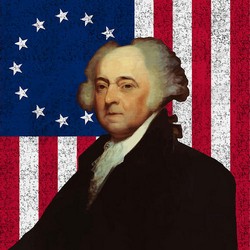
TRUMP FATIQUE

This morning I was struck with the realization that I am suffering from a horrible addiction complicated by an equally powerful revulsion of the subject of my addiction. Confused? So am I. Nevertheless, I will attempt to explain my dilemma. Perhaps a bit of personal history might be helpful in unraveling the chain of events that led me to such a no-win situation. As a responsible US citizen, I have always felt the need to be aware of current events both local and international, in order to be able to exercise my right to vote in a sensible manner. Since retirement I have been able to devote more time in the pursuit of such knowledge, and therein lies part of the problem.
THE GOOD OLD DAYS
In my earlier years I often did selective perusal of print media, augmented by nightly news broadcasts on radio. The broadcasters in those days were fastidious in their attempts to eliminate any appearance of political bias in their programs. I even recall one newscaster who said that he did not vote in any national or statewide elections as he was concerned that it might affect his objectivity. Newspapers likewise were careful to separate opinion from facts by relegating their interpretations to the editorial page. The print media in those days were very open about their biases, and there were papers with both liberal and conservative orientations.
GREAT PROMISE
But then along comes television. Initially most people could only get 2 or 3 stations unless they lived in a large city. The height of television antennas became the new status symbol, and the six o’clock news was now both seen and heard. I was now able to not only hear but see my hero Edward R. Murrow who was one of the few who challenged Sen. Joseph McCarthy during the senator’s communist witch hunt, and whose quotes are especially timely today https://www.brainyquote.com/authors/edward_r_murrow. One especially apropos in our current political climate even though 70 years old is: “I have an old fashioned idea that Americans like to make up their own minds on the basis of all available information”.
IT GOT BETTER
Of course, that would not be the end of it. The technology advanced so rapidly that one could barely keep up, much as is with the current electronic explosion. Color would soon be added, screens got larger and the ultimate boon for couch potatoes like myself was the invention of the remote. Now as more stations were added we could channel surf while needing to only exert the fingers of one hand. TV cameras were soon made small enough to be portable and along with the development of videotape it became possible to bring live news happenings to the screen. That may seem cumbersome now that we have trucks with equipment that send a live image directly back to the station, but it was big in those days. Many believe this ability to film live action in the field played a big part in the public renunciation of the Vietnam war. We who belonged to the fraternity of couch potatoes soon found it more satisfactory to get all our news by pushing a button rather than struggle with an unwieldy newspaper especially if we had to walk all the way out to the front yard to get it. True TV news only hit the high spots, but what the heck? Who had time to read all that stuff anyway?
NO MORE CLIMBING
The next big innovation was cable TV. All those antennas were either taken down or became flag poles. Then in 1980, just about the time that sitcoms were becoming really boring, along comes Ted Turner an audacious young dude who has inherited a small TV station, and decides to start a 24 hour TV news business called “The Cable News Network”. What a boon to us news junkies. Now we could stay up to date with little or no effort, and it was no longer necessary to make it to the armchair by six o’clock. When Turner’s crazy idea became successful there soon followed the formation of MSNBC, and Fox News.
THE WAR IS ON
MSNBC used the tag line: “The Place for Politics”, and it soon became obvious that they could have safely stuck the adjective liberal in there somewhere. Not to be outdone Richard Murdock a conservative international newspaper publishing baron established his competing network, Fox News, and compete they did. Fox and MSNBC see the world through different prisms. For example, this morning Fox blamed Obama for the recent killing of children in Syria with saran gas because he had not offered sufficient support for the rebels in the past while MSNBC placed the blame on Trump as he had recently announced he would pull out of Syria which they insist emboldened Assad.
WORK TOGETHER? ARE YOU KIDDING?
There seems little doubt that the animus between the two organizations has contributed significantly to the divisiveness which now plaques the country, but I am sure it also makes for good ratings. Studies have shown that we are influenced by what we see and hear on television. If that were not true, would companies spend millions of dollars on commercials? As a result those of a particular political orientation will likely migrate to the station which reflects their views, which will not only be confirmed but enhanced, the gulf grows wider and there is little chance of reconciliation.
I SAW THE LIGHT
In my younger days I was a card carrying conservative Republican who believed that government was too big, communism was our greatest threat, and those freeloading welfare bums would bankrupt the country. Shortly after I began my practice Medicare and Medicaid came into being and I was convinced it would be a disaster. As I came to know more about my patients I realized that Medicare and Medicaid were saving lives, people did not choose to be destitute, and the communist thing had been vastly overblown. Both parties decried all the wasteful spending, but did nothing about it so that issue was a wash. Eventually I fell in love with Jimmy Carter which cemented my transition.
HOMELESS
In spite of my becoming a tree hugging, soft hearted, wimpy democrat, I did hold on to a few conservative values consequently; I have always considered myself to be a middle of the road kind of guy. With that in mind I rejected the networks I felt to be extreme in favor of CNN which brings us to the root of my problem for you see CNN doesn’t do news anymore. In its stead they do Trump, and the President (ugh, that is hard to say) has made a fool of me. It has been well documented that Trump likes attention, and CNN is giving him all they have to give other than time out for commercials. To be fair, I must say they do use some time to report mass school shootings and such, but even then they find a way to bring him into the story.
NOT MY FAVORITE PERSON
In my writings, I have made no secret of my disdain for your President (I refuse to own him) which may lead you to ask why I continue to suffer those twinges of nausea all day long. The answer may lie in the fact that I am addicted not to CNN, but to that person. When Barb asks me why I am so eager to turn on the kitchen TV in the morning before I even get my coffee I answer I need to see what the asshole has tweeted now. From then on I am mesmerized as so called panels of experts discuss over and over his most ridiculous statement of the day. Perhaps it is similar to watching a horror movie which is really scarey, but you can’t stop watching.
NO WONDER I’M SO SCREWED UP
It is more likely that I continue to watch with the hope that something good will be announced much in the same way kids become addicted to their cell phones, gamblers can’t stop betting, or we play the lottery when the odds against our winning are monumental. After all it has been shown that intermittent positive reinforcement is the means by which addiction is produced. Ah Ha, that must be it, that Breaking News thing that keeps popping up on the screen every few minutes which 9 times out of 10 turns out to be broken news i.e. stuff they have been talking about for hours. Meanwhile I keep waiting for some good news to break, and since they only talk about Trump I leave it to your imagination to decide what that might be.
HOPE SPRINGS ETERNAL
With that new insight I believe I can overcome this problem. I have already taken to listening to NPR and BBC radio both of which stream real news, not Trumped up news (did you get that). Maybe I can transition to getting some print news online and eventually kick the CNN gig.