Author: Eshrink Editor
SPORTSMANSHIP
SPORTSMANSHIP
My Grandson who plays college basketball recently told me of an episode in which the player whom he was guarding threatened to return to the campus and shoot him. Although I was very concerned, he did not take it seriously and told me that “trash talking” was part of the game. He described such talk as anything from making physical threats and personal insults to comments about one’s lineage. The goal of course is to distract, and thus gain an advantage.
The subject of the behavior of competing athletes is one of which I have little personal experience for I was that kid who was always last to be selected during a pickup game, and never made the team in high school. Consequently; my needs to compete were satisfied vicariously as a sometimes rabid fan.
Nevertheless; it seemed clear to me that this so called “trash talking” must not be very sportsman like. With that in mind, I googled the word sportsmanship and came up with the following definition: “ethical, appropriate, polite and fair behavior while participating in an athletic event and graciousness in defeat” With that I concluded that trash talking flunked the test on several counts, and that derogatory comments about an opponent’s mother were definitely unsportsmanlike.
There was a time when such disrespecting of an opponent would have been considered bad form and could lead to suspension or even dismissal from the team. Most coaches emphasized “fair play” and often ended their pregame speech with the phrase: “may the best team win.” One would be judged on how well he played rather than on the outcome of the game. Another commonly used phrase was: “it’s not if you win or lose, but how you play the game” a phrase that has now become laughable among many.
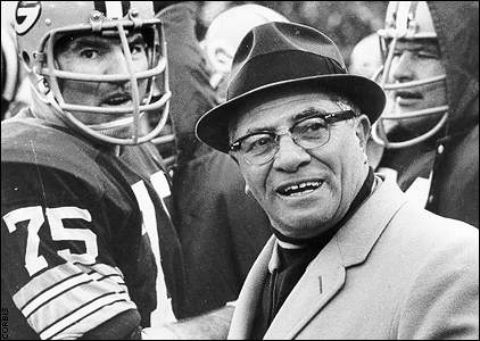
Vince Lombardi
Then in the 60s along comes Vince Lombardi whose oft quoted phrase: “Winning is not everything, it is the only thing” seemed to give license to do anything necessary to win. However it is a shame that another of his statements is so rarely mentioned, namely: “ the object is to win, fairly and by the rules …….”

Woody Hayes
There were others such as Woody Hayes, the hero coach of all us Ohio State alums, who adhered to the old fashioned codes of fair play which for many seemed outmoded. He saw himself as a father figure, and as such felt the responsibility to teach his players values and self- discipline. Although strict (the toughest guy on the team would prefer to eat his jock strap rather than face his wrath), he showed that he cared about his players for more than their athletic ability. When I was an intern at Ohio State University hospital, one of his team members was diagnosed with an acute leukemia, for which at that time there was no adequate treatment. Not only did he visit the player daily, he set up a schedule for the team members to rotate visiting in order that one of them would be with him 24 hours per day.
In spite of his legendary successes, he refused pay raises retorting that money was not that important to him. His salary in 1978, his final year of coaching, was 43,000 dollars. This year our current coach, Urban Myer, received a raise and now will be making an average of 6.5 million dollars per year over the next five years. Of course if he can’t make it on that, he probably can pick up a few extra bucks with endorsements and such.
There have always been those who would cut corners (it doesn’t seem politically correct to use the word cheat anymore), witness the “Black Sox” scandal of 1919 (“say it ain’t so, Joe”), but with millions of dollars at stake for coaches, players and institutions, many athletes will be competing for more than the satisfaction of winning. The “deflate gate” episode received a great deal of attention, but was defended by many as a minor infraction. I guess it is OK to cheat if it’s only by a little bit.
In recent years it seems to me the number of scandals reported have escalated to the point they no longer garner much attention. The use of performance enhancing drugs has apparently become epidemic, and at times have been responsible for so called “roid” reactions of violent behavior. Lance Armstrong, perhaps America’s most admired athlete, was found to be using such drugs. His only defense was that everyone was doing it, and that may well be true. It raises the question as to what should be done about records which have been set with the aid of such drugs. There are frequent accounts of athletes getting into trouble in bars, which should not be surprising since TV commercials like to couple beer drinking with sports.
Under Woody’s reign any player seen frequenting a bar risked being thrown off the team. Now my alma mater has decided to start selling beer at our football games. What a wonderful idea. We certainly need more drunks at the games. I recall when discovery of alcohol in one’s possession would result in immediate rejection from the stadium.
It is not that unusual for an athlete to deliberately attempt to cause injury to opponents, and is admittedly encouraged by some hockey coaches. Many teams are said to have an “enforcer” whose job it is to intimidate players on the other team. A football player who finds himself on the bottom of a pile is at risk of being battered. In baseball “dusting the batter” often resulting in hitting him with the pitch is accepted as part of the game.
Some of the simple things that have been eliminated from sports may have also contributed to the rise in un-sportsmanship behavior. For example, it used to be customary that when a referee charged a player with a foul, the player raised his hand to acknowledge responsibility. In actuality, the hand-raising might have been more for the benefit of the people keeping the stats before the introduction of the technology we have today and the responsibility benefit was just a gratuitous benefit. But today, instead of responsibility, fouls are often met by players with academy award worthy performances of eye rolling, gesturing, and head shaking.
In 1991 part of the Detroit Pistons team walked off the court when the game was not in doubt and with only 8 seconds to play in order to avoid congratulating the winning team. This has become a classic example of a lack of graciousness in defeat. The NCAA has found it necessary to impose penalties for “taunting” an opponent, but it has now become common for a player to pound his chest and do some kind of dance after making what he considers to be a spectacular play. Now, I don’t mean to suggest that players should not be proud of their accomplishments, but would it not be more sportsman-like to let the deed speak for itself? I submit we need more players like Walter Payton, the famous Chicago Bears running back, who was nicknamed “Sweetness”, by his teammates because of his demeanor on and off the field.
Money may not be the root of all evil, but it certainly has played an important role in advancing the philosophy of winning at all costs. For the major universities the number of Heisman trophy winners or graduates going to the pros may be a more important factor in advancing enrollment than the number of Nobel Prize laureates. The bonuses offered to coaches in return for their winning a championship or bowl game testify to the value of such victories; meanwhile the cost of attending college or professional athletic events is prohibitive for many middle class families.
Man has probably tested his strength, abilities, and endurance since the beginning, and those activities continue to serve a valuable function. Such competitions have contributed to his health, and well-being except for some of the earlier sports in which the competition didn’t end until one of the participants was either dead or incapacitated. It also has the capacity to help develop character, discipline, and the abilituy to work with others to achieve a common goal. I submit it is also helpful in our maturation to experience “the thrill of victory and the agony of defeat.”
As I was gathering material to support my biases about this subject, daughter/editor Maggie told me a story of how she witnessed a coach of an opposing team at her son’s soccer tournament coaching the kids on how “to flop” during the game in an effort to get fouls called on the opposing team. Maggie was appalled as am I. This week there was a story of a high school coach who ordered one of his players to deliberately run into an official to retaliate for an alleged bad call.
But I am sure there are a majority of coaches who decry cheating and disrespectful behaviors. I have a friend who is one such person. He resigned as coach of a little league team because he could not tolerate the behavior of parents who were loud, belligerent, and even shouted expletives at the children. In my day, kids found a vacant field or park and played unsupervised. Now even small children are dressed in uniforms and treated as if they are adults. Some must feel a great deal of stress. I wonder what ever happened to playing for fun, and what are we teaching our kids.
I guess it has always been true that the jocks were the most popular and admired kids in school. Now those seen to have exceptional talent are often recruited by colleges while in junior high school. It is little wonder that some come to feel that their exulted status should allow them more latitude in their behaviors, and indeed there is evidence that they sometimes suffer fewer consequences which is not apt to prevent further transgressions. It requires more maturity than the average teenager possesses to deal with such early fame and adulation.
This special recognition can sometimes have negative effects. I am reminded of a high school student who I was asked to treat for depression several years ago. In reality the reason for the referral was that he had announced his intention to quit the football team. I was told that he was an outstanding athlete, and had been the key to the team’s success that year. He had been briefly hospitalized following an injury, but now had recovered. After some initial probing he said he felt as if no one cared about him. After more questioning he told me that before football no one noticed him, and after he got hurt many came to visit, but only seemed interested in when he would be able to play again. He stated that not even the coach asked him how he was feeling, but seemed only concerned as whether he would be able to play again. He was convinced that the coach whom he had counted as a friend had no interest in him as a person. Whether or not his perceptions were correct, it does point out the importance of the unique relationship between a child and his coach.
In spite of the dark sides I am convinced that sports, especially the team variety, offer much that is good. Competition motivates us to give our very best effort, to test our limits of endurance, learn to focus on task, tone our bodies, and experience the value of working together. However; in my opinion when the basic tenets of sportsmanship are ignored the outcomes are tarnished, and values diminished. I am concerned that I don’t hear many discussions about sportsmanship these days, and that there is so little shame associated with its lack. I am also concerned when I hear a Charles Barkley announce that he does not intend to be a role model, for today’s children who are in dire need of role models. I wonder how many children have watched on TV the often replayed scenario of a famous football player as he strikes a woman with his fist, and pulls her from the elevator like a sack of potatoes. Talk about role models.
I believe we should expect our sports heroes to be heroic not shameful, and I think we need to take another look at some of those corny old fashioned ways of thinking about sports.
*Thanks to my son Peter who has made use of his encyclopedic knowledge of the history of sports to advise me on the subject of this paper.
From eshrink’s editor: So, what can we do to change this trajectory toward acceptance of bad behavior in sports?
As eshrink’s daughter, I defer to the lessons I learned while we played sports and watched sports growing up with the best parents in the land! As a parent, your children are always watching you. Focus on the skills one learns from sports: teamwork, integrity, resilience, and hard work, instead of the score. It’s great to win, but a child learns much more about life when he loses as long as you guide him/her in the right way. Point out good behavior when watching sports, “It was a great contest. Even though they didn’t win, they gave it their all, never gave up and should be proud of their effort.” Point out bad behavior: for example, when watching a game recently, a player intentionally yanked another player by his face mask dragging him to the ground and then another player made the throat slashing sign in the end zone. If you ignore such behavior, your child might think it’s acceptable. And don’t be afraid to speak up to other parents who are behaving badly, coaches who are being poor examples. You can speak up without putting others down. Silence in witness of bad behavior is construed as acceptance. As a fan and a parent, don’t boo opposing teams. Instead, cheer success of your team…a good play, good team work.
CONFESSIONS OF A BIRD KILLER
This morning I killed a bird. When I raised the garage door I found the little guy trying to fly through the window. He had apparently been trapped in the garage all night. I tried to direct him to the open door, but he continued to flutter and bang his little body into the glass in a desperate attempt to free himself. My attempts to shoo him out the open door only increased his agitation. He was atop the lower sash of the window so I brilliantly decided to lower the top sash so he could fly away. In the process he was crushed between the two parts of the window. As I removed him from that trap he fluttered his wings a few times, in a final futile attempt to escape.
Watching this helpless little creature die, gave me pause to think about our relationship with animals, and in particular why we humans seem to have this need to kill things, even each other. Is this some primordial hangover from the days when our ancestors decided to add fresh meat to their diet and thus become omnivores? This must have been a time when they became the pursuer rather than the pursued. It would not have taken them long to achieve their present day status as the grand champion of all predators.
Hunting Nostalgia
This was not the first time I had killed a bird, but this time it was as the saying goes “up close and personal”. On occasion birds have flown into my windshield, and I recall shooting a couple of them with my BB gun when I was a kid. I also shot pheasants, ducks, grouse, and quail back in the days when I thought I was a modern day mountain man. I had hunted squirrels, and rabbits, gigged frogs, and had been on a few coon and fox hunts. The camaraderie of fellow hunters and the dogs combined with the opportunity to be away from it all was the best part of those times. In retrospect, I don’t believe I ever did enjoy the killing part, but if you are macho man you can’t allow that sentimental stuff to be seen. The memory of one incident from many years ago is especially vivid. I was camped with a group of guys in the mountains of Virginia to hunt deer. On the second day, I got lucky and shot a magnificent ten point buck. I plodded up the mountainside and saw him lying there appearing to stare directly at me. I sat there for a time and wondered why I had done that. It was my last deer hunt.
Hunting to Extinction
There are now many species on the verge of extinction. The loss of habitat is usually listed as the major cause of diminishing numbers. Hunting as a source of food is a factor, but often more nefarious goals are involved. Tons of ivory have been harvested from African elephants, and likewise the white rhino has been slaughtered by the thousands so that his horn can be sold in Asia as an aphrodisiac. Now there is only one male white rhino left in the world. He is under constant guard to protect him from poachers.
 The extinction of the passenger pigeon may be the saddest of all such stories, for it is an example of how ignorance of our surroundings can have major consequences. Until the mid-nineteenth century it is estimated that there were billions (yes that is with a B) of passenger pigeons residing in the eastern United States. There are reports and even some photos of flocks so numerous that they blocked out the sun. They were a nuisance and also a delicacy, a combination guaranteed to place them high on the kill list for chief predators like us. Nevertheless, conventional wisdom was that the supply of these birds was inexhaustible, a premise that would be proven untrue as the last known passenger pigeon was shot in 1914. Her stuffed body is on display at the Cincinnati Zoo.
 Trophy Hunters
Then there are of course the trophy hunters, the most recently famous of which was the dentist who is said to have paid $50,000 to shoot a tame old toothless lion. When I was a kid, I read every magazine dedicated to hunting and fishing that I could find. I was especially fascinated by those stories (supposedly true) in which the author stood bravely in the path of a man eating lion, charging rhinoceros, or rogue elephant. Of course the animal would drop dead at his feet from his well placed bullet (did I mention that our hero was a superb marksman); otherwise he would not have been able to write the story. Perhaps the dentist had been exposed to the same literature as I, but when shown on TV with his keeper, this lion looked to be about as dangerous as a dairy cow.
Do Hunters Serve Any Purpose in the 21st Century?
Lest I sound too negative I should say that I have nothing against hunters. Many of them are ardent conservationists. They also serve a valuable function as the ones who perform the predator function. Over population leads to disease and malnutrition, and the natural predators for many species are no longer available. Last year there were 191,000 deer reported killed in Ohio (note the word reported) yet the deer continue to feast on Barb’s flowers. Hunting is not like shooting a cow in the pasture, but requires skill, patience and knowledge.
This dog don’t hunt…
As for me, perhaps it is my age, but I have lost my zest for killing anything (flies and mosquitoes excluded). My guns have all rested on the wall rack for the last 40 years or so. I like to look at them from time to time and be reminded of those times listening to Pamela, my basset hound announcing in full volume that she was in hot pursuit of a rabbit, or looking for a squirrel I hear chattering of a squirrel as the sun comes up through a clump of shell bark hickory trees, or the sound of a ruffed grouse taking off with a sound so sudden and loud that I might stand there forgetting to lift up my gun.
I don’t remember much about the killing part of those hunts except for that deer whose dead eyes continue to haunt me from time to time. In spite of my squeamishness, I feel no remorse as I bite into a nice juicy steak. There is no denying the hypocrisy when we chastise those who kill “helpless” animals while paying others to kill equally helpless animals in order to satisfy our desires to eat the flesh of those animals. I wonder if a visit to a slaughter house would affect those appetites. But then we frequently use the “out of sight, out of mind” mechanism to deal with such contradictions.
Thrill of the Kill
There are some people who have no similar compunctions and actually seem to enjoy killing things. You might think that an old psychiatrist like me would be able to explain why this is so, but in truth I can only offer conjecture, for it remains for me a mystery.
LIFE on a SUNDAY MORNING
Editor’s Note: This is a post from last year that I’ve transferred from dad’s previous blog. Enjoy!
June 8, 2014
It is Sunday morning and I have been sitting on the patio surveying my miniscule portion of the universe. It is a beautiful balmy summer morning. I am surrounded and engulfed in the sounds and sights of life. Birds seem to be especially vocal, Charley the chipmunk who has outsmarted me at every turn in my attempt to capture him brazenly runs past my feet chasing a new found friend, which probably means I will soon have an entire family with whom to contend. Lilly runs off to add her voice to the chorus of dogs probably in objection to someone’s use of the street without their permission. I notice that the Christmas tree which I planted a short time ago (it seems like a short time) is only a couple of feet shorter than the electric pole which stands beside it. The hibiscus plants which I had given up for dead due to my neglect have made a remarkable comeback and are about to shower us with more beauty. A sprout has suddenly appeared at the side of the stump of a tree which had cut down nearly two years ago, but it has performed its Lazarus like miracle and refuses to stay dead.
As I focus more intently on my environment, I suddenly become aware that within my view is every shade of green imaginable. There is a cloud moving toward me, and it will soon be dropping more of the blood of all this life. That huge ball of fire so powerful that we dare not gaze directly at it provides the energy to keep it all moving. What an awesomely miraculous thing, this phenomenon we call life. I have spent most of my life studying life as it exists in my own species, but rarely have I taken the time to appreciate the ways that it surrounds, engulfs and nurtures me. I do recall lying on the grass, and staring in wonder at cloud formations as a child, with a feeling of reverence almost spiritual in its intensity. Many of the questions from those days still remain without answers, but as I recently told Carter (one of my exceptional grandsons) I believe there is more wisdom in questions than in answers.
Surely as I see my own personal supply of it dwindle, life becomes more precious, and I suspect that is not unusual for we old buggers. I hear much about “finding the meaning of life”, and such similar claptrap, and I suppose I have also engaged in such fool’s errands, when it would have served me well to spend more time simply enjoying and appreciating it, much as I did this morning. I have in the past made the cynical remark that I would rather go to a funeral than to a wedding. But as with most cynical statements there was a grain of truth in that with funerals I was forced to confront my mortality, and come away vowing to make the most of my time. Those promises to myself however were short lived and I soon returned to my charge through the trees while losing sight of the forest.
Take it from a guy who has been there “the good old days” were not all good, but in my opinion one of the traditions worth saving was the Biblical admonition to use the Sabbath as a day of rest, and as a time to reflect on things beyond our control and understanding much as I did this morning. In other words there was more to Sunday than just going to church. There were the “blue laws” which actually made certain activities illegal when carried out on Sunday. Since all religions did not use Sunday as their Sabbath, these laws were obviously discriminatory; however they did serve to promote time for reflection, and family cohesiveness. But, it was not only the blue laws that limited activities. In those days my soliloquy would not have been interrupted as it was this morning by the sound of a neighbor mowing his lawn. It was considered very poor taste bordering on sacrilege for one to engage in any kind of work on Sunday. There were exceptions of course for positions vital to the community functions such as medicine, law enforcement, firemen etc.
There was an oft quoted saying that one should “make hay while the sun shines’; however if the sun was shining on Sunday the hay would have to wait until Monday. No farmer “worth his salt” would want to be seen working his fields on the Sabbath. Some women were so extreme in their views that they even refused to cook on Sunday; consequently would spend much of Saturday preparing food for the Sunday after church meal which was usually the grandest of the week. Even though the industrial age was in full swing, factories were expected to shut down unless there were compelling reasons not to do so. Business transactions were to be avoided on Sunday and almost all businesses were closed. It was a day for family activities such as picnics and visiting, though often the afternoons consisted of sitting on the front porch watching what could be seen of one’s own part of the world.
If I sound nostalgic, it is because I am, but I suspect most octogenarians suffer from some degree of that malady. Sundays now seem to be a time to catch up on all the work not finished during the week. It has become the favorite time for shopping. The only thing restful about the “day of rest” is that some may get to sleep in a little longer, that is if they don’t have a job which requires them to work on Sunday. I miss front porches which seem to no longer to be necessary, and if present rarely used. I miss seeing children playing out in their yards on Sunday. I would like to see them abandon their electronic toys occasionally to lie on the grass and look at the clouds, maybe even play hop scotch or hide and seek. I have no desire to go back to those days of my youth, for undoubtedly this is the best time to be alive in the history of man at least in this part of the earth, but I do believe we have much to learn from what has gone before. During my brief time on the planet, I have seen many so called innovations which were actually recycled from the past, and I believe there is still much to be learned from our ancestors. One such lesson could be regarding the value of a weekly day of rest and contemplation. If readopted, such a tradition might even result in some reconciliation of the tree huggers and money grubbers which would undoubtedly help us to become better stewards of our planet.
Those who know me will undoubtedly note a bit of hypocrisy in this essay for I have been a chronic violator of this biblical injunction since my teen years. I too felt that I could not “waste a day”, but now am convinced that a regularly scheduled goof off day would have served me well.
Love Good
The Big C and Me
Editor’s Note: This is an excerpt from the book “Reflections for the Future” that includes many of my dad’s writings (e-shrink). You can order it on lulu.com (hard back) or download the pdf of the book for free. Dad referred to this article in a recent blog post so I’ve copied it here.
They faxed the results of my CT scan the other day, and it showed no signs of reoccurrence. Briefly I felt a sigh of relief, such as I imagine the men on death row must feel when they get a reprieve to delay their execution. This journey began nearly a year ago, only a few weeks after my brother died of a rapidly progressing lung cancer. Fortunately, he had little time to suffer as he died only three weeks after he was diagnosed. My wife insisted that I should have a chest x-ray, and there it was, “a right upper lobe mass.” My hopes that it might be a benign lesion were dashed when the follow-up scan was interpreted as “Probable bronchiogenic carcinoma” and confirmed when the PET scan “lit up.”
One would think that my training and research interests would have prepared my to deal with this problem, for back when I was an academic my colleagues and students jokingly referred to me as the “Angel of Death.” This was due to my interest in thanatology (death and dying). At least on a conscious level I was interested in how awareness of our mortality affected such things as personality, super ego development, motivation, mood problems, suicidal and other self destructive behaviors. I now wonder if much of my interest had more to do with my own personal conflicts than a strictly scientific interest. My research led me to the believe among other things that Freud was correct when he stated that people generally were unable to imagine their own non-existence. He was also quoted as having said while he was dying of a painful malignancy that he envied those who believed in an afterlife. Billy Graham seems to have something in common with the Islamic suicide bombers in that he has said that he is looking forward to death for he is convinced that he will have another one much better than his current one. I have also seen many patients who yearn for or even attempt to hasten their death in order to rid themselves of unbearable physical or emotional pain. For some my studies seemed to indicate that there may even be a sexual component to their fantasies of death, and for others a reunion with loved ones who have “gone before’. These are attitudes which I labeled as thanatophilic.
Unfortunately, I am not a thanatophile, On the contrary I am quite thanatophobic, I love my life and as is the case with most things, with the threat of its loss it becomes more precious. My education in the sciences has given me an appreciation for the awesome complexities of life, and some understanding of its fragility, but it is more than the sum of its parts. Now more than ever I look out our kitchen window and marvel at the birds as they all struggle to sustain their life and are programmed to replace themselves so that “life goes on”. I am overwhelmed with their beauty and grace. Is life just a complicated chemical process or does it house something spiritual? I am certainly not the first person to pose that question. When I attempt to understand the physicists as they theorize about the nature of matter and the vastness of the universe, it seems my life must be very insignificant; however sometimes I act as if the world could not get along without me. I guess Freud really was right in that I can’t imagine myself as being dead.
When I first received the shocking news that I had cancer, it suddenly became very clear that my musings and “scientific” investigations into how people think about and cope with death were of little use to me. Kubler-Ross was a researcher at University of Chicago who had beaten me to the punch with her book on death and dying; consequently I had always criticized her for what I considered an overly simplistic explanation of the dying process. Much to my chagrin I found myself to be a poster boy in following her descriptions of people’s behaviors as they faced death. The 1st stage she described was one of grief, and I did that one well all the while attempting to hide it out of a sense of embarrassment. Initially I tried to regain control by trying to “get my affairs in order”, but that rapidly gave way to a feeling of intense sadness which was most severe when I thought of my Grandchildren. I found myself suppressing tears whenever I thought of them. I told myself this was ridiculous, for how could I anticipate feeling this sense of loss if I were dead. If I were dead I wouldn’t feel anything or would I?
It has been said that ignorance is bliss, and also that a little bit of knowledge is dangerous. I knew my body had betrayed me and that my own cells were attempting to destroy my vital organs. I could picture them as they would look through a microscope with their bizarrely shaped nuclei, many of them in the process of dividing as they rapidly reproduced themselves. I knew the traitors had spent the last several years quietly multiplying in my lung preparing for the final assault. The obvious defense against this army was to totally destroy them, and this could be accomplished only with surgery. There would be collateral damage of course, but pulmonary function studies indicated that my body could survive the loss of a lobe (approximately ½ of my right lung). Barb made me promise to “fight like hell” and I vowed to do just that; however as the day of surgery came closer I became more fearful. My fear was that I would wake up attached to a ventilator with my arms restrained and unable to speak, or of some other complication ( I could think of many) that would render me helpless. The idea of such helplessness had always been terrifying to me. The ultimate horror I could think of was quadriplegia with right sided stroke a close second. It turned out those fears were groundless and I tolerated the surgery well for an old bugger. The epidural almost completely eliminated the post operative pain for the first few days, and other than being tethered to a couple of garden hoses protruding from my chest wall I was reasonably comfortable, after Barb had raised enough hell to get me a more comfortable bed than the slab on which they initially placed me.
The pathology report was favorable with no tumor cells found in the lymph nodes ( the most likely route through which the they could spread) and although the tumor involved the visceral pleura ( the covering of the lung) it did not appear to have penetrated into the pleural cavity. This invasion of the pleural cavity is what had killed my brother. The five year survival rate with this type and stage of lung cancer is sixty seven percent. I am told that this could be improved by seven more percent with chemotherapy: however the side effects from the extremely toxic drugs designed to kill those little devils that might have escaped can also do serious damage to healthy parts of my body. I decided to take my chances without it.
My spouse who has been a cancer survivor for twenty years has been a rock, and we have rather deftly switched roles with me now dependent on her for support. She acknowledges my fears, discourages my somaticising, and encourages me to live in the here and now. I have gone through Kubler- Ross’s “bargaining stage”. In my case this involved pleading with God to allow me to stay here to see my grandchildren grow up. I have been amazed at the number of people who knowing of my illness say they are praying for me. This includes friends, casual acquaintances, and even patients all of whom seem to know of my ordeal. I have decided that with all of the problems facing God it is presumptuous for me to expect special treatment, so I have decided to keep my eye on the ball and do what I can to follow his will as I imagine it to be. I hope to stick all these death and dying fears back in some corner of my mind. It has been my experience that one of the major problems with worrying is that we usually worry about the wrong things and the bad things that happen to us are the ones of which we never thought. The fact that I don’t want to die is a testament to how fortunate I have been to have such a wonderful life. Maybe my luck will hold and I will die in my sleep in another twenty or thirty years.
SUCCESS
 The other morning I awakened to a pleasant surprise. CNN had someone on the screen other than Donald Trump. Jimmy Carter was holding a news conference about his illness and plans for the future, a future that one could safely assume was rather limited since he acknowledged that he was about to undergo treatment for a melanoma with cerebral metastases.
As a cancer survivor myself (see: THE BIG C AND ME) I felt my admiration grow even more for this man who had always been my hero. This 91-year-old man of unshakable faith, showed no bitterness or self- pity, but was determined to carry on with his life’s work as long as he could function. His response to questions about how he felt about his illness was typical Jimmy Carter: “I will hope for the best and accept what comes.”
As I considered the accomplishments of this person who had come from inauspicious beginnings as a peanut farmer in a small town in Georgia, a feeling of awe came over me. As a young man he left the small town of his childhood to attend Annapolis, bent on a career in the Navy. Subsequent to that, he attained an engineering degree and was involved with Admiral Rickover in the development of nuclear submarines. After returning home, he not only was elected governor of his state and then to the highest office in the land, but won a Nobel Peace Prize after negotiating a treaty between Israel and Egypt that may have saved thousands of lives. It would also seem unlikely that a son of the deep south would become an outspoken foe of bigotry and a strong supporter of human rights throughout the world, but he did. A failed attempt to rescue American hostages in Iran is said to be responsible for his defeat for a second term as president.
Mr. Carter’s presidency was labeled by many as a failure, and his many achievements in economic and foreign policies have been largely ignored. His integrity however has never been challenged. His fulfillment of his promises to “never tell a lie” and to “never avoid a controversial issue” did not enhance his popularity, for as any successful politician will admit, truth telling is not a winning strategy in the political arena. His successor however could have used the tune “don’t worry, be happy” as his theme song.
The loss of his presidency would prove to be the beginning of even greater exploits. Most ex-presidents build libraries which are more like monuments to themselves. They seem to be very concerned about their legacy, which shouldn’t surprise us, after all those with weak egos are unlikely to ever make it to the top spot. Mr. Carter; however, used his monument as a platform on which to establish a center to “wage peace, fight disease, and build hope.” He did confess in his news conference that he has cut back his schedule somewhat, but still plans to remain involved in The Carter Center’s operation. When asked about his most fervent wish, he replied “to outlive the last guinea worm.” For those not familiar, the guinea worm has been a prevalent cause of much suffering throughout many parts of the world and has been almost totally eliminated through the efforts of the Carter Center.
Not only was I impressed with his vigor and enthusiasm, but by his abiding concern for issues he obviously considered more important than his own. Now I ask you, how could you not love a guy like that? For me, listening to him was very emotional. I experienced an intense feeling* of respect. A few days later, a grandson happened to be visiting and we were discussing my blog. As reigning patriarch, I have issued a hard and fast rule that all family members must read this stuff whether they like it or not. Accolades are appreciated, but not required. On the other hand, those who are critical should expect to move down a notch or two on the Christmas gift list. After successfully passing the quiz on the contents of my last blog (although not a fan of Ronald Reagan, I do subscribe to the trust but verify policy) he went on to suggest that I do an essay on success.
Since both my grandsons are beginning their senior year in college, I could understand why such a topic might be on their minds. I also felt the topic particularly serendipitous due to my recent encounter with Jimmy Carter. An analysis of his career brings up the problem of defining exactly what we mean by the word success, and how do we make that judgment? What do we mean when we say a person is a success or a failure? Does it make any sense to make such all encompassing judgments about people since the inconsistent conclusions arrived at by those who are judging would seem to prove that such distinctions are quite subjective. Is success like many other things in life in the eye of the beholder?
There generally seems to be a consensus that Carter was the most successful ex-president in our history, but the agreement ends there. As to the rest of his life, there are those who applaud and those who consider him a failure in many ways. One could say that his political career was a mixed bag. He lost his first bid for governor of Georgia, and his  reelection for president. His presidency was mired by so called “stagflation” for which he was blamed by some while others gave him credit for initiating policies that got the economy back on track. I believe most historians would agree that the negotiated peace treaty between Israel and Egypt was his most laudable success. In spite of this, he was accused of anti-Semitism for his book on Israeli politics: “Palestine Peace not Apartheid” in which he presented the Palestinian side of the story.
With this in mind one must conclude that the distinction between success and failure very much depends upon one’s values. Those of us of a more liberal position are more likely to judge Mr. Carter as a successful person than those of a different political persuasion. Our success in competitive activities such as sports can be more easily determined by winning. We also have developed tools, even though crude, to help us measure academic success. In business, success is generally measured in terms of profits generated, but we have no way to assess the most important facets of life such as honor, compassion, fidelity, fairness, integrity, parenting, and citizenship to mention a few.
The term success is usually viewed favorably by society, but can also have negative connotations. The most succinct definition I could find was “the accomplishment of an aim or purpose”. Obviously if that goal is nefarious in nature the accomplishment will not be viewed in a positive light. For example there are successful criminals, con-artists, and other asocial people. There may also be an issue with the means of accomplishing the desired goal. There may be not only illegal but unethical factors contributing to an individual’s success. Unfortunately such behaviors are many times ignored as successful people are often idealized.
Is the Key to Success Linked to the Courage to Fail?
With all this in mind I have come to the conclusion that each individual is the only one who can judge his success. Of course we need to set goals if we want to be successful in reaching them, but if the goal is to leap tall buildings in a single bound our chances of success are diminished. I have known people who are reluctant to set goals for themselves presumably due to fear of failure. I can only assume their life must be very boring. Success requires risk, and one must be prepared to accept failure for in spite of our best efforts we will not always succeed. It is said that many of the most successful people throughout history have had multiple failures prior to achieving their goals. In my own case, although I have never aspired to lofty goals, I figure my success rate to be about one success for every 10 failures. It is therefore logical that success usually requires a certain amount of determination, and the ability to not be dissuaded by failure. It also lends credence to the age old admonition: “If at first you don’t succeed, try try again.”
Flexibility in interpreting results may also be helpful. At times it may be necessary to revise or reframe one’s expectations. There may be unintended consequences of reaching one’s goal which may exceed or diminish expectations. If a goal is not attainable, it may be possible to modify it in such a manner that one can still enjoy the feeling of success. I have a brilliant close friend and colleague who has written much about psychiatry both for lay and scientific consumption, most of which has remained unpublished. I sense that he thus feels as if he is a failure even when I point out to him that he has been successful in producing thoughtful extremely well written material, and further remind him that his judgment is at least as good as the editors who reject his writings. It is always dangerous to allow someone else to be in charge of one’s self-esteem.
Most successes go unnoticed so it is important that we acknowledge our successes to ourselves. Patting oneself on the back does not necessarily denote arrogance, and will help us develop the confidence needed to pursue more successes. Failure sucks, but even an occasional success will rid us of that feeling. Mankind has undoubtedly been motivated by the search for that feeling one associates with reaching a goal.
At this point in my blogging career, I find it necessary to modify my goals for success. I have come to accept that my writings will not be appearing in the New York times, be going viral or be considered for a Pulitzer Prize; consequently my quest for fame and fortune must end. To that end, I will reread this thing and convince myself that it is worth reading, and crown myself a success.
*One of my friends who reads this stuff has questioned my definition of respect as a “feeling” in my last blog . The highlighted word is for her.
THE GREAT DEBATE

Republican presidential candidates from left, Chris Christie, Marco Rubio, Ben Carson, Scott Walker, Donald Trump, Jeb Bush, Mike Huckabee, Ted Cruz, Rand Paul, and John Kasich take the stage for the first Republican presidential debate at the Quicken Loans Arena Thursday, Aug. 6, 2015, in Cleveland. (AP Photo/John Minchillo) ORG XMIT: OHJM122
Along with a few million others, I recently watched the republican debate which had received nearly as much hype as the Super Bowl. Well I should qualify that statement by admitting that I checked out and went to bed after the first hour. When the next day I asked my political junkie wife if I had missed anything important, she thought I had, but couldn’t remember what. It has always seemed to me a bit disingenuous to call these spectacles debates. My understanding of debates is that opponents line up on either side of an issue and present their arguments in favor of or against it. When I was in high school we had a debate team which the smart kids were invited to join; consequently I received no such invitation.
THE SWIMSUIT COMPETITION
Presumably those who reach the level of presidential candidates must be intelligent. I heard one pundit mention that Senator Ted Cruz who is a graduate of Princeton and Harvard Law school was an outstanding student and is extremely intelligent. Perhaps he is a more humble person than he appears, as he has managed to hide this quality quite well so far. The show seemed more like a Miss America pageant as the presidential hopefuls were all putting their best foot forward and doing their best to look presidential. Mr. Rubio was by far the handsomest of the group in a boyish sort of way. Mr. Trump had appeared to modify his coiffure; although he did not show up in his baseball cap, which he wears at campaign stops presumably to let us know he is just one of the guys. I have also noted that many of those running for the office now give their stump speeches dressed sans coat or tie and often even with sleeves rolled up, just like normal people. But on this night they all wore suits and white shirts adorned with their favorite power tie.
NO LIVES WERE LOST
The viewership of these so called debates may also be explained by the public’s hope to witness an historic calamitous gaff, much in the same manner as some watch auto racing to see if there will be a crash. Now, any politician knows that if one is to be successful it is imperative that he/she never directly answer any question. During the time I watched I thought the interrogators did a credible job of asking questions, but they were outmatched by this chorus line of masterful diverters. In most instances they were able after their non-answers to slide seamlessly into a dissertation of all the qualities and experiences that guarantee they are the most electable candidate. Of course in politics electability always trumps ability.
FAMILY STUFF
There appeared to be a consensus that it was necessary to convince the electorate that they were all just like us. Those with humble beginnings used their childhoods as proof that they were of high character, and understood our problems. I did listen with interest as my own Governor Kasich listed his accomplishments. Frankly, until then I didn’t realize how good I had it. Although I thought he had done some good things, I could not understand how the fact that his father was a mailman figured in as a qualification to be President. On the other hand when Jeb Bush insisted that he was proud not only of his father, but also his brother, I felt this called his judgement into question.
WHAT WAS I THINKING
After thinking more about the subject I realized that it would not have been possible for a debate in the classical form to have taken place. Since all republicans in congress vote together on almost every issue, it would be difficult to find an issue in which one could find opposing sides. While democrats seem to think it is cool to disagree, republicans agree with each other on all important issues, which brings to mind the famous quote by Walter Lippmann: “where all think alike, no one thinks very much”. One should not generalize; however as they do have some outstanding thinkers in their distant past: Teddy Roosevelt and Abe Lincoln for example. Far be it for me to disparage any of today’s best and brightest, but it seems unlikely that any of these contestants could channel those spirits. Conversely; I believe it was Will Rogers who said “I am not a member of any organized political party, I am a Democrat”. Somethings seem never to change very much.
NO NEWS EQUALS MORE PUNDITRY
It has been nearly a week since that momentous occasion, and the pundits are still at it. Since there have been no major catastrophes to report other than a couple of shootings of unarmed citizens, which have now become so common that they are hardly newsworthy, they continue their focus on the big show. My charming wife is addicted to CNN; consequently I have endured continuous exposure to a long line of experts with often conflicting observations. There did appear to be a consensus that “the Donald” was the victor. It is true that he made the most noise and received the most attention, and in this day and age that is probably all that is needed to be victorious. He apparently subscribes to the widely held premise of agents and advertising experts that there is no such thing as bad publicity.
WHERE ARE THE GAFS WHEN YOU NEED THEM
There were a few negative comments about Ran Paul’s temper, but I sensed some disappointment at the lack of any major screw-ups. It would have been nice if someone would have forgotten their lines a la Rick Perry, or something like the famous John Kerry gaf: “I voted against it before I voted for it” could have spiced up the narrative. Mostly the contestants “made nice” with Mr. Trump because of his implied threat to run as a third party candidate if they were mean to him which would likely result in a democratic victory. Besides it would be sacrilege to violate their hero, Ronald Reagan’s, eleventh commandment that one “should never speak ill of another republican”.
THE SECOND TEAM IGNORED
In response to comments about the selection process, a preliminary affair was arranged for those who could not make the cut. CNN gave the unanimous decision by a knockout to Carly Fiorina. The ones I listened to seemed mildly surprised at her performance, but made no mention of her having been fired from Hewlett-Packard. Since the show, I have heard little more of the also rans, and it seems unlikely that they will be able to raise enough money to buy a place on the ticket.
KICK THE BUMS OUT
If you a think I am cynical about politics, it is because I am. From the looks of what is happening during this campaign, it appears that I am not alone. One need only look at the crowds of thousands that are attending the speeches of an admitted socialist, and polls that show a person who had been labeled a joke a few months ago in the lead for the republican nomination to realize that the electorate is fed up. They are clearly saying that anyone is better than those we now have. How is it that when nine out of ten people disapprove of the job our congress is doing that incumbents continue to be reelected.
THE BEST GOVERNMENT MONEY CAN BUY
Something is seriously wrong when our representatives admit that they spend more time raising money to be reelected than doing the work for which we pay them. There are some estimates that the Presidential election alone will cost 5 billion dollars. Add an equal amount for all the other races for federal offices and as Senator Everett Dirksen famously said “a billion here and a billion there and pretty soon you are talking real money”. Candidates sit at the feet of billionaires, and beg for contributions. Commentators assume that those with the most campaign money will win their elections. If money is speech as our ideologically tainted supreme court says, then thousand dollar a plate dinners speak volumes. It seems to me that we could fix a lot of pot holes and feed a lot of children with a few of those billions.
ENOUGH ALREADY
The election cycle is a thing of the past for campaigning is now continuous. The term: statesmanship is rarely heard anymore. Campaign TV choreographers put more focus on personality than qualifications. Ads denigrating and slandering opponents have proved to be effective; consequently we are deluged with negative ads. The media outlets are the only ones I know who like this stuff, but it seems to work. Repetition must be a necessary component for successful brainwashing.
CHEATERS NEVER PROSPER???
In many countries elections are rigged usually by intimidation or fraud. As an enlightened and democratic country, we are proud to say that our elections are fair and closely monitored. That is not to say that our political parties have not looked for creative ways to shift the odds in their favor. Undoubtedly those involved in these ploys would find ways to rationalize their behaviors, and deny unfairness. Our news media give less coverage to these sorts of things than they due to an under inflated football, and it disappoints me that there is not more outrage. My favorite peeve of these strategies is the gerrymandering which has become an accepted means of revising boundaries to give one side an advantage. It has become accepted practice by both Republicans and Democrats. Even more outrageous and deserving of contempt however are those attempts by some states to limit voting of certain groups by requiring ID not readily available to them. In most cases they are not only undemocratic, but racist as well. These are the kinds of shenanigans that bring shame to a democratic society, and undermine the faith we need in our government if we are to survive in a hostile world.
KEEPING THE FAITH
There is no doubt in my mind that we live in the best country on earth. It is also clear to me that it can be better. History informs us that no government is free from risk of decay from within. We remain the most powerful nation on earth but we need to remember that power does not guarantee righteousness. I am grateful that in my country I am able to write these kinds of criticisms of my government without being hauled off to jail or worse. In my opinion that is the most important freedom of all. Well there I go again, starting to preach when my assignment was only to apply my extraordinary journalistic skills to cover the debate. Hey, that giant ego thing works for Trump, why not me.
CAUSE AND EFFECT

Yesterday, I had an interesting discussion with my Grandson concerning the recent episode in which a young woman was found dead in her jail cell of an apparent suicide. She had been stopped for a minor traffic violation which following a confrontation between her and the arresting officer resulted in her incarceration. This was portrayed in the media as merely another example of the use of excessive force by police. After watching the images from the officer’s body cam, I likewise placed the entire blame for the incident on the cop for having over-reacted to an angry lady who he had charged with a very minor traffic infraction. Imagine my surprise when my grandson placed an equal amount of responsibility on the victim.
Carter reminded me that the lady had appeared to deliberately provoke the policeman, which set in motion the events leading to her arrest. He went on to generalize from that with the observation that his generation had “no respect for authority”. He cited examples from his own experiences such as the relationships of his peers with his basketball coach, teachers, parents, those charged with law enforcement, and indeed anyone in a position of authority. I responded that in my opinion this cop was being a real asshole, and not deserving of any respect. He counterpunched with the statement that I was missing his point for if she had treated the officer with the respect due someone in his position, she would have simply received a ticket for the violation and moved on. He did agree that the cop had acted inappropriately and that the entire interaction was something which required the participation of both parties.
With this last statement, I bid a hasty retreat for my own Grandson had inadvertently rubbed my nose in one of my own mantras. It hearkened back many years ago to the time when I taught marital therapy. My students were reminded that most couples blamed each other for their problems; therefore establishment of blame could never be therapeutic and must be avoided at all costs. The couples needed to learn that they both played a part in causing their problems if they were to be successful. Of course this same principal would apply to any human interactions, and my own analysis of the situation under discussion had ignored my own admonition.
Later, I thought (always a danger in my case) more about the subject of respect and the issue of authority. Initially, it occurred to me that if Carter respects his elders, why did he disagree with me, but that was followed by the not so brilliant insight that were he to pretend to agree solely because of who I was he would be patronizing me, which is for me the worst kind of disrespect. I concluded that the idea of respecting authority was not as simple as it would appear at first glance, and decided to google my old friend Mr. Merriam-Webster for the definitions of both respect and authority. The results were as follows:
AUTHORITY:
- The power to give orders or make decisions.
- The power or right to direct or control someone or something.
- The confident quality of someone who knows a lot about something or who is respected or obeyed.
- A quality that makes something seem true or real.
RESPECT
- A feeling of admiring someone or something that is good or valuable, important, etc,
- A feeling or understanding that someone or something is important, serious, etc, and should be treated in an appropriate way.
- A particular way of thinking or looking at something.
Anthropologists seem to agree that the ability of humans to band together in order to achieve common goals was an important factor which led to our domination of the planet. Prehistoric man learned this early on: families got together into groups, who then joined with other groups to become tribes and so on. The process continued as bigger was found to be better resulting in our current state of affairs with nation states populated with millions or even billions of people.
It must have become obvious early on that if a group of guys decided they would like to kill a Wooly Mammoth (said to be about twice the size of your average elephant) there would need to be a game plan. There would need to be someone in charge who would be given the power to “direct and control”, and who “knows a lot” about how to kill that big sucker, in other words someone in authority as defined by Webster. It goes without saying that the hunters would need to have respect for their leader’s skills and/or experience if he was going to risk his life. It seems reasonable to assume that the respect accorded the leader would have been earned.
I am one who has always considered humility a virtue; consequently when I went into the Navy as a medical officer, I felt embarrassed when enlisted men saluted me. I confided this to an old chief with whom I worked and he assured me they were saluting the uniform and what it stood for, not me personally. In that case I had not earned the respect deserving of a salute, but others had done that for me. I was definitely an authority figure for I was given “the power to give orders and make decisions.” I was endowed with that power by virtue of having taken an oath to preserve and protect the Constitution of the United States.
In like manner the police officer under discussion had taken an oath to protect and serve his fellow man, as lofty a goal as one could imagine. With that in mind he was endowed with considerable power, and his badge was deserving of respect. He forfeited that respect at the moment he violated his oath for his behavior was antithetical to his promise to protect and serve. I will concede that the lady in question did not initially offer the respect due the cop, but feel strongly that his is the greater sin for such incidents undermine the credibility of those who take their mission seriously and disrespect a profession that should be the most honorable of all.
In my opinion the ultimate blame for this incident should be laid at the feet of a system that does not adequately vet applicants for law enforcement positions, nor offer reimbursements sufficient to guarantee the most highly qualified and trainable people. We are told there was a time when the neighborhood cop who walked his beat daily was accepted as a highly respected member of the neighborhood. Sadly there are now many neighborhoods in which police are feared rather than respected.
In that vein I noticed that Webster’s definition of respect describe it as a feeling of admiration. I do agree with Carter that the current generation is less respectful than was the case in my younger days. That would seem to indicate that they do not find people in positions of authority whom they can admire. Perhaps we who complain about lack of respect are actually the cause of the problem. The current generation certainly hears more about the moral or ethical failures of those in authority than about their good deeds. Today our children witness a continual parade of scandals, cheating, drug abuse, and other bad behavior by those athletes who in previous generations would have garnered unlimited respect.
We also note that authority is power. The quote from Lord Acton that “power corrupts and absolute power corrupts absolutely” is as true today as it was 150 years ago. Throughout history absolutely powered people or governments have time and again proven his point; consequently although authority is necessary in any civilization we must be ever vigilant that the power granted does not exceed established boundaries. The lust for power seems almost a part of the human condition. Unchecked it is certain to undermine the purpose of the authority from which it originated.
Before closing my ramblings I feel the need to express my concerns about the power exerted by those who purport to represent my interests. Millions of dollars are now being spent on never ending political campaigns to elect people who are to make and enforce laws which I must obey. Our supreme court has ruled that money is speech, and I contend that in our society money is power. If both positions are accurate then people in poverty are likely to be left speechless and powerless.
For those of you who have endured this far, I end offering some free advice, (a commodity that never seems to be in short supply, and is rarely worth more than you pay for it). If you admire a person or entity it probably has earned your respect, but if you don’t, it more than likely deserves your contempt.
Separation Anxiety + Mental Health
 Lincoln is a very large black Labrador retriever, who has bonded to my son-in-law. Bonded does not adequately describe this relationship for it is as if Lincoln is attached to Jim by a very short invisible rope. Recently, during a visit to my daughter’s home I had the opportunity to witness a hilarious demonstration of this attachment. Jim was mowing his yard with Lincoln at his heels, and when he turned to push the mower in the opposite direction Lincoln followed. This continued with Lincoln following back and forth until the job was done. In a similar manner, he is rarely separated by more than a few feet from his master. When Jim leaves he is frantic, constantly watching the door, pacing back and forth, obviously quite agitated. Lincoln would seem to be the poster child (excuse me, poster dog) for the diagnosis of separation anxiety.
According to the ASPCA web site, the condition is not uncommon among dogs, and is most common among those rescued from kennels, and those who have been moved or have lost their major guardian. In other words, it seems that dogs know when they have a good deal and worry that they might lose it. Lincoln fits that category as he had been given up by his family and given to Jim. Watching Lincoln started me wondering if we humans are all that much different from him.
Most of us can recall at least one incident when we experienced “homesickness.” In my own case I remember vividly very intense feelings when left to stay with my Grandparents. I never have been able to find words to adequately describe those feelings, but have likened it to a kind of psychological amputation in that a part of one’s self is missing. Those who have experienced it will understand how painful it can be.
Leaving for college is a common precipitant for it represents an abrupt breaking of many of the bonds attached to things familiar and to those upon whom we are dependent. My youngest daughter Maggie (currently my editor and the one who bears total responsibility for talking me into writing all this stuff) was the most memorable example of this phenomenon; although, her siblings also experienced it to some degree. Maggie was eager to fly away from the confines of a boring small town to gain freedom from parents who continued to treat her as if she were a child and to subject her to all kinds of stupid rules. As a matter of fact she was so convinced that geography would be the solution to her discontent that she refused to consider any school within her home state.
The vision of that skinny little girl surrounded by huge limestone buildings gently sobbing and feebly waving a goodbye as we pulled out of that parking lot has never left me. Little did she know the effects her mother and I felt from that poignant scene, for we were heading home to an empty nest. Nothing would ever be the same. Maggie was a prime example of the wisdom of the admonition that one should be careful what he/she wishes. She lost nearly 20 pounds during her first two weeks, and was barely able to function according to her roommate who called us to express her concern. Barb and I resisted our impulse to go save her from this horrible fate, and as one would expect she soon had a spontaneous remission, and went on to excel.
Homesickness vs. Separation Anxiety Disorder
What Lincoln and Maggie have in common is that they have both experienced separation anxiety; although in Maggie’s case the condition was temporary but for Lincoln it became chronic, which qualifies him for a diagnosis of separation anxiety disorder. Although they share the same symptoms, Maggie’s reaction would be viewed as homesickness; therefore, benign in its implications while the same problems if persistent are characterized as mental illness.
In like manner, one could make a case that mental illnesses are largely due to quantitative rather than qualitative variations from the norm. Who among us has never experienced an irrational fear, a fleeting suicidal thought, unwarranted suspiciousness, unreasoned feelings of despondency, or a spontaneous episode of anxiety without obvious cause? Such short lived experiences are usually shrugged off, but the realization that these feelings differ from those of a mentally ill person only in their duration can result in self-doubt and feelings of insecurity about one’s mental stability.
The mechanisms we use to deal with these feelings of mental insecurity and self-doubt are all apt to contribute to the isolation and discrimination so often seen in our relationships with people who are mentally ill.
Denial
Denial is a powerful mental mechanism characterized by statements such as: “pull yourself together, stop worrying, quit being so sad, or stop acting so crazy.” Such statements deny illness and suggest he only needs to “buck up,” thus, perpetuating the time honored tradition of blaming the victim for his troubles. Of course kicking a person while they are down is not very therapeutic, but it may help us feel immune. Some naysayers even insist that the whole idea of mental illness is a fable.
Avoidance
Avoidance is another method of dealing with one’s insecurities. It operates under the out of sight out of mind premise. When I was practicing there were some people would not visit friends or relatives in our psychiatric ward. Many others were obviously uncomfortable in that environment, and would avoid eye contact with patients. The usual response to someone exhibiting bizarre behavior is for observers to look away after a furtive glance. Avoidance in its extreme form is to be shunned, which is guaranteed to exacerbate most any mental illness.
Ridicule
Ridicule is a tried and true method to avoid ownership. It is said that those operated Bedlam (which was actually named Bethlem Royal Hospital), the infamous insane asylum in England that charged admission for visits to the facility where one could make fun of and taunt the patients, felt it was quite progressive because the fees collected helped fund the “hospital’s” operation. I imagine the taunters felt safe since most of the patients would have been chained to a wall. We are of course much more sophisticated than the residents of jolly old England, yet when we joke about mental illness, are we not engaged in a similar coping mechanism? For the patients and their families, there is certainly nothing humorous about mental illness.
Words
The way we speak often illuminates thoughts buried so deep that we may lack awareness of them. This appears to be true when we discuss mental illnesses, especially the more serious variety. For example when we say a person is schizophrenic, where schizophrenic is an adjective, we seem to be saying what he is, but when we use the term as a noun as “he is a schizophrenic” we are saying who he is. He is no longer a human with the disease, but he is the disease, and his humanity is diminished. People with schizophrenia have this in common with those suffering from leprosy, who are usually referred to as “lepers.”
The plight of those who suffer from mental illness
The parallels don’t end there for those afflicted with either diagnosis, leprosy or schizophrenia, have suffered the same punishments including: torture, execution, imprisonment, denigration, ridicule, and shunning. Both have been thought to be caused by demonic possession, curses, divine judgments, witchcraft, etc. They have been with us throughout recorded history and probably longer. You may be thinking, “Yes, but we have become so much more sophisticated, enlightened and compassionate.” Yet, thousands of severely mentally ill people are imprisoned. Only recently has there been a movement to mandate psychiatric care reimbursement by third party payers to be equivalent to that provided for treatment of non-psychiatric illnesses. An estimated 70% of the homeless who live on our streets are mentally ill. Our government has diligently worked to deny benefits to veterans suffering with post-traumatic stress disorder, and the list goes on. Incidentally, the last leper colony in the U.S. was not closed until 1999.
The stigma of mental illness
I contend that ignorance is fertile ground for the development of stigmata. We are often most fearful of those things which are mysterious to us. A diagnosis of separation anxiety does not promote much fear in us. We all have some familiarity with and empathy for that problem, but mention psychosis and there will be a different reaction. There are abundant myths regarding psychotic illnesses, and for many that term belongs in the same category as axe murderer. Since early childhood we have been taught to avoid people who are acting strangely, and what we don’t understand is always strange.
Behavior Health vs. Mental Illness / Patient vs. Client: Renaming and Reframing
Another way of dealing with uncomfortable problems is to reframe them by renaming them as something less threatening. In the mental health field this mechanism is used by mental health advocates in a way that I feel undermines their stated goal of de-stigmatizing mental illnesses. One such term which I find totally repulsive is behavioral health which has found its way into the vocabulary of not only the general public, but those charged with treating the mentally ill. While espousing the need for acceptance, they choose to call the condition by a different and totally inappropriate name. A mental illness is no more a behavior than is cancer, but since there is a type of treatment used for less serious illnesses called behavior therapy, the term has now been co-opted to encompass all psychiatric illnesses.
In their zeal to demedicalize mental illnesses, the powers-that-be have successfully substituted client for the word patient when describing people in treatment. This is an issue which sometimes leaves me wondering if it might be time for some more therapy for myself. I have fought this one unsuccessfully for at least 20 years. The word patient is from the Greek meaning “one who suffers” while the word client has to do with a business relationship. Call me a snob, but I feel a doctor patient relationship is more than a series of business transactions. As I have pointed out repeatedly to all who would listen and even those who would not: Accountants, lawyers, and hookers have clients. Physicians have patients.
Shortly before my retirement, I penned a letter on the subject to all the nurses with whom I worked, expecting them to be a bit more sympathetic since they had been medically trained. When I asked one if she had read my letter, she answered in the affirmative, then said “Your next client is here.”
Sadly, the previously described types of reactions to a diagnosis of mental illness occur at a time in a person’s life when he/she is in most need of support and relatedness. Admittedly there has been some progress in educating us about mental illness, and research is opening doors toward more understanding, but society remains relatively uncommitted to dealing with one of our most pressing problems. Hopefully there will come a time when patients will not fear being seen going into their psychiatrist’s office.
From Eshrink’s Editor: What can you do to help?
Get informed. Volunteer.
(Side note from eshrink’s editor: If you think about it, all of the big issues that face our society are just symptoms of a society that has yet to address mental illness and the plight those who are the caretakers for the mentally ill face. As the election cycle gets in full force, pay attention to how few candidates address mental health and mental illness.)
Below are some resources I found helpful.
http://www.nami.org/Get-Involved/Raise-Awareness/What-You-Can-Do
http://www.nami.org/get-involved/raise-awareness
FAMILY
Does parenting make us unhappy?
In a recent conversation, I heard about a young couple who was quoted as saying that they had decided not to have children. They had allegedly made this decision based on their belief that childless couples were happier. It is true that one gives up a lot of freedom when they choose to become parents. Children are a long term financial liability not to mention the fact that at times they can drive you crazy. In spite of the downsides, I strongly disagree with the premise that parents are unhappy because they have kids. Granted, as children go through the terrible teens, they may not seem to be very interested in their parents’ happiness. Nevertheless; in the many years I have spent attempting to help people deal with unhappiness, I found those without children were by no means happier. One of my patients who had never conceived once said to me that she felt “incomplete.” Conversely, I don’t recall ever hearing anyone say they regretted having children.
The benefits of parenting.
Some may suggest that the urge to reproduce is simply due to a pursuit of sexual satisfaction; however, I submit that the need to nurture is an even stronger emotion. My wife frequently mentions the wonderfully warm feeling she experienced when those little guys had been bathed and tucked in for the night; although I recall she looked exhausted. We were fortunate that it was possible for her to be a stay-at-home mom until the kids reached an age of relative independence (a situation that is frequently impossible to implement in today’s families).
Children are also useful in helping enhance our personality development. I have long insisted that having a child is the most effective treatment for narcissism. They teach us to look outside of ourselves. They provide us with an opportunity for a “do over” to correct our mistakes and to vicariously act out our failed accomplishments. Although they often disappoint and anger us, we continue to care about them, protect, encourage, and sacrifice for them. These qualities are ones that I once read somewhere as the definition of love which went like this: “love is caring for another as much or more than for oneself with knowledge and without compulsion.” Nowhere is this statement more apropos than in the feelings we have for our children.
Oh yes, there are glaring exceptions and I have witnessed the crippling effects of child abuse, but even in the most abhorrent of these cases one often finds examples of love gone awry. One horrible example of this received my attention when a mother was brought to our hospital after she had drowned her two children. She had a history of mental illness, but had always been overprotective of her children. She turned out to have been delusional and convinced that demonic forces were coming to sexually abuse and torture her children, and that their death was the only way to protect them from the horrors which she thought were inevitable. As has been noted by many, victims of child abuse frequently become abusers, but one might consider that by being denied a loving relationship with their children, second or third generation abusers continue to suffer by being denied the most gratifying experience of life.
Children become even more important to people like myself who have been fortunate enough to reach a “ripe old age” (when I hear this phrase I am not comforted by the thought that when things ripen they soon begin to rot). As our limitations increase and we find ourselves spending more time in doctors’ offices and funeral homes, we become more dependent on others. I recall responding to a young man who said he did not want children with, “Who will come visit you in the nursing home?” An occasional visit from social worker types is not the same as one of your own flesh and blood. The idea of growing old alone is very frightening to many people (myself included), but even when their offspring are not particularly attentive, older folks seem to find some solace in the knowledge that they exist. Even those who have been totally neglected may continue to have rescue fantasies, and even in the midst of their angst often make excuses for their children’s neglect.
Our brains are hardwired to repress most painful memories; consequently, if you want to know what is most important in life, ask an old person to reminisce. You will find them to be very accommodating: reminiscing is a favorite pastime for us old folks. In most cases their reminiscences will be largely dominated by the good times in their lives. You will also note that many of these resurrected memories will be times with family.
Family vacation
It was during a time of my own reminiscing that I was motivated to write this essay. The process was triggered while planning for our family’s annual vacation which has become a tradition with my gang, but has become increasingly difficult to initiate as grandchildren grow older and develop more commitments. This year was especially difficult as it turned out there was only one week in the entire year when everyone would be able to attend, and then only after manipulating schedules. At first it had seemed unlikely that everyone would be able to go, and we might be forced to cancel. I found that thought very depressing.
Now that everything has been ironed out, and I am trying to decide whether to pack my bathing trunks and risk the derisive comments of the kids about my less than magnificent corpulent body, my thoughts have turned to all those prior vacations. It has been over 50 years since the first, and it was monumental. We checked into a hotel with its southern traditions intact in Nags Head. This was a place where the family was introduced to their waiter who would care for them the entire time they were there, and dinner was a grand affair with everyone expected to “dress.” Barb was in her glory, dressing up the kids and showing them off. Later there would be trips with four kids in a station wagon without air conditioning or video games, but the misery of getting there was dwarfed by the excitement of finding a motel with a pool.
Vacation from hell.
It has been more than 40 years since we went on our last sightseeing type vacation. I had terminated my general practice, and we had decided to have a grand adventure prior to my starting a psychiatric residency. It was destined to go down in the annals of Smith history as an unforgettable experience, and indeed to this day remains a topic often mentioned when we are all together. The kids refer to it as the “Vacation from Hell.” It all began as most disasters do, innocently, when a friend showed me his new motor home. Now at that time this was a new innovation in the travel business and I was most impressed. It presented an opportunity to be closer to the flora and fauna, and would save money on hotel and food expenses. I also was naïve enough to think that with more space when on the road the kids would fight less, and I would not need to scream as much. Indeed, I pictured us becoming an on the road version of the Cleaver family.
Further investigation revealed that these motor homes were very expensive. I was convinced I could build one myself for much cheaper. With that in mind, I bought a retired dry cleaning truck and set about to make it habitable. After the installation of a stove, refrigerator, and toilet, it suddenly looked a little tight spacewise. I think one of the kids used the sardine analogy to describe it. There would be many other smart ass remarks before this trip concluded. Nevertheless; the vehicle (which would come to be known as Smith’s folly) was packed and stocked with provisions . As an added measure of security, I hung my motorcycle on the back and we were on our way determined to explore all points of interest in the wild west. Unfortunately, this trip would rival that of the Griswald’s in the Chevy Chase movie Vacation.
We made remarkably good time our first day on the road. We made it past Chicago, and I was feeling vindicated. The kids had engaged in only minor fisticuffs, but that may have had something to do with the fact that we had managed an early start, and they had slept a good part of the day. We had lunch in the “motor home” (some might suggest that I use that term lightly), and the self-contained facilities solved the problem of poorly synchronized bladder functions. As we were looking for a place to hook up to water, electricity and sewage disposal, it suddenly became very cloudy and we found ourselves in the midst of a thunderstorm with rain so heavy that it was difficult to see the road. Suddenly the idea of spending the night in a campground lost its appeal, and we checked into a motel.
The following day began uneventfully. It was bright and sunny, with not a storm cloud in sight. All went well until the late afternoon when we decided to pull off the highway in Galena, Illinois, the mention of which never fails to elicit a chuckle from Barb. Like most vehicles of its vintage, ours had a gear shift lever attached to the steering column. While pulling away from a traffic light, I attempted to shift gears, and found myself holding the unattached gear shift lever in my hand. Even in the face of this catastrophe, Barb was overcome with laughter at my facial expression as I struggled to understand what had happened. With the gear shift lever broken off at its base, the truck (at this point I no longer addressed it as a motor home ) was stuck in low gear which created some significant problems for the traffic following us and not surprisingly, they became impatient as our top speed was about 10 miles per hour.
It turned out that God had not totally forsaken us, for we stumbled upon a Chevrolet auto agency after “driving” only a few blocks. I must have still had a silly look on my face for as we pulled into the service department, the mechanic who greeted us supressed a smile as I held the lever in my hand and asked if they had one of those. Of course they didn’t, but I was told they could probably have one by the following day. With that we limped at 10 mph to the closest motel. Although the savings I had projected by sleeping in Darell’s folly was taking a hit, the kids were happy because the motel had a pool. The replacement part arrived later that next day, and we were back on the road after our second night in the motel.
Are we there yet?
If you are thinking it could not get any worse, you would be wrong. After a few hours on the road the sun disappeared never to be seen again for the next three days. As a matter of fact, it became dark enough that I decided to switch on the headlights. One black cloud to my left looked particularly ominous, and as its funnel shaped appendage moved down towards the earth, I figured correctly that we were in big trouble. Now, as a native of the southern Ohio hill country my acquaintance with tornadoes was limited to what I had read, which wasn’t much. As it advanced straight across the cornfield toward us, I attempted to tone down the terror from my voice to utter some hollow platitudes. Of course as every parent knows, kids read us like a book and my attempt to reassure them only caused more fear.
It only made sense to me to seek some shelter, so I stopped under an overpass, but was soon interrupted by a siren and flashing red light which had pulled up next to me. I was thinking, “Can this guy be serious about giving out tickets in this situation?” Then I noted that he was waving and pointing ahead apparently wanting me to move on. I was angry that he was forcing me to go back out into the storm, but being a law abiding compliant soul, we struck out again. I would later learn that under a bridge is the worst possible place to be in a tornado, and perhaps that patrolman saved our lives.
After vacating what I thought was a safe haven, I found I could only see where I was going by straddling the center line. The wind was so intense that it blew water right through the rubber seal of the windshield. Then suddenly I realized that we were traveling on the berm of the road. The highway was perfectly straight and I had been white knuckling the steering wheel to keep on that white line; consequently, I was confident that we had been simply lifted off the road and set gently back down on four wheels. In a short time the wind died down, and it was evident my promise that this trip would be a grand adventure was being fulfilled.
The tornado had moved on, but the sky still looked ominous and once again the idea of sleeping in the camper lost its appeal. Clouds and rain continued to dog us for the next couple of days and we continued to hear that conditions were right for tornadoes. These announcements were meaningless to us as we had no idea where we were, so the wisest thing to do seemed to be to turn off the radio and hope for the best. The kids were not impressed when we drove through the badlands. We did manage to catch a glimpse through the fog and mist of Mt. Rushmore but the kids were still not impressed.
Soon the sky would brighten and I was convinced that we would still salvage this vacation. I was hopeful when we got to Wyoming, bought cowboy hats all around, and stopped at a dude ranch which advertised trail rides for five dollars. It turned out as you might suspect: it was a short trail, which became shorter when I heard Barb scream for help. She was bringing up the rear and her horse decided he would rather go back to the barn at a rapid pace. Unfortunately, there was no dashing cowboy on a white charger to run her horse down and rescue her. I was having my own problems hanging on.
Our next major attraction was to be Yellow Stone park, and I was looking forward to finally testing the sleeping accomodations of the camper and awakening to the smell of bacon frying. It was a gorgeous night and after getting the kids bedded down, Barb and I decided to sleep under the stars. I quickly fell asleep, but was awakened by loud clanging sounds. Upon closer observation, the sound was coming from bears on a foraging expedition and had knocked over all the garbage cans they could find. Barb beat a hasty retreat to the camper with me close behind.
At that point, we decided we had experienced enough adventure, and after an uneventful swing south to glance briefly at the Grand Canyon, and an equally brief visit with Barb’s brother in Phoenix, we headed back north for home. Through all her travails our trusty land schooner had performed admirably, save for the minor gearshift problem. As we rolled along Kansas, confident the rest of the trip would be smooth sailing, I noticed a lack of responsiveness when I depressed the accelerator. It soon became apparent the clutch of the “motor home” was going out. This did not present much of a problem in the flatlands, but as we got into the hill country , the steeper ascends were a challenge. With the clutch slipping, and the engine racing we were barely able to top most of the hills. In spite of this minor impediment we were finally relieved to arrive home with no lives lost.
Flashforward
Since those days our group has doubled in size and family vacations have consistently been for me the highlight of each year. They were suspended for the past year following the untimely death of my oldest, yet the family T shirt commemorates this one as the 21st of such get togethers. They have all been deliciously chaotic affairs, but none that could match the “ vacation from hell.” We were forced to leave a day early from a South Carolina beach due to a hurricane, and there have been the usual sunburns, jelly fish bites, a broken leg, a sizeable gash from attempts to break up a dog fight, and a fall down the steps resulting in my eyeglasses having impaled my head; otherwise, they have been relatively benign afffairs. Most have involved a week at a beach and they have all been at different places as we always seem to wait too long to make reservations.
This year’s family vacation is only a few days away, and I find my feelings analogous to those I experienced as a child a few days before Christmas. I always look forward to seeng the progeny of course, but to witness them all together interacting not only with me, but with each other is a most exhilarating experience.

Here I sit three days later with a magnificent view of the Gulf. The trip down here was relatively uneventful. There was a minor issue in a parking garage in which one of the grandkids who is learning to drive ( and who shall remain nameless ) backed into a parked car. Her Mother violated every tenet I had ever taught her by leaving a note with her phone number. Well maybe I might have inadvertinately mentioned that “honesty is the best policy” rap when she was little, but never thought she would take iit seriously. Meanwhile the kids have managed to trash the place in short order. They are at times loud, argumentive, constantly in motion, and in short wonderful.
By the way, I feel compelled to mention that one of those guys who said he did not want children was my son who is on course to be nominated as Father of the century.
NOTE FROM ESHRINK’S Editor. We recently returned from our 21st Annual Smith Family Vacation (these are the vacations dad discussed above…a tradition started when Simon and Carter were babies in 1994). Unfortunately, I don’t have pictures from the “vacation from hell” but I’ve added some pictures for family of previous trips during our 21 year vacation history.

This is the vacation where dad impaled himself with his glasses when he fell down the steps. Jim pulled them out, and we took the picture BEFORE dad went to get stitched…we Smiths don’t let anything get in the way of the family photo 🙂 but maybe that’s why the picture is so blurry.

This was vacation we took in Michigan. Jim proposed to Trudy on this vacation. I think it was 2005.


Horseback riding at the ranch. Summer 2007.
l
 eshrinkblog