WHO’D A THUNK IT?

REFLECTIONS

Reunions are times for reflection, and my medical school class reunion is soon. There has been much to reflect upon, as 60 years is a long period in one’s life even though it is a microdot in the history of mankind. There have been hundreds of thousands of personal experiences during that time, all of which have enriched my life, and indeed I have been blessed.

In addition to those times with patients, I have witnessed momentous changes in all aspects of medicine. Things that were undreamed of during our student days are now routine and taken for granted. Newly invented diagnostic procedures are more efficient and precise. Scans have replaced many previously unreliable and time consuming tests. Antibiotics were invented. Vaccines virtually eliminated many serious illnesses. Now, no mother would hold her child in her arms while watching it die of diphtheria as did my grandmother, and there are few doctors left who have ever seen diseases so common in our day that they were accepted as a normal part of life.

While we were still in medical school, anti-depressant and anti-psychotic drugs were marketed, and within two years, 70% of state hospital patients, many of whom would have otherwise spent the rest of their lives in institutions, were discharged. Cardiologists who were limited in their treatments by very few medications now actually are able to visualize occluded coronary arteries and unplug them by sticking a catheter through the heart and into the coronary arteries, much as your plumber opens a clogged drain. Even more unbelievable was the idea that organs, especially the heart, could be transplanted. If that isn’t ghoulish enough, now there is talk of manufacturing organs from stem cells. And we must not forget, like it or not, this is the digital age, and computers have become an indispensable tool in all aspects of medicine, with even robots now entering the picture.

One day many years ago, during my internship, I found myself assisting in surgery to repair an abdominal aortic aneurysm, the first such surgery to be performed in the state of Ohio. The body’s largest blood vessel was in the process of bursting, and the patient was brought into the OR literally screaming in pain for which massive doses of morphine had no effect. One of the nurses was kept busy wiping the sweat from the surgeon’s brow to prevent it from dripping into the abdominal cavity as he worked. After 6 hours and gallons of blood, the patient died on the table, and the surgeon was barely able to make it to the dressing room, totally exhausted. Today, that procedure is routine and can sometimes be done without even opening the abdomen.

IS IT ETHICAL?

As is the case with most major scientific achievements, there have been many unintended consequences, and we are confronted with ethical questions, most of which have no acceptable answers. There are all those end-of-life dilemmas such as when to “pull the plug.” In my day, death was the enemy, and we considered ourselves ethically-bound to preserve life at all costs. Death was defined as lack of a heart beat, but with life support systems now in general use, it is possible to keep a heart beating indefinitely. Today, families are faced with the heart rending chore of agreeing to the withdrawal of such support. I have seen family members whose grief is compounded by the irrational belief that they were complicit in their loved one’s death. This problem has found a solution through asking patients to sign notarized documents promising to die appropriately and in a timely manner.

On the other hand, our newly found technology may preserve a life of pain and suffering and leave the physician to question the preserve-life-at-any-cost dictum. This has contributed to a newfound focus on “quality of life.” As a consequence, there are now five states permitting physician assisted suicide. We old fashioned guys and gals were bound by oath and a code of ethics to always do our utmost to save lives and never, under any circumstances, to end them. Although, there were undoubtedly occasions when a physician may have been overly generous with his doses of morphine for a patient who was finding it difficult to die. I suspect a similar treatment plan is often used in the terminal stages of hospice care today.

It is not surprising that these changes have generated controversy. There are those who feel dying should remain in the hands of God, and to violate the sanctity of life, no matter the rationale, is a most grievous sin and should be illegal. Strangely, some of those same people may feel that capital punishment is justified. There is also the argument that to accept assisted suicide is to go down a slippery slope from which there may be no return. Proponents of that position are not impressed with the safeguards put in place to prevent it being misused e.g. for depressed mental patients or for those elderly infirm people who are made to feel they are a burden.

MO’ LIFE MO’ PROBLEMS

The successes of medicine have also been responsible for cultural and political problems. There have been remarkable increases in longevity. During my lifetime, life expectancy has increased nearly 20 years in spite of the adoption of unhealthy lifestyles by many of us. This longer lifespan has contributed much to the current problems with social security as the actuarial tables, used at its inception in 1935, grossly underestimated the increase in lifespans. A longer lifespan allows some to outlive their savings, resulting in the creation of “sandwich families” where parents find themselves caring for both their children and their parents.

It has been well documented that healthcare expenses increase drastically as a population ages. A Kaiser Foundation study reports that the average person’s medical expenses double at age 70, triple at 80 and increase five times at 90. It seems likely that the future will see the average person living even longer, and the problem will be compounded by all those baby boomers joining the ranks. It is little wonder that the bean counters are predicting a major crisis for Medicare. It is enough to make an old person like me apologize for living so long.

OUR MOST COMPLICATED FIELD

Of all the accomplishments in medicine, none holds more potential for raising ethical, moral, and religious questions, while at the same time promising the elimination of some of our most terrible diseases as does the field of genetics. The sequencing of the human genome was completed in 2003 after a 13 year period of collaboration by scientists worldwide. It was made possible by the development of extremely powerful computers, which were able to compile the huge amounts of data needed to identify and catalog the billions of DNA connections present in our genes. This has been hailed by many as the greatest scientific achievement of all time with the promise to unlock many of the secrets of life.

586fcd1d9a668_genoma

This research has made it possible to identify the location of mutations responsible for many of the inheritable diseases, and now, even more remarkable, a procedure called CRISPR (an acronym for a string of big words that I couldn’t remember even if I tried) makes it possible to actually remove a portion of DNA from a gene and replace it with DNA which has not been corrupted by mutation. With the repair completed, the condition can no longer be passed on to the progeny. The unraveling of the make-up of the genome promises to result in discovery of many genetically influenced diseases and further our understanding and elimination of those illnesses that “run in the family.”It is also possible to use CRISPR to modify the genetic make-up of bacteria and trick them into becoming friends rather that attackers. There seems little doubt that these discoveries will revolutionize the practice of medicine and further increase human longevity.

MORE THAN MEDICINE

Genetic manipulation of this sort has been found to be useful in a variety of areas other than medicine, including chemistry, biotechnology, and the life sciences, but the development of genetically modified foods seems to have gained the most attention and criticism. Nineteen European countries have banned GMOs, apparently out of fear that some botanical Frankenstein monster might be created, thereby refuting scientists’ reassurances of their safety. Other experts insist no danger exists and point out that we have made changes to the nature of living things for a long time with a methodology both cumbersome and lengthy.

Since the Stone Age, man has used selective breeding to modify the genetic make-up of both plants and animals. Witness the number of breeds of dogs we have, all of whom are direct descendants of wolves. On the botanical side, it is said that corn evolved from a Mexican weed with a seed pod smaller than your finger, which, thanks to the selective breeding initiated by Aztec farmers 9,000 years ago, we now have a plant which is said to provide 21% of the world’s food. Production of desired changes by this process is time consuming, often requiring hundreds or even thousands of years. Now, there is the potential to produce those changes in a single generation. There are already instances in which resistance to drought, disease, and pests have been accomplished.

LOOK OUT SEX ED

Many say that the genome is a “blueprint of life,” and as such it does seem that caution is in order before beginning to tinker with it. It is theorized that it will soon be possible to have “designer babies,” who can be ordered with whatever characteristics that are important to the parents. Imagine what Hitler could have done with the help of CRISPR in his zeal to develop a master race. Since there is no aspect of a person that is not designed and controlled by genes, the changes which could be accomplished are limitless. An even spookier thought is the possibility that life could be created by man. After all, DNA has been synthesized and is readily available, and it is deemed possible to construct a synthetic gene. If the construction of one synthetic gene is possible, why not an entire genome?

TECHNOLOGY AGE

As with almost everyone else, I have dived headlong into this “Brave New World” of digital bliss. In a previous blog, I commented on warnings about artificial intelligence by a few guys who know about that stuff, and I also wrote about the replacement of people by machines. There has been speculation as to the effect of prolonged viewing of violent video games on kids, and recently evidence has been collected that kids’ attachment to their cell phones has all the qualities of addiction. I have also witnessed the birth of satellites, the internet, social media, space travel, atom bombs, jet airplanes, GPS systems, robots, television, and computers, to name few of the awesome things developed in the relatively brief time I have taken up space on this planet. Those few years have produced more advances in science and technology than happened through all of history. I am impressed and a little scared.

The ability for society to take advantage of all the marvelous achievements of our day without destroying itself, in my opinion, should be job one. It appears to me that our young people are strongly encouraged to learn technical skills and seek an education focused on math and science. Granted, there is great need for such occupations. Consequently, they are lucrative, but there is an even greater need for those who can view these changes from a distance. In that vein, I believe there has never been a greater need for a liberal arts education, yet it seems few share that view. We need philosophers, theologians, historians, artists, poets, writers e.g. professions not directly immersed in high tech stuff. I believe it is more important to know where we are going than how to get there. This is especially true during this time when events are changing so rapidly that there is hardly time to contemplate unintended consequences.

In medicine, when a new procedure or treatment is prescribed, physicians are taught to do a risk-benefit assessment. That is based on the premise that body parts are all linked together, so any changes in one organ are apt to result in changes somewhere else. In the case of the burgeoning technology which threatens to overwhelm us, I believe that it is important for those knowledgeable, but not directly involved in the research, to do risk assessments, also, in order to predict some of the side effects of technology. These ideas should be debated and become “Breaking News,” and perhaps even receive as much coverage as the rescue of a dog who fell into a well. In medicine, we have the FDA, which regulates drug and equipment development, but all that digital stuff, which I don’t understand, garners no press until it is out there, undoubtedly doing both good and bad.

Perhaps the greatest challenges facing generations to follow lays not in developing new technologies, but in learning to control those from mine.


Note from the editor: In case you were wondering, CRISPR stands for Clustered Regularly Interspaced Short Palindromic Repeat.

A VACATION TO TAKE YOUR BREATH AWAY

Those who are interested in my well-being (there must be thousands) will be pleased to learn that I am recuperating satisfactorily from our recently completed family vacation.  This was the 23rd such event in which progeny and their spouses were included. Although previously there had been years of nuclear family vacations a la the Griswalds, some of which have been chronicled in prior issues of this blog, this year’s version was uneventful. We completed the week without a single emergency room visit, and it was cited by several as “the best vacation ever.” 

CHANGE IN VENUE

With much difficulty, we had been able to find a week when all 13 could attend.  Only 4 previous vacations had been held in land locked locations with the others at various beaches, from Cape Cod to Florida.  As reigning patriarch, I suggested this year we should go west to the mountains. To my surprise, there was unanimous agreement (a rare condition in this family) to the change in venue, and soon a house large enough to comfortably house us was procured.  It was located on a mountain above Breckenridge Colorado, elevation 9600 feet.

OXYGEN, PLEASE!

At this point, I asked myself the question: “What kind of idiot with diminished lung capacity would take a vacation at altitudes where oxygen is in short supply?” It is even less comprehensible when that idiot is also a physician who is supposed to know about that stuff. Of course, those questions are rhetorical and do not require answers, so those of you who leave comments need not provide them.  

Research into the subject of altitude sickness in puny people was not productive.  One paper emphasized the value of good hydration while another recommended the use of Diamox, which is a diuretic causing, among other things, dehydration.  This seemed to me analogous to attempting to put out a fire with gasoline.  My Internist predicted my Oxygen saturation level would probably drop to 90% which I would probably survive, but anything lower than that would be trouble.  My cardiologist suggested that I should leave if I couldn’t breathe (why hadn’t I thought of that?).  On arrival, I found there must be many other puny people for oxygen was doled out at a lounge which operated much like a Starbucks, where one could relax and take as many whiffs as he liked.  The kids rented an O2 generator and I was able to indulge at will, but thankfully remain housebound.

The breathlessness I experienced dashed any hopes I might have had to do mountain climbing, but that was no great loss as I am seriously acrophobic. There were secondary gains in that it allowed me to read, and continue my sedentary lifestyle without criticism.  I was able to experience all kinds of adventures vicariously via daily wrap ups supplemented by iPhone photos, not to mention the pampering which I found most agreeable.  

Tradition demanded that each branch of the family volunteer to prepare dinner one night of the week.  This year the cousins were assigned a night and did a bang up job.  Barb’s chili, always a favorite, came up short, literally that is. She had underestimated the capacity of those hiking, mountain biking, white water rafting, horseback riding appetites and the pot did not even survive the first round which gave the kids an excuse to head down the mountain and pig out on hamburgers and such. 

0

THE LOCALS

The family did befriend a long time resident of the area.  Fred was first seen looking into the kitchen through the patio door as were getting ready to eat.  Not coincidentally, he would return each evening at dinner time to take advantage of our generosity.  As a matter of fact, on our last night, he returned with Mrs. Fox and Freddy Jr., who also seemed to enjoy their dining experience.  In our family, volume rules in any discourse, and Maggie’s objection to feeding a wild animal were soon drowned out by rationalizations that one could hardly consider an animal who eats out of one’s hand to be wild. Plus the fact that he had become dependent on we naïve tourists seemed to be working out well for him and his family.  Besides, feeding a fox shouldn’t be compared to feeding a grizzly bear.

0-1

Our gang’s sojourn on the mountain ended all too soon, and I think all had a good time. As for me, I learned that although shortness of breath can be very inconvenient, under the right circumstances, it can offer significant advantages.


a2dfb198-80db-47ce-8291-931f0ce138a8_e6d47a71-939f-47fe-9cbf-84047b757c37_m.jpg

THE GOOGLE SCREED

As I was contemplating the recent brouhaha at Google over diversity in their workforce, I clicked on CNN just in time to hear that the engineer, James Damore, who dared utter his words of dissent over the company’s diversity policy, had been discovered and promptly fired.

Maggie had forwarded a copy of the so called anti-diversity screed to me, and I was contemplating adding my own biased opinion to the mix before receiving this latest news, which has added an entirely new dimension to the story.

VIVE LA DIFFÉRENCE

The author’s basic premise was that women are different from men biologically and those differences make them less fit to do the kinds of work required at Google. In a previous blog post, I presented evidence that there were indeed many differences between men and women; however, I presented evidence that those differences were more of an asset than liability in today’s corporate structure. One study indicated that women in general were more effective in positions of leadership than men. In a vigorous exercise of convoluted logic, our hero used the same study I had referenced as alleged proof of female lack of leadership skills. His conclusion was the exact opposite of the conclusion the authors of the study proposed.

Additionally, common stereotypical myths were validated as fact e.g. that women are by nature emotionally less stable than men. He goes on to posit that women’s superior ability to relate and empathize with others is a handicap and that such concerns might interfere with their function since “being emotionally unengaged helps us reason better about the facts.” However, I suggest the opposite is true and that observations from La La Land are more likely to be distorted than when one is acting as a fully functioning human being. This is only a partial critique of this 10-page rant, but to go further would definitely violate the Maggie rule that brevity is more likely to result in readership.

SEXISM? OF COURSE NOT.

The impetus for the rendering of this document was the initiation of a program to ensure diversity within Google after the Department of Labor found evidence of a gender gap in pay. Mr. Damore disposed of this problem by using the time honored strategy of blaming the victim. His explanation for the disparity is that women do not pursue higher salaries as aggressively as do men, then goes on to say, “We need to stop assuming that gender gaps imply sexism.” One might respond that such gaps certainly don’t eliminate that possibility.

TRUTH TO POWER?

In spite of my very negative assessment of Mr. Damore’s manifesto, which by the way seems to be shared by many, the reaction of Google raises the issue of an even more fundamental threat: freedom of speech.

Freedom of speech is a fundamental guardian for any democracy, and this is the one issue in which Damore’s statements ring true. Indeed, his statement that many fellow employees agree with his position on these issues, but would never have the courage to say or defend their position because “of our shaming culture and the possibility of being fired.” This was confirmed by the CEO’s statement that accompanied the news that Google was firing Damore for “advancing gender stereotypes in our workplace.” It seems to me this statement indicates that employees must not only follow the company’s directives, but only have thoughts and opinions approved by Google.

HERE’S TO YOU MR. ORWELL

Are we to assume that there exists within the confines of this giant corporation a “thought police” department? Should anyone who questions company policy be fired? “WIRED”  reports that the screed “thrust company executives in a tight spot” in that those espousing free speech would be at odds with those who would want to see Damore punished. There would be no “tight spot” were Google to endorse a policy welcoming critiques of their policies. If such were the case, he would be judged on his willingness to adhere to company policies rather than what he thought of them. One feminist, Elizabeth Ames, insisted he be fired for espousing a “very divisive issue.” How different is that from the situation in which a woman is fired for complaining about her treatment in the workplace? Interestingly, it was a woman, Evelyn Beatrice Hall, who actually coined the phrase “I disapprove of what you say, but I will defend to the death your right to say it.”

CAN’T WE JUST ALL GET ALONG?

Recently, there have been a spate of situations in which there have been attempts to silence objectionable viewpoints. The screed author correctly points out that there is little hope of resolving conflicts without free and open discussions of the differences. The lack of such give and take in our society seems pervasive. The country both in government and the electorate is divided and personal insults have replaced honest debate in many cases. In my opinion, it is also true that politically correctness is now overdone. In such an environment, is it any wonder that mutual respect is missing and divisiveness enhanced?

WE DON’T WANT TO HEAR IT

Of particular concern to me are recent reports of students in our major universities effectively holding demonstrations to prevent those with unpopular views from speaking on their campuses. These so-called institutions of higher learning have encouraged such learning to be about the good, the bad, and the ugly, and have always been open to all points of view. They have taken great pains to preserve the freedom of their professors from efforts to limit their speech by providing tenure (a policy that is now being eroded). In addition to being recognized as bastions of free and open speech, they have been incubators of fresh ideas in all areas of life. The censorship of information, ideas, or opinions is anathema to their mission and is not only dangerous but disgraceful.

WHOSE OX IS BEING GORED?

In spite of the fact that Mr. Damore was full of crap in much of what he wrote, he did make an important point which is well worth considering: without the freedom to express one’s views, there is no chance of finding resolution to differing opinions. He did demonstrate the courage of his convictions and paid a price for that. Many others have also paid a price due to discrimination by Google. This begs the question as to who is the culprit here?
It seems to me that Google missed an opportunity to contribute to a closing of the gap between these so-called liberal and conservative viewpoints. Engagement in dialog rather than an attempt to silence dissent could have at least promoted some mutual respect. It also seems to me such an approach would be self-serving, as one would expect employees to function at a higher level in an environment where freedom of expression is encouraged rather than punished.

THE HERD MENTALITY PARADOX

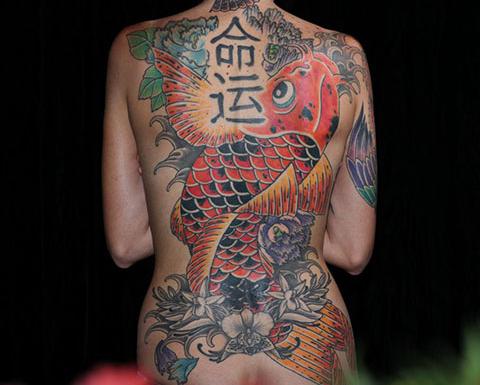
Tattoos have become quite popular lately. The pallet available to the artists is rather limited. Since blue is not my favorite color, the products I have seen of their labors are not things I would want to hang on my wall or my body. Nevertheless, some of these guys produce remarkable drawings. I am not familiar with the tattooing process so I don’t know if the images are sometimes traced, but it is obvious that some are drawn freehand by people with talent.

THE HISTORY OF TATTOOS

My extensive research into this subject consisted of a brief look at Wikipedia, where I was surprised to learn that tattoos were found on the body of “the Iceman” (the five thousand year old mummy discovered in a glacier). I don’t have a tattoo; although it might not be a bad idea for we old codgers on the brink of senility to have our names, addresses and phone numbers tattooed on our person. It works for cows. A similar system was used on victims of the holocaust, i.e. an ID number was tattooed on their forearms, so even their identity was taken from them.

WHAT DO CRIMINALS AND SAILORS HAVE IN COMMON?

In my earlier days, tattoos were not cool nor even respectable. They were mostly associated with sailors and criminals. I have no idea how the tradition came about with sailors, but it was common for their visits to a foreign port to be immortalized by getting a tattoo, although body art was taboo for naval officers. When I was in the Navy many years ago, one of my patients with tattoos on both forearms approached me about having them removed. He had enlisted when young, had progressed through the ranks and had eventual become a commissioned officer. Summer whites had recently become less formal with short sleeves, and he was desperate to have his tattoos removed, a nearly impossible task in those days.

I wonder how today’s tattooed will feel when the fad runs its course, and they are stuck with unfashionable drawings on their bodies. I understand that there are now procedures to remove tattoos via lasers, but the process is slow, painful, and expensive. The good news is there should be job security for dermatologists in the post-tattoo era.

THE HISTORY OF PIERCINGS

The idea of punching holes in one’s skin in order to hang jewelry on one’s body is likewise an ancient practice, as Ötzi the Iceman was also found to have pierced ears in addition to his tattoos. Earrings were also found on a few several thousand year old mummies. The practice of piercing ears was resurrected in the middle of the last century, and is now perfectly acceptable having previously been seen as barbaric. Throughout history, there have been piercings of protruding body appendages for various reasons, including religious or spiritual.

cropped-cropped-kolo

They also may represent a need to conform to one’s culture, or to rebel against it, as seems to be the case with many of our younger generation. Contrarians may actually think a ring hanging from a nose, lip, tongue, navel or other less visible structure may have an aesthetic value, but an old fogy like me is likely to be repulsed.

WHY?

Whenever I see a body adorned with drawings, writings or hardware, the first question that comes to mind is….


hqdefaultteeth-view-piercings


WHY? WHY? WHY? WHY?

If the purpose is to gain attention, it is effective as I find my gaze fixed on the body art, but not the rest of the person. Could it be that rather than drawing attention toward themselves, they are actually diverting it away? Is the message “look at me” or “look at what I have done?” Prison tattoos are recognizable by their crudely drawn images often announcing to the world that they are a “mean motherf*****.” Others may be sending a message as to who or what they are or what they believe. Perhaps there are as many reasons for this need for body decorations as there are people who do them. Whatever the reasons, it must satisfy some basic human need as it has been embodied in cultures throughout history and beyond.

MAKEUP: THEN AND NOW

Some cultures have been able to satisfy their longings for ornamentation by using less permanent procedures by simply painting the surface of their skin. Makeup, like other ways to change or enhance appearances, has been in evidence for at least three thousand years; although, there appears to have been something of a hiatus during the Elizabethan years. With the arrival of the Flapper Girl in the 1920s, modesty took a hit, and the sexy look was in. You may recall that your Grandmother (OK you young whippersnappers think Great Grandmother) did not use any makeup.

019216f9174669b3322a4453b5cf7831-flapper-makeup-makeup-s
I recall our family being visited by an aunt from the big city when I was a kid. I noticed right away that her lips were very red, cheeks were pink, her eyelashes long, and when she sat I could see her knees. I thought she looked great (had I known what it meant I would have thought sexy), but her brothers and sisters all said she looked like some kind of “floozy.” Today floozies must abound, for the US cosmetic and beauty products industry raked in 64 billion dollars last year.

Although women seem to be concerned about their body image and prefer an idealized weight and form, their primary focus seems to be on integument (hair, skin, and nails). I recall my shock the first time I saw a woman with painted toe nails. I was accustomed to painted fingernails since they had been common since the nineteen twenties, but to paint one’s toenails was really far out and innovative. Now, I find the Chinese had been painting theirs for at least three thousand years. That scenario seems to characterize the circular nature of fashion trends, and it lends credence to the idea that “there is nothing new under the sun.”

THE BUSINESS OF BEAUTY

There is little doubt that when it comes to personal appearance, women spend the most time and resources on hair, either grooming or removing it. The hair salon industry brings in 20 billion dollars per year. The phonebook in my town of less than 30,000 people lists 45 beauty salons. In addition to maintaining an acceptable coiffure, there is also the removal of unwanted body and facial hair. In the sixties, some of the more dedicated feminists refused to shave their legs. Until then, I had no idea that women grew hair on their legs; although I should have realized that pink razor in the shower was used for something. Waxing assures that even stray strands of fuzz on the face is eliminated (for some reason, it is OK to shave legs but never the face).

The female perception of the status of her scalp hair appears to effect drastically her sense of self, mood, and confidence, consequently requiring her rapt attention. A bad hair day can mess up everything; conversely, the standard comment, “I love your hair,” is the ultimate compliment. Today’s long hair styles must require even more time and effort in order to remain beautiful and preserve self-esteem. In some cultures, hair seems to have some sexual connotations, for women are required to cover their heads in much the same manner as we insist women cover their breasts.

MEN’S “BEAUTY” PREOCCUPATION

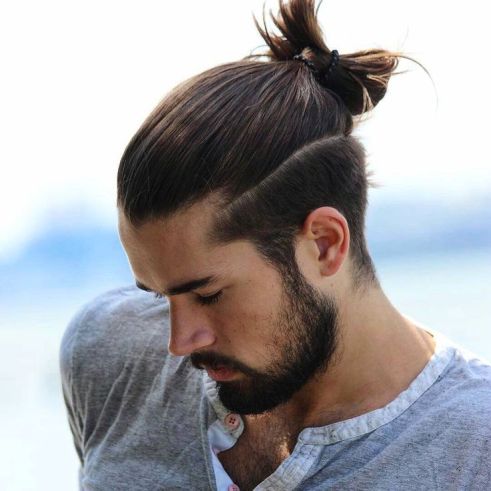
Contrary to conventional wisdom, it may be that men are more preoccupied with hair than the opposite sex. Perhaps it is a sign of our country’s disarray that there are so many ways for men to deal with the hair on their heads.

man-bun-shaved-sides

There is long hair, short hair, no hair, dreadlocks, ponytails, pigtails, and the most recent version of the obnoxious: the so-called “man bun.” There are also those deliberately designed to wig us out like the mohawk or spiked versions. Shiny hair is out, but in my day no man’s closet was complete without a bottle of Brilliantine. The recent trend of shaved heads should offer an honorable solution for those troubled by male pattern baldness, certainly more sensible and convenient than wearing one of those awful looking rugs.

In my day a hairy chest was something of which to be proud, signifying masculinity, now I am told some men actually shave their body hair. What could this world be coming to?

FACIAL HAIR HAS ALWAYS PRESENTED A PARTICULAR PROBLEM FOR MEN

A full beard could become a repository for the part of lunch which missed his mouth. In times of hand to hand combat, it could also put one at a disadvantage by providing another object to grapple. There seems to have always been some indecisiveness about how much to remove.

In 1901, Mr. Gillette marketed the safety razor, which greatly simplified the process of shaving. Though some, including my grandfather, still preferred the straight razor. Every Sunday afternoon grandad stroked that wicked looking instrument several times over the leather strop, which hung in the kitchen over a wash pan, and he proceeded to lather his face with a soft bristle brush. I was old enough to realize what the phrase “sharp as a razor” meant, so I was transfixed as he deftly scraped a week’s growth of whiskers from his face.

808c8e23f8834c8a8f18ee0ac71f3007

These days, I note some men sport a few days of “scruff” much as did grandad, but then 16 hour days left little time to work on being pretty. Even so, beards were uncommon in those days.

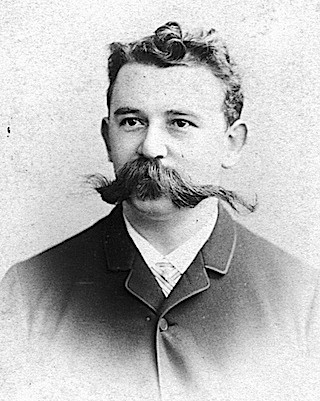
My great uncle had a magnificent handlebar mustache which sagged sorrowfully at the ends during the week when it was saturated with sweat, but perked up with his Saturday night bath, and a tad of beeswax. Now, there seems to be much less consensus as to dealing with facial hair. Just about any type of hirsute sculpting seems to be in play these days. Maybe there aren’t enough role models available these days, or could it be that some are feeling more comfortable risking escape from conformity. I tried a mustache several years ago, but Barb threatened dire consequences if I didn’t remove it. Since retirement, I have become a devotee to the scruff movement of sartorial splendor which she tolerates, unless we go someplace where I will be seen. I have always disliked the idea of shaving every morning, but, like grandad, I still shave at least once a week whether I need it or not.

FASHION POLICE

Since I have already violated the Maggie rule to “keep it short” (I suspect this is particularly applicable to the stuff I write), I will not attempt to take on the subject of women’s clothing fashions. Suffice it to say I have witnessed hemlines rise and fall with great regularity through the years. Likewise, I have seen cleavages appear, disappear, then reappear, and I am still amazed at the ingenuity of those who have been able to produce so many different breast profiles. There have been corsets, nylons, pantyhose, bobbysocks, saddle oxfords, short heels, long heels, extralong heels, shoes of thousands of different designs, and even knee-high boots. There are an infinite number of ways they have found to cover their bodies, and conversely to exhibit their bodies. There is the bikini bathing suit (named after the atoll which was used to test the hydrogen bomb), and as a gift to we lecherous old men we now have skin tight everything. Unfortunately, short shorts have now become short enough to nearly reach the danger zone. Some women even cut holes in their jeans apparently in order to show some skin. I recall reading somewhere that women dress to impress other women rather than men. If that is the case there are some unintended consequences, for they certainly get this old man’s attention.

Although men also get sucked into being told what they should or should not wear, changes in men’s fashion do not occur as rapidly as they do with women. For the past 40 years, a box of neckties has resided on the top shelf of my closet, waiting to be resurrected when wide ties once again become fashionable. Hope is waning as ties seem to have changed little in recent years. I seldom wear a tie anymore, and more guys are going barenecked. If neckties are on their way out, it is not a great loss, as they were not very good at keeping necks warm anyway. Our dear President has introduced a new style of necktie which, although of standard width, is long enough to obscure his fly. I see no signs that it is catching on so far.

In my lifetime, I have witnessed the rise and fall of zoot suits, leisure suits, bell bottoms, white bucks, wingtips, loafers, argyles, suspenders, felt hats, paisley prints, madras shirts, knickers, car coats, pea coats, and trench coats to mention a few things absolutely necessary in the wardrobe of any well dressed man at various times. I recall the time when I would not dream of leaving the house without a key chain fastened to my belt which was draped down to my groin and into my right front pocket. It mattered little what was on the end of that chain if anything, but no thinking man could consider himself fully dressed without it.

WHEN THE DESIRE TO BE DIFFERENT TURNS INTO A FAD

(HATE IT WHEN THAT HAPPENS)

Of course my original question, “Why do we do all this?” does not have a ready answer. In some cases, hero worship or a desire to emulate someone admired probably plays a part. It may be to separate oneself from the herd in order to be noticed or to protest its rules.

stop-wearing-backwards-hats

A recent example I have noticed is with the issue of baseball caps worn backwards. Baseball caps are a uniquely American invention devised to keep the sun from player’s eyes. To wear them backwards obviously defeats their purpose, but this was also initially seen by many as a defiant gesture. It is true that with the invention of the catcher’s mask it was necessary for the catcher to turn his cap around; however, it seems unlikely that our unwitting trendsetter who was the first to turn his cap around identified with baseball players. Little did he know that this simple gesture would be copied by millions of young people, thus a trend came into being which had nothing to do with its original meaning. Perhaps as backward facing ball caps no longer attracted attention, he was forced to move on to extremely baggy pants riding low on his hips and poised to drop to his ankles.

A friend who grew up in Africa and was educated in England told me that his first impression of the U.S. upon moving here was the rate of change. He felt that we were never satisfied or content, and that as soon as we achieved something we promptly set out to change it. It seems to me that this is even more true now that our digital world functions at warp speed. This may have some positive if it is responsible for fads like baggy pants to pass quickly.  This characteristic would also seem to benefit the fashion industry, allowing them to cycle from being in style to obsolescence rapidly.

We are by nature herd animals. We have survived and thrived by banding together in groups large and small.

As a member of our species, we face an existential dilemma. We have a basic need to conform in order to remain a member of the herd, while at the same time retain our individual identity. We want to be included, but we want to be noticed, to be the same but different. This is exemplified by the woman who, when choosing what to wear, wants something which is “in” but would be mortified were she to attend a social function and find someone wearing the same dress as hers.  We have an idealized image of what is a beautiful body which few of us inhabit; consequently, we attempt to hide our flaws and display our assets. When one is able to achieve those goals without violating societal norms, she is deemed fashionable.

BEAUTY IS IN THE EYE OF THE BEHOLDER

I am of the opinion that the human body is beautiful, that is before we set out to defile it with our bad habits. It is true that beauty is in the eye of the beholder, but this beholder sees much of attempts to enhance its appearance as a travesty resulting in things which are unattractive or even repulsive. I am left wondering if the cute little girl with the ring in the septum of her nose who served me coffee the other day is convinced that hardware enhances her beauty. There is something to be said for accentuating the fine points of that which is beautiful. One of my avocations has been to frame pictures, paintings and such. There were times when the mat and frame chosen brought the subject to life and it was transformed to something one wanted to look at. That was very satisfying. The ring in that little girl’s nose didn’t do that for me. There is no way for us to know what she saw in her mirror. It could be that she saw something beautiful, so who am I to judge?

PART III: CONFESSIONS OF A RECOVERING MALE CHAUVINIST

This morning I saw Theresa May, the British prime minister, on television discussing the recent terror attacks on her country. Prior to her, Margaret Thatcher (the Iron Lady) held forth as the country’s leader all during the eighties. Angela Merkel is the highly regarded prime minister of Germany; Canada has a female Prime Minister; and we recently came within a hair’s breadth of electing a woman President. Nevertheless, at last count there were women heading 9.1% of countries worldwide and 4.6% of fortune 500 companies with female CEOs.

In my last blog, I discussed the significant progress women have made towards gaining equality and respect, but these numbers tend to confirm that they have a great distance to travel. The evidence presented also points to major differences between women and men both in the way they think and the way they relate to others. I reported on research which demonstrates that some of these differences are evident at birth. My interest in this subject originated from the random speculation on what the world would be like were it operated by women, which of course raises the question as to the effect these female qualities would have on their ability to lead.

TELL ME IT ISN’T TRUE

My daughter, Maggie, thinks that men lead by controlling while women seek to find consensus. There can be little doubt that women are more nurturing than men, and studies I mentioned in a previous blog confirm that they are also more empathic and observant of others’ communications. By contrast, she feels men are not as open to suggestion, are dogmatic, less tolerant, and less patient. You may be thinking “Oh sure, just another man hater,” yet a study of 7,280 leaders published in the Harvard Business Review shows women scoring higher than men on 12 out of 16 competencies thought necessary for good leadership. More surprising was the fact that the gap was even wider between men and women in upper levels of management.

ITS NOT MANLY TO ASK FOR DIRECTIONS

This latter factor could be explained by results contained in the same study indicating that women continue to consult with others as they reach a higher status, while men do not seek other opinions as they climb the corporate ladder. Perhaps men are more likely to become satisfied with their accomplishments as they reach the top of the corporate chart; consequently, they don’t feel the need to look for input, new ideas, etc. Or it may be that as men reach the top of their game they don’t like to admit they need help, whereas women are probably less likely to see inclusiveness as a sign of weakness or incompetence.

YAK, YAK, YAK

We guys know that on average women are more talkative than men, and that most women seem to hunger for conversation. It makes sense that with all that practice they should be better listeners. In a prior issue, I quoted a study indicating that females are more attentive and interested in both verbal and non-verbal cues, even at birth, so little wonder that in this study they were found to “communicate powerfully and prolifically.” As one would expect, women scored well above men in the “nurturing competencies,” i.e. building relationships or helping and inspiring others. What was surprising is that they also beat out their male counterparts on categories traditionally ascribed to men. For example: the largest disparity was with the competency “takes initiative,” which seems to negate the idea that women are too meek and passive to lead. We men can take heart that we were victorious in the category “develops strategic perspective.” Even so, I suppose those women’s libbers would say this means we guys can’t see the forest for the trees.

MITE MAKES RIGHT

Men have evolved to have superior upper body strength, which adapted them to be hunters and warriors. This has also made men uniquely qualified for many jobs in the industrial age. Women, on the other hand, are less physically powerful but posess superior manual dexterity, adapting them for infant care, food preparation and making clothes. Now, society is on pace to virtually eliminate the need for physical strength as robotics take over the jobs which required muscle. Conversely, most jobs, if there are any, will involve pushing buttons and fine tuning instruments. Even the warriors of the world will be out of work, for all the strength needed to fight a war will be the ability to look at a screen and push buttons. In that regard, women’s fingers are known to be more facile than men’s.

NEVER FEAR, WE CAN DO JANITORIAL WORK

If the foregoing assessments are correct, male employment prospects may soon be in jeopardy. In order for women to take over the world, they would also need to take the lead in politics. In addition to the aforementioned qualities needed for leadership, effectiveness in government requires consensus building, another talent in which women are said to excel. It has not been so many years ago that the thought of a female president of the United States would have been laughable, so lookout guys—they are gaining on us! All those strategies which we have used so effectively in the past to keep them in their place are not likely to be effective much longer.

NOT FIGHT FOR OUR COUNTRY?

In the event that it comes to pass that women are able to make use of their advantages in a digital world and become the top dogs, would the world be different and, if so, in what way? In pursuit of the answer to that question, I queried my favorite expert on the subject of women. Barb replied without hesitation that there would be no more wars. If that is true then she has answered the question of how to eliminate the most horrible activity of man—an answer that has been right under our noses for thousands of years. That idea seemed overly optimistic to me, but the idea certainly was appealing. Imagine a world without defense budgets and the ability to use resources to benefit people rather than to kill them. Of course there would be a down side in that the military industrial complex would no longer be needed, and that could cause some economic problems. Unfortunately, we cannot be sure that all women share Barb’s anti-war sentiments. After all, there was Joan of Arc, and women in the military continue to lobby for more involvement in combat roles; although, in general, men seem attuned to the so-called glory of war while women focus on its horror. Thus, it is reasonable to expect women to look for other means of problem solving.

COULDN’T SOLVE THIS ONE BY BEING NICE

If women should achieve the highly unlikely status of leaders in those countries famous for the most barbaric treatment of women, would they see fit to stop those practices, even though their religious leaders and judicial systems condone and even encourage such practices? Would rape victims be punished while their assailants go free? Would so-called honor killings continue to go unpunished? Would there be any serious consequences for those men who carry out genital mutilations in order to guarantee chastity? In many cultures, women are denied the most basic freedoms and are virtually imprisoned. Would women in leadership roles be prone to accept many of these practices as appropriate since they had been firmly ingrained in their culture for hundreds of years?

THEY ARE NOT PERFECT EITHER

The premise that power corrupts was accepted as gospel by our founding fathers, who took pains to see that nobody had too much of it. Since one of the highest scores for women in the Harvard study was “Displays High Integrity and Honesty,” one would expect women not to be as susceptible to such corruption, yet there is one example of such a happening. Indira Gandhi was the first female Prime Minister of India. She was much admired all over the world for the policies she had initiated to help achieve equality for a people who had been victims of a caste system throughout their history. She initiated many reforms including equal pay for women, which was indeed a revolutionary concept in those days. However her legacy was tainted by an about face in her style of governance when faced with an economic crisis. She became authoritarian, jailing her political opponents, limited freedom of the press, and was eventually convicted of “dishonest election practices.” I find it interesting that she was quoted as saying: “To be liberated, woman must feel free to be herself, not in rivalry to man but in the context of her own capacity and her personality.” It sounds as if she was on the right track, but slid off the rails.

Can we take from this example that women would exhibit the same flaws as men when it comes to governance, or would they function differently in a world dominated by women, where rules from a male dominated world no longer apply? Research cited in Psychology Today confirms that “men are more oriented toward impersonal or invidualistic goals, and women are more oriented toward social integration,” a result consistent with Baron-Cohen’s studies (see Part II of this series). In other words, men tend to gloat over a victory while women feel sorry for the loser.

“WINNING IS NOT THE THING, IT IS THE ONLY THING?”

Revered football coach Vince Lombardi also said “No leader, however great, can long continue unless he wins battles. The battle decides all.” For women, the most satisfying resolution to conflict would be that negotiations result in a happy outcome for all; most would probably prefer to avoid the battle. This does not mean that women are not competitive, far from that, but “happy ever after” is still their favorite ending. We men also have that problem with testosterone, which stimulates aggressiveness, a need to dominate, and may affect our judgement in some cases. Vince said one can’t lead unless he or she wins battles, but women would rather discuss the matter over tea.

Conflict has undoubtedly caused more pain and suffering throughout the ages than all other factors together. Politically, this has not changed since Cain and Abel. Nations in particular respond to an attack, real or imagined, “proportionally,” which is not much different from the way children react i.e. if you hit me, I will hit you back, and the excuse is always: “He started it.” Conflict usually results when one entity feels it is under assault of its person, possessions, beliefs, or integrity.

Early in my career (before the days of the 15 minute session), I was very involved in attempts at conflict resolution due to a special interest in family and couples therapy. We were able to categorize conflicts based on the methods the participants used to deal with alleged assaults by another person. As I mentioned in an earlier blog, the most malignant and destructive relationships were the result of an attack-attack system: a perceived attack, physical or verbal, is reciprocated by an attack of equal or more intensity. As you might expect, in such situations the level of anger escalates, and violence may ensue even though the basic disagreement(s) may be trivial, which is further evidence that “violence begets violence.”

That term was first published in this country nearly 200 years ago in an editorial in the New York Times. There are biblical references to that same truth, but we continue to ignore it. Our leaders continue to seek military solutions to the world’s problems. They give lip service to negotiations but refuse to talk to their enemies, while millions are homeless, starving, and face death or worse. My research in writing these essays has convinced me that in situations where women leaders come in conflict with each other, a non-violent resolution is more likely to occur, and winning will be defined by the degree of satisfaction felt on both sides rather than by a body count.

WHO WOULD HAVE GUESSED?

Recently, in the midst of all these ruminations, I happened on to an interview of our ex-president. Mr. Obama admitted, in front of God and everyone, to being an avowed feminist. He even went on to say that he thought women would do a better job than men at running things. It is not clear to me the gender of his audience; however, I see no advantage for him by currying favor with any group since he doesn’t need their votes anymore. Although I am in basic agreement with his conclusions, I must confess to some reservations about a total transfer of power.

LITTLE WONDER THEY ARE PISSED

Feminists say their cause is equality, yet many of their leaders show signs of animosity towards men, perhaps aggravated by their prior experiences. Maggie recently allowed me to read  an article she wrote about some of her experiences in the workforce. I was shocked to hear about the insults and unwanted physical contacts she had experienced. Although she had previously made casual mention of some of these experiences, I had no idea that she had actually been assaulted, which is probably just as well, otherwise she might have spent her free time visiting her old man in the slammer. There was probably also an element of my excusing much of those behaviors as only a little good-natured teasing as we men are wont to do. It is to their credit that women in “the movement” are educating us guys as to the hurtfulness of some of these behaviors. Laws designed to protect women from discrimination and exploitation have also led many organizations to initiate more stringent rules against such behaviors. In spite of all these attempts at protection, discrimination persists, as evidenced by such obvious things as unequal pay and opportunities for promotion.

NOT PERFECT?

While contemplating this vast change in the gender hierarchy, a number of questions come to mind. If women were to become leaders, would they be immune to the corrupting influence of power? Would their attitude towards men be conciliatory, or would they reverse roles and become the discriminator? Would they be inclusive, and allow boys in their sandbox? Would their means of problem solving be more effective? Would they be concerned about environmental issues? To what extent would they become peace mongers? Would they be staunch defenders of liberty or would they be too wishy-washy?

As is usually the case, when performing these kinds of mental gymnastics, of which I am fond, the quest for an answer only results in more unanswerable questions. I did conclude that when men and women are working together, it is best they leave their hormones at the door. In such an environment, they are most likely to reach a common goal by combining their unique talents and thereby gain in respect for each other. We could use a lot of that.

PART II: CONFESSIONS OF A RECOVERING MALE CHAUVINIST

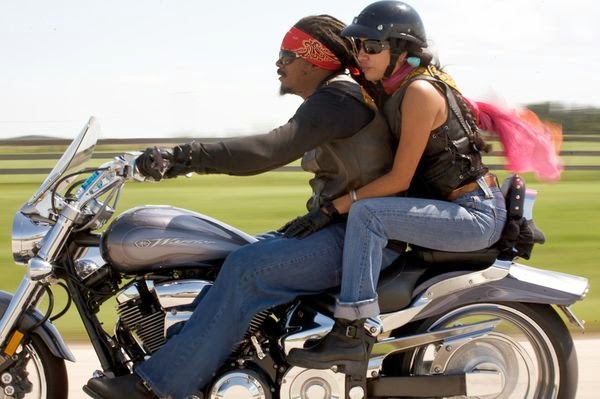
Spring has definitely arrived in my part of the world, and we have been treated to a series of balmy days with pleasant sunshine and agreeable temperatures. Amorous bird songs are drowned out by legions of Harleys that come roaring out of hibernation. Many have two passengers, one of each sex.

motorcycle2bpassenger

I actually owned a motorcycle back in my more adventurous days, and I understand the appeal of riding into the wind. As I recall, I was only able to get Barb on the back of that bike once, and fortunately for me, she insisted that I get rid of it before I killed myself.
It must be written in some motorcycle rider’s handbook that when two people are on the same bike the girl must ride behind on the buddy seat. Actually, it only recently occurred to me that I have never seen a woman driving a bike with the man on the rear seat.

Manufacturers are apparently well aware of this rule, for they take pains to assure the (usually) shorter (female) person’s seat is elevated in order for her to be able to see over her man’s shoulder. I do give those gals credit for their courage. I once was taken on a ride by a friend who was showing off his new bike, and I was scared shitless, perhaps for good reason, since motorcycle accidents account for nearly 5,000 deaths per year, and motorcycle riders are 29 times more likely to die than those injured in automobile accidents.

CATCH ME IF YOU CAN

Recently, I did witness a different scenario. I happened to be passed by a group of motorcyclists and was surprised to see a petite young girl heading the group piloting her own bike (we’ve come along way baby).

veenu3

She was followed by a large fellow on a larger motorcycle who I assumed was her partner. I wondered if this was a prelude of things to come. It fueled my speculation as to what the world would be like if we men were to give up control and women were to take over running it. What other changes might occur other than lowering the buddy seats?

YOU THINK THIS IS BAD? TRY SAUDI ARABIA.

Although in many parts of the world women are oppressed and their voices suppressed, in the U.S. women have achieved a great deal of success in liberating themselves from the stereotypical roles to which they had been attached for ages. In this country, women were not allowed to own property until the 1850s. In 1920, the suffragettes finally won their long standing battle to gain the right to vote. World War II provided an opportunity for women to work in jobs formerly exclusive to men. Women joined the Civil Rights Movement of the ’60s, and in the ’70s, a number of feminist causes were won (and bras were burned).

bra-burning_freedomtrashcan

Legislation was passed to correct some of the more egregious areas of discrimination, such as the ability to fire a woman for becoming pregnant, the requirement that a single woman must have a man co-sign a loan regardless of her income, and, of course, the lack of the right to sue in cases of sexual discrimination or harassment (thank you Anita Hill).

NOTHING IS SACRED ANY MORE

Few professions have shown more changes in gender participation than Medicine, which had traditionally been almost exclusively the domain of men. There were three women in my medical school class of 160, and I can only recall one female professor. Now, the women medical students at the same university outnumber the men, and 73% of the faculty are female. I have personally contributed to this travesty by choosing a female as my personal physician. The dramatic turnabout has left a classmate of mine convinced that his eminently qualified grandson was denied admission because of his gender. Could we be in for more conflicts over reverse discrimination?

Conversely, there were only two men in Barb’s nursing school class. Men in nursing during those times would always be considered suspect regarding their sexual orientation, and homophobia was the norm. However, today men in the nursing profession can be as macho as the next guy. It does appear to me that some gender bias still exists in nursing, as men seem to be promoted to supervisory positions sooner that their female counterparts.

YOU CAN’T KEEP THEM BAREFOOT AND PREGNANT FOREVER

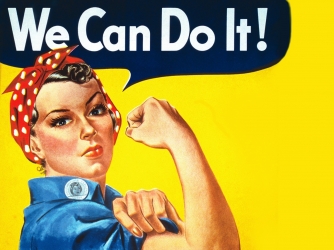
In the aftermath of World War II, the United States had become the richest and most dynamic economy in the world. The exposure to the outside world of the “Rosie the Riveters” who contributed to the war effort gave impetus to a conviction by this new breed of feminists that they could be productive in pursuits other than homemaking or helping of male workers. Many were no longer content to be stenographers, secretaries, bookkeepers, maids, receptionists or stay at home moms, and a burgeoning technology made it possible for them to work outside the home. Included were all manner of labor and time saving inventions which now became within the grasp of the average middle class family.

we-can-do-it-rosie-the-riveter-wallpaper-2-ab
YOU THINK YOU HAVE IT BAD? THE “GOOD ‘OLE DAYS” OF HOMEMAKING

Prior to this household appliance revolution, the position of family matriarch was indeed a full-time job and then some. My mother, along with most other housewives of the era, followed a fairly rigid schedule in order to keep things running smoothly. Monday was laundry day, Tuesday ironing, Wednesday cleaning, etc. The differences in the procedures to accomplish these tasks was monumental compared to today’s use of automatic washers and dryers, microwave ovens, dishwashers, freezers, garbage disposals and such.

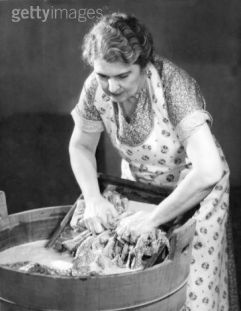
For example, laundry day was really an all day job. In my childhood, mom used a wringer washer (high tech at the time), while grandma remained attached to her washboard 7e7fec72369ae35cf4513a15cbada626using a procedure for washing clothes that had not changed in hundreds of years.  The procedure was not only time consuming but arduous. It involved heating water to fill a metal wash tub, adding soap, placing the corrugated board in the soapy water, and rubbing the clothes against the board until clean. They then would be placed in another tub of “rinse water,” wrung out by hand, and hung out to dry on a clothes line. When dry (she always hoped for sunny days on Monday), the laundry must be taken down, folded and made ready for ironing on Tuesday. That procedure was also much more labor intensive than now: there were no “wash and wear” fabrics, and there were no pampers.


WHAT’S FOR DINNER MOM?

Food preparation was also a much more time consuming activity in those days. There were no cake mixes, and very few prepared foods available in grocery stores. The term “making it from scratch” must have been a term invented during the second half of the last century, for there were no other alternatives in those days. There were no school lunch programs, and what mothers put in their kids lunch buckets was a source of pride. I recall when our family was first able to buy a refrigerator, and how grateful mom was that it was no longer necessary to go to the grocery every day. Most homes were heated by burning coal, which presented major problems for the woman of the house in her attempts to keep a “clean house.”

The point to all this is although working mothers have their hands full, to be a stay-at-home mother in the old days was also not easy (and somewhat of a necessity in many respects). My mother was busy from dawn until bedtime with only a short break to listen to her favorite soap opera As the World Turns, but she thought hers was an easy life compared to what she had experienced growing up on a farm. Although my father had quit school in the eighth grade, she had graduated from “business school,” where she had learned basic secretarial skills. Her only employment was during the war when we all moved to the big city to find employment in an aircraft factory.

LOOK OUT GUYS, THEY ARE CLOSING FAST

In 1967, half of all U.S. mothers did not work outside the home; in 2012, only 29% stayed at home. Although no figures could be found, it is probable that the percentage of married women with or without children who were full time homemakers was much higher prior to the war. I assume the percentage of single, married, or cohabiting women who are employed is also much higher.

I WONDER HOW SHE REALLY FEELS

In spite of the strides made by women in pursuit of equality, there are still some pretty large holes to be filled. Feminist daughter Maggie has much to say about the disparities, and as someone with considerable experience in the corporate world, she speaks with authority and passion on the subject as follows:
“….Entering the workforce in the ’80s, I would say it was a kind of ‘catch 22’ situation: If we wanted to succeed in a world where male brains were the majority, some women felt like they had to ‘act like a man’ but would be labeled a ball buster, dyke, hostile, etc. If we were ourselves, we were seen as a pushover, soft, emotional, etc. I have several examples from my experiences in the workplace. For example, a guy gets shitty about something that needs changed, and he is labeled as a leader, a ‘take charge’ kind of guy, a guy who ‘gets things done.’ If a woman does the same thing, she is pushy, bossy, ‘hard to work with.’ If a guy is upset about something in the workplace and expresses it by yelling or being direct, he is ‘passionate’; if a woman does the same thing, she is ‘hysterical,’ ‘emotional,’ ‘out of control.’

It appears to me that feminist voices have been less strident in recent years, even though there are still many “Maggies” in the world who are not shy about speaking of gender injustices. Much has been discussed about an apparent lack of female involvement in positions of leadership, and I have long wondered what the world would be like were women to run it, i.e. the whole shebang.

To that end, I plan to explore that fantasy in the next issue of Smith’s Wondrous Words of Wisdom and get some ideas as to the progress they are making in developing an Amazonian society. Stay tuned for Part III!

CONFESSIONS OF A RECOVERING MALE CHAUVINIST

Much of my life has involved trying to understand people.  Since more than half of my patients were females, it follows that I should know something about women by now.   Unfortunately there is that gender barrier which makes it difficult for me to put myself in their shoes, both literally and figuratively.  Even though I feel I must have learned something after all those years, I identify with Freud, who allegedly said that after all his years of study, women still remained a mystery to him.

In my case, the problem was made more difficult because I had no sisters. As a child, I viewed girls as fragile little flowers who must be protected by those of the opposite, stronger and more sensible sex.  Although some admittedly showed signs of intelligence, I thought their inherent sentimentality impaired their ability to make rational decisions.  At that time, there were already signs that this societal norm was fracturing in spite of a great deal of male resistance.  For example, the right for women to vote was still viewed as a big mistake by many.

RESPECTED OR DEVALUED?

Since I grew up as a compliant, conservative midwesterner, I was naturally compliant with the rules I was taught about girls.  Consequently, I learned to open the door for them, not to swear in front of them, and never ever to strike or physically harm them in any way. This latter admonition was considered to be not only unfair due to man’s superior strength, but unmanly, and manliness was all important for almost all boys, and still is for most of us.

At about the age of five, I learned all about the anatomical differences between girls and boys from a very worldly 12 year old distant cousin.   Detailed exploration of her physique proved beyond a shadow of a doubt that we were anatomically different.  The experience did explain why my mother frequently chastised my brother and I for not lowering the toilet seat.

In the old days, boys got most of their sex education from locker room banter, which was, as you might suspect, not always accurate; needless to say, I entered medical school not nearly as sophisticated in such matters as I pretended to be.  We learned a lot about the anatomy and physiology of women but not much about the experience of being a woman.  During our clinical rotations, we were privileged to participate in the treatment of women, the treatment of their family members, and the birth of the women’s children.  It was heady stuff.  From there, it was on to a stint in family practice and eventually to psychiatry, where there was not much emphasis on the study of the differences between the male and female psyche.

WHERE THE RUBBER HITS THE ROAD

It was by living with a spouse and three daughters that I began to understand a bit about how female brains work.  From the beginnings of their lives, it was clear that the girls were more prone to outward displays of emotion than their brother.  Based on a totally unscientific study of these four kids, I remain convinced that the differences were present at birth.

Some have suggested that the female’s nurturing instinct is simply a learned behavior, for one would not expect to see significant hormonal influences in toddlers. Yet I believe I have seen evidence of such behaviors very early in my daughters’ lives, which leads me to believe female brains are hardwired for nurturing.  Indeed, the job of nurturing is done without training by females throughout the animal kingdom, so why would we expect Homo sapiens to be any different?

NO WONDER I AM A SUCKER FOR GADGETS

In his book, The Essential Difference: Male and Female Brains And The Truth About Autism, psychologist Simon Baron-Cohen concluded that boys and girls exhibit different behaviors at birth.  Female babies were noted to pay more attention to social stimuli, such as human faces or voices; while boys were attracted more to nonsocial, or spatial, stimuli, such as the movement of a mobile above his crib. Baron-Cohen concluded that these traits will persist as these babies grow into adulthood because male and female brains are wired differently.  Additionally, the use of modern scanning technologies shows great promise toward the enhancement of our understanding of such differences.

REAL MEN DON’T CRY

It has long been said that females are more sensitive to others’ feelings and, therefore, are more empathic than men.  This does not mean that men are devoid of empathy, but that their empathy is perceived differently.  Researchers have identified two different kinds of empathy which they call affective and cognitive.  Affective empathy actually involves experiencing another person’s feelings and is more common in women, while cognitive empathy, characteristic of men, is triggered by imagining oneself in the same situation.  To feel sorry for another’s misfortune is different from actually experiencing his or her sadness.  In light of this, it is safe to say that when a woman says “I feel your pain,” she actually means it.  Likewise, she will also be capable of sharing in your joy.  A survey of the women in my life has confirmed this phenomenon exists, and they gave examples of situations in which their ability to function was affected from sharing a friend’s grief.

As women strive for equality, there has been an effort to minimize the differences between genders, which has led to serious debates and questioning of conventional wisdom.  It could be characterized by the lyrics of that song in the 1950 musical film Annie Get Your Gun: “Anything thing you can do, I can do better.”  In one definitive study, a large group of students in the grades 2 and 3 were given tests designed to measure empathy, then retested when they had reached an average age of 14.   The results verified the hypothesis that the girls were more empathic than the boys, especially on the affective scales.  Moreover, the difference that was present at the younger age increased as the children grew older.

FOLLOW THE MONEY

These days, if one wants to learn about human behavior, he needs only to look at marketing research, for these people know more about us than we know about ourselves.  The power of the internet has allowed them to accumulate massive amounts of data which has been used to chronicle much information about both individuals and groups.  One such treatise on the subject confirms “that there are inherited differences between… the way men and women think, perceive, and remember information.”  It goes on to say, “Girls watch faces. Boys watch objects.”

The authors conclude that “segmenting by gender is crucial if businesses are to make their websites more enjoyable and profitable.”  One might conclude that if the bean counters think it, then it must be true that men are really from Mars and women from Venus.

IT MIGHT GET STICKY

That these differences exist makes perfect sense from an evolutionary point of view since the talents of both sexes allow them to function at a high level when performing the specialized functions required of members of traditional families.  Nevertheless, it is true that times are changing, and those roles could change as technology turns us on our heads.  We undoubtedly will see dramatic changes in our world, which will require many different kinds of talents.  In many ways, it is conceivable that these changes may result in role reversals that we now find difficult to imagine.  Many changes are already occurring, and I plan to ruminate further on the subject in my next blog.

Meanwhile, I very much agree with French experts who respond to comments about the disparities between the sexes with the phrase: “vive la difference.”

THAT MOTHER THING

These days, it is difficult to forget Mother’s Day as there are plenty of reminders on TV, radio, newspapers, billboards, and now even the internet.  Although the holiday (it even seems disrespectful to call it that) has been a boon to florists, candy companies, and greeting card businesses, it also generates a type of sentiment not found in other celebrations.  According to Mr. Google, there have been times set aside to venerate mothers and motherhood since ancient times, but our modern version is said to have its origins in Grafton, West Virginia in 1908, when Anna Jarvis promoted the idea of a day to honor mothers. She was soon to be disappointed when the day which was sacred to her became commercialized.  Anna spent the rest of her life attempting to correct the image which she felt dishonored her Mother, and died penniless in an institution.

DON’T MESS WITH MOM

We are all aware that motherhood is necessary for the propagation of the species, but the relationship between a mother and her offspring is like no other.  Mothers will fight to the death and endure any amount of hardship to protect and nurture their offspring.  This is true for most of the animal kingdom, but especially for humans.  Most animals who have live births nurture their young until the kids are able to make it on their own, but human moms never stop mothering.  You might think since they are around for a couple of decades it might be that they simply become like an old pair of shoes which you don’t like to get rid of, but there seems to be much more to it than that.

Back in the old days, when country doctors did pretty much everything except major surgery, I delivered a lot of babies.  Many times I would hear my patients in labor crying out that they would never go through this pain again, but when that baby was delivered into her arms the room would brighten with her smile.  The ordeal of birthing would soon be forgotten and often at the six weeks checkup there would be talks of having another child.  The mother of my children describes her feelings of holding our babies as a feeling of joy which she could not find words to describe.

Screen Shot 2017-05-13 at 8.30.46 PM.png

Kids do grow up and leave the nest, but they carry a piece of Mom with them for the rest of their lives.  No one or no other relationship will have such a profound effect on their lives.  Without nurture, it has been shown that children will grow up with significant deficits similar to those seen in Harlow’s monkeys when they were deprived of maternal contact.  With that in mind, it seems clear that mothers’ roles involve much more than merely giving birth and providing sustenance.

When children are born, they have no sense of who or what they are.  One can see an infant at times appearing to discover his toes and other body parts.  Likewise, in their early years, they will need help to develop an identity, and to do so, they will depend upon those with whom they spend the most time. However, perhaps the most important issue they learn concerns their lovability.  In my practice, those who felt as if they were unlovable were among the most unhappy.  They found it virtually impossible to establish meaningful relationships.  They lacked self-esteem, often to the point of self-loathing; consequently, they were vulnerable to exploitation of all kinds.  They were often used and abused, which they felt they deserved.  This opinion of self, which appears to have its origins in childhood, resists change and seems to persist throughout life even when told their picture of themselves is inaccurate.

ALL YOU NEED IS LOVE

Obviously, the only way one can know they are lovable is to be loved, which brings us back to the subject of mothers.  Traditionally, they are the ones in charge of loving.  Their love is constant, unremitting and lifelong.  They continue to love even when their children are total jerks or perpetrate the most dastardly of deeds.  It has been said that a father’s love is conditional.  I have always resented that characterization, for I felt I loved the kids as much as did Barb, yet I must admit that her capacity for forgiveness and tolerance exceeds mine.  After all, I was only an observer and not a participant in their entry to this world.

If you think mothers are lovers, take a look at grandmothers.  With the responsibilities of teaching kids manners, discipline and societal survival skills gone, there comes an avalanche of unimpeded love.  For me, grandparenthood has been an opportunity to enjoy the kids without feeling any responsibility.  I have concluded that grandparenthood is God’s reward for enduring the vicissitudes of parenthood.

It is true that in the past mothers have received a bad rap from we psychiatrists.  Mothers have been accused by us of causing everything from autism to homosexuality.  This fad began with Freud, who attempted to unravel some of the mysteries of early childhood.  Although his work provided an impetus to learn more about the effects of childhood experiences on later life, many of his conclusions have been discredited.

IT DOESN’T GET EASIER   

In the past, motherhood was a full time job.  Although mothers would engage in activities outside the home (my grandmother helped with the milking), their primary function was to care for their families.  Today’s mothers amaze me in that a majority of them also have full time jobs outside the home.  That puts an exclamation point after the time honored phrase “woman’s work is never done.”  Granted, fathers are now more involved in domestic activities than in the past, but I seem to remember reading something about a study that indicated the duties of the woman of house have changed little over the years.  Without our so-called modern household conveniences, it would probably be impossible for the hardiest of souls to accomplish what these warrior mothers do.

However, the most amazing mothers, to me, are the single moms who take on the total responsibility for feeding, clothing, teaching, disciplining and loving their children.  The fact that many single mothers accomplish this without any outside help is inspiring, especially when one considers the number of kids who grow up to be good people.  Unfortunately, these mothers are often derided rather than praised.

THEY AREN’T ALL MUSHY

You should not be surprised to learn that I too had a mother.  She loved me for no good reason that I could fathom, and I loved her too (although I would never admit it when I was growing up).  Mom was not a hugger.  She was a patter—i.e. when she was glad to see me, or pleased with something I had done, she would wrinkle her nose and pat me on the arm or shoulder a couple of times.  I suspect this was a result of her childhood, for her family was not demonstrably affectionate and never wanted to be “showy.”  She was a great cook and enjoyed feeding us.  In later years, a visit would see her “throw together some leftovers” with little obvious effort, and they would always be delicious.  I was a child of the Depression and barely recall my parents on occasion telling my brother and I they wanted us to eat first.  It would be years later before l realized why they did that.

SUPER MOM

It has been my good fortune to meet and marry someone who was born to nurture, and I have watched her in action for quite a few years.  When we were married, she announced that she wanted to have four children.  I thought two would be plenty, so we reached a Barb-type compromise and had four.  Since they were all exceptional from the very get go, I agreed to keep them all.  It was a good decision.

As with most mothers, Barb continues to exude love from a reservoir that never runs dry.  Every now and then, she will reminisce about those days when she had them all fed, bathed and tucked in, and how she felt “so rich.”  When we see a baby in the grocery, she tells me how she would like to hold it.  If there is a young one in a restaurant, she will approach the mother ask its age and tell her how beautiful is her baby (she seems to have never seen an ugly one).  Those tear jerking ads on TV featuring small kids do a number on her.  She insists were she a little younger she would adopt some of those starving African kids.

As for the grandchildren, don’t ask unless you have some time to spare.  It takes a while to tell you how wonderful they all are, but you will be able to see those tired brown eyes come to life.  Like it or not, you will probably also hear the complete package which includes their parents who are also “above average.”

SHE WILL JUST SAY YOU SHOULD SAVE YOUR MONEY 

Meanwhile, it is nice to send your mother flowers and stuff, but all she really wants from you is love.  She deserves all you have to give.

Conspiracy Theories

Throughout history there has been no shortage of conspiracy theories.  There appears to be no group of people who are immune to the acceptance of unproven explanations and stories which are often passionately embraced.  The theory that UFOs have made contact with us and that our government has kept it secret to avoid alarming the populace has remained intact for more than half a century.  Charismatic cult leaders have often used conspiracy theories as recruiting tools.  Imagined conspiracies can be used to excuse failures of all kinds, or as weapons to discredit or harm others.  Though most could be categorized as harmless gossip, some can have devastating consequences.

THIS STUFF IS NOT NEW

During World War II thousands of American citizens of Japanese and German ancestry were incarcerated due to an unfounded theory  that many had immigrated to the U.S. in order to become spies or saboteurs.  In the infamous hearings orchestrated by Sen. Joe Mccarthy in the 1950s, he insisted there was a vast communist conspiracy afoot to overthrow the government.  Many were accused of treason, which although unproven, left many lives in ruin.

The assassination of President Kennedy spawned a host of conspiracy theories.  Those named as responsible for the shooting included, Russia, Mexico, Fidel Castro, the Mafia, the CIA, and even President Johnson.  There was a successful movie rife with complex plots which legitimized the conspiracies in some minds.  The Warren Commission, which was assembled to investigate, was widely discredited by those with their own conclusions as simply another attempted cover-up.   The commission was appointed by Johnson, which raised the question as to their possible involvement in the assassination.  In such manner conspiracy theories spread and grow.

THE LATEST POLITICAL TALENT

Our new President is no stranger to conspiracy theories having served as the self- appointed promoter of the birther movement.  His continued drum beat that Obama was born in Africa, and therefore an illegal president provided him with a great deal of free publicity and support from the Obama haters.  He spiced up his climate change denials by adding the whole thing was a Chinese conspiracy.  During the campaign, he alluded to allegations of Clinton misdeeds of many years ago even mentioning the theory that they may have arranged for the murder of Vince Foster whose death had been ruled a suicide. He resurrected the old birther mantra when he learned Cruz was born in Canada, and when that did not gain traction, suggested that Cruz’s father may have been implicated in the Kennedy assassination.

His assertions that the entire democratic process was rigged, that the media were “all crooked” and should not be believed, and his questioning of the integrity of the justice system did little to “make America great again” but rather undermined his believers’ faith in our government.  We can only hope that their disillusionment did not extend to the questioning not only our government, but also our form of government for that type of thinking is what has led other countries down the path toward authoritarianism.

BELIEF MAKES IT TRUE

In politics, such stories are common, but in this election we have been bombarded with them.  In a previous blog I made mention of the phenomenon of confirmation bias which results from our tendency to accept as true, information which is consistent with our own beliefs.  I have since happened onto an article that addresses the problem in great detail.  A study by a group  of Italian sociologists led by a Dr.  Quattrociocchi (no I can’t pronounce it either) followed the Facebook reading habits of over 1 million of their countrymen, and their paper confirmed what had always been suspected, but with some interesting twists.

The results of their study titled ‘Inside the Echo Chamber” was published in the April issue of The Scientific American.  In this innovative study, they were able to separate readers into two groups – those who read scientific material versus those who were regular conspiracy theory consumers.  There appeared to be very little interaction between the groups i.e. the ones who read science rarely read any of the conspiracy theory material while the conspiracy theory aficionados likewise avoided the science websites, whereas both groups tended to communicate only with those of like mind.  It should not be surprising that those of a more scientific bent would be more skeptical of unsubstantiated theories.

Those of both groups were found to have wide ranging social networks in which opinions generally conformed to their own, but those who consumed conspiracy news spread it more widely, which may help explain how such stories go viral.  Of more concern was the authors’  conclusion, based on a yet unpublished study, that the so called debunking of a conspiracy theory actually reinforces one’s belief in it.  Such a conclusion does not bode well for the effectiveness of fact checkers in their job of correcting misinformation foisted on the masses.  As a matter of fact, attempts to correct “fake news” especially when pursued vigorously may simply convince the theorist that the conspiracy is wider than he thought since he knows that ordinary news sources cannot be trusted.

PARANOIA COMES IN ALL SIZES

This refusal, or perhaps inability, to question one’s beliefs is also seen in an extreme form in the minds of patients who are delusional and/or paranoid.  I do not suggest that all conspiracists are psychotic; however, any psychiatrist will confirm that it is useless to try to change the mind of those suffering from delusional thoughts.  Such efforts are likely be interpreted by the patient as due to your having been duped or that you are a participant in the imagined conspiracy.  That latter phenomenon is probably at least partially responsible for the relatively high risk of assaults and worse on mental health professionals.  The same phenomenon in milder form may also account for the difficulty of fact checkers to change minds.

IF JOE SAYS IT, IT MUST BE TRUE

The Media Insight Project  http://www.mediainsight.org/Pages/%27Who-Shared-It%27-How-Americans-Decide-What-News-to-Trust-on-Social-Media.aspx, a collaboration between the Associated Press NORC and the American Press Institute, did a well controlled study  that indicated people were more likely to accept information passed on by a friend as truth than if the same story came directly  from its original source.  This factor seems also to promote more rapid spread of information and its companion, misinformation.  They also note that Facebook was second only to TV as a source of news about our recent election. They state  Facebook is closing fast and predicted soon to occupy the number one spot.

Dr.  Quattrociocchi  states “conspiracy thinking arises when people find themselves unable to determine simple causes for complex adverse circumstances,” which I am convinced is too simple an answer.  People are curious by nature which has served us well in our quest to dominate the planet; however can also make us vulnerable to absorbing unproven explanations.  Oft times the mere mention of a half-truth may be enough to encourage us to fill in some blanks and come up with a plausible theory.   We like to know secrets about others but to divulge them is even more pleasurable.  Some call this gossip, and at times the process can be quite competitive.  Remember the school yard chant: “I know something you don’t know!” We pass on the information after securing promises that it will be kept secret knowing full well that it is likely to be passed on at the first opportunity.  The juicier the better for the more outrageous the more superior we feel.

GREAT SPORT

It is also true that conspiracies are interesting, sometimes even fascinating.  I for one am a voracious reader of spy novels and mysteries which of course are always rife with conspiracies, and I am certainly not alone in that.  Conspiracy theories are an excellent excuse for failure, and it is also useful to put them in play in anticipation of possible failure as in “the system is rigged”.  This strategy can not only help save face, but if one can actually convince himself it is true will leave his self- esteem undamaged in the event of failure.

Events surrounding our most recent election campaign have generated a great deal of interest in the use of such stories.  In a previous blog I talked a bit as to how the Russians and perhaps others have been able to use the internet as a tool to attempt to influence the outcome, and how its ease of access allows information of all kinds, real and  unreal, to be promulgated at little expense to large groups of people.  Although his participation  in those nefarious activities are unproven, we do know that our President has demonstrated considerable talent making use of stories about people, groups and institutions which are later proven to be without substance.

WHERE ARE THEY WHEN WE NEED THEM

People are by nature curious, and curiosity makes for fertile ground in which explanations real or imagined can be sown.  One would think that our President’s failure to be more forthcoming would elicit conspiracy theories galore.  Issues such as his tax returns , foreign business dealings,  the alleged Russian connection, etc., would leave one needing only to fill in the blanks left between what is known to produce juicy conspiracy theories of the highest order, yet surprisingly the opposition hasn’t to my knowledge come up with any Manchurian Candidate type conspiracy theories.

Will Rogers quoteWhile writing this rambling essay I happened on to a website featuring the political satire of Will Rogers, and was amazed to see how timely they are 100 years later. His comments about the effect of money, and untruths in politics lead one to believe that little has changed.   The quote in the picture I thought particularly apropos.  We could use the genius of a guy like Will Rogers today.

It seems clear that conspiracy theories will always be with us, for they appeal to many for a variety of reasons.  We can only hope that they will not be routinely fabricated in order to discredit a candidate for office.  The information highway is already fraught with so much misinformation that the ordinary voter finds it difficult to know the truth about a person or an issue. To paraphrase Jefferson, democracy cannot survive without an informed electorate.


PANTS ON FIRE: the truth about truthfulness

Since our fearless leader arrived on the scene, there has been much debate over the matter of truthfulness. Though the word truth may not be as fashionable as it once was, it is still used a great deal in everyday language. I have my own ideas about the definition of the word, but etymologists tell us language is in a constant state of flux. With that in mind I decided to look up the definition of the word to see if its meaning had changed during the past 80 or so years. It seemed to not have changed appreciatively since the day a few decades ago when I lied about throwing a hatchet at my brother.
The definitions of the word “truth” I found confusing in most cases; for example, one was “the quality or state of being true,”  which I did not find to be helpful. It reminded me of the meaningless cliche “it is what it is.” However, I was pleased to learn that some of the synonyms used george-washington-cherry-treefor truth, such as candor, honesty, and sincerity, are still associated with the word. Along with a few million other kids I was indoctrinated with the fable of George Washington and the cherry tree. The moral of that story was very clear that lying about the deed was as bad or worse that the deed itself. To that end when my father confronted me about a misdeed, and said “don’t lie to me” I soon learned that I was more likely to escape corporal punishment if I confessed.
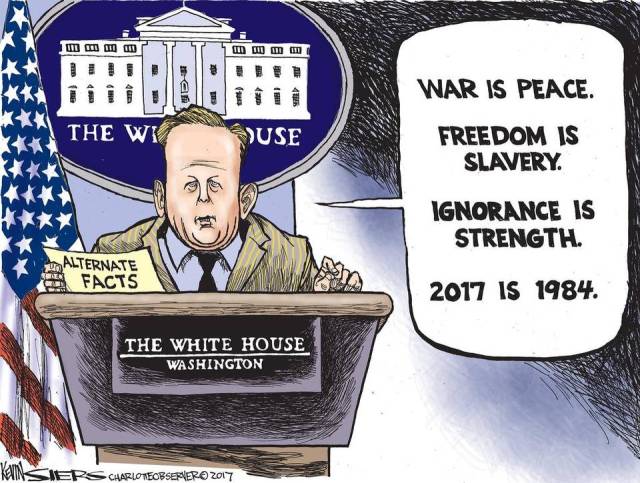
 

Truthfulness in the “good ole days”

According to my recollection, truthfulness was highly regarded in those days; although there were situations in which lying was condoned. For example, horse traders, much as the used car salesmen of today, were famously expected to lie. In those days I am told that transactions involving horses were seen as a competition testing the ability of the buyer or trader to judge horses, and the rules about truthfulness were suspended. In most situations however; truthfulness was considered a virtue and liars were regarded as on the same level as wife beaters.
My indoctrination into those ideas about truth was successful, and I value them even today, although I must confess that I have transgressed a few times. In most cases I have rationalized by telling myself they are only white lies, minor exaggerations, or embellishments, and that there are times when truth can be hurtful. As a consequence, I tend to classify lies as to their size in order to excuse my behavior. However, according to the Smith classification, any prevarication uttered by the most powerful man in the world is a whopper with the potential of dire consequences for the entire world.

I Don’t Care if Trump Lies

With all that in mind, you can imagine my chagrin when I ran across an article in the January 23 issue of “The Daily Wire” titled 5 REASONS I DON’T CARE IF TRUMP LIES. It was written by John Nolte who had previously been editor of the far right web based Breitbart News which was also the former home of Steve Bannon, Mr. Trump’s advisor. Mr. Nolte justifies the lying by using “the old everybody does it” strategy we used in grade school by saying: “Politicians lie. That is what they do.” He goes on to say “In politics lying is a tactic, and if you don’t use that tactic, you’re screwed.” 19c05de8e57fda9170ee3a1e7a95e269How many times in history have we heard that. If indeed the most talented at lying have an advantage at the polls, it might explain why there appears to be so much dissatisfaction about the performance of our elected officials. Nolte is not so charitable with the major news outlets that he describes as “evil” due to their dishonesty, but assures us that “I will not lie.” Yes, I am sure George Washington would be pleased to know someone is following in his footsteps.

Fake News. Confirmation Bias. The Internet Conundrum.

4e6661deeb79365cf2ad34752f12c3f7The term “fake news” has been bandied about a lot lately, but that seems to me an oxymoron. If it is fake, it is simply a lie, certainly not news. No matter what it is called, the internet has become a fertile field for its growth. It allows any individual to send whatever lie he chooses with impunity to large numbers of people who are then capable of spreading it to others like an epidemic. The more outrageous or unusual the story, the more likely it is to be widely dispersed. The volume of such misinformation is such that there is something for everybody so that a person is more likely to believe something if it supports his own beliefs or prejudices, and discard that with which he disagrees. This has been called the confirmation bias.
As he continues to surf the web, he will be drawn to those sites, truthful or not, which confirm his beliefs. So armed, he becomes even more entrenched in his opinions and more unlikely to listen to alternative ideas. In my opinion this is one of the major contributors to our divisiveness. Unfortunately his conclusions may have been influenced by faulty evidence.

In an optimistic essay in the December 29, 2011 issue of the Atlantic, by Rebecca Rosen titled TRUTH, LIES and the INTERNET, she acknowledges that the internet is a repository for much misinformation, but comforts us by insisting “the internet has brought a golden age of Fact Checking,” and goes on to say “…..the good news is that the Internet is nurturing accuracy.”

So much for prophecies: here we are six years later with the development of wonderfully complex lie machines, which are not only capable of reaching millions of people, but can actually tailor their lies to appeal to certain groups or even individuals. In the face of such onslaughts, all the fact checkers in the world could not keep up with their output.
Not only has the internet provided a convenient platform for the delivery of lies, new techniques such as the twitterbot are now used to overwhelm and prevent access by competing messages.

In contrast to the Atlantic article, Richard Clarke’s book, Cyber Warfare has turned out to be prophetic. He had warned in his book that the US was sorely lacking in preparedness for cyberattacks. Russia has proven him correct in his assessment by their role in attempting to undermine our electoral process. I have heard several comments on TV which attempt to assure us that the outcome of the election was not affected by these cyberattacks; however I find it hard to believe that anyone could be certain of that since there are so many intangibles which may affect such outcomes.

Whatever the effects they may have had on the outcome of the election, the specter of even the possibility of an illegitimate presidency or treasonous staff members is a win for the Russians due to the loss of confidence in the process. Slanderous comments about various politicians are accepted as fact by some which further undermines the trust in our system. Attitudes so developed may also result in a cynicism about our government which may discourage our brightest and most dedicated from a career in public service.

Facts. The truth. The whole truth. And nothing but the truth.

When testifying in a court of law all people must swear to tell “the truth, the whole truth, and nothing but the truth”. This oath is said to have been traced to the 13th century. Those guys must have been pretty smart, for they already were aware of how one could make a lie appear to be the truth. Unfortunately, counterfeit truth tellers are not required to take such an oath in ordinary situations. They can avoid telling the “whole” truth by taking something out of context, usually a word or modifying phrase that changes the meaning of what is said. The “nothing but the truth” phrase forbids the mixing in a lie or two which can also change the gist of the message. Such strategies seem to me to be used more frequently now than in days past.

190583Beliefs and opinions are not facts. Facts are a necessary component of truth; however truth is more than that. Truth requires an understanding of the meaning of the facts, their relevance to the issue at hand, and their context. Truth is necessary for our survival. Truth is essential for development of trust. Without trust, chaos reigns and society disintegrates. Truth is honest, sincere, and respectful. Truth is especially important in today’s messy world, but currently seems to be in short supply.
Since I began this essay, I noted that Time Magazine featured a lead article on truthfulness. Although I was initially dismayed to have been scooped, I was nevertheless heartened that the issue is getting the attention it deserves. Of course lying is not a recent development.  It has been said that THE TRUTH WILL SET YOU FREE which leads one to ponder the question of the effect of its absence.   Plato addressed its seriousness a bit before my tenure when he said:
“FALSE WORDS ARE NOT ONLY EVIL IN THEMSELVES, BUT THEY INFECT THE SOUL WITH EVIL.