Bryan’s Problem: Homosexuality or Intolerance?

Introduction

Another holiday season goes in the books…not the least of which are the check books.  Our family has developed a tradition of attending a movie on Christmas evening, that is, by those who have sufficiently recovered from the materialistic orgy of gift giving and gluttony.  Since wife and I no longer host the activities, I felt energetic enough to accompany the movie goers this year.  Of course I was counting on deferential treatment for this old patriarch, and was not disappointed, for I was deposited at the theater entrance while a grandson parked the car.  Fortunately, this provided just enough time for me to purchase tickets for the group.

The movie we had chosen was The Imitation Game, which provoked some painful memories for me.  For those unfamiliar with the story, it is about the person who was able to break the German code in World War II, and is credited with designing the precursor to modern computers.  As portrayed in the movie, the main character exhibited symptoms suggestive of a diagnosis of Asperger’s syndrome.  He was also homosexual, “outed” by British police, charged with “indecent behavior,” chose chemical castration in lieu of incarceration, and eventually committed suicide.

Bryan

The story reminded me of a major failure of mine as a psychiatrist many years ago.  Bryan (not his real name of course) was a freshman at the university where I was teaching.  His chief complaint was depression with rather typical symptoms such as: insomnia, loss of appetite, restricted interests, weight loss, the inability to experience pleasure, impaired concentration, and self-deprecation.  In those days, depression was characterized either as Reactive or Endogenous.  As the word suggests, the former title was reserved for those patients who had experienced trauma of some kind such as grief or other kind of loss, while the latter referred to those for whom no explanation could be found to explain their illness.

Initially Bryan’s depression seemed to be without cause and therefore endogenous.  As a matter of fact, it seemed that he should be sitting on top of the  world.  He was a very handsome young man with blond hair and muscular build.  He had been valedictorian of his class, the quarterback of his football team and the president of his high school class.  He soon confessed, however, that he had recently participated in a sexual encounter with another male student, which left him immersed in shame and guilt for he said he never wanted to be a “queer.” He did acknowledge that he had always been attracted to males, but had previously been able to suppress and ignore those feelings. However a few beers at a fraternity party had allowed him to act out impulsively with devastating results.

Bryan’s Call for Help

After a few visits with little change, he arrived one day, and announced that he was feeling much better, and had decided to quit school to look for work in his hometown.  I of course questioned such a drastic decision especially since in the face of depression judgment is often impaired.  He assured me that he was no longer depressed and felt much better since deciding to change the course of his life.  Several weeks passed until one day I received a call from his Mother who wanted to see me in person to talk about Bryan.   As promised, Bryan had quit school, and gone home but not to look for a job.  Shortly after his last visit with me, he had shot himself in the head.  Fortunately or unfortunately depending on one’s point of view he did not die and after several weeks in the hospital was placed in a nursing home.  Mother reported that he had suffered severe brain damage, and was in her words a “vegetable” with no hope of improvement.

The Pain of Hindsight

My thoughts went immediately to that last visit, and I realized my blunder in not decoding Bryan’s message.  For he was telling me that he had found a terrible solution to his problem, and I should have suspected that such a sudden cure from depression of this magnitude was extremely unlikely, and probably was what has been called by psychiatrists a “flight into health”.   Studies have shown that suicidal patients frequently send such coded messages prior to attempting to kill themselves.  They seem to be rolling the dice to see if anyone will notice, perhaps retaining a faint glimmer of hope that someone might still be able to rescue them from their torment.  I also theorized that his termination of our relationship was designed to release him from the promises he had made to me that he would not act out his suicidal thoughts.

Depression: What It Is and What It Isn’t. What Helps and What Doesn’t.

At the risk of digressing from my story, I feel the need to talk about depression and suicide.  It is unfortunate that the word depression is used to describe a group of very serious, often fatal illnesses, which are often confused with the transient feelings of sadness we all experience from time to time.  This leads to a great deal of misunderstanding by most people as to what we as psychiatrists mean by depression, and often leads to delay in treatment.  We use a number of adjectives such as: melancholic, bipolar, unipolar, major, etc. to differentiate different types of depression, but the one thing they all have in common is that the course of the afflicted person’s illness is beyond his/her control.

Consequently; advice such as, “go have some fun, don’t take yourself so seriously, stop worrying so much,” and my all time favorite “you need to trust more in God” are apt to worsen the situation.  Suggesting such remedies is much like advising a person with a broken arm to go lift weights.  The fact that the person is unable to do these simple things further depresses self-esteem which is already at a low ebb.

Much as we who are treating have a semantic problem in labeling, our patients have a problem in describing their symptoms for I don’t believe there are any words in the English language that can adequately describe the torment of the clinically depressed patient.  The more seriously depressed are often literally at a loss for words.  I have seen patients with histories of medical problems resulting in excruciating physical pain who tell me that it was nothing compared to the suffering endured by an episode of clinical depression.  No wonder that the CIA chose two psychologists to design a protocol for their “enhanced interrogation,” for depressed patients often describe their condition as torture.  Faced with such intolerable torment and hopelessness, it is not surprising that one might choose the only avenue left.

Indeed, the lack of hope in a depressed person is one of the risk factors for suicide.   Untreated clinical depression carries a mortality rate of nearly 20%, but is not often treated as a potentially fatal disease.

40,600 Suicides

Much has been written in the lay literature about suicide, but much more needs to be done.  Suicide is endemic throughout the world, and the incidence varies little in different parts of the world.  1The Center for disease control reports 40,600 suicides in 2012, but the actual incidence is certainly much higher as there are many incentives to deny the true cause of such deaths.

Suicide remains the 4th leading cause of death among children and young adults, and the epidemic of suicides among returning veterans has finally gained some notice.  The loss of life is only part of the tragedy of suicide.  Families have a grief enhanced by questions such as: What could I have done, Why didn’t he tell me?  The grief and guilt are often laced with the anger of having been abandoned.   In my experience the pain suffered by parents of child suicides is by far the most intense.  As one parent told me several years after losing her child, you never get over it, you just learn to live with it.

When Was Homosexuality Demonized?

Anthropologists have reported that many so called primitive societies (that term may be one of those pot kettle things) were accepting of homosexual behavior and in some instances homosexuals were venerated.

John Boswell2 and Scott Bidstrup3 allege it was not until the 12th  Century that homosexuality came to be regarded as immoral, and subsequently was made illegal.  Bidstrup holds the Christian church responsible for those judgments, and sees them as the genesis for the homophobia which still persists to some degree.  It should be noted however that the Torah4  prescribes death as punishment for sex between two men or two women; although some scholars insist this was meant to apply  only to certain pagan practices. In the New Testament Romans 1”26-27 is frequently used as proof of the sinful and immoral nature of homosexuality but again others disagree with that interpretation.   There have always been disagreements amongst scholars and lay people alike regarding scriptural meanings, and nowhere is this more apparent than with the issue of homosexuality.  My own personal opinion is that these interpretations are strongly influenced by one’s political view as people of a more liberal bent generally appear to be more accepting.   There is ample evidence that homosexuality has always existed regardless of the culture, and its prohibitions, and its incidence does not vary a great deal.

Whenever I see on TV gay couples being married or hear of a gay pride parade, my thoughts often turn to Bryan.  I wonder if he had lived in a time when the homosexual label was less toxic, and he had not been conditioned to view it as repugnant and shameful, would he have lived to fulfill the promise that his life seemed to hold for him.

Homophobia in the Old Days

I must confess that I was a classic homophobe early on in my life.  Although, I did not approve of gay bashing which some thought was a fun way to spend a Saturday evening, awareness of its happening did not seem to bother me much in those days.  I recall that being called Queer was worse than sissy; although in my case I had no idea what the former meant.  Sex was a taboo subject in those days except between adolescent boys whose testosterone levels were heading for the stratosphere.  The “F” word was considered the most profane utterance of all, and would only be heard in secure facilities such as the boy’s locker room.   By high school awareness of male attraction to males came to the fore, and should one, heaven forbid, develop an erection in the post game shower, he became immediately suspect and would likely be shunned.  In those days a guy would likely receive more respect as an axe murderer than as a homosexual.  I imagine the same attitudes were still in place during Bryan’s time, and I picture him attempting to avoid any glances at his team mate’s anatomy.  Come to think of it, such behavior is not unique as can be witnessed by observing a group of men relieving themselves at a row of urinals.  Without exception, they will all be staring straight ahead as if there is something particularly interesting on the wall.  It is as if to look down at another man’s genitalia would signify a prurient interest.

After becoming a physician and later a psychiatrist I became aware of the multitude of serious problems facing the male homosexual.  For most the fear of discovery was always with them.  After all there were so called sodomy laws some of which remain on the books in a few jurisdictions; although generally no longer enforced.  There was widespread discrimination in hiring.  For those fortunate enough to have a job, outing could result in its loss.  Long term relationships were not common, since living with another man was sure to raise eyebrows.   Consequently; multiple sexual partners were common which put them at greater risk for venereal diseases.  As mentioned previously gay bashing was a popular sport among some homophobes, and was rarely prosecuted unless it resulted in death.  Some religious groups considered them evil and others saw them as simply disgusting.  Ridicule and denigration were not unusual.  The cruelest cut of all was for those who were ostracized by their family when their sexual identity was revealed.   At a time in their lives when they most needed love and support, they were recipients of rejection and shame.

There were a few openly gay people, but most chose to remain secretive for obvious reasons.  Bisexuals were able to maintain the charade of heterosexuality in most cases, marry and be seen as traditional family men.  Some with a more  fixed sexual identity would also marry as a means to cover their sexuality or as an attempt to “cure” themselves.  Needless to say such unions were rarely successful.  Some estimate the incidence of homosexuality to be as high as seven per cent, and since their lives were usually quite stressful the incidence of depression, and anxiety disorders was in my experience significantly higher than that seen in the population at large.  The result of which was that there were more patients with problems arising from their sexual identity than one might expect.

Homosexuality: Nature or Nurture?

During my more than fifty years in the practice of general medicine and psychiatry, the one thing all those patients had in common was their insistence that they had not chosen to be homosexual.  Almost without exception when I asked my homosexual patients when they had become aware of their sexual orientation, their response was that they had always known they were different.  They felt it was not a learned behavior, but something they were born with.  Since Freud appeared on the scene over one hundred years ago, there has been a running debate as to the roles played by early childhood experiences versus genetics in human development, (the so called “nature, nurture controversy”).  Nowhere has the debate been more strident than in the areas of sexual identity and sexual orientation.

Freud’s formulation of the genesis of homosexuality was that normal psychosexual development was inhibited when a child grew up in a household where the mother was simultaneously seductive, but cold and rejecting, while the father was emotionally distant and uninvolved.  His views were widely accepted, but there were critics who insisted that these psychodynamics could not be elicited in many cases.  During the last half of the 20th century there developed more interest in brain function as it relates to mental disorders, personality development etc.  This new field of neuroendocrinology with its high tech methods of studying brain function called into question many of Freud’s theories, and resulted in the development of many medications which have been lifesaving for many.  One eminent psychiatrist went so far as to declare the talking therapies obsolete, and many training programs deemphasized the teaching of the various psychotherapies.  It is true that there have been amazing progress in understanding how our brains function.  The discovery of DNA and mapping of the human genome have opened new exciting vistas for the study of human behavior and its problems.

Call me old fashioned (which of course I am), but I remain convinced that the hand that offers the pill is also important.   Man’s ability to form mutually dependent relationships was an important factor in the survival of the species.  I am convinced that the computer which gathers a patient’s history although accurate is not as effective as a concerned human being.   Brain scans may allow us to visualize certain feelings, but doesn’t show much empathy.  Recently, I have been heartened to read pleas for more psychotherapy training for psychiatry residents in some journals.  I am hopeful this may be a prelude to a return to a more equal swing of that nature-nurture pendulum.  Among the population at large, the distinction of the classic debate is important.  The major question  as whether homosexuality is predetermined or developmental remains unanswered.  Gay rights activists hold that homosexuality is merely a normal variation in one’s psychological makeup which is no more in their control than is the color of their skin; therefore genetically determined.  Others consider it to be immoral, while some of the more zealous religious groups still consider it a sin.  Regardless of etiology, there is general consensus in the psychiatric community that one’s sexual proclivities are not subject to change.  There are some who claim success in their efforts to change a person’s sexual orientation, but others refute these reports and suggest they are only teaching their subjects to repress their urges.

Hope for the Future?

Since Bryan’s day there have been remarkable changes in our society’s attitudes towards homosexuality; although that is not to say that discrimination and homophobia has been banished.  The enlightenment had its origins when the gay community organized and attached themselves to the coat tails of the civil rights movement of the sixties.  The political boldness of this group contributed to and was enhanced by several well known public figures who “came out of the closet” and reported they felt liberated by their decision.  I vividly recall the hallabaloo in the press when Billy Jean King announced to the world that she was a lesbian.  This was in marked contrast to the recent outing of Anderson Cooper which hardly caused a whimper.  There was as expected a backlash in those early days of the movement, and one of my other vague memories of those times is of a gay man who was tied to a fence pot and beaten to death by two rednecks.

In 1972 my own professional organization, The American Psychiatric Association, in an apparent response to political pressure deleted homosexuality from the list of mental disorders in 6DSM III (The Diagnostic and Statistical Manual of Mental Illness).  They resolved their ambivalence about causation by adding the term “Homosexual dysphoria” referring to mood problems associated with homosexuality.  The response of the membership was mixed with some praising the leadership and others expressing concerns that the organization was abandoning scientific principles for political correctness, and that the new term was simply an attempt at fence straddling.

The march towards gay rights was slowed by the aides epidemic, which was originally called the gay disease.  One prominent TV evangelist went so far as to label the disease as God’s punishment of gays for their sins, and equated it to the story of Sodom and Gomorrah.  Although less evident discrimination is not hard to find even though examples are less obvious.  One such case was brought to my attention shortly before my recent retirement.  The patient was a young man who  was angry, depressed and  anxious.  He was employed in a factory where he told me he had received awards for his productivity;  however that was to change after it became known that he was homosexual.  He was continually harassed teased and belittled.  His work bench was sabotaged.  He was routinely addressed as faggot or queer, and was shunned in the lunch room.  He decided to take his problem to the human services department where he received only token acknowledgment, and later heard his supervisor refer to him as a “fag trouble maker”.   He sought legal redress for the discrimination in which he thought his employer was complicit.  This accomplished little other than to deplete his savings with legal fees.  With the abusive behaviors unchecked they escalated until the stress became intolerable and he quit his job.  His employer refused to okay his application for unemployment compensation.

In spite of such incidents, which are hopefully isolated, there are hopeful signs that things are changing for the better.  The gay community has become organized and is no longer powerless.  There is a new openness regarding sexual identity, and fewer reasons to remain in the shadows.  In recent years I have noted that my patients are rarely apologetic for their sexuality, and in most cases have accepted it.  With this newfound openness, there appears to be more long term relationships.  Polls show that in the past few years there has been a demonstrable increase in the acceptance of gay marriages, and a relaxation by some courts on the bans against gay parenthood.  The most hopeful sign for the future; however, is the fact that homophobia appears to have been drastically reduced among young people.

It has pleased me to witness more dramatic changes in attitudes in the past 50 years than have occurred in the previous several hundred.  They come too late for Bryan; however they may be life saving for others.  That is important as the world is in great need of their sensitivity and creativity.

1Centers for Disease Control and Prevention; Fatal injury Report 2012

2Boswell, John; The church and the homosexual an historical perspective

3Bidstrup,Scott; Saint Aelred the Queer

4Leviticus 20:13

5Romans 1:26-27

6The diagnostic status of homosexuality in DSM III: a reformulation perspective; Amerrican Journal of Psychiatry: Volume 138 issue 2 February 1981 pp. 210-215

Morality Be Damned…

Ferguson’s Out. Torture Is In.

Senator Feinstein being interviewed about the Senate’s summary report regarding the CIA’s report on torture

CNN has held me captive this week.  I previously reported my observation that CNN only does one story per week.  It was fortuitous that the report on alleged torture perpetrated by the CIA came to play this week for the Ferguson story of the previous week was losing its luster.  I was fascinated and appalled as Senator Feinstein delivered a summary of the senate committee’s report.  Predictably, her words were barely spoken when a barrage of rebuttals were fired.  If our government could function that efficiently when in session, they might actually be able to accomplish some things.  Yes, self-defense is a powerful motivator.  As one of my friends said, “Turning up the heat increases the Brownian movement.”

The naysayers have insisted that “enhanced interrogation” is not torture; however if such interrogations are enhanced by eliciting pain, it is torture.  Regardless of the term used, the definition of torture from Webster’s dictionary is “to inflict pain.”  It is generally accepted that this may involve either physical or emotional pain or both.  It certainly appears that the techniques used on these prisoners were designed to elicit pain; consequently, I will dispense with the semantic gymnastics and refer to the procedures in question as torture.  This, in spite of the fact that some of our leaders have insisted that we do not use torture.

The parade of experts, supporters, and critics of enhanced interrogation or EIT (the acronym makes it seem less onerous) has continued until today when it appears the budget battle in congress may be the next “breaking news.”  The debate included such topics as the program’s effectiveness, its legality, the effects of making the report public, and who, if anyone should be held responsible.

Our former Vice President’s erudite statement was that the report was “a lot of crap.”  When asked if he thought the end justified the means he replied without hesitation, “absolutely.”  CIA Chief Brennan described some of the techniques used as “abhorrent” but characterized them as mistakes rather than as criminal in nature.  His defense of his organization was basically that they were simply following orders.

Nuremberg Trials

Were he old like me, he would have recalled that this defense was rejected during the Nazi trials at Nuremberg following World War II or that the Uniform Code of Military Justice allows members to refuse to follow unlawful orders .  But the CIA chief vigorously defended his staff as hardworking dedicated patriots whose vigorous interrogations had saved thousands of lives.  This of course was disputed in Feinstein’s report for she contended that their activities provided no “actionable” intelligence.

9/11/01

The horror of that fateful morning will be forever etched in our memories.  Seeing those planes crash into the World Trade Center and actually witnessing people leap in desperation from those windows was sickening.  In no way do I wish to minimize the fear that another attack might have been imminent, or the pressure the intelligence community must have felt to learn more about the plans of the terrorists. In spite of the hectic environment, they did not lose sight of the CYA tenet, which is always prominent in bureaucratic thinking.  They looked for a friendly judge to give legal cover, and decided to keep the operations secret (in the name of national security of course).  In order to keep their hands relatively clean, and to bypass any squeamishness, they decided to outsource the torture.  They ponied up a few million dollars and contracted with Sadists Inc. to do the dirty work.

The focus on the effectiveness of torture to secure information seemed to imply that if it worked it was justified.  I was pleased to note that later in the week there was more emphasis on the morality of torture, or as it should be stated the immorality of torture.

The History of Morality

When I researched the subject of morality, I found that although there is a great deal of variation amongst various cultures regarding codes of behavior, almost all prohibit harming others.  Consequently; one must consider torture to be the antithesis of morality.  This raises an age old question as to whether the good cancels the bad, or are moral codes absolute.  I have always felt that morality is in service of social expediency; although it appears that torture, though common, is rarely condoned by a society. Early in our history, we humans found our chances of survival were greatly enhanced by banding together. In order to be able to function as a cohesive unit, it was necessary to find a way to relate to each other with a minimum of animosity.  If, for example, you were attacking a Wooly mammoth with a spear, you certainly would not want the guy who had your back to be pissed off at you. Devising some rules for maintaining relationships are still important. Codes of conduct have been further developed through the years, and provide a veneer of civility over our more basic instincts. These standards can  be suspended when a culture sees fit, but even in war, where the most harm is done to the most people, there are rules prohibiting torture. These are the same international laws in which we helped to codify. Those who were involved in the torture programs insist they have violated no laws, but admit they are fearful they could be charged with war crimes should they leave the United States for any reason.

A Win for Liberal Arts Education

As the week progressed I was pleased to see the subject of our moral values come to the fore, and I hope this crisis may lead to further explorations of the subject. Recently, I witnessed  another interview by an educator of some repute, who was touting the advantages of an education in science, engineering, math, or failing that, learning a trade.  He decried a liberal arts education as worthless in these times because one could make much more money as a plumber than as an historian.  I take exception to that for I feel that in these times especially we are in need of more historians, philosophers, linguists, economists, poets, sociologists, anthropologists, theologians and creative artists of all kinds.  For should we become simply technocrats, we shall lose our humanity.

KINDER and GENTLER?


Preface: This article is intended to provide a straight-forward, unedited view of my perception of the treatment of minorities as a young white boy growing up in the Midwest. In that vein, I use the derogatory terms for minorities that were commonly used in those days as a literary device to illustrate how far we have come while acknowledging we have a long way to go in our quest to fulfill Martin Luther King, Jr.’s vision that a person be judged by the content of his character rather than the color of his skin.

Introduction:

In my last blog, I mentioned that my childhood was a kinder gentler time.  As I re-read that sentence, it dawned on me that for many people that time was neither kind nor gentle.

JAPS

I was 11 years old when the Japanese attacked Pearl Harbor.  Like most people, I was caught up in the patriotic fervor of the day.  We were taught that this “sneak attack” was characteristic of these “sneaky little slant-eyed devils.”  We applauded the imprisonment of all people of Japanese descent, even if they were American citizens. Preservation of national security and the suspicion that these Japanese Americans couldn’t be trusted, was the rationale used to effectively imprison American citizens without being charged with a crime.  Of course the word “prison” was not used and this completely unconstitutional act was justified by saying they would be interned only for the duration of the war.  Most of these people lived in California, and there was concern that if Japan invaded the West Coast many Japanese Americans would be involved in sabotage.  A large percentage of these “detained citizens” were farmers who owned some of the best farmland in the country. When the war ended, they found themselves homeless because their farms had been sold for back taxes.

JEWS

The war in Europe had been going on for some time, but there was little note of the persecution of Jews by Hitler.  Anti-semitism was rife in the U.S., and I can recall overhearing conversations where adults blamed the Depression (and poverty in general) on “those New York Jews.” Consequently, when a ship full of German Jews appeared on the East Coast, they were denied asylum and turned away, eventually returning to Europe to await their fate.

COLOREDS

African Americans were drafted into the military in large numbers, but usually assigned to non-combatant roles.  It was not until 1948 that Harry Truman issued an executive order to desegregate the military.  A number of years later, I happened to be reading a story in The Reader’s Digest that was written by the first African American man granted a commission in the Navy.  He recounted the bigotry that still existed when he was commissioned, but made mention of one person who had been supportive.  I am proud to say that person was one of my cousins, Travis Van Horn.

Higher paying jobs were denied to African-Americans.  They were excluded from most factory work and if they were hired it would be to do the “dirty work” or to clean the premises.  They were denied membership in most trade unions so that only positions as laborers were all that were available to them.  For example if working on a construction job, a black man would be mixing the mortar and carrying the bricks while a white guy would be laying them.  These factors contributed to higher unemployment among blacks and more poverty in black neighborhoods, but the average white person would explain the cause to be laziness.  Black women’s job opportunities were largely limited to domestic help, or cleaning of offices or motels.

WASPs

In my position as a WASP (White Anglo Saxon Protestant) in a middle class neighborhood, I didn’t have much contact with black kids.  There were a few in our schools, but most attended schools in black neighborhoods. No black family would ever dare move into a white neighborhood.  Statements meant to deny racism such as “I have nothing against niggers, but I wouldn’t want one to move in next door or my daughter to marry one” were common.

Higher paying jobs were denied to African-Americans.  They were excluded from most factory work and if they were hired it would be to do the “dirty work” or to clean the premises.  They were denied membership in most trade unions so that only positions as laborers were all that were available to them.  For example if working on a construction job, a black man would be mixing the mortar and carrying the bricks while a white guy would be laying them.  These factors contributed to higher unemployment among blacks and more poverty in black neighborhoods, but the average white person would explain the cause to be laziness.  Black women’s job opportunities were largely limited to domestic help, or cleaning of offices or hotels.

Generally I believe that even here in a small town in the Midwest it was commonly held that black people were intellectually inferior, oversexed and smelled badly. They were not required to go to the back of the bus, they did so because they “knew their place.”    During my childhood, there were still occasional reports of lynching in the South.  Although such murders were generally disparaged, I don’t recall a huge public outcry, but then kids don’t pay much attention to the news.

The Bubble of Bigotry

Even though I was immersed in a culture of bigotry, I was mostly oblivious to it.  Yes, I had wondered why the black kids all chose to sit in the balcony at the movies, and I was aware that the local skating rink was open to blacks only on Monday nights.  I knew that a nearby ice cream store was closed on Monday nights, but never made the connection.  There were two side by side swimming pools in our town presumably to make us feel that we were doing well by satisfying the separate but equal mantra.  The schools were integrated in theory.  There were no separate water fountains or rest rooms, but a quarterback on the football team would have been unthinkable.

The first time I can recall feeling much empathy for African Americans occurred while I was a teenager working at my father’s service station.  A black family pulled into the station to get gasoline.  Their license plate indicated they were from a neighboring state.  As I was filling the tank, the father crossed the street to a nearby restaurant, knocked on the back door, and returned with food for his family.  It suddenly dawned on me how demeaning this must be for a person to be excluded from even entering this dumpy little restaurant, let alone not being allowed to feed his family there.   Until then, I had not noticed that black folks did not eat in our restaurants.

Equal Opportunity Bigotry

Our prejudices were not limited to African Americans, we were equal opportunity bigots.  Words* such as WOP, dago, kraut, heinie, hun, chink, jap, nip, Pollock, towel head, kike, frog, and nigger were all part of our everyday vocabulary. There were many jokes about “dumb Pollocks” and “Irish drunks.” We were tolerant of other religions, but only barely.  Discrimination against Catholics and Jews was more subtle than it was for people who had a different skin color, and the non-WASPs reciprocated by keeping a superficial but cordial relationship with us. Many families were fragmented by interfaith marriages. After all it was the Jews who murdered Jesus, and the Pope was felt by many to be a dictator intent on world domination, in some cases even considered the devil incarnate. Indeed, even marriages between people of the same religion, such as Catholicism, but different cultures (Italian or Irish) were considered controversial.

Western movies were a favorite amongst us kids and cowboys and Indians was a favorite game.  As in the movies, the ones who got to be cowboys were the good guys and the Indians were ruthless savages.  No one bothered to tell us how they had been displaced from their lands, persecuted and ethnically cleansed.  Nor did we learn anything about their customs.  Here in the land of the free they were not permitted to practice their own religion or even speak their own language.  We of course were blissfully ignorant of all this.

*Etymology of Slurs

WOP = a term used to describe Italian immigrants and stood for With Out Papers

Dago = is thought to be from the Spanish term Diego and was a slur used to describe Italians.

Heinie= term referred to Germans, in which the origin is probably the German colloquial word Heini, which is loosely translated as idiot or moron.

Nips= shortened for the Japanese word for Japan, which is Nippon

Kike = several theories on this etymology of this Jewish slur. Some say it originated at Ellis Island when Jewish people who didn’t write English refused to sign with an X because it represented the Christian cross so they would sign with a circle. Keikl is the Yiddish word for circle.


Faggots

The problems of the aforementioned folks, pale in comparison to that of the so called “sexual deviant.”  This term is very telling for it might be defined as any kind of sexual activity which deviates from the “norm,” which was in actuality often interpreted as any type of sexual activity other than that performed in the missionary position.  Prescribed punishments for these deviants was codified in so called sodomy laws and varied from two to 10 years in prison depending on the state.   Consequently, homosexuals attempted to satisfy their needs in secret.

Men living together would surely raise questions so they would secretly “cruise” to find willing partners.  Parks and public restrooms were the places where they could meet, and engage in clandestine sexual activity.  These areas became labeled as public nuisances.

Homophobia was rampant, fueled by misinformation equating homosexuality with pedophilia, bestiality and all other manner of criminal behavior.  Gay men were not only at risk of contracting venereal diseases, but also becoming the object of a “gay bashing party” which could be administered either by redneck homophobes or police.  In some cases, arrest and resultant exposure could have caused even more devastating results.

Some had married in an attempt to hide their homosexuality or in the mistaken belief that they could change their sexual orientation.  Exposure could literally destroy their lives.  The stress of living under such a cloud took a toll and suicide rates among gays were higher than in the general population.

Did the Rampant Poverty of the Depression Encourage Bigotry?

In a previous blog I had mentioned that I was “a child of The Depression.” My own family suffered through that period along with millions of others.  I’ve often wondered if the struggle for basic needs led to more prejudice and bigotry as all people struggled for the scraps to survive. Or, did it just allow more people who might have disagreed with unfair treatment of minorities to ignore it due to their instinct for self-preservation? As in the Maslow’s hierarchy of needs, it is difficult for one to aspire to self-actualization and championing a cause for others when scrambling each day to feed his family?

My father had been unemployed, and had lost our home to foreclosure.  I was not aware of my family’s financial woes and had no idea that we were poor.  It never occurred to me to question our frequent moves, or why our parents sometimes insisted we eat before they came to the table.  Occasionally there was “surplus” food available at the local “relief office,” and I do recall Dad coming home one time with a gigantic cloth sack of rice.  Subsequently we daily ate every kind of rice dish imaginable long enough that to this day I have an aversion to rice.

As I’ve grown older, I see this as a credit to phenomenal selfless parenting I was afforded. My parent’s ability to sacrifice in order to make me feel safe and secure during a time of extreme poverty is something at which I marvel today. Hence, I didn’t grow up feeling like a victim or insecure.

My father’s friends congregated most nights at our house to discuss their successes and failures at finding work.   I recall lying on the floor listening to their conversations as they discussed strategies or rumors of where a day’s labor might be available amid speculation as to whether they had enough gasoline to get there and back. In retrospect, my father’s home brew was probably the real attraction.  One of those nights comes to mind which I choose to relate in spite of the risk of offending the sensitivities of any SPCA or PETA members who may be reading this.  Dad had received a live rooster in return for some work he had done for a farmer, and when the guys assembled in our cellar for one of the brews, dad decided to offer the rooster a sample.  He gobbled it quickly and was given a refill.  The poor rooster was immediately tipsy and began to stagger around the room, lift his head and attempt to crow.  If he had a hangover, it would have been short lived for he would be in a pot with some drop dumplings the following day.

For many there were no fond memories of those times.  The basics of food and shelter were not available to all.  There were essentially no social safety nets.  In retrospect, it amazes me that there was not more civil unrest or even revolution in the face of such ubiquitous suffering.  I suppose hope stayed alive partially due to Roosevelt’s programs and reassurances that things would improve.  He was a public relations genius and I recall how everyone who could get near a radio would tune in to his “fireside chats.”

The Hobo

The Great Depression spawned a new type of homeless person who came to be called the hobo.   Homeless people were not permitted to sleep in parks or other public places.  There were vagrancy laws which made it illegal to be destitute; consequently many unemployed homeless men kept on the move.  It seems they were much like Forrest Gump who started running and just didn’t stop.  They sometimes hopped freight trains or rode the rails, but could often be seen walking along the highways. Theirs was a rather solitary existence; although through the years they had developed a subculture, and would share with each other the whereabouts of likely places to get free food and other logistical information.  For example they would learn which towns were tolerant of begging and which jails to avoid.   At times there might be chance meetings under a railroad bridge or other secluded spot where several might stay for a few days until rousted out by the authorities.  Their routes of travel tended to follow the seasons much as do migrating birds, and they would rarely be seen in our area when cold weather set in.  Since my grandparents’ farm was located on a well traveled state route they were subject to frequent visits.  The hobo or tramp as they were sometimes called would offer to do work for food.  Grandma would thank him for offering, decline his help, and bring a plate of food out on the back porch for him.  The transaction was mutually beneficial as his hunger was satiated as was her need to do her Christian duty.

After The Great Depression

By the early fo1940s, things were beginning to improve for most families thanks to the war effort.  In short order a decade of massive unemployment morphed into a labor shortage as factories were converted to produce planes, tanks, guns, and ammunitions.  The draft was in full swing, and out of desperation, women were hired to work in the factories.  It has been said that nothing unites a people like a common enemy.  That was certainly the case during WWII, for our hatred focused on those terrible people, the Japs and the Germans.  It seemed as if generations of ethnic strife was put aside in order to deal with a common threat.

My family, as did many others, soon moved to the big city where they both found work in an airplane factory.  My brother was drafted into the army at 18 and a few months later found himself in the Battle of the Bulge. My parents would cringe whenever they saw a Western Union telegraph delivery person in the neighborhood for fear that he would be heading to our house with the dreaded message which began: “We regret to inform you…”

As the months passed, many blue stars hanging in front windows were replaced with gold ones.  At a time when over 60 million people were being killed, not to mention 6 million Jews, it is ludicrous to say this was a kinder and gentler time. However, it does seem in the face of this worldwide catastrophe, people did seem to be more caring.

Following the cessation of hostilities it was not long until anger began to emerge.  The civil rights movement changed laws but I am afraid not many attitudes.  Recently I sense a backlash.  For example things like preferential treatment legislated for minority groups leads to resentment on the people who feel they are being punished for the sins of their fathers.  If history is any judge then these feelings will also fester and conflict will continue as always.

Self-identification is an interesting concept. There are some identifiers we can’t avoid, such as skin color or gender. There are other identifiers we choose, such as religious affiliation or being a member of a fraternity or sorority. It appears humans have always found ways to group themselves to be part of a smaller community versus embracing the idea that we are all part of the human race. We all want to be heard. We all want to be understood. To be loved. To be happy.

It reminds me of a story my daughter tells about her son who attended a Summer Bible Camp with a neighbor. Little did she know the zealous nature of the camp until her six-year-old son told her how each day before lunch, the preacher would call for true Christians to come to the front to be saved. In addition to being saved, they would get a prize from the toy box and a snack. Simon refused to go to the front of the room to be saved by the preacher. His neighbor pleaded with him, “Don’t you want to be saved, Simon? Don’t you want to be a Christian?” to which Simon responded, “I just want to be Simon.”

Ferguson

Now we are once again experiencing violent demonstrations, and there is little sign of true reconciliation.

The frustrations and injustices suffered by the citizens of Ferguson are undoubtedly well founded. They are reminiscent of the riots of 1992 in Los Angeles.  This was precipitated by the beating of a black man by police officers from the LAPD, which was recorded on video tape. His name was Rodney King and his tearful statement was perhaps the most eloquent and wise question of all when he said “Can we all just get along?”   Of course there has been progress in the area of black white relations, and the “N” word has supplanted the “F” word as the most profane of utterances.  But as my grandfather once said, “Just because you don’t say it, don’t mean you don’t think it.”


REMEMBERING WHEN…

Introduction from Maggie “eshrink’s” daughter. Just a week ago, we were preparing for the trick-or-treaters. These annual events always make me wonder what the event was like for my mom and dad. Some people say how things are so much worse now than before. Kids are rowdier, more disrespectful, etc. My dad shared his memories of Halloween back in the “good ole days” (70 years ago…give or take a few).

Halloweens of Yesteryear

My debut to the blogging world has not been auspicious, at least as far as my main audience (my kids) are concerned.   They tell me they would like to hear more about life in the dark ages (i.e. life before television).  This should not have been a surprise—they have always seemed more interested in listening to stories of my childhood than to those words of wisdom which I have unselfishly doled out to them through the years.  My kids always seem more attentive when my stories include a circumstance that was particularly embarrassing to me, such as the time I scored a basket for the other team.  An experience that caused me to change my career choice from NBA player to something less competitive.

Since we recently endured another trick-or-treat fiasco, I felt some reflections on Halloweens of another era might be of interest.

Although we enjoyed sweets as much as the current generation, the trick thing held more interest. No one was safe, for compliance was in the eyes of the beholder. If the treat was judged inadequate, retribution was sure to follow.  Some who had previously been judged as stingy could also suffer the wrath of us hooligans who could suffer the joy of delinquency for one night without fear of punishment.

The “tricks” of trick-or-treat in the good ole days.

A favorite stunt was to stand an armload of corn stalks against the front door, ring the bell, run, and watch the fun unfold from a distance as we tried to contain our laughter.

Soaping windows was very routine—albeit challenging to write graffiti backwards from the outside so it could be read from the inside. Automobiles parked on the street were of course very vulnerable and writing legibly on those windows was not a problem.

My most memorable Halloween prank.

My most memorable Halloween was the one I spent with my grandparents near the village of Irville. It was there in the land of no indoor plumbing that one of the most drastic tricks was to upset a privy (a.ka., outhouse, port-o-potty, latrine).  This was sure to leave  the victim in dire straits unless his neighbor was sympathetic, even then houses were not very close together and has oft been said, “timing is everything.”

On this particular Halloween night, I met my band of brother conspirators to plan our assault. The target was the Squire’s privy.  In the village, everyone had a nickname and Squire presumably had earned his because of his haughty behavior, and the fact that he continually advertised his lofty position as Justice of the Peace (JP). In his front yard, stood two large hand-painted signs advertising his station as JP and Notary Public.  An iron fence circled the property, which concerned us as a possible impediment to our retreat following completion of our dastardly deed.

The guys had attempted the mission the year before, but their efforts came to naught for they were unable to budge the privy. Someone suggested we could attach a rope and pull it over with my Uncle Cale’s mule, Old Jack.

Since they knew I was acquainted with the mule, and had access to the barn, they decided it would be easy to borrow Jack for a short time with no one being the wiser. Now, I had heard stories in the past about horse thieves and their fate, and Uncle Cale was not known for his sense of humor. I would as soon kick a hornet’s nest in my bare feet as try to sneak old Jack out of that barn.

I needed a plan B.

As an alternative, I suggested we enlist Tank Thomas to join the mission. While he wasn’t not long on intellect, he was very large and very strong—qualities I felt made him an ideal prospect.  I once saw him put a 100-pound sack of feed under each arm and walk away without breaking stride.  We all figured this would be his last time in the 8th grade as he was approaching adulthood and he had much trouble fitting into his school desk.  Tank was more than happy to join us, for I imagine he often felt excluded.  After completing our rounds, we camped out across the street from our target while we stuffed ourselves with the treats we had collected, waiting for the lights to go out in the Squire’s house.  Soon all was dark, and we approached our target from the rear, confident of a successful operation.

The execution.

Tank soon proved his worth. As he put his shoulder to the back of the privy, it began to move; however our exultation was abruptly interrupted when the door of the privy flew open and Squire jumped out with a shotgun, screaming in a manner uncharacteristic of his usual sophisticated style.

I discovered when it comes to running, there is nothing quite so motivating as an angry man with a shotgun in his hands. Due to my pigeon toed anatomy, I had always been handicapped in sprinting contests—which was so severe that I sometimes tripped myself with my own feet.

On this night; however I would have made Jesse Owens look bad. It was as if my feet never touched the ground and when I heard the deafening roar of that 12-gauge, I definitely took wing and cleared that iron fence with plenty of room to spare.

I had heard stories of people who had replaced the pellets in shotgun shells with rock salt. It was said that when those chunks of salt penetrated one’s backside, there would be no sitting for weeks.  Squire would later brag to the loafers who hung out at Raile’s general store that he had scared the “beJesus” out of those little hooligans by shooting in the air.

There was a certain laissez-faire attitude about Halloween shenanigans among most parents; although of course there were limits as to what was permissible. It was not unusual to see adults suppressing a smile while delivering a mild chastisement.  Many of them had plenty of stories to share from their childhoods, which usually emphasized the creativity involved.

The preeminent Halloween prank to beat all pranks

The most famous prank of the 19th century, was related to me by my Grandfather. He and a couple of buddies were unhappy with an affluent farmer for whom they had worked in the hayfields.  They felt they had been underpaid for their work and that the man had not delivered on his promise.

One Halloween night, the group dismantled the farmer’s hay wagon, hoisted it piece by piece to the roof of his very tall barn, and reassembled it there. This prank may have been judged the most creative of the 19th century.  In any event, 50 years later the telling of the tale illicited that famous grin to his face.

Then and now

In spite of the low grade vandalism and the unscripted nature of the Halloweens of my youth, it was a kinder gentler time in many ways. There were no razor blades in candy.  I suppose there were pedophiles in those days, but we were blissfully unaware of their existence.

Parents worried more about all those infectious diseases than abduction or molestation. Children were allowed to roam free unattended in their neighborhoods, and were not confined to a cyber world.

There were no little leagues or biddy football or travel basketball and soccer. A child’s athletic training prior to high school was usually limited to playing catch with his dad in the backyard.  Kids were expected to entertain themselves, which usually meant they organized their own games and needed only to please themselves with their performance.

For me the most memorable experiences were those balmy summer days when I could lie on my back in a lush green field and simply watch the clouds.

The Ebola Fiasco

Like everyone else, I have been following the nearly continuous news briefs on the Ebola epidemic, and feel compelled to express some of my concerns. I have been watching the NIH guy who seems to be on the cable news channels at all hours.  I will give him credit for endurance, but I must confess that I am a bit skeptical of some of his pronouncements.  I get the feeling that his job is to reassure, and that the powers-that-be are more worried about panic amongst the populous than the spread of a virus with a 60% mortality rate.  Contrarian that I am, I can’t help wondering if a bit of low grade panic might be indicated.  As of this writing, the second case of Ebola has been contracted inside the United States.

Let the Blame Game Begin

As has become standard operating procedure, we can now let the blame games begin. The nurses blame the CDC.  The CDC blames the nurses and the hospitals.  The hospitals are quick to retaliate and join the nurses in blaming the CDC.   All this is done using polite terms but the inference is clear.   Predictably, it did not take long for the loudest and most vocal of all blamers to enter the fray—oh yes, the politicians saw this as an opportunity to make hay.   They blamed everyone except themselves.  It seems lost on them that they were the ones who cut the budgets of both the NIH and CDC, or that the position of Surgeon General had been vacant for over a year because they had refused to confirm his appointment, allegedly due to pressure from the National Rifle Association.  Perhaps he was not confirmed because he was opposed to people shooting people.

But do not fear our fearless leaders have already mounted their white horses and are getting ready to convene multiple congressional inquiries. I am sure this will solve the problem in short order.   They are now well rested from their vacation and will be full of vim and vigor.  They will be able to prance and preen, adopt expressions of concern only occasionally glancing at the TV monitors to see if they are being seen back home.  They will give opening statements as to how this issue is much too important to politicize it, prior to launching into a diatribe as to why the opposing party is responsible.  Yes indeed, it is true as someone said, we have the best government that money can buy.

Experts in Incompetence?

I am not convinced that all of the reassurances offered by our experts are justified.   Initially we were told that an infected person was not communicable until symptoms such as fever occurred.  Later that was modified from impossible to “very unlikely.”  We were also told that because this was not an airborne virus, it could only be contracted by direct contact with an infected person’s body fluids.  They did of course include saliva in the list of body fluids that could harbor the virus, and I was reminded of a friend who usually violates my space during a conversation and I find myself recipient of significant amounts of his spittle.  I guess this is not what they meant by “airborne.”

History of the Containment of Viruses before Vaccines

Although I am by no means a virologist or expert in communicable diseases, I was, an eon or so ago, a family doctor in the days before there were vaccines for many of the viral diseases.   Quarantine was our only weapon to prevent measles or chickenpox from infecting an entire school.  Nearly all adults had developed immunity to most of the childhood viruses because they were so prevalent that nearly everyone had been   infected during childhood. For anyone else, even minimal contact guaranteed infection. They all had incubation periods that were quite predictable, as does Ebola.  One of the difficulties in preventing the spread of viruses was the fact that the children were often infectious before they exhibited symptoms. However, tiny lesions inside the mouth called Koplik spots could often be seen a couple of days prior to development of the rash from Measles.   A testament to the success of measles vaccinations is that during a recent outbreak of measles in Southern  California (due to misguided information to parents who refused to have their children vaccinated) there were few pediatricians or family physicians who  had ever seen a measles rash let alone Koplik spots.

The incubation period for Ebola, as for all such viral illnesses, is the time it takes for the virus to replicate itself until there are sufficient numbers to cause symptoms. During that entire time, there are viruses present in the body and I find it difficult to believe that the number of organisms necessary to infect another person is exactly the same as that which will cause a fever.  We were taught in medical school to never use the terms never or always as there are always exceptions.  With this in mind, the idea that one is safe until full blown illness develops seems questionable.

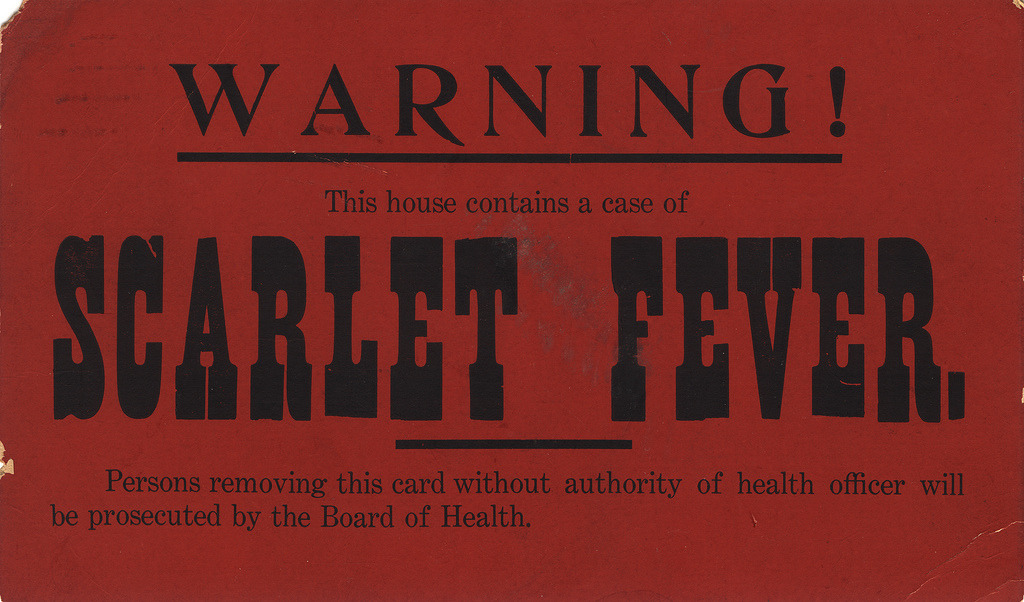
Since there is no definitive treatment for Ebola, it has become necessary to revert to some of the tried and true methods of the past which were used to limit the spread of infectious diseases. Before antibiotics or vaccinations, local health departments were responsible for case finding and initiating quarantines.  It was not unusual to see a card in a window announcing that the family was under quarantine for some of the more serious illnesses, such as scarlet fever.  It was mandated that such illnesses be reported to the local health department whose job it was to monitor the patients, and their contacts.  This was especially true for venereal diseases, and although this could be embarrassing for the afflicted patient, the public’s health trumped privacy or personal embarrassment.  As a matter of fact it was routine policy for a serologic test for syphilis to be done on everyone admitted to a hospital.  Positive results would be reported, even though it was not convenient for an infected person to have his or her spouse notified.


Penicillin and Subsequent Antibiotics

In the 1940s penicillin was developed, which revolutionized the treatment of many bacterial infections.  Other antibiotics soon followed, which were effective in treatment of some of the diseases in which penicillin was not.

Penicillin became the treatment of choice for everything in John Q. Public’s mind, and he wanted a shot of it for every conceivable problem including but not limited to snotty noses, ingrown toenails, and common colds. I recall several instances where patients left my office in a huff after I refused to give them penicillin.  Consequently, penicillin and subsequently developed antibiotics were misused, and given even for viral infections for which they were not effective.  Farmers even now feed antibiotics to their livestock to promote growth so we all may be unwittingly ingesting small amounts of these drugs.  There was also the problem of compliance. Often, people would take their medication long enough for symptoms to disappear before all the offending pathogen could be destroyed.  These factors conspired to result in the development of resistance to the drugs in the case of many bacteria. Now hospitals struggle with trying to rid themselves of MRSA and C-Diff for example, and it is said that 20% of all admissions will develop some kind of infection while hospitalized.  Tuberculosis, which had been all but wiped out is now making a comeback—this time in a form which does not respond to available medications.  It seems we consistently underestimate the versatility and tenacity of those little buggers.   They are too small for us to see, yet they continue to adapt and ultimately outsmart us.

Other Viruses: AIDS and Our Response

Viruses such as flu, AIDS, or Ebola to name a few are a different story. They are not affected by antibiotics; although the so called cocktail of meds has been effective in altering the course of AIDS.  Both AIDS and Ebola originated in Africa, and are transmitted to humans through body fluids.  The vector for aids is thought to be subhuman primates (monkey family) and for Ebola, bats.  Both diseases were thought to be contracted by using their respective vectors for food.

The story of HIV is particularly poignant for there was much misinformation, and discrimination. Since AIDS was thought to have been brought to this country by a world traveling airline attendant, who was apparently quite promiscuous.  He is postulated to have infected many other gay men and initiated the epidemic.*  Consequently, fear was coupled with homophobia, and AIDS patients were subject to discrimination both socially and  in the workplace.  This mistreatment and discrimination was the subject of a Tom Hanks movie in 1993 entitled Philadelphia for which he was nominated for an academy award. As the disease spread through the homosexual community, some TV evangelists preached that this was God’s punishment for the sin of homosexuality.

Ryan White was a 13-year-old hemophiliac who contracted AIDS in the early 1980s from a drug transfusion.  Ryan was the first hemophiliac to contract AIDS, which considered a “homosexual disease” at the time. Due to fear of contagion and the fact that the spread of the disease still wasn’t understood, Ryan White’s middle school expelled him. He and his family were shunned.  The case received international attention as the Indiana teenager fought to be allowed to returned to school. “It was really bad. People were really cruel, people said that he had to be gay, that he had to have done something bad or wrong, or he wouldn’t have had it. It was God’s punishment, we heard the God’s punishment a lot. That somehow, some way he had done something he shouldn’t have done or he wouldn’t have gotten AIDS,” said Ryan White’s mother recounting the early days of his diagnosis at ryanwhite.com.

Soon there was a backlash from saner sections of populous, but as is usually the case, the pendulum swung too far in the laudable direction of preserving privacy.

My Experience with the AIDS Backlash

During the early days of the AIDS epidemic, I was called upon to serve on a panel to discuss the problem.  At the time, the medical community was still learning about the virus and how it spread. I had the temerity to suggest that it might be a good idea to use some of the case finding techniques that had been helpful in the past, by adopting procedures to allow health department workers to find those who had been sexually involved with the identified patient.

The rest of the panel jumped on me with a vengeance for even suggesting that we violate an AIDS patient’s privacy by reporting their illness to an agency.  Their reasoning was that even if the agency honored confidentiality agreements, the contact person would know.  I can’t help but wonder if this refusal to use time honored public health measures didn’t contribute to the rapid spread of the disease.  According to the CDC, there are now 1,100,000 people in the  United States who are  HIV positive 20% of whom are women.  40,000 of these people die each year; although admittedly not all die from AIDS alone.  Many are drug users who use dirty needles and some are prostitutes.   In any event those numbers suggest to me that the AIDS epidemic is not over.

Back to Ebola: We Did Know about It and Chose to Ignore It.

Nearly 20 years ago, Laurie Garrett authored a book titled:  The Coming Plague, newly emerging diseases in a world out of balance. One of the chapters was a history of the 1970s Ebola epidemic, and the heroic virologists who were involved in its study.  It was self contained largely because it affected very rural villages at great distances from each other in Africa.  In many of the villages there was over a 90 percent mortality rate.  It was felt that had it affected areas more densely populated, the effects would have been much more devastating.  The investigators realized this organism had not disappeared from the planet and was likely, even surely, to appear again. But the complacency about which Garrett warned in her book set in, and here we are woefully unprepared.  Could a vaccine have been developed?  Who knows?  What is obvious is that there could be little money to develop treatment for a disease when no one had it.  There was also the problem that it was an African disease, and there has always seemed to be some reticence to spend resources on those folks.  Yes, it appears the world is still out of balance.

Will we learn anything from this episode? I am not optimistic.  Ms. Garrett outlined all of the conditions necessary to virtually guarantee an eventual worldwide pandemic and we do little to change that course or to prepare for what will most probably come.  There have been many other lessons never learned.  Bubonic plague is said to have killed nearly 40 percent of all Europeans.  The flu pandemic of 1917-18 killed 50 million people.  There have been major epidemics recorded throughout history.  Not long ago, we were told that bioterrorism was something we must guard against.  Anthrax, which so far has been susceptible to some antibiotic,s was a suspected weapon.  I take little comfort in the knowledge that no longer are any antibiotics manufactured in the United States.  But, not to worry, I am sure that the countries where they are manufactured would be happy to give us the highest priority in getting us what we need in the event of an epidemic whether man made or naturally occurring.

I imagine that there will be books written about all the major screw ups in our attempts to deal with the current crisis.   The question to be answered is what have we learned?

*Gaëtan Dugas, the Air Canada flight attendant, has never been definitively pinpointed as “Patient Zero” (the first North American with AIDS) by the scientific community, but he gained notoriety as such in San Francisco Chronicle reporter Randy Shilts’s notorious book, And the Band Played On: Politics, People, and the AIDS Epidemic.

Surprise! Surprise! Media Covers a Real News Story: Pay Up or Die

On one of my recent blogs, I was quite critical of television news coverage, but now feel compelled to eat some crow due to the story about drug prices on 60 Minutes the other night. This is a subject that has been dear to my heart for years, and I found myself cheering the physician who was being interviewed with an enthusiasm usually reserved for my grandson’s basketball team.

The Cost of a Hope

The focus was on a new drug for the treatment of colon cancer (Zaltrap).   According to clinical studies, this drug offered no advantages over other similar acting drugs, such as Avastin. However, the cost for an average person was $11,000 per month, even with health insurance, compared to a piddly $5,000 per month for Avastin.

The return on average Joe’s investment is that he gets to live four and a half months longer than he would without the drug.  Of course this is an average result and it is possible that there may be some few people who are actually cured.  This pinpoint ray of hope in many cases would persuade Joe to give it a try, and who could blame him.  In addition to the financial burden, if Joe chooses treatment, he will also be forced to deal with whatever side effects occur.

It does seem unconscionable to me that a man facing a probable terminal illness must choose between treatment and leaving his family in poverty. Cancer alone is stressful enough and I know whereof I speak for I am a cancer survivor (see The Big C and Me). Unfortunately this is not the only case in which outlandish prices are charged for medications. For example Gilead pharmaceuticals recently received a great deal of unwanted publicity about their new drug Sovaldi.  It has proved to be remarkably effective in the treatment of Hepatitis C with a 90% success rate in an illness previously deemed incurable.   The only problem is that it costs $ 1,000.00 dollars per day and must be taken twice daily for six weeks.

Will Government Intervene?

I was aware that not long ago our Congress in their infinite wisdom issued the pharmaceutical industry a license to steal by passing a law forbidding Medicare to negotiate drug prices. In return, we were given assurances that the industry would do their best to hold the line on prices.  I recall hearing of this agreement on my car radio and expecting there would be a furor over this boondoggle, but there was hardly a ripple of discontent.  When citizens sent their prescriptions to Canada, whose negotiations had resulted in significantly lower costs,  the FDA warned that Canada’s drugs might not be safe.  Never mind that almost all U.S. medications were manufactured off shore beyond their purview.  The fact that drugs are sold to other countries for from 20%-50% less than in the U.S. would seem to indicate that either we are being ripped off or we are subsidizing these other countries.

Physicians Dance with the Devil

Although disgusting, none of this was new to me. The big shock was to learn that physicians could be a party to this rip off.  The 60 Minutes story revealed a creative marketing gimmick, where the makers of Zaltrap sold their product directly to the attending physician, and discounted it 20%. To paraphrase Senator Everett Dickson “20 thousand here and 20 thousand there and pretty soon you are talking real money.”

In the past Medicare had taken great pains to avoid conflicts of interest among doctors.  For example, guidelines were established to limit a doctor’s ability to refer patients to facilities in which they had a financial interest, and for a physician to bill for medications dispensed in his office would be fruitless.  Medicare has used its big stick very effectively.  Physicians and their organizations also have traditionally been active in removing the temptations of situations in which their choice of treatment could be influenced by financial incentives.

Nevertheless the big drug companies continue to get their nose under the tent, and this cancer drug thing smacks of big bucks.  I am reminded of one of my favorite semi-raunchy stories about the guy who approaches a beautiful young lady and asks her if she would be willing to go to bed with him for $ 1,000,000.  After some hesitation she says yes.  The guy then asks if she would go to bed with him for $ 10.00. The woman indignantly replies “What do you think I am?” He responds “We have already established that, now we are just negotiating the price.”

Full Disclosure: My Dance with the Devil

In the interest of full disclosure, I must confess that I have taken advantage of some of the perks provided to physicians by drug companies. A few years ago I agreed to become a “consultant” to one of those companies.  One of my first duties was to attend a conference in Palm Springs to relate my experience with one of their Psychiatric drugs.    The conference consisted of a one-hour presentation about the drug and we were free to spend the rest of the long weekend being wined and dined in the luxurious resort. I returned home ashamed that I had sold my integrity for such a small price.   That incident marked the onset of my reformation; though I must admit I have not bought a pen in fifty years.

Self Regulation + The Other Side of the Coin

Pharma has cleaned up their act in recent years, I suspect in response to some unfavorable publicity. There are no longer free trips to exotic places, and gifts are forbidden unless they can be proven to be of educational value. They no longer give out writing instruments with their logo,  but feeding seems to be OK for there are still frequent invitations to  exclusive restaurants for “educational “ activities, and bringing in food for an entire office staff is now the norm.  The restaurant meetings usually feature a so called expert who will present a program with the help of the company’s slides which are of course totally unbiased.  Of course the presenter receives a generous fee for his effort, the audience gets a superb meal, and everyone is happy.  Physicians would insist they are not influenced by these gimmicks, and I respond that these marketing folks are not stupid and such strategies would not be used were they not effective.

None of this is meant to disparage the pharmaceutical industry for they are a very key component in our medical system. They have done much to alleviate suffering, and to prolong life.  During my career I have witnessed amazing advancements in the medications available to us physicians.  Their research facilities are the envy of the world.  They are also involved in a highly competitive business with significant risks.  It takes a huge amount of money to bring a new drug to market, and if not approved by the FDA, the research and clinical trials representing hundreds of millions of dollars is lost.  Nevertheless, first and foremost, they are a business. As such, pharmaceutical companies exist primarily to make a profit.  Their first responsibility is to their stockholders, and I suspect any feelings of humanitarianism must be secondary.

My quarrel is with my fellow physicians and a system that does not recognize the uniqueness of the medical profession. Ted Kennedy is alleged to have once said that: “Medicine is too important to be left in the hands of physicians.”

There was a time when I would have violently disagreed with that statement, now I am not so sure.   Many of the big names in my specialty of psychiatry profit from  relationships with drug companies. Even major universities appear to have cozy relationships with big pharma.  In recent years it has become fashionable to publish so called “head to head” studies comparing one medication to another in order to determine which is the most effective.  Surprise, surprise in over 95% of these studies authored by physicians and financed by a drug company,  the sponsoring drug company’s product won.  Some experts in study design point to built-in biases; others have noted that unfavorable results are never published.  I feel that physicians may sometimes be complicit in this type of misinformation, although I grant that sometimes they may be duped.

My Experience with Sales Reps from Pharma

During my years in practice I have enjoyed visits from drug company representatives. I have found them to be well trained and knowledgeable.  The brief periods of time spent with them was often a welcome break and I always enjoyed the repartee.  Their job of course was to promote their product, which was usually done in a very professional manner, and they often provided useful information.  One notable exception was when a rep blatantly said to me that she would arrange for me to attend any meeting in the country at her company’s expense if I would write ten new prescriptions for her company’s product by the end of the week.  Of course my wife’s travel and expenses would be included.  I should have told her my soul was no longer available because Ii had already sold it for a trip to Palm Springs.

During the last few years of my career I decided to do some research by exploring the attitudes of some of these reps with whom I had developed a close enough relationship that they were able to share with me some of their most disagreeable experiences. When pushed most would confess that they resented the role of food delivery  person to various offices.  Most disgusting to them was that there were offices where the physicians would only see them if they would bring in lunch for them and their staff.   My favorite rep told me of an episode in which she was taking a group of doctors to dinner.  Since one of them fancied himself a wine connoisseur, she asked him to order the wine.  He ordered a four hundred dollar bottle.  You can imagine her opinion of that presumptuous jerk.  Another told me that she had delivered lunch to the office of one of her more demanding clients when she was asked to also deliver food to the doctor’s house for her child and the Nannie.  One of the best of all times however was the story of a major academic figure who I had previously held in great respect until I heard the story of how he had asked the rep to get him more dinner talks at seven hundred bucks a clip because he had kids in college and needed the money.  Previously I had violated my rule to abstain from these dinner charades, but attended one at which he was speaking due to the respect I held for him then.  I was actually embarrassed  as he made no attempt to be objective and was a blatant shill for the drug company.

Is the Cost of Ethics and Integrity Too Great?

The sad part about these stories is that it apparently works. The rep who offered me the payola for writing prescriptions of her product subsequently was promoted to a very responsible position in her home office.  Even sadder is that physicians are so easy, and do not see the value of maintaining a respectful but arm’s length distance from big Pharma.  I know the good old days were not always that good; however I am convinced these things would not have occurred back when I was a young buck.  In those days I thought some of those ethical standards espoused were ridiculously strict.  Now, they don’t seem so crazy after all.

My major concern is that we now have a system in place which permits and even encourages what I consider to be transgressions.   In spite of all my complaints, I do believe in the capitalist system.   The promise of fortune and the fame which accompanies it are powerful motivators which have resulted in much that is good in our society.   Profit is necessary for people and companies to succeed; however I believe that there are instances where the admonition to set prices based on “what the traffic will bear” is not always appropriate.  Medication is one of those instances: for when it is a matter of life or death, the traffic will bear almost anything which makes for fertile ground for those willing to take advantage,

The Economics of Drug Research

Another problem is that in order to profit or even break even, one must have a large demand for a medication. Blockbuster medications, as Wall street calls them, are those which are used by large  segments of the population.  Zocor (a cholesterol lowering drug ) is a good example as millions of people are taking this or similar statins.  The problem with this is that there can never be enough sales to recover those huge costs of development.  Consequently; those afflicted with uncommon illnesses are neglected.

What Does It All Mean for the Future + Ebola?

So, knowing all this, where do you suppose this puts the quest for medications to treat the uncommon and rare diseases?   You’ve got it: at the very bottom. Since companies are averse to losing money, research will be limited to academic laboratories that lack the structure or finances to market medications.  They are largely dependent upon advocacy groups or NIH for financing.  Our forward looking Congress has virtually eliminated the second option with their draconian budget cuts.   Our current Ebola crisis is a case in point.  We have known about this virus for nearly 45 years but outbreaks were mostly limited to cases in small isolated villages in Africa, and received little attention.  Now there is a frantic search underway for a cure or at least a treatment of some kind.  Although the epidemic in the 70s was localized, it was found to be highly contagious with a mortality rate of 90 percent.   Still the epidemic was contained and as the saying goes “out of sight, out of mind”.   There have been some academic virologists who have worked with the virus, but as nearly as I can tell no big push to develop a vaccine or even to determine if that or any other treatment might be possible.  Now that there is the potential for a big market, so I am sure the drug companies will become interested.   I have my own concerns about this Ebola thing, but that is another story about which I hope to write next blog post.

Archeology Class Term Paper

Introduction by Maggie (eshrink’s daughter and official editor of the eshrinkblog: My dad is taking his archeology class seriously. Below is his class assignment. He has decided on a third career…he will be Ohio Smith…leave no outhouse left unturned.


September 14, 2014

Nancy Hamblin, Ph.D

Ohio University

Zanesville, OH 43701


Dear Dr. Hamblin,

This letter is written with two purposes in mind.  First, I wish to thank you for a very enjoyable learning experience under your tutelage, but my second reason is to ask for your expertise in helping me identify a recently discovered artifact.

Since I do recall from my class that context is important in identifying artifacts, let me explain how I came to be in possession of this one.  You may be pleased to learn that as a result of your inspirational lectures, I have decided to embark on a new career.  It is my intention to become Muskingum County’s top archeologist.  I believe that as I expand my sphere of influence in the field I may eventually be addressed as Ohio Smith.

To that end, I contacted a former patient who had told me of his hobby as a bottle collector, and that most of his prizes were found in excavations of the sites of outhouses near abandoned homes.  This person had been referred to me from a diversion program after he had been accused of extorting money from an elderly lady; however he had assured me that this was not true and he was very believable. He was quite gracious, and showed me his extensive collection of Zanesville swirl bottles, which I had been told were quite rare.  He even offered to sell me one at a very reasonable price. When I told him I preferred to make my own discoveries, he was so pleased at my dedication that he offered to sponsor me for membership in the Privy Prospector’s Society of Southeastern Ohio in spite of my lack of field experience.  There was of course a nominal initiation fee and dues, which seemed a bargain for the privilege of being able to consult with a group of experienced privy archeologists.  Sadly, when I later called him back to learn when the next meeting was scheduled, he informed me that the club had disbanded in a fit of jealous rage over his collection of Zanesville swirls, and that the club’s treasurer had absconded with the organization’s funds.

Although disappointed, my enthusiasm was undimmed for I was determined to become a top gun in the field of archeology.  I felt it was appropriate that I begin my quest by probing the sites which had been occupied by outhouses, since few people are old enough to have had as much direct experience as I have had.  As a matter of fact, I have fond memories of summer days in my grandparent’s two-holer (I don’t remember ever seeing both holes used at the same time, but I assume they were for emergency situations).  It was here that I learned to multi task for while performing normal excretory functions I was able to peruse the previous year’s Sears Roebuck or Montgomery Ward catalogs, and catch a glimpse of the lingerie section without being chastised.  Of course the catalogs were there to serve a more utilitarian function, and the glossy pages always seemed to remain after all the others were gone.

My experience was not limited to utilization, for I had been involved in the maintenance and logistics of the facility, which were not as simple as you might think.  Slaked lime was used liberally in order to minimize the odor and discourage flies.  These outdoor toilets came in different sizes and configurations, but were usually built on skids to facilitate moving them when the pit beneath them was nearly full.  A modest one-holer might be only four or five feet square while others were much larger, and more luxurious.  I recall visiting one in which the owner had installed modern toilet seats similar to those still in use today.  I found it to be a very useful innovation as it solved the splinter problem.   Privies  of course were built from wood, some painted and others not.  Although there was a popular metaphor used by some uncouth youth to describe a well-endowed young lady as “built like a brick s…. house,” I don’t believe such a structure ever existed.  Research done in preparation for my first expedition answered a burning question, which had haunted me for years (e.g. why the crescent opening in most privy doors?)  The answer I discovered is that it was a symbol representing the female gender, used in colonial days when it was considered very poor taste for women to use the same facility as men.  The men’s privy was identified by a star.  Apparently the tradition continued long after its symbolism was lost, and men became interlopers.

I vividly recall the day probably 70 or more years ago, when I was drafted by my grandfather to help move the privy.  Of course it meant digging the new pit, and since the soil was quite sandy, lining it with cast off boards from the local sawmill to prevent a cave in.  Precision was required in order to assure proper placement of the building over the pit.  This was made even more difficult by Jack, Uncle Cale’s white mule, who proved to be a recalcitrant participant when asked to tow the privy to its new location.

In those days when to waste was regarded as sinful, that which was unused was burned since there were no waste disposal services.  Therefore, that which would not burn was often deposited in the privy.  This would prove to become a rich source of artifacts for us modern day archeologists.  I realized that privy prospecting was unlikely to lead to discovery of prehistoric artifacts; however I felt the process of discovery was similar in all digs, and the experience would help me develop the skills needed to succeed in my newly chosen field.  I hope you have not been bored with all this information, but I found it necessary in order to establish my bona fides as knowledgeable or even expert regarding the subject of privies.

You taught us the importance of site selection, and I had no trouble with that as I had chosen the two abandoned villages of Irville and Nashport on State Route 146, which were only one-half mile apart from each other. Both were vacated in the late 1950s when the Dillon Dam was built.  Most of the houses in Nashport were moved a few miles west, and the community retained its identity. Although some of the houses in Irville were moved to other locales, there was no attempt to preserve the town itself.

Nashport was founded in 1827 by Thomas Nash who is said to have been a farmer and inn keeper.  His town was built on the banks of the Ohio Canal, which had opened to traffic in the same year.   This marvel of engineering that connected Lake Erie with the Ohio River was expected to stimulate commerce in previously inaccessible portions of Ohio.  Mr. Nash must have felt that his port, midway between the canal’s origin and termination, would be in a strategic location to profit from the boom that was expected to follow.  The success of the canal systems was short lived; however as they would soon be supplanted by the iron horse. The remnants of the canal are still visible. As a matter of fact, in my childhood, portions were populated by huge carp that I unsuccessfully shot at with bow and arrow.  I do look back fondly on those times spent on my Grandparents farm situated on the edge of Irville.

Nashport was also the site of an Adena Indian mound, which is listed on the National Registry of Historic Places.  It stood behind Salty Settles General Store and had been plundered by souvenir hunters long before my time. I understand it was explored by professional archeologists in 1975, but am not aware of the yield.  Another larger mound could be seen from my Grandfather’s back yard. It sat atop the area’s tallest hill overlooking the valley.  I am told it has subsequently been discovered, but I am not aware if it has been excavated.  Collection of Native American artifacts (I am trying to be politically correct ) was considered the province of boys in those days, and we were often able to find arrow heads and spear points by following the breaking plow as it turned the furrows.  A couple of days later the arrow would be dragged over the ground to break up the furrows and this could be even more productive.   As you can imagine, finding one of these artifacts was sure to provoke feelings of wonder as to how it got there and what or who had been the target.

I have been unable to find any written history of Irville, and the only evidence of its existence is the cemetery that bordered the farm. My ancestors from at least three generations are buried there. However, there was a great deal of verbal history to be had in the back of Charley Railey’s General Store.  There was always a group of older residents who assembled six nights a week around the pot belly stove to discuss every subject imaginable, except for politics, which had been declared off limits do to the fact that the one democrat in the group tended to become belligerent in such debates.  My acceptance as an adolescent into this group was probably due to my rapt attention as they told stories about “the good old days.” I suspect they enjoyed an audience for already much of what they had learned from their parents was no longer relevant in a culture in which a burgeoning technology no longer relied on the color of the wooly worm to predict the weather

These loafers as they were called provided some verbal history of Irville.  In addition to the stories about various pranks perpetrated in their childhoods, they had much information about the village going back to the early nineteenth century; although they could not recall specific dates.  For example, Joe McCann said that the Nether’s house had once been a stagecoach stop and later was a stop on the Underground Railroad.  Others confirmed this was what had been told to them by their parents and furthermore they agreed that there had once been a tunnel under the road leading to a sister house on the other side of the main road to the village so that fugitive slaves could move from one house to the other to avoid the slave chasers.  Although all were aware of the mound in Nashport, they knew little of the natives who had originally inhabited the area.  I do recall talk of how arrow heads were so plentiful as to not be considered novelties.

With this background information in mind, I now set about to: 1) establish my goal for the dig, 2) decide upon the exact site, 3) procure the proper equipment, and 4) get appropriate permission, as per what I learned in your class. I felt that I would be able to finance the dig independently, which would allow me to proceed without delay.  My goal was to look for artifacts dating back to the canal days. Consequently, it would only make sense that I concentrate on the Nashport area and the area closest to the old canal bed.  As for equipment, I had a pick and shovel in the garage, a trowel, and several old paint brushes.  I did require a visit to the hardware store to buy a machete like instrument that the clerk told me was designed to clear brush.  I was unable to find a pith helmet, but a tour of the local Goodwill store turned up a well used felt hat, a near replica of the one worn by my hero Indiana Jones.  My only major purchase was for a metal detector, as I was confident that tin cans and other metal objects would likely have been discarded when the privies were moved. The area I planned to excavate was owned by the Muskingum Conservancy District so I asked a neighbor who happens to be a County Commissioner for permission to dig, and he said he didn’t care, but warned me to stay away from the Indian mounds.

Finally the preparations were complete and I set off on my virgin dig with great hopes that I would be able to contribute to the history of the region. I soon found that things change a great deal in a half century or more, and I spent a good bit of time searching for landmarks.  The bucolic countryside of my youth had become an overgrown forest, and was now virtually impassable except for occasional paths used by fishermen on their way to the lake.  The old road through the village was still visible and I was finally able to identify the steps to the Methodist church, which I had climbed many times often under duress.  From there I was able to proceed westward to where I thought the canal had been; although this section was not visible.  I found cutting through the thick brush and briars quite exhausting, and had no hits except for an occasional beer can.

As I was about to give up for the day, I entered a vine covered clearing and my metal detector suddenly came to life. I felt certain  I must have hit the mother lode.  Sure enough, my trowel immediately struck metal on the first thrust. And I was soon turning up rusted cans from only a few inches below the surface.  There were also many unidentifiable glass shards, and one intact “mason” jar inside of which was the artifact in question.

As you can see from the accompanying photograph, the object is about 7 inches long with a wooden handle attached to a pear shaped weighty end. Initially, I thought the bulbous end of the object must be stone because of its weight; however its texture is very smooth, there is crazing on the end of it and I since have noted a very small figure 9 where it is joined to the handle.  All this suggests to me that it is ceramic. The handle is perfectly round as if turned on a lathe.  It is made of a very dense hardwood with an irregular grain suggesting it came from the burl probably of a maple tree.  The narrow end is blackened in spots, but these areas do not have the appearance of having been charred, but rather look like some type of stain.  There are also a few spots of a white substance which can be scraped off with the fingernail.

Although this is obviously not a prehistoric artifact, I am hopeful that it may prove to be related to the history of the canal. It does not appear as something that would be effective as a weapon, and seems much too small to be used as a metate.  If you have any ideas or can suggest references which could help in its identification, I would be most grateful.  I was forced to leave the site prematurely after noting the vines in the area were poison ivy. I plan to return to complete the excavation when my recuperation is complete.  In the tradition of archeologists past and present I will not be deterred by assaults on my body by a hostile environment; consequently I did manage to make a brief visit to spray the area with weed killer.  I look forward to hearing from you if your busy schedule permits.

Respectfully,


Darell Smith MD


Letter #2

Dear Dr. Hamblin,

You will be pleased to learn that I have been able to complete the identification of the artifact. I am well on my way to full recovery of the dermatitis venenata with the help of massive doses of corticosteroids, and was able to return to the site of my excavations.  Research regarding the poison ivy revealed that it can still be dangerous after it is killed; therefore I needed to take special measures to prevent another disabling rash.  The protective clothing was a bit uncomfortable since the temperature almost reached ninety degrees, but I remained determined to find the answer to the mystery of the Nashport artifact.

To that end I set to work and after several hours of careful excavations came upon 3 small pottery shards which appeared to be of the same material as the end of my artifact. They were nearly ½ inch thick, and when put together indicated they had been part of a small round dish which I estimated must have been about 5 inches in outside diameter.  There was some staining of the inside of the shards which appeared to be a match to those seen on the handle of my artifact.  Thus I concluded that this instrument had been used as a kind of miniature metate, but was much too small to have been useful as a tool for grinding grain.

The next layer uncovered produced an intact glass bottle with a ground glass stopper which would prove to unravel the mystery for I immediately recognized it as an apothecary bottle of the type used in medical facilities a hundred or more years ago.  It then dawned on me that my artifact had been used to compound medications, was a pestle, and the shards part of the mortar.

There had only been only one medical facility in Nashport, and I was dumbfounded to realize that I was beginning my Archeology career in the same place where I had begun my life as I realized this must be the site of Dr. Welles’ hospital. Dr. Welles was a beloved family physician who had added a couple of rooms to his office in order to deliver babies in a state of the art facility rather than in the home.  I was apparently one of his first deliveries there, and I am told my father, a truck driver at the time, participated by administering ether during the delivery. Dr. Welles subsequently committed suicide, but I deny any responsibility.   My last visit to Dr. Welles’ replacement was for treatment for a spiral fracture of the humerus sustained when attempting to mount Jake Davis’ draft horse by jumping from a fence post.

There was no doubt in my mind that fate had played a role in choosing a site for my first dig. Thank you for choosing not to respond to my first letter, as I take that as your confidence in me to solve the problem.

Respectfully,


Darell Smith MD


Evil

Introduction:

Daughter Maggie who also happens to be my editor suggested that she would like to see me write something about evil. I think this was precipitated by the recent beheading by one of those ISIS guys.  She was interested in my thoughts as to whether there were people who were born evil or if it was an acquired condition, and did I think there was such a thing.  Since this is a question which has been debated by the brightest minds on the planet for the past several thousand years, it seemed appropriate that I take a few minutes to answer it and settle the issue once and for all.

As you might expect, we shrinks see all kinds of people many of whom have done very bad things.  Evil; however like many things in life is “in the eye of the beholder.”  For this beholder, the actions of that person in the black suit and mask were about as evil as it gets.  His compatriots, to the contrary, must have applauded this act as pleasing to God.  Many see capital punishment as justice served, but I see the taking of a human life as legalized murder and therefore evil; however I could make an exception in the case of the ISSIS guy.  If I had the power to take his life and did so, would that make me evil?  On second thought, it may take a little longer than I thought to figure this out .

John Wayne Gacy and the Harlequin Complex

Many years ago I had briefly in my possession a painting which had been done by John Wayne Gacy while he was on death row. The subject was a skull with a clown face.  For those too young to remember, Gacy was the person who had lured 33 boys to his home where he murdered and then buried them in a crawl space under his house.  It appeared that his motivation for the murders was that he experienced orgasm while watching them die.  Yes, this was a monster of the highest order.  I was particularly interested in the case as I had been doing some research at the time about a possible relationship between attitudes toward death and psychopathology.   Gacy had been very active as a clown who participated in community parades, etc.   There was an extensive history of physical abuse by his father and bullying by his peers, but he had grown up to be active in local politics, community affairs, and had actually received awards for his contributions.

My interest in this case was that Gacy seemed to be an extreme example of what had been called the “harlequin complex.”  The term was derived from an age-old myth about the Harlequin who came from the afterlife to seduce a maiden.   The harlequin is frequently represented as a masked figure or as a clown. Briefly put, this is a type of psychopathology in which a person romanticizes death even to the point of equating it to a sexual experience.   Actually, this attitude may exist to a lesser extent in the population at large as evidenced by phrases such as “flirting with death” and the Muslim promise of multiple virgins for martyrs.  I coined the term “thanatophilic“ (death attractive ) for this condition and theorized that it might be a factor  in some suicidal behaviors.    I found what I thought was evidence for this disorder only in some women and homosexual males.  Drawings of clowns were frequently produced in art therapy sessions on our inpatient unit. Gacy was bisexual, was diagnosed as a sociopath without remorse, and enjoyed acting out as a clown.  My hypothesis was that these factors came together to form the “perfect storm” leading to the abhorrent and depraved acts of evil.

The History of Evil

In the final analysis all that I have presented so far are suppositions, which do not answer the question as to why any member of the human race could do such things to his brethren. I recall reading somewhere that humans are the only species who deliberately set out to kill their own.  Yes, other species may fight over food, territory, or mates, but rarely do these fights result in death.  Does this mean that evil exists only in humans? I find it interesting and at the same time disappointing that a public execution is thought to be an effective recruiting tool for this evil organization called ISIS.  Are there that many blood thirsty people in our midst?  Sadly, the answer must be yes, since throughout history despots have had little difficulty convincing ordinary people to participate in the worst kind of evil acts.  When torture is needed there seems to be a plentiful supply of sadists available. It seems that evil is ubiquitous, for there appears to be areas on every continent where evil reigns supreme.  There are reports of mass executions, rape, torture, subjugation and even slavery in this so called civilized world.   Even this small quiet Midwestern town is not immune, for I have spent many hours listening to patients as they recount their experiences of abuse at the hands of those who had been charged with the duty to protect and nurture them.  For too many of these victims, the damage is permanent.

Evil appears to have always accompanied mankind.  The “ice man “frozen in a glacier in the alps for over four thousand years was x-rayed and found to have a flint arrowhead in his chest.  Sadomasochistic tendencies have always seemed part of the human psyche.   The coliseum attracted thousands to cheer gladiators’ battle to the death, and witness wild animals attack and kill people.  It is theorized that they cheered the slaughter much like we cheer our football teams.  During the French Revolution, huge crowds assembled daily to watch the guillotine perform its evil duties.  Our own history records similar responses as our ancestors burned witches to the stake, and later lynchings were also said to be well attended.   The tradition of this sick type of voyeurism persists today as we watch a so called sport in which the goal is to inflict a concussion on the opponent.  It is now being superseded by a more violent form in which contestants fight in a cage in which anything goes. Are the spectators at these events different from those who watched similar events in the colliseum? I have always found it ironic that society found dog fighting or cock fighting abhorrent but endorsed boxing as a legitimate sport.  I should have not been surprised; however for slavery was not only tolerated, but extolled by many as God’s will.  Executions for capital crimes is not deemed as evil by society, but is called justice.   Our capacity for rationalization appears to have no limits.

Evil and War

More subtle forms of evil are seen when con men inflict destructive but less visible types of pain on their unsuspecting victims. We often see examples of unscrupulous   people using their positions of power in evil ways.   Most of us, myself included, were shocked to learn that our government which we thought of as the least evil of all had engaged in “enhanced interrogation” which turned out to be a euphemism for torture.  The most evil of all the activities devised by man; however must be war.  It undoubtedly has caused the most suffering to the most people throughout history, and has apparently always been with us in one form or another.   Archaeologists find evidence of wars going back to the Stone Age, some of which were even more brutal than modern conflicts.  There are many Biblical accounts of wars.  Even David, the legendary Jewish hero, allegedly favored by God was recorded as having slaughtered hundreds or more people after one conquest.  He is said to have forced the entire population to lie down in a row and ordered his soldiers to kill every other person.

Evil and Religion

Of course, any discussion of the subject of evil would be woefully incomplete without including religion.   In many ways I think religions have been unwittingly complicit in the promotion of evil.  No, I am not referring only to the Elmer Gantrys or the false prophets such as Jim Jones or David Karesh who seem to show up in our society on a fairly regular basis, and who of course are grand champion evil doers.   It is my opinion that the organized religions of the world have done a poor job in their “battle with the forces of evil,” and at times have actually been perpetrators of their own brands of evil.  Obvious examples of course are the crusades, the inquisition, and the power mongering of early church leaders.  There are also records of early missionaries to the Americas using torture and imprisonment to force indigenous peoples to adopt Christianity.  The Isis occupiers now top that blasphemy by offering Christians the choice of conversion to Islam or death. Let us also not forget about the church which became a haven for pedophiles where priests who had pledged allegiance to their God and their flock did untold damage to children whose trust they violated.  Even more egregious was the Vatican’s silence as the holocaust took place in their own backyard.  History reports the practice of human sacrifice in some older religions which were done to appease their Gods. We must not leave out the antiabortion zealots who attempt to shame and humiliate troubled women.  They frequently threaten Doctors who perform abortions and on one occasion murdered in the name of their God.

Now many followers of the Muslim religion have perverted the teachings of the Koran in order to justify doing evil things such as the extermination of all “non – believers.”   And yes, I am sure they believe their cause is just.   Since their cause is so righteous it frees them to use the all too familiar rationalization that “the end justifies the means” and thus perform the hideous act of decapitating an innocent young man in front of a camera. This evil act was violent and it has been said that violence begets violence.  If it were in my power I would probably unleash a violent response and he would in turn label me evil, assuming he still had a head on his shoulders.   Of course, I would use some mental gymnastics to justify my returning of evil with evil.

Was WWII an Act of Evil?

As previously mentioned, I believe that war is the most evil of all man’s activities. I am a child of World War II.  My brother celebrated his eighteenth birthday in April, and found himself on the frontlines of Europe four months later. I recall my parent’s anguish as they listened to news every evening.   I saw the blue stars displayed in most windows, often replaced by gold ones. Families lived in dread of the knock on their door by a Western Union messenger with the telegraph which began: “We regret to inform you…”  Years later I would work as a consultant to the VA and have the honor of treating some of the veterans (or should I say victims) of that war and even some from the previous war, the one that was  “the war to end all wars.”  That pronouncement proved not to be prophetic. In WWI it was called Shell Shock, in WWII Battle Fatigue, and in this last one Post Traumatic Stress Disorder.   Whatever the name, it is sufficiently painful for many of these veterans that they end their lives to escape the torment that never ends.   Add to that the brain injuries, amputated limbs, and the pain for families who lose their loved ones, the thousands of innocent civilians dead or maimed, and it is difficult for me to see war as anything but evil.  In spite of its horrors, we continue to glorify our warriors as has been the case throughout history.   Sargent York of WWI fame received the Congressional Medal of Honor for having killed nine Germans in one skirmish.   It is true that war also brings out the best in many with incredible feats of valor and sacrifice for their comrades, but I doubt that a medic who saved nine lives that day would have been honored in the same way as was Sgt.  York.

I seem to recall that someone once said that “evil begets evil.” If they didn’t say it they should have, for it is obviously true. For in the case of wars it is always the case that evil is fought with evil. For example in 1941 Japan attacked Pearl Harbor and many lives were lost.  Subsequently the Japanese were known to have committed numerous atrocities.  Most would agree that this behavior is evil.  The United states responded by imprisoning all the people of Japanese descent whom they could find, even those who were citizens,. After a prolonged period of killing each other, we dropped atom bombs on Hiroshima and Nagasaki killing thousands of civilians, and putting a generation of survivors at risk for the development of radiation caused illnesses.   Our President insisted this saved thousands of lives since it ended the war abruptly.  This sounded very much like the old conundrum of who do we throw out of the lifeboat.

The war with Germany proceeded in similar fashion. After conquering Europe, Germany initiated a campaign of indiscriminate bombing of England.  The stated goal was to destroy morale and the will to fight.  Actually it meant that this “civilized war” had regressed to tactics used by so called Barbarians hundreds of years before when it was  considered good policy to kill your enemy’s entire population .  With this strategy it was no longer necessary to seek military targets, for now it was also desirable to kill as many civilians as possible to destroy their will.   America and Britain responded in kind and unleashed a furious program of bombing German cities on one occasion precipitating what would later be called a “fire storm” in which an all encompassing conflagration swept through the city of Dresden with such ferocity that it destroyed everything and everyone in its past.  No one knows the death toll, but estimates vary from 35,000 to 150.000 mostly innocent souls.

The moral of these last two stories is that if one fights with evil you can safely put your money on evil for no matter the outcome evil wins.

Recent Wars

Recent armed conflicts (politicians don’t like the term war) follow the same age old patterns.   The evil of 9/11 was followed by the loss of several thousand lives and untold suffering in a war which we were told was necessary for our protection.   The entire country cheered when the assassination of  Osama Bin Laden was announced.   Some archaeologists opine that throughout the ages wars have been fought in the pursuit of resources. We were assured however that this war had nothing to do with Iraq’s oil reserves.

Meanwhile Israel insists that Hamas is responsible for the death of hundreds of Palestinian men, women and children due to Israel’s recent response to Hamas rocket attacks. I suspect that is of little comfort to survivors of the bombings.  Some world leaders criticized the Israelis for the attacks based upon a lack of proportionality!  In other words, it was acceptable to kill some Palestinians just not that many.  It reminded me in a perverse way of the Vietnam War when the day’s body counts were announced on the evening news.  Our progress in the war seemed to be measured by how many Vietnamese were killed.  The Israelis seem to find some justification in refusing to negotiate by labeling Hamas as terrorists while they honor the memory of Manachin Begin, one of their founding fathers, who had admitted plotting to blow up a hotel in London early in his career.  Indeed there does seem to be credence to the statement that “one man’s terrorist is another man’s freedom fighter.”

In recent years we have made much progress in solving some of the problems associated with war. Technological advances now allow us to kill much more efficiently oftentimes without soiling ourselves with their blood.   The tools of war which allow us to kill from a great distance must make it easier when we don’t have to actually look our enemy in the eye as he dies.  We know that drone operators living in Colorado can now go to work in the morning, drop a few bombs on the other side of the world, and be home in time for dinner.  In their defense, it is said that some have difficulty dealing with the uncertainty of who they might have killed.   I read that robots are now being developed which may someday replace human soldiers.   I would applaud that effort if the robots would only engage other robots; however I suspect that society in its infinite wisdom will find ways as it always has to continue to kill each other.

Recap: Is there evil in world? Is it learned? Is it genetic?

Those of you who have endured reading this far might remember that I began with the promise to answer Maggie’s three questions.   For those of you who like myself teeter on the edge of senility, they were:  1) Is there evil in the world,  2) Is it acquired , or 3) is it genetic?   The answers are: yes, yes, and yes. If you have any interest in the subject you may be curious as to how I arrived at these conclusions.  If so you are condemned to read the rest of this erudite essay.

As I immersed myself further into the topic it finally occurred to me to look up the definition of evil. Wikipedia defined it as the “absence of good.”  This did not make sense to me for I am certain there were times in my life when neither good nor evil was in evidence.  There have been times in my life when bad things happened, that could in no way be described as evil.  I also rejected it because it is an example of what someone has called “binary thinking,” that is thinking in terms of opposites which tends to end in depth analysis and is not really defining.   I counted 18 synonyms for evil in Webster’s dictionary and good was not listed as an antonym.  The definition which best suited my purposes was “doing harm to others.”  I liked this definition because it offered no excuses, rationalizations, or justifications.  It obviates the need for debate, and it can be easily identified.  If we accept this definition, there is no way we can deny the existence of evil for it surrounds and even engulfs us.  We see it in our daily lives and on a larger scale throughout the world, a few examples of which I have noted in this paper. Much has been written about the struggle between good and evil.  In my opinion both conditions stand alone.   For example, during all wars there are heroic and compassionate acts performed, but to my knowledge they do nothing to stop the carnage. No matter the impetus for evil acts, the fuel which propels it is hatred. The only known antidote for hatred is forgiveness.   As I pointed out previously the problem with the eye for an eye solution is that both sides end up without eyes, but although blind both feel righteous.

Is Evil learned or inherited? It depends on who is answering the question.

Question number two is more difficult. As a matter of fact, it is one that philosophers and theologians have debated throughout recorded history, and perhaps beyond.   It is difficult for most of us to see evidence of evil in a newborn so since some will grow up to do evil things, they must have learned it somewhere along the way. Psychologists would identify the cause being due to life experiences. For example in Gacy’s case, the extreme verbal and physical abuse he suffered, and conflicts about his sexual orientation led to perverse and evil behavior.   Sociologists would point to the alienation, poverty, bigotry, exploitation, and break down of family structure of many cultures as a root cause of much evil behavior.  Witness the proliferation of street gangs whose members appear to be searching for a sense of belonging.

Historians describe a lust for power as an affliction which sometimes results in the making of despots.   A physician friend of mine had the bad fortune to be called up to serve in Iraq, and was assigned to be the personal physician of Saddam Hussein. He was surprised to find Saddam to be congenial in spite of his imprisonment.  He confessed to my friend that he had done some bad things, but that they were necessary in order to keep his country together.   I think it is safe to assume that Hitler along with our current crop of evil rulers have used the same brand of logic to justify their evil doings.  It is said that Hitler’s motivation came about due to his anger over Germany’s  loss of world war I,  so  it seems logical to conclude that the most famously evil man of the twentieth century  was not born evil but acquired these traits later in life.

Can ordinary people do acts of evil?

As I had previously mentioned the fact that Hitler and other tyrants have always been able to find apparently ordinary people to do evil by proxy has always perplexed me. However; I recently have been reminded of a study from many years ago in which people were paid to participate in a faked experiment in which they were asked to initiate an electrical shock to another person.  The shock was not real but the recipient pretended to experience pain each time the button was pushed to administer the faked shot.  The surprising and frightening result of the study was that over half of the subjects continued to push the button which they thought was administering shocks even after the make believe scientist had encouraged them to increase the strength of the shock to what the needle on the fake gauge registered as dangerous, and the alleged recipient of the shocks was screaming as if in agony. What is even more frightening about this study is that the subjects were not a bunch of brain washed , doped out Charles Manson followers, but ordinary people.  Perhaps this may explain why soldiers accused of atrocities frequently respond:” I was just following orders” while others are wracked with guilt for engaging in acts which would have been unthinkable in any  other circumstance. Could this mean that some people are programmed to be followers, and therefore more susceptible to control by those who would do evil?  To the best of my knowledge, follow-up studies were not done, but it would have been helpful to know more about the personalities of the subjects.   It might have been more important to learn about the resisters than the followers, as they might make us feel more hopeful.

Nature vs. Nurture

The distinction between acquired and inherited causes of evil becomes blurred as I ponder the question. For example in Gacy’s case I postulated that the abuse he suffered coupled with his homosexuality were factors; however many now feel that one’s sexual orientation is already established at birth.  Consequently, we could postulate that his evil behavior was influenced by both acquired and genetic factors.  Neurobiologists point  out that although our brain has evolved to have a huge cerebral cortex which allows us to out think all other creatures,  it sits atop a more primitive portion relatively unchanged from the brains of our ancestors.  These centers are the seat of more primitive and instinctual emotions, and if unchecked can result in violent behaviors, thus everyone is born with the potential for violent behavior.  In other words, in spite of our vaunted intellect and veneer of sophistication we are animals.   Activation of the primitive portion of our brains requires some kind of stimulus.  Therefore we could correctly posit that all of us are born with at least the potential to do harm to others.

For more than a century there has been an ongoing debate regarding nature versus nurture theories to explain human behavior and mental illnesses.  Freudians focused on childhood experiences while others felt that brain function was relatively unaffected by such factors.   In recent years there has been a burgeoning interest in genetics especially since the human genome was sequenced.   Nowhere has there been more interest in these developments than in the field of Psychiatry, for it has long been noted that certain mental illnesses seemed to be more common in some families than others; although a direct correlation could not be established.  Now the links are being identified, although in most cases it has been found that the modes of inheritance are quite complex, involving multiple genes.  It has been noted that genetic mutations are much more common than previously thought, and may even be modified by life experiences.  This is a monumental discovery and solves the controversy since it appears biological and environmental factors are interconnected.   Technology helps us understand brain function, as we now are now able to actually watch a brain function via the PET scan.  Neuro-endocrinologists learn more each day about the various neurotransmitters which allow the billions of brain cells to communicate with each other.

You may be wondering what all this has to do with my subject.  It is relevant because we need to know more about how evil people think or if their thought processes are different. In my youth during the time BTV (that ancient time before television) I listened weekly to a favorite radio mystery entitled “The Shadow”.  It was about a super hero who was able to make himself invisible.  It always began with a conspiratorial voice which announced  “Who knows what evil lurks in the heart of man , the shadow knows.”   I have often thought we could use a guy like that to help us sort out the bad guys. People who do evil things without remorse even enjoying hurting others have been called sociopaths or psychopaths.  These people appear to lack any semblance of a super ego.   Many have a history of being abused in childhood, but others show signs of  sociopathy  early in their lives suggesting that there may be in some cases a genetic component.  Conventional wisdom has always been that in such cases if these kids cannot be turned around by their late teens they will be at great risk to do evil things throughout their lives.  These people are not all criminals, rapists, or con artists, etc.  A close look will find elements of sociopathy  in all strata of life and occupations.  Stereotypes don’t  always fit as I once saw a used car salesman who was on the verge of bankruptcy  because he was so conscientious that he repaired his customer’s cars long after any warranty expired.   He might sell a car for less than he had paid for it if he felt sorry for a customer.

Of course most people even those who have done bad things to others are not sociopaths.  Many good people do things  they  later regret and do feel remorse while others feel justified often rationalizing  their behavior.   Many common human feelings such as:  anger,  envy,  ambition, fear,  suspiciousness,  and jealousy,  to name a few may trigger an impulse to do harm to others.   Hans Selye many years ago explained how certain stressors could initiate what he called the “flight or fight “ reaction by causing the body to produce increased levels of corticotropic  hormones which could result in unpredictable behaviors.   Anabolic steroids have been known to cause so called “roid rage”, and other drugs including alcohol may also contribute to violent behavior.   These and many other circumstances may be factors affecting people in such a way that they feel compelled to harm others.

All the foregoing facts would seem to confirm that we are all at risk of becoming either victims or perpetrators of evil or both.   I wonder about the famously evil people of recent and remote history, those who were responsible for the most evil.  Were they qualitatively different from the rest of us, or was it just a matter of the degree of evil?   As previously mentioned, I have seen and known many who have done great harm to others thereby satisfying the criteria for my definition of evil; however I cannot recall meeting anyone who I thought was totally evil.  Granted my perception may be skewed since my job has been to look for the good in my patients and try to help that part of them to grow. There were times also when my own negative feelings toward a particular transgression (Pedophilia for example) would cause me to refer the patient to someone more tolerant.

Why does evil exist?

What I have said so far may not be at all a satisfactory answer to Maggie’s question concerning the existence of evil for I suspect she was referring to evil in a more spiritual sense.  Science attempts to answer the question how, but why is the province of theologians. All during the time man has been present on this planet he has been the victim of all kinds of cataclysmic events such as: tornados, earthquakes, volcanoes, drought, disease, starvation, and pestilence to name a few.   Since these catastrophes were beyond his ability to understand their causes, it is not surprising that he would look to unseen forces to explain them. Thus the idea of evil being the product of demonic sources would be the only logical conclusion, and remember that this large brain of his had developed the power to use logic.  Some societies attempted to appease the demons, and others prayed for a loving God to defeat evil, or the devil as he would come to be called.  Some cultures even used human sacrifice to appease their demons

There has been little change in this regard since the Stone Age.  As Christians, we view Jesus as having sacrificed his life to protect us. We continue to pray to a “just” God to protect us from evil, and to provide us with a bucolic existence following our death.  We are instructed to resist satanic forces which are ever present. Many will ask:  if God is all powerful, why doesn’t  he  destroy Satan,  and why did he allow him to  corrupt Eve there in the garden,  get this evil thing started, and allow it to get completely out of control?  Was he asleep at the switch?  Was it a test to see how his creations would fair against his worst enemy?  If it were the latter, we have obviously failed miserably.   Of course these humans had evolved and developed the tools to allow them to survive and eventually dominate all other creatures.   Apparently, that was not enough for they then set out to dominate each other, and then begin the destruction of that beautiful garden from which they originated.  There were of course other explanations for all of this by other religions, all of whom were attempting to deal with that awareness of their mortality which had resulted from the development of those massive cerebral hemispheres.  Most defined their experiences as supernatural phenomena.

Some of you may remember Flip Wilson’s comedy show in the seventies.  One of the characters he played was Geraldine who when confronted would respond “the devil made me do it.”  It has occurred to me that some of us may be like Geraldine, and use Satan as an excuse for our wayward behaviors.   It has always been difficult for me to accept as reality anything that I couldn’t see, hear, touch, taste or smell which has left me a doubter in all things spiritual.  I do realize that our ability to perceive is constrained by the limits of our special senses, and do not deny that there are dimensions of life that are beyond my understanding. I readily accept the possibility that there are spiritual influences in our lives, but fail to see evidence of their presence.  For all I know Satan may be responsible for my spiritual blindness.  Though I don’t pretend to be a biblical scholar, in my opinion the scriptures were not all meant to be literally interpreted. In my limited reading of the Bible, I note that Jesus made liberal use of metaphors and allegories in his teachings.  This suggests to me that he wished us to think about and interpret his stories.

Is there a weapon that will defeat evil?

The genius of Jesus was in his plan to eliminate evil. Whether believer, doubter or atheist all should agree that if his two fundamental admonitions “turn the other cheek and treat others as you would like to be treated” if followed, would stop us from fighting evil with evil.  He rejected the old eye for an eye philosophy which had been responsible for thousands of years of suffering. He also proposed we fight evil with love not just good deeds.  Imagine what this world would be like if mankind had followed those teachings.   There would be no wars, thievery, murders, assaults, or shady business dealings.  Dishonesty in all its forms would be eliminated. No one would suffer the pain of ridicule, rejection, denigration, or abuse of any kind.  Psychiatrists would no longer be needed.

He must have known about this potential for evil that resides in all of us and offered us the tools to suppress it, no matter its origins. He also promised redemption when we lapsed as he must have known we would occasionally do.  The world which he offered us sounds more like heaven than this earth to which we are bound. Through the ages there have been individuals and groups who have worked at following the teachings of Jesus with limited success.   Some notable exceptions in recent times have been Martin Luther King, and Desmond Tutu: King, with his non-violent protests, and Tutu whose program of reconciliation helped prevent a counter revolution following the abolishment of apartheid in South Africa.  Gandhi, although not a Christian, used the same principles in freeing India from British rule.  Nevertheless, in all these cases the refusal to fight evil with evil was paramount.

Although many Christian denominations talk the talk about these teachings only a few seem to walk the walk by featuring non-violence as the most important of their preachings.  The Quakers come to mind and I am also told that the Amish and Menonite sects deplore any kind of violence even in self-defense.  They refuse to participate in wars for example.   Unfortunately, for the Jesus strategy to be successful there must be one hundred percent participation.  Since this is unlikely to happen, I suspect evil will likely be with us forever.

Granted there is much that is good which allows us to find happiness in the face of evil, but only love will defeat it.

Sex and Gender

Introduction:

The following is not intended to be a scientific treatise nor an anthropological study, but rather the observations and anecdotal information compiled during more than 50 years as a physician, treating and studying individuals and families.  It has been my pleasure to have recently attended a course in elementary anthropology.  I had often thought that my training in psychiatry would have benefited from exposure to that discipline and had as a matter of fact suggested such a course be added to the curriculum when I was a member of the faculty at OSU.  I felt that our study of human behavior, which was largely kept within the confines of our own culture, limited our ability to resolve the conflict over the nature-nurture controversy that was raging at the time.  It was a time when neuro-scientists were challenging much psychoanalytic theory, and were learning more about alterations in brain morphology and functions that seemed to be associated with some mental illnesses.   An example of how anthropology had contributed to resolution was the observations of anthropologists in the field that the prevalence of schizophrenia was similar in all cultures studied lending evidence that at least in that disorder the cause was likely biological rather than due to a failure in nurturing as had been postulated by the Freudian school.

The section on “sex and gender” were of particular interest to me as I had devoted much of my career to dealing with families.  I found it interesting to learn more about spousal relationships in other cultures, and was more impressed with the similarities than the differences, for as in our culture male domination oftentimes coupled with physical abuse was ubiquitous.   I have witnessed the destructive effects of abusive behaviors on families and individuals.  I have seen these behaviors passed from one generation to the next as the victims of abuse grew up to be abusers.  It appears to me that the incidence of abusive behaviors has increased during my years of practice; although accurate data is difficult to obtain since abuse is likely under reported.  The police department in our town of twenty five thousand people responded to two hundred sixteen cases of domestic violence in the past year, and I am confident that this represents a very small portion of the total number of occurrences.  In recent years there has been much more attention paid to the care and protection of the abused; however very few resources devoted to the root causes of abuse.  In my opinion, one factor which has been largely ignored is the physiology of the sex act.  I believe the underlying anxiety concerning male inadequacy has much to do with his need to dominate with whatever means are available to him.  I also believe the rapidly changing roles for women in our culture is a contributing factor to male insecurity.

————————————————————————————————————————

Not surprisingly, the vast majority of abuse cases involve male on female assaults, both physical and verbal. It is true that the males of mammalian species generally exhibit more aggressive behavior than the females.  This is even more evident in species that live in herds where the strongest and presumably the most virile male dominates.  These animals are likely to become even more aggressive when the harem becomes receptive.  Of course much can be explained by the high levels of androgen in males, and that generally the male is larger and stronger than the female.  In the human this difference is much more evident in that the male is almost always possessed of a great deal more upper body strength; consequently the female is usually no match for her spouse in physical altercations.  None of these factors; however answer the question of why men beat and verbally abuse their spouses unless one is willing to accept the idea that they do it only because they can.

It does appear from what I learned in the course that such behaviors are not unique to our culture, and I was particularly struck by the number of cultures in which females were not valued other than for vaginal masturbation, the production of male offspring, or as a commodity to be bartered.  It was surprising to me that the idea of romantic love, which permeates our culture is not necessarily the norm throughout the world.   One thing which does seem ubiquitous in all the cultures we studied was the importance to most men of their self image: their need to be seen as “macho.”  Most Freudians would likely ascribe this to men’s fear of latent homosexuality; however I feel there is a different mechanism at work. I have seen evidence of insecurity in nearly all of these men who are abusers and I believe this insecurity is due in large part to the fact that they are saddled with the total responsibility for the completion of the sex act combined with the inability to conceal failure due to biological design.  Abusive men are typically quite jealous and very controlling, often attempting to isolate their wives from friends and family.  Sometimes their jealousy rises to the level of paranoia.  They may seek validation from their partner of their sexual prowess, and episodes of these behaviors may in some cases only occur when under the influence of disinhibiting drugs such as alcohol that unmasks previously suppressed feelings.  Such observations about the male human and his frequently observed insecurity are well documented. Since this insecurity is not limited to our culture, it leads one to the tentative conclusion that it is likely biologically related.

I am of the impression that during my years of practice, the frequency of marital discord with spouse abuse has increased; although I am aware that such calculations may be skewed as women may now be more likely to come forward with their complaints.  I do know that in my day, the macho thing to do was to be a defender of females, and that those who abused or even were disrespectful of women were labeled as cowardly.  We were operating with some Victorian values still intact, and to be seen striking a female would have been considered unmanly.  Fathers would instruct their sons that they must never under any circumstances strike a woman.  On the other hand young women were taught to be “lady like”, a euphemism for docility and therefore non-threatening.  It occurs to me this might be an example of how cultural norms developed in order to keep male insecurity in check.  In earlier times, society developed certain prescriptions in an attempt to contain men’s aggressive nature, and encourage female subservience. For example, the idiom “rule of thumb” is said to be derived from a law that stated a man couldn’t beat his wife with a switch thicker than his thumb. Other laws dictated the time of day that the beating of one’s wife was prohibited. Indeed, the tradition of the female assuming her husband’s last name is derived from the fact that society viewed a female as the property of her father who then “gave her” to another man to be his property.  The Salem witches were all female, there were multiple biblical injunctions for women to be submissive to their spouses.  In some Christian religions Eve was blamed for causing mankind to be saddled with “original sin” (notice the use of the male gender to describe the world’s population).  My Daughter, the feminist, reminds me that although all men are created equal, nowhere in the constitution is the word woman or any reference to the female gender to be found.  For several hundred years British common law prescribed the principle of coverture for all married women which meant that a woman became the property of her husband, and gave up most of her rights upon marriage. It appears from what I have learned that this attitude toward women is common with most if not all cultures which have been studied.

While it may have been considered cowardly and disrespectful to strike the weaker gender in the context of how I was reared in the 40s and 50s, abuse still occurred.  Victims were threatened with dire consequences if they should report being beaten.  They were intimidated, usually had no resources, and eventually their self esteem diminished until they became hopeless and helpless, sometimes even blaming themselves for the abusive situation.  Family matters were considered private so that even when abuse was obvious, society was reluctant to intervene.  Courts were generally unsympathetic, but even if granted a divorce many abused women felt there was no way they could make it on their own, especially if there were children involved.  In general, relying on family support was often problematic. When the victim would ask for help from her family, she would often be told “you made your bed now you can lie in it.”   Some families did intervene if the woman was not too ashamed or frightened to report the abuse.  I recall my satisfaction when the brother of one of my patients appeared at her house with the simple message to her husband, “If you ever hit my sister again I will kill you.” She lived an unhappy but peaceful life thereafter and when last seen had decided to stay in the marriage until her children were grown.

Family structure had not changed much as our society moved toward the middle of the last century.  Indeed it seemed to have much in common with most cultures we studied in our anthropology course.  The father was undisputed “head of the household” in charge of discipline, and providing for the material needs of the family.  The mother was charged with nurturing and maintenance of the living quarters.  Although she was nominally in charge of running the household, usually the father was in charge of her and she would make no major decisions without his approval.  A frequently heard mantra was “a woman’s place is in the home,” and for her to spend too much time away from home risked her being labeled as neglectful.  There were some professions open to women.  Nurses had proven themselves capable during the Civil War and the job seemed to fit the female role of nurturer.  Female school teachers were common, but there seemed to be a preponderance of spinsters among them.  I suspect this was because they were less likely to need maternity leave, and I wonder if some did not feel that to get married put their job at risk.  Unmarried women were also deemed suitable for secretarial jobs, telephone switchboard operators, and of course various types of domestic positions as housekeepers and nannies.

Although women earned the right to vote in 1920 with the passage of the 19th amendment, they still faced many discriminatory practices, all of which seemed designed to keep them in their place, helpless, dependent, and non-threatening.  Most churches prohibited women from involvement in leadership positions and female pastors were unheard of.  The legal system was almost exclusively run by men and divorces, although rare, usually did not favor the woman unless she could prove infidelity, and even then a divorcee was often looked on with disfavor.  In the case of infidelity, people would silently wonder what she had done to drive her husband into the arms of another woman.   As a divorcee, she would always be suspect and often shunned.

One particular legal issue that shocked me was to learn that if a wife sues for redress following a disabling injury, the husband may join the suit and demand payment for “loss of conjugal rights.”  I wonder how they determine the value.  Perhaps they could have a prostitute testify as to the going rate.  I have never heard of a woman who sued for loss of her conjugal rights, but I suspect even now she would be laughed out of court.

It is said that most cases of rape went unreported in the past, as a woman was likely to be accused of causing if not actually inviting the rape.  Some women have reported that the court room experience was almost as terrifying as the rape itself.  Though our tendency to blame the victim does not result in the extreme punishments as carried out in other cultures, the principle is the same and the results psychologically devastating.  It has given me pause in encouraging the reporting of some rapes by these women; although there has been much improvement in recent years in the procedures for dealing with rape victims in most cases.  However recent publicity concerning the number of unpunished sexual assaults in the armed forces is compelling evidence that the problem has not been completely remedied, nor is it surprising it continues, since the male of our species is subconsciously reacting to a loss of power as the culture advances to a society that doesn’t require male-dominated traits, such as physical strength. Sexual assault of women is not limited to the United States: the World Health Organization reports that one third of all women worldwide will be the victims of violence during their lifetime.

For at least 150 years, women of our culture have lobbied for equal rights.  The suffragette movement was the first milestone in their efforts; however I believe that World War II marked the beginning of changes leading to their quest for more independence.  There had been a few heroines, Amelia Earhart comes to mind, who had invaded some professions formerly the exclusive province of males, but they were rare enough to be newsworthy.*  WW II however; resulted in a manpower shortage caused by the millions of men drafted into the military, and a massive increase in manufacturing for the war effort.   The country was gripped in a patriotic fervor and posters of “Rosie the riveter” wearing dungarees working in an airplane factory were everywhere.   For the first time other than for nurses, women were inducted into the army and navy as support in non-combatant roles. Some were even trained as aviators to be used for delivering airplanes to the troops.  As a result, Susie homemaker would never be the same.

When “Johnnie came marching home,” many women decided they preferred a career in a man’s world to the traditional role of full-time housewife.  There continued to be a mass exodus from the hinterlands to the cities: for to paraphrase George M. Cohan’s lyrics, you can’t “keep them down on the farm after they’ve seen Paree.”  Children were not an asset for city dwellers, and more effective birth control methods were developed.  New technologies were providing efficiencies for the average housewife and it was a time of relative prosperity.  It was also a time of unprecedented consumerism.  The wartime propagandists turned their skills toward selling stuff, and were wildly successful.  Many women wanted more for themselves and their families, but were also bored and missed working outside the home. Additionally, there were now more opportunities for women to further their educations and many were interested in careers other than the ones previously labeled as suitable for women.   Thousands of veterans took advantage of the G.I. bill, and many married couples invaded college campuses during the late 40s, my own brother was among them.  The discipline and maturity veterans had developed in the armed services served them well in the classroom, and many professors reported these guys were excellent students despite in many cases dealing with what was termed battle fatigue (now called post traumatic stress disorder, and known in World War I as shell shock).

The post war euphoria of the 1940s was dimmed by the onset of the Korean War in 1950, and most WWII vets managed to avoid that one.  I was in undergraduate school at the time and along with thousands of other students was given an academic deferment.  That conflict did not result in the all out response which characterized what would come to be known as the “Big One.” The veterans of the Big One (WWII) were now graduating from college and contributing to the baby boom.  Many appeared to be living the American dream with a house in the suburbs, a couple of kids and a shaggy dog.  These children of the Great Depression were rapidly ascending the socioeconomic ladder to become members of a great new middle class.  Centers of learning flourished, a huge new population of eager consumers fueled demand for products as manufacturing facilities built to produce the materials of war were converted to satisfy that demand, and which soon expanded to include most of the world.  In short, we prospered while much of the world lay in ruins.  What an irony that the unspeakable horror of such a war could be followed by such a period of growth and prosperity in our history.   Opportunities abounded, families frequently moved to take advantage of them, and the traditional cohesiveness of the extended family often suffered.

Technology continued to grow at warp speed, and in particular, the miracle of television took over many a household.  I recall overhearing a conversation between my father and his friend during which my father was telling his friend about an invention that was a radio in which you could not only hear, but see the people.  The friend responded that was the craziest thing he had ever heard, and suggested my father stop reading science fiction. In the 60s, space exploration dominated our need to be the biggest and best, and science fiction had become reality. It seemed as if anything was possible.

But the 1960s were not only a time of great scientific exploration, but also of massive social upheaval, not the least of which was a questioning and exploration of our sexual behaviors.  There had been some cracks in the dam but it burst with a roar in the late 50s and 60s as our puritanical sexual inhibitions were challenged.  I could barely remember the gasps of the audience when Clark  Gable delivered that famous line  to Vivien Leah, “Frankly my dear, I don’t give a damn” in the classic movie Gone With  The Wind.  The movies continued to be self censored probably until well into the 60s.  There was never any profanity permitted let alone nudity.  Bedroom scenes were always filmed showing the couple in twin beds.  There may have been hints of sexual activity, but never directly expressed.

Prior to the war discussions about sex or even use of the word sex in mixed company were considered to be in poor taste.  Men were expected to enjoy sex and women to tolerate it.   Parents were embarrassed and dreaded the conversation with their children about the birds and the bees.   For women, chastity was valued above all else, and an intact hymen was treasured so that her husband could be reassured that she had not been “ruined.”  The most information many girls got in the way of sex education was to be told that sex must be avoided at all costs, and should not even be discussed.  The idea of sex education in the schools was unheard of, and still today some groups violently oppose it, convinced that ignorance of the subject will prevent promiscuity.   On the other hand, the potential husband could be expected and even desired to be “experienced.”  It was not clear how he could accomplish this without having consorted with “wanton” women.

Boys sought their sex education through their peers or older brothers; consequently there were many myths promoted by self-anointed experts in the field.   As testosterone levels climbed, tales of sexual exploits more often imagined than real dominated conversation between boys both young and old.  In truth, we remained woefully ignorant.  I remember an incident in my adolescence when a friend and I were reviewing a purloined marriage manual.  While reviewing an illustration of a copulating couple, my friend said in disgust, “My mom and dad would never do anything like that.” The fact that we, the most intelligent organisms on the planet, were the only species to need such instruction suggests that societal influences have been sufficiently powerful to suppress mankind’s most basic instinct. My own formal sex education consisted of a brief lecture in high school by Mr. Shamp, the gym teacher, concerning the dangers of venereal disease.  He was frequently interrupted by the snickers of his audience.  As the migration of society to urban areas continued, most children were no longer exposed to the reproductive activities of farm animals, and they were even more ignorant of sexual matters.

By the late 50s, I had begun my medical career, and considering the environment in which they had grown up, it is not surprising that many of my female patients were confused about sex. Many were woefully ignorant about anything sexual, in addition to being very inhibited.  Some considered it dirty and the act itself abhorrent.  As I mentioned previously it seemed that the inability to achieve climax was much more common than it is today; although it could be that some felt it unbecoming to admit they enjoyed sex.  Societal constraints on sexual activity were loosening.    Playboy magazine had wide distribution, and its publisher saw himself as the originator of the so called sexual revolution.  Boys treasured their pilfered copies especially the centerfold nude photos.  Mothers frowned and fathers smiled.  To top that bit of journalistic excellence, Hustler magazine soon followed, and topped their predecessor in the semi porn business by displaying the genitalia of their nude models, thus providing little Johnny with a more comprehensive anatomy lesson than was available in his mother’s lingerie catalogs.   There were stirrings of discontent amongst some feminists who were now beginning to organize and flex their political muscles.  There was a sense that such publications exploited women, and Barbara Walters gained her entry onto the big stage by infiltrating a playboy club as a playboy bunny and giving witness to how she felt those girls were denigrated.

Much has been made of the societal upheaval of the 60s.  It was a time of demonstrations and protests, the most notable of which were for civil rights and against the Vietnam War, but it was an opportunity for oppressed groups to join in the struggle.  There was also much questioning of traditional gender roles and sexual mores.  The subject of sex was out of the closet and now a favorite topic of everyday conversation.  The F word (I still have trouble writing it even though it has become a mainstay in my limited vocabulary), the absolutely taboo word that should never ever cross the lips of any female, was used with impunity.  The so called sexual revolution was in full swing.  Masters and Johnson were doing in depth studies of sexual activity in their laboratories.  The concept of “free love” was resurrected, along with open marriage, communal living, shacking up, and wife swapping**.  Trial marriages were recommended by some, and the decade ended with Woodstock which some observers described as a “giant orgy with music” (I once had a patient who told me she had it on good authority that she had been conceived at Woodstock).  In 1965, the venerable and conservative magazine Cosmopolitan, for nearly 100 years a bastion of advice for the traditional homemaker, shocked many of its subscribers by suddenly focusing in very explicit terms on methods for becoming sexually fulfilled.   The idea that women should expect and seek enjoyment via sexual relationships was in itself revolutionary.  With the development of “the pill”, fear of pregnancy was no longer an inhibitor of sexlual activity.   Many clergy felt that Sodom and Gomorrah had arrived, but in spite of all the hubbub the vast majority still held on to their old beliefs and moral codes.

At about this time, a group of women formed the National Organization for Women (NOW) to join the quest for equality.  Their stated mission was for equal rights in general, but specifically to escape the confines of male dominance, and attain equal status in all areas of life.  They became a political force as membership and fellow travelers grew in number and they realized that they did not have to vote as instructed by their husbands or boyfriends.  They had appeared to capture some of the revolutionary zeal of their predecessors of the suffragette era.  Not surprisingly this “women’s liberation movement” was not met with a great deal of enthusiasm on the part of the male population and the women involved were frequently labeled “castrating bitches,” a term very telling in itself and provides evidence to support the theory to be presented shortly.

The female quest for equality has been successful in many ways; although remnants of the old biases persist.  I am amazed at the changes which have occurred during my lifetime.  There were three women out of a class of 150 in my medical school class, and now I am told that women students outnumber the men, and usually outperform them.  I recall when there were practically no females actively involved in government but have witnessed a string of female heads of state beginning with Golda Meir, Margaret Thatcher, Angela Merkel and more recently a woman seriously campaigning for president of the United States.  Some women’s groups complain that there are too few CEOs of major companies as if the fact that there are any is miraculous compared to what was.  The other day I even saw with my own eyes a woman riding her own motorcycle, and expect to soon see one with a man mounted behind.  With the speed at which these changes are happening, I may live to see a female NFL football coach.

Now for those of you who have managed to endure this preamble there must be questions as to how it all relates to the subject of male on female abuse.  It is my premise that the relationship problems that lead to violent behavior originate from the fact that the male bears full responsibility for completing the act of sexual intercourse.   Throughout the animal kingdom it is generally the responsibility of the female to attract the male and he must then be the aggressor.   She may be actively involved, but is able to be totally passive and can fake orgasm if she so chooses.  This is especially true if the couple copulate in the so called missionary position.  Consequently, there is no performance pressure on her, while her partner must undergo a series of complex autonomic nervous system functions which are not under his conscious control.   In other words he is powerless if an erection does not occur and his failure cannot be masked.  Since women are not under such pressure to perform, and do not have a refractory period following intercourse their ability to perform is only limited by desire.  Men on the other hand require that a period of time elapse between episodes.  In contrast to other mammals female humans may be receptive to a mate at any time since they are not limited to a period of estrus, thus requiring an insecure jealous male to be constantly on guard.

These factors combined to place women in a position of power, which could only be overcome by physical domination.  As societies became more complex and “civilized” more subtle methods of control needed to be developed thus men were able to develop cultural institutions designed to perpetuate the myth of female inferiority thereby justifying the necessity of masculine control.    Since their sexual superiority was the only source of power left to the women, it is little wonder that they learned to use their “feminine wiles” in order to be relevant.  A bit of seductive behavior to attract attention followed by the massage of a fragile ego with a few flattering comments about his masculinity would often produce the desired results.

There is ample evidence that throughout history women have frequently been the “power behind the throne”, so I suspect this form of interaction is not a modern invention.   Awareness of the male’s vulnerability has also been used as an offensive weapon.  Passive aggressive measures involving sexuality are sometimes used as a mechanism to express hostility toward men.  In those cases the woman exhibits some suggestive seductive behavior, but when the man responds she appears to be insulted that he is “hitting” on her, and he feels foolish or angry that he has been duped.  Even more devastating are comments suggesting that his performance in bed is less than perfect, or that his performance leaves her unsatisfied. There is nothing new about these observations: but I find it interesting that we men often describe these behaviors and many times other expressions of hostility as “castrating.”  Use of this term denoting a violent removal of one’s source of masculinity provides further evidence of the male’s sense of vulnerability, which may on occasion lead to a violent response.

The female’s weapons, although effective in many situations, are no match for an adversary twice her size and strength who is bent on inflicting pain.  During the years I have listened to literally hundreds of accounts from my patients describing their feelings of horror during some of these assaults.  Contrary to what some cynics and/or chauvinists may report, I have never seen any evidence that any one of them enjoyed or deliberately provoked the attacks.  On the contrary they reported that they were constantly in fear of saying or doing something which might “set him off.”  Reports of loaded guns held to their head, or a knife to their throat were not rare.  Many have been told that if they should ever leave or report the assaults that they would be killed.  The worst of the abusers were the ones who threatened harm or even death to their own children as the ultimate weapon of control.  For some their rants and rages expanded to include the children.  Teachers or pediatricians would hear all kinds of implausible stories as to the cause of their injuries.  A mother would be caught in the worst kind of dilemma: if she reported the abuse she felt certain there would be violent repercussions while no action almost guaranteed the terror would continue.  Most cowered, begged and directed most of their energies toward placating the monster in her home.

There were exceptions, and some of the persecuted chose to react in kind.  There were many thwarted attempts to fight back with whatever weapon was available usually a kitchen knife, but I recall one instance in which a baseball bat was used effectively.  There were many instances in which the oldest son in the family would take it upon himself to be the protector, and when sufficiently mature would contain the abuse by abusing the abuser.  There was one instance where rage overcame fear, and my patient shot and killed her husband.  I was asked to see her the next day and shall never forget her reaction, for she ran over, embraced me and said, “Oh Dr. Smith I didn’t know I was so sick.”   She was so overcome with remorse that she hung herself that same night.  In another case I was subpoenaed to testify for the defense in a case in which my patient had been shot and killed with his own hunting rifle while he slept.  His wife who admitted to the act alleged a prolonged pattern of physical abuse, intimidation and threats if she left him.  The jury was apparently not very sympathetic for she was sent to prison.  These examples although extreme are meant to show that the issue of domestic violence is not a trivial one.  I have occasionally given lectures to groups of law enforcement officers, and am told that they believe the most dangerous part of their jobs is responding to domestic violence situations.

The terrible physical trauma inflicted on these families, may not be as destructive in the long term as the verbal and emotional abuse which was usually a component of the physical abuser’s armamentarium. Verbal assaults could also be very effective by themselves, and had the advantage that they left no tell tale bruises.  Some were able to achieve their goal of absolute domination simply with words. Many of the most damaged patients I have seen grew up hearing a litany of criticism, and derogatory, humiliating comments.     These verbal abuse victims often grow up lacking confidence, self- worth, and with a very poor self- image.  They not only feel unloved but also unlovable.  Personal relationships are difficult, for their self-loathing leaves them convinced that no one could ever like them.  They tend to distance themselves from others, and are chronically depressed.  One can only imagine how many lives have been ruined in this way.  It is generally accepted as fact that the abused often grow up to be abusers, and I believe that abused female children frequently grow up to be abused, thus becoming unwitting participants in the cycle of violence.  I have always been amazed at how many of these women grow up to find themselves in an abusive relationship reminiscent of that which they had experienced in childhood.  One would not expect this to be an area where the repetition compulsion would be operant, but many go from one abusive relationship to the next.  The only plausible explanation I have come up with is that perhaps they feel unworthy of the respect which would be due an undamaged person.

Not all victims of childhood abuse grow up to satisfy the stereotypes I have just presented.  I have known some male survivors who were passive and avoidant of confrontation, usually suffering from treatment resistant depression.  One such family comes to mind, four members of whom I had seen off and on over a period of 30 years.  Although they were reluctant to talk of it, I was aware that both their father and grandfather had been abusive (one of the advantages of practicing psychiatry in a small town).  Father had died at a young age presumably from the effects of chronic alcoholism, and the children were all very protective of their mother who suffered from crippling rheumatoid arthritis.  She lived with one of the daughters, but they all were involved in her care.  It seemed the siblings had a close relationship, which is not common in such cases for usually the kids escape as soon as they are able, vowing never to return, and the family scatters.  My impression was that the abuse in this case created a common bond, which was reinforced by their need to protect their mother.  One of the men suffered from a seizure disorder (I suspect as a result of paternal abuse).  His brother could never seem to hold a job, was barely literate, and never was able to recover from abandonment by his wife.  All four had failed marriages, one sister had been treated for drug addiction and the two brothers eventually committed suicide.  One of the suicides left me with a good deal of self- recriminations for the last time I saw him he paused at the door as he was leaving to thank me “for all you have done for my family.”  Long before societal programs to prevent suicide were developed, I was giving lectures to my students, other physicians and anyone else who would listen about using a third ear to detect subliminal messages which might indicate a person might be contemplating suicide.  Joe (not his real name) was obviously saying goodbye, and I had missed it.  Later in the day as I was recording the session, the light came on and I attempted to contact him, but it was too late.   Some might insist that these good gentle people were the victims of bad DNA, which may well be true; however I am certain early life experience played its part.

Up until now I have said little about rape for I feel it deserves special treatment as the most destructive of all the abuses one can suffer for it involves a violation which affects the total being.  I have interviewed many rape victims and they have difficulty putting into words how they feel, but you can see in their eyes a hollowness too vacant for tears.  Violated is the word I most often heard from these women, but later would come the fear and then the anger.  Rare is the rape victim who can go on through life without it having a profound effect on future relationships.  It appears that no one is immune for it is ridiculously common among all ages and socioeconomic classes in our culture. I am not privy to any information about the prevalence of rape in other societies; however would expect that in those who undervalue females even more than we, many cases would receive little attention.  As a matter of fact in some cultures a rape victim is typically blamed for having been raped and may be murdered by her own family as a so called “honor killing.”

In this country it is estimated that at least twenty percent of women will experience a sexual assault of some kind during their lifetime.  It has been said that rape has little to do with sex, that its main goal is domination. With rape that domination is complete for by denying her control over her own body, she is denied the last vestige of power, and is totally devalued.   Married women are not immune, and husbands who force themselves on their wives are not as rare as you might think.  We are told that date rape has become common on college campuses, and that the drug, ecstasy, has been used to facilitate unwanted sex.  There seems to be little shame associated with these behaviors and some rapes, even gang rapes have been proudly displayed on social media.  It is little wonder that the term gentleman is used less frequently these days, for the quality of gentleness in a man no longer seems to be as highly prized as it once was.  I find it interesting that gay men who are not faced with the same challenges as heterosexual men appear to be much less violent, and even gentle.

It may seem inconsistent that I began this paper with anecdotal observations suggesting that the incidence of spousal abuse had increased over the past 50 or so years, and proceed to indicate that women’s power had increased dramatically over the same period of time.  I contend that it is precisely due to this empowerment coupled with the inevitable loss of customs which had conspired to limit female power that were seen as a threat to many men.  Men had always been insecure about their ability to act on the most basic of instincts (reproduction), but now that the insecurity increased they often projected blame on their wives for their own deficiencies.  The language of exclusively male habitations make frequent use of sexual colloquialisms.   For example a powerful man or outstanding athlete was called a stud, a man who was felt to be submissive to a woman was dubbed as “pussy whipped”, and “ballsy” was synonymous with gutsy while cowards were said to lack gonads as in “grow a pair.”  Women who were felt to be aggressive were called “ball busters” or “nut bashers” or as mentioned previously among the more sophisticated as “castrating.”   Of course it has been noted by many that women in positions of authority are often referred to as bitches for exhibiting behaviors which would be admired in men.   Sometimes idioms are very revealing.

In spite of all these problems, there has been considerable progress made in the protection of women from domestic violence.   The establishment of shelters for battered women and their children, advocacy groups, rape counselors, and in some states laws requiring the reporting of cases of suspected abuse.  Ohio laws now allow police to file domestic violence charge on their own in order that accusers can no longer yield to pressure to withdraw their charges.   Most emergency rooms now have so called rape kits available which allow them to gather evidence in a timely fashion.  Although these efforts are laudable, they do little to get at the root causes.  Our culture has changed dramatically in a very short period of time, and the end is not in sight.  The cave man approach to dealing with women is no longer appropriate or acceptable, although punishment of the perpetrators does little to solve the problem.   It is clear to me that there is need to focus more on the abusers for feelings are rarely changed by fiat.  Men may feel they have little control over their family, but cling to the thought they are responsible as titular head.  Finding oneself in a position of responsibility without power guarantees anxiety and frustration which often leads to anger.

Families continue to be in a state of flux for the changes I have enumerated have resulted in changes in family structure and function.  Stay at home moms are no longer the norm, support is usually unavailable from extended family, the neighborhood or village.  Scheduling of the family dinner is increasingly difficult due to outside activities.  Back when I was director of the Family Study Unit at OSU, we felt the traditional family dinner was the most important activity for developing family cohesion.  It was a time of sharing, learning, listening, and perhaps most important belonging.  Those who work with juvenile gangs tell us that these organizations are often a substitute for a functioning family.  I wonder how many have been present at a family dinner on a regular basis.

Family structure now exists in many forms.   There are families with same sex parents, others where mom brings home the bacon, and dad fries it.  There are many single parent families and also large numbers of blended families.  In recent years I have seen many families where grandparents are rearing the children after parents have abandoned or abused them.  I have even seen one happily married couple who professed their love for each other and seemed to have been successful parents in spite of the husband being transgender.  Unfortunately the variety can be confusing since the instruction books from previous generations no longer apply, and folks must improvise.

Those of you who have labored through this writing must feel you deserve to hear a solution to the problem.  I am sorry to disappoint for I only have suggestions as to how it might be minimized.  From what I learned in anthropology, it seems that cultures eventually create customs to deal with change.  It appears to me that tradition like morality develops in the service of social expediency.  Tradition development takes time and the changes in our culture are occurring much more rapidly than ever before.  As I mentioned before, prior attempts at social engineering while discarding previously held values resulted in unintended consequences.  If the premise that male on female violence originates from the male’s fear of the female’s power is correct, then convincing men that nice is a more effective weapon than nasty might be effective.   This seems unlikely since cultural mechanisms to deal with the problem in the past have apparently met with limited success.  Men’s need to dominate is well documented throughout recorded history and is not likely to go away easily.

To me the future for gender relationships in this country does not look promising.  Women continue to consolidate power in politics, religion, and education.  It has been said that the woman vote elected our current president.  The equal rights amendment which had languished for nearly one hundred years may finally get a hearing.  The hue and cry of equal pay for equal work is getting louder.  A woman was recently promoted to general in the army.  Some catholic women are agitating for female priests to be ordained.  The myth that females cannot excel in mathematics, physics and engineering has been dispelled.  Although these are some of the factors which are predictive of a power shift, I am also convinced that as our manufacturing processes change, women will be more in demand than men. It is predicted that robots will soon be doing all the heavy work in manufacturing, and that when robots are able to manufacture more robots there will be little demand for so called brute force. The jobs left would be those requiring more digital dexterity at which women have been shown to be more efficient and capable.  Could we then have a culture in which stay at home dads predominate, and the mythical Amazon society comes into being?  I doubt that we men with our fragile egos could cope.  Although I say all this with tongue in cheek, it does beg the question of how we will cope with gender equality which seems now to be almost inevitable.  It might even come to pass that those who have been dominated for thousands of years may come to dominate their opposite sex.  If either case should occur, the fallout would be earth shattering, and the question is will our culture find ways to adapt.

*My daughter points out the irony of my example of Amelia Earhardt as a female heroine in that she is known for her failed flight around the world.

** My daughter finds it interesting that the term is “wife swapping” and not “husband swapping” or spouse swapping, denoting ownership of the wife as is rooted in the custom of matrimony.

EPILOQUE

Today I learned that congress now has introduced a bill designed to deal with the apparent epidemic of sexual assaults on college campuses.  I recall an incident when I was a freshman in undergraduate school in which a male student was permanently expelled after he was seen leaving a female dorm in the early morning hours.  A mere thirty years later, we checked my son into a co-ed dorm, and we were told that colleges were no longer in the parenting business, and they were not interested in monitoring students’ sexual behaviors.  It does bring up the question as to whether sexual permissiveness may contribute to sexual assaults; although of course in no way does it excuse them.  For my part, I don’t believe that most young men need stimulation to stoke their testosterone levels, and l wonder if lust is the primary motivator in some of these cases.  Binge drinking which can be very disinhibiting and adversely affect judgment may also be a factor.  As in the past, there is little interest expressed in looking at causation and possible prevention.  I recently returned from a trip to Vanderbilt’s castle in Ashville North Carolina, and found it interesting that unmarried female guests were housed in a separate wing of the house as far away as possible from the men.   Photos of people at the indoor swimming pool showed as little of the anatomy as possible.  Apparently, this was a cultural attempt to tamp down overt sexual stimulation, or perhaps simply to promote chastity.  Since we have no reliable records of the incidence of sexual assaults from that era, we will never know if these measures had any preventive effect.  I suspect they did, and suggest that a look at college campus subcultures might be revealing.

Darell J. Smith MD

Where’s Walter Cronkite When You Need Him? The media’s inability to multi-task (among other things)

The Curmudgeon’s Corner

The Media + Robin Williams
August 17, 2014

                It would take longer than the time I have left on this earth to discuss all the complaints I have with our current news media; however last week’s performance exemplifies many of them.  I spent much of my time this last week being dumbed down by CNN.  You might ask ‘why didn’t you simply turn the channel?” and my answer is: if I had not watched it I wouldn’t be able to complain, besides where else is a news junkie to go? MSNBC and FOX news function as political propaganda machines rather than as news organizations.  I had some hope for Aljazera USA, but was told by Time-Warner that I must buy a separate cable box in order to get it on the kitchen TV where I prefer to get my morning news.  I suppose it is a coincidence that Time-Warner is the parent company of CNN.

Perhaps you have noticed that CNN only does one story per week; although that story is repeated continuously until something juicier comes along.  Each retelling is presented with great fanfare as “breaking news”.  Occasionally, they might break in to mention some trivial world events such as the numerous wars raging throughout the world, or the plight of the millions of refugees throughout the world facing starvation, genocide or slaughter.  I sense they would prefer to focus on domestic stories for it must be cheaper to use reporters from affiliates than to hire independent foreign correspondents, which the closing of most of their news gathering facilities throughout the world necessitates.

The story to which I am referring mercifully ended in less than a week as it was recently replaced by the shooting in Missouri, which remains at the top of the charts.  This morning there was breaking news that the Governor was planning to visit Ferguson again.  How exciting!  As you may have guessed the suicide of Robin Williams was the story of the previous week.  I have always been a fan of Robin Williams and thought he and Johnathon Winters were the two funniest men in the world.  My wife commented the other day that Robin had “kind eyes”, and watching the clips on TV, I had to agree.  I was also impressed that his humor was not at the expense of others. There is no question that this man was a comedic genius in addition to being an exceptional actor.

Prior to my bitter old man days, I was a psychiatrist and as such have always had an interest in what makes people tick.  I have found the genius thing to be especially interesting.  For example, how is it that the brains of so called savants can perform unbelievable acts of genius when in all other areas  they are so limited? In my younger days I had also done some research into attempting to learn more about suicidal behaviors.  With these sorts of questions in mind, I found myself listening to a parade of so called experts discussing Robin’s life and tragic death.  Physicians generally spend a lot of time attending lectures by various experts; consequently I have had a lot of experience in this area.  I have even pretended to be an expert myself on occasion.  Somewhere along the line some medical truth teller defined an expert as “someone more than fifty miles from home with slides.” I felt a CNN mental health expert could be characterized as “a smooth talker with an agent.”

With the exception of Dr. Oz (really smooth) who did give a short but accurate monologue about depression, I felt the experts sounded like amateurs.  I feel  sure  that it would take any first year trainee in psychiatry about 15 minutes to diagnose Mr. Williams.  His history of depression, and substance abuse, quick, nay lightning fast wit, periods of impaired judgment, racing thoughts, and family history  were absolutely diagnostic of Bipolar I disorder.   Bipolar disorder frequently gets bad press, and I felt this would be a wonderful opportunity to dispel some of the myths about the disease.   Many historians now think that many of our most creative people have been afflicted in some form.   Robin Williams certainly was in that group.

Arthur Miller, the playwright once said that he had not been able to write anything worthwhile since he started on lithium (a mood stabilizer) but he felt wonderful. This is the man who wrote Death of a Salesman in one day. Yes, bipolar patients can be incredibly productive until they  run out of gas and fall into a pit of intolerable hopelessness, and despair.  I don’t believe any of us who have not experienced that pain can truly understand suicide.

Robin Williams paid a big price for his genius, and I can’t help but wonder if in the past I may have stifled some potential genius’s creativity by treating his Bipolar disease.  Yeah, unintended consequences can be a bitch, but I wager that Robin would have gladly traded fame and fortune for euthymia.