DO YOU HEAR ME NOW

Editor’s Note: Image not approved by e-shrink, but I needed some eye candy 🙂

In a previous blog, I promised an encore presentation on the subject of interpersonal communication. Your patience is about to be rewarded for I will now set about to fill these pages with the words of wisdom promised.

Actually if one excludes extrasensory communication and similar spiritual phenomena, there is little mystery about how we communicate with each other, but it is amazing how we can screw it up. It appears that all creatures have some means to communicate. Some plants are said to communicate with each other, and I just read an article in Scientific American presenting evidence that some bacteria send signals to others of like kind.

The Dawn of Communication

It is impossible to know exactly how earliest man communicated, but it can be assumed that job one as they came together as groups and then tribes, was to be able to communicate with each other. They would soon find that gestures and other nonverbal means were not sufficient for them to be successful carrying out joint efforts, like gathering food, providing shelter, and protection. Sound would prove to be the most effective means. Messages could be carried over distances without interrupting the sender’s activities. For example a certain sound may have been agreed upon to sound a warning. Meanwhile, man would be evolving physically with very versatile machinery to produce a variety of complex sounds which we now call words and language was born.

Necessity is the mother of invention

Since our Great, Great, Great, Great………..and so on grandparents, like us, were never satisfied with the latest technology, they would undoubtedly start looking for ways to communicate distances beyond their range of hearing. It would also be nice to save and share messages. Smoke signals and other such signaling procedures would have little useful utility. They solved that problem by devising symbols for each word thus enabling them to not only hear, but also see all those words. Fast forward a few thousand years, and here I sit recording words in this mysterious black box. As you are all aware this is not the end of that story, but more about that later.

Most of us talk better than we listen

Of course humans have developed the most complex system of communication centered on our verbal language skills. As a matter fact, many anthropologists rate our ability to use language as the major factor which allowed man to become the dominant creature on the planet. It is language that allows me to write this paper, and to communicate ideas, opinions, directions, knowledge, feelings, or indeed any thoughts which come into my head to anyone who is inclined to listen, and therein lies the most common flaw in any communications system, i.e., most of us talk better than we listen.
Psychiatrists listen, it is what we do, as a matter of fact sometimes that is all we do. It has always amazed me how therapeutic listening can be. There are many times when patients have left my office saying they felt much better after venting their particular problem, in spite of sparse verbal responsiveness on my part. It makes me sad to think that some people find it necessary to spend money to have someone listen to them. Come to think of it, if we all would be better listeners it might save a lot on shrink bills.


I can identify with those people who feel no one listens for I have always envied those guys with deep commanding voices who are able to dominate a discussion. In those situations I am rather soft spoken and sometimes feel excluded. My attempts to change the timbre of my voice have been unsuccessful; consequently; I am usually content to let my wife take the lead in those social situations as she is very good at social repartee.

The Nuts and Bolts of Communication

Everyone knows that in order to have a communication, one must have a transmitter and a receiver. For the sake of brevity (my readers seem to appreciate that quality in these blogs), I will limit my comments to communications between people; although, I realize there are now many machines that communicate, and that animals communicate with each other and with us. It is important to remember that in the presence of other people it is impossible not to communicate, for paradoxically not to communicate sends a message: therefore a communication has taken place. When one ignores another person, it may send a powerful message, but one which can be interpreted in many ways. The message may be clear depending on the situation or context, but can also be confusing.

An outstretched middle finger pointing skyward will rarely be misinterpreted

Verbal conversations are the most versatile and intimate of our means of messaging while written messages are less likely to be misunderstood. Non-verbal messages can also be very precise, for example in our society the presentation of an outstretched middle finger pointing skyward from an otherwise closed fist will rarely be misinterpreted. In spite of such exceptions, words are generally the more precise tool. The superior quality of verbal versus non-verbal communication is evidenced by the difficulty those born without hearing experience as compared to those who are blind. It is well known that a person’s lack of one special sense will result in a compensatory increase in acuity of its opposite. The result for deaf people is that they can become markedly adept at sign language, but to converse with hearing people becomes very difficult. They must either use crude gestures, or depend on written messaging, the first being ineffective and the second inefficient. Lip reading is apt to be fraught with errors and may not even be possible for those born deaf. Blind people however converse with little difficulty and their enhanced hearing may allow them to hear inflections which might go unnoticed by those with normal vision which could help make them superior communicators. The result is that deaf folks often prefer to relate to others who are deaf, while blind people find it easier to assimilate into ordinary society.

The Art and Science of Listening

As I mentioned previously, I believe that failure to hear is usually due to a failure to listen. Listening requires effort. In order to be an effective listener one needs to use all of his faculties, including not only his ears, but also eyes, touch, and sometimes even his sense of smell. It goes without saying that it is essential to be attentive, and to maintain eye contact unless the one talking seems uncomfortable. Observing a person’s posture and movements are all part of the listening process. For example, folding one’s arms across their chest indicates they are not likely to be receptive to your comments. Of course there are many less obvious non-verbal cues which are delivered unconsciously, to which we may respond to without awareness they have occurred.
People who study non-verbal communications can gather amazing amounts of information by simply watching a person. While teaching both individual, couples, and family therapies, we often would show a video tape of a session without sound, and speculate as to what the body language revealed. If the therapist who conducted the session was present he/she would usually be surprised at his/her lack of awareness of some their own non-verbal behaviors. Although a thorough review of the subject is way beyond the scope of this paper, we can learn some things which can be helpful to enhance our abilities to really listen just by watching.

Listen with your eyes

Most cues will be obvious, the breaking of eye contact, leaning forward or backward in a chair etc. One very telling clue as to our engagement is the shifting toward or away from symmetrical positioning e.g. the mirroring of postures. If the person with whom we are conversing mimics our sitting position, it is likely that they are engaged in the conversation, and to change positions will indicate disengagement. We are likely to sense those changes in others more easily than in ourselves. Leaning forward toward the conversant will indicate interest and encourage more talk on the subject while leaning back can be interpreted as: “enough of that subject.” At the same time it may be helpful to remember that if you are bored you probably will look bored, and you will give off the same signals as your bored companion. As mentioned previously, words are still your best shot to receive a clear message, and the non-verbal stuff should be viewed as ancillary.

The Transmission

Now that you know everything there is to know about being a receiver, we can move onto how you may become a talented transmitter. If you are to become a scintillating conversationalist, or a raconteur par excellence you must learn how to deliver a clear and succinct message. This must not be as easy as it sounds for even when listening as hard as I can, I sometimes have no idea what is being said. The KISS acronym (keep it simple, stupid) is still a good rule when it comes to personal conversation. Complexity tends to obscure rather than illuminate. Most contemporary poetry violates this rule in my opinion. My attempts to understand it leaves me with the same feeling I get after spending a half hour working on a rubric’s cube. I confess that I carry a few big words around to use when I want to impress; however long multisyllabic words should be avoided if a little one will do. (You may notice that I have used some of my favorite fancy words in this paragraph, and I trust you are duly impressed).

Direct vs Indirect

Conventional wisdom is that one should always be direct with one’s communications, and “not beat around the bush” as my grandmother would say. In general that is a good rule to follow; however there are times when one might need to deviate from that practice. It brings to mind the solution that my wife Barb found to a vexing problem. It involved a young man who did some office work for her from time to time. The problem was that he had a persistent very strong body odor. She was concerned for him, and suspected the B.O. might well have something to do with his limited social life. Of course, she was reluctant to confront him directly. Although her maternal instincts had kicked in, she did not feel close enough to him to be comfortable discussing his problem directly. After considerable deliberation she resolved her dilemma by giving him a box of deodorant soap for Christmas. Unfortunately, she had no follow up with which to judge the success of her coded message.
There are times however when a direct communication is the best choice in embarrassing situations. One personal example happened while I was giving a lecture to a group of nurses. I noted some snickering among them which was puzzling since grief was the subject of the talk. I later learned that my fly was unzipped. It would have been an act of kindness to have been informed of my zipper problem. To make matters worse, I was forced to endure taunts by colleagues that this was an obvious Freudian slip.

Sending manure and roses in the same box

Although words are of the utmost importance in communicating, we must not forget the music that goes with them. By that I mean the tone, volume, cadence, pitch, and other elements produced by the noise maker in our windpipes. The mechanisms we use to produce sound is remarkable in its versatility and is capable of expressing innumerable emotions which can accompany our words. What we say can be modified, enhanced, diminished or even totally changed in their meaning by our voices. When the words fit the music it can add clarity, but when they don’t it can be confusing. This also applies to visual clues as previously discussed. In those situations in which sound contradicts the words, we have two conflicting messages in one. The purpose of double messages is usually to express hostility, but make it difficult for the recipient to respond as we used to say at the lab: “to send manure and roses in the same box”. In such cases it may be difficult for one to decide which is the more pungent odor.

Sarcasm and the double message

Sarcasm is probably the most recognized form of the double message; however there are some who are masters of the technique. Some women are said to be “catty” in their conversations with other women For example at a dressy social function Miss Catty might say, “What a nice dress, I saw one just like it on the dollar rack at K-mart the other day.”The recipient of this message is apt to remain speechless unless she is quick enough to come up with an equally sarcastic response. In any event the two are unlikely to become friends. There are words and phrases which can be interpreted differently. Some idioms can be confusing and even suggest opposite viewpoints. Since language is never static some may change in their meanings as for example the phrase, “cute as a bug” usually referring to a younger person now seems to be accepted as complimentary; however I don’t believe many people would consider bugs cute.

Anger vs Hostility

Many people find it difficult to deal with anger either of their own or others. This can be limiting in their ability to form lasting and honest relationships for there will always be reasons for anger towards others whether real or imagined. Unexpressed anger will result in either hostile behavior or depression.

In our so called civil society it is often deemed inappropriate to express anger directly, but rest assured it will be communicated by all those non-verbal means we have talked about in spite of our best efforts to conceal it. Contrary to public opinion anger and hostility are not synonymous. Anger is an emotion while hostility is a behavior. Hostility is unlikely to resolve the issues which perpetrated the anger, and furthermore the response to hostility is apt to increase one’s anger.

The efficient and healthy way to express anger

There is a very simple and efficient way to express anger and that is to say “I am angry with you.” This will allow the source of your anger the opportunity to ask about your anger and consider options other than fighting. As I mentioned before, you are the only expert on your emotions so they can’t be refuted by others. If he shows no interest in resolving your differences, you are best off to just dump the sucker.

When you’re on the receiving end of anger

The opposite side of the coin is when you are the recipient of the anger or hostility. If the person is sufficiently enlightened to open the conversation with their feelings of anger, you have a good chance of resolving the issue, but it is more likely that it will be hostility, e.g., name calling, accusations, jealousy, or even physical assault. In the latter case just run unless you have a ball bat handy.

Acknowledge the affect

In other circumstances you may be able to diffuse the hostility by acknowledging the affect. The affect for you non-shrinks is the word we use for feelings. As a matter of fact that phrase: “acknowledge the affect” became my mantra when teaching psychotherapy. Phrases such as, “you must be very angry, or you really look mad,” may lead to a more productive discussion. In some cases it may be more effective to use your own affect especially if there is no response to your acknowledgement of his anger. Whatever you say must be honest, like “I feel sad, this hurts my feelings, or you are scaring me.” Although these strategies do not guarantee success, they are less likely to result in escalation of the conflict. Of course sometimes we would rather fight and in such cases that remains a prerogative; although it is often difficult to determine the winner.

Being assertive without hostility

Many of us have grown up in homes where we were taught to be submissive. This is probably true for women more often than for men. Then we grow up and find that we must be assertive or be ignored. Our childhood experiences of assertiveness was usually linked with anger, but as we grow up we learn that to be accepted into society we must learn civility. The result is that in this competitive world we must assert ourselves or be left in the dust. The problem is that we don’t know how to be assertive without being hostile. This was a problem for many, many of my patients. As women strived for more independence, and learned to work alongside men who were accustomed to being considered the dominant gender their need for assertiveness training increased, and this need is not confined to women. Learning to recognize feelings will help one to compartmentalize them and learn how to communicate without unwanted hostility. In other words acknowledge the affect.

The Awesome Complexity of Communication

The subject of interpersonal communications is obviously much more complicated than what is presented here. It is estimated that our vocabulary includes between 10,000 and 17,000 words depending on age and education level. When the myriad non-verbal modifiers are added coupled with the thousands of ways words can be arranged we become aware of the awesome complexity of this function which we take for granted.

P.S. I am a bit anxious about submitting this for publication as I have a grandson who is about to graduate with a major in communications. I can only hope he will be merciful in his critique.
Next time, I hope to share some thoughts about families.

Marriage & Relationship Counseling 101

Introduction from eshrink’s editor and daughter.

Dad’s introduction to his communication series got me thinking about stuff I’ve learned/witnessed as the daughter of a psychiatrist. In this post, eshrink will discuss marriage counseling, but his post contains useful information for any person in a relationship. There’s also some interesting behind-the-scenes shrink strategy for all of those armchair therapists out there 🙂

1970-something

I was 12 years old when I rode with my dad from Zanesville to Upham Hall at Ohio State University. It was a sunny, Monday afternoon in the summer. Each Monday, dad traveled to OSU to teach a class for the medical school. I would often ride along in order to visit my best friend Susan. Our family had moved from Columbus, Ohio, to Zanesville, Ohio, after I finished 5th grade.

After dad finished teaching his class, he saw patients at an office in the Columbus suburb, Upper Arlington, which is where we had lived before moving to Zanesville. During this particular Monday, my friend Susan was busy during the afternoon, which meant I wouldn’t be able to visit with her until dad’s class was over. Dad let me sit in the observation room with the medical students. The lesson that day was about marriage counseling. A couple entered the room where my dad was and sat down. He explained the medical students were observing as OSU was a teaching hospital. Dad started the session by asking the wife what first attracted her to her husband. “Go back to when you first met, what attracted you to Bob?”

The demure woman dressed in a pink dress and cardigan sweater didn’t have a hair out of place and appeared to be one of those people who is extremely efficient and organized…maybe too organized, as she sat somewhat rigid with impressive posture.

She looked up to her left and seemed to soften as she reminisced about the first time she met Bob. It was a party at college. She said she had always been quite reserved, somewhat shy and felt out of place at large social gatherings. She saw this crowd of people around a man with a large presence and hearty laugh. She marveled at how he was the life of the party and effortlessly worked the crowd. When he talked to her, she felt as if everything was somehow lighter.

Next, was Bob’s turn…he remembers how “put together” Jane was and what a good listener she was. “I felt like I was the only person in the room when I talked to her. She listened and seem to ‘get me.’”

Next, dad asked Jane why she and her husband were here. She said she was unhappy in the marriage and had been for years. Dad continued to probe. After a few minutes, he reiterated what he had heard her say and asked, “Well, what is it about Bob that you think is making you unhappy.” Jane said he had changed. He had become so self-centered. He never asked her what she thought. He always had to be the center of attention. Everything was a big joke. She went on and on….describing all of the qualities that had first attracted her to Bob. In the adjacent observation room, the med students and I let out a collective gasp.

Dad will use this memory of mine to share some insights about marriage, relationships, and communication. Take it away dad….


Eshrink’s marriage counseling 101
It was quite a surprise to hear that Maggie had retained such detailed memories of the session she observed at the family study unit nearly 30 years ago. It could have been even longer, but I am not certain as to how sensitive Maggie is about age disclosure. As is common with those of my vintage, my long term memory is much better than for recent events such as where I left my car keys; consequently I do have some vague recollections of that day, but not of the specific couple involved. These unhappy people whom Maggie so eloquently described; had been referred to our clinic with a fairly common marital problem, which she also defined quite well in her introduction.

After looking at the prospects of sending four kids to college on an assistant professor’s salary, I had recently left my full time position on the faculty of the Psychiatric department of OSU for greener pastures. However, since I had enjoyed teaching, I hung onto one of my favorite subjects, namely marital and family therapy. After the move to Zanesville, I continued to spend one afternoon per week teaching at the Family Study Unit. The facility consisted of two rooms with a one way glass separating them. The format was very informal and participation was voluntary; consequently there were participants from a variety of disciplines including social work, psychology, medical students, and psychiatry residents. We received referrals from both the inpatient service and outpatient clinic. They were seen by the referring physician or by a volunteer from the group. The sessions were videotaped and discussed later by the viewers, but there was usually a lively discussion by the viewers during the session. Occasionally I would be challenged to be the therapist which must have been the case during the session which Maggie referenced (I am sure the students all welcomed the opportunity to critique the old man).
Opposites attract, but do they stick?
A reciprocal relationship as described in Maggie’s intro frequently leads to marital problems down the road. It is true that opposites attract, but it is also true that one must be careful of what he/she wishes for. Those behaviors which first attract two people to each other frequently become the source of their complaints after they are married. My explanation of this phenomenon is much more simplistic than her shrink’s who appears to be drawing on psychoanalytic interpretations. In my opinion Jane saw in Bob what she lacked and yearned for. Perhaps at that party she felt more comfortable in his presence, she might have felt safer as he diverted attention to himself and she could feel a part of the group without exposing her social ineptitude. Bob may have felt more comfortable in her presence as she listened to him; consequently he did not feel the need to utilize all that energy to gain attention. It seems likely that he noted her compulsive personality characteristics (“she was so put together”). It seems likely from the description of his behaviors that he was a big picture guy and the idea of an organized person in his life was appealing. She might even be able to help him get his s… together.
Courtship probably went well. He added some zest to her life, and his needs for approval were realized by her. He would have been impressed by her sound judgement, rational approach to life, and organizational skills which were in marked contrast to his cluttered lifestyle. He might have even asked for advice about personal matters from time to time. She would have enjoyed the playfulness that had been lacking in her life, the little pats on her backside, and the sharing of his sense of humor. They would have looked forward to seeing each other, and were lonely when apart. As a matter of fact it was as if a part of each was missing when they were separated. The affectionate feelings which resulted would have further enhanced the sexual attraction which they probably had felt at their first meeting.
The end of the honeymoon (6-8 years post nuptials)
Now let’s fast forward six or eight years, which was the most common time for marital problems to reach a crisis point in our experience. As Maggie pointed out the anger is palpable, and has erased any feelings of affection. There has been very infrequent if any sexual activity for months. There are probably a couple of kids. They disagree about childrearing practices. Bob says “Lighten up, let them be kids, if you keep them on a tight leash they will grow up to be uptight like you”. Jane’s response: “How would you know anything about the kids, you are never home. Wednesday is bowling, Saturday golf, Sunday you are plastered to TV watching your precious football”. “I never know what time you will get home. You spend more time with your friends than with your kids”. Bob: “Why would I want to come home? All you do is bitch at me.” Jane: ‘While you are out having fun, I am at home doing your laundry and cleaning up the messes you have made. I work all day too, but you expect me to do all the work around the house”.
This little vignette is what family therapists are faced with routinely. It is an example of an attack-attack system. When under attack one is likely to subscribe to the age old tenet that the best defense is a good offense; consequently it is natural for one to fight back. There are continued back to back attacks, and the situation soon escalates into a full blown fight. There are other ways to deal with an attack, and some of them can also be harmful to a relationship but we will save that for later. The attack-attack system is very inefficient as each blames the other; consequently nothing is accomplished, and resolution is impossible. There is also the risk that the escalation may result in violence.


It is helpful for the therapist to view the problems presented as caused by the system under which the patients communicate. This helps to prevent him from getting “sucked in to the system”, and becoming part of the problem or even aggravating it. For example, if one joins in the search to discover who is to blame he has become a participant rather than an observer, and he is apt to aggravate rather than contribute to a solution. It is characteristic of all communication systems that once one is incorporated into that system he loses sight of the big picture. It might seem a simple thing to avoid that pitfall, but time after time we observed therapists who were “sucked in”.


Interestingly, as we viewed videotapes following the sessions it would be obvious to the perpetrators that they had committed the sucked in sin, of which they were unaware during the session. Probably the best albeit least efficient way to deal with the problem is to have two therapists at a time. Of course in a private setting this would be much too expensive We are all conditioned to “join in a conversation” but the therapist’s role should be to observe and intervene rather than join. To be successful in modifying the system, he needs to become a meta-communicator, that is to communicate about their communications, or in other words to be able to look at the system from the outside. He then needs to help his patients understand how their system of communicating to each other is causing their problems.
Reframe Anger
In Bob and Jane’s case the goal should be to allow them to see how their never ending attacks on each other have compromised their relationship and prevented them from getting what they want from their relationship. It might be helpful to reframe their anger: “you two must care a lot about each other to become so angry that what you had was lost”. The response will usually be: “of course I care, he is the Father of my kids” and he with a similar response such as: “I am here aren’t I?” People rarely admit they don’t care, besides if they admitted they didn’t care it might be used against them. The hope is that this might stick somewhere in their brain so that when one is screaming at the other they might recall that exchange.
I feel…
joy, sorrow, anger, fear

Usually; it is necessary to use a more creative approach. One could be to give them an assignment to preface each comment they make to each other with the words: “I feel”, and having them practice in the session. One would expect Bob to say “I feel as if she is a bitch”. He would be reminded that this is an opinion not a feeling, and also told that there are four basic feelings namely: joy, sorrow, anger, and fear. Jane would likely interrupt with her own rendition of Who’s afraid of Virginia Wolfe, and inject a comment like, “See, he doesn’t have any true feelings, he is an insensitive asshole” or something equally flattering. She would be corrected also and asked how she felt about Bob becoming an asshole. At this point it might be more productive to stick with her for a while since men have usually been conditioned to not express feelings, and women are usually quite good at it. Her first response would probably be “it makes me angry”, and when pursued with “anything else? she would likely say “it makes me sad”. If we were lucky there might even be some tears.
Were we fortunate enough to get this far in the session we would have accomplished a lot. As we shrinks would say, we have reduced the conflict from a cognitive to an affective level of communication. In relationships emotions are more important than facts. If I say I am sad that’s that unless I am a liar. An ongoing debate to prove who is worse is difficult to carry on if only feelings are expressed. It has been said that perception is reality, and emotion always colors perception. That is undoubtedly the reason that we psychiatrists are often saying, “and how do you feel about that”? That principal is also useful in relationships of all kinds, but I will save all that for a future blog since I am approaching the length of writing allowed by my esteemed editor.
The Double Bind.
There have been multiple schools of thought regarding psychotherapy, the most recent and widely accepted being Cognitive Behavioral Therapy or CBT. Basically, it is based on the premise that how we think affects our emotions and behaviors, and seems to me to be a one size fits all approach. It is time limited, highly structured, but I preferred to go in the opposite direction and deal with feelings directly. One approach to these kinds of relationship problems which I have always found intriguing, and resulting in some success has been with the use of the therapeutic double bind or paradoxical admonition as it has sometimes been called. The double bind or catch 22 is not new. It involves creating a situation in which a person is put in the damned if you do, damned if you don’t position. Back in the days when mothers were blamed for all our troubles the classic example was when a double binding mother always gave her son two neckties for Christmas, so that when he appeared the next day with one of the ties on she could say “oh, so you didn’t like the other necktie.”
Give ’em hell therapy?
In like fashion, it is possible at times to produce a situation in which the patient is better if he does or better if he doesn’t. I have found this particularly helpful in treating some forms of sexual dysfunction, but that is another story. For Jane and Bob I might suggest they spend 20 minutes each evening at an agreed upon time to complain and berate each other for 20 minutes. My explanation might be that with so much pent up anger they both needed time to get it out of their system. In order to be fair, they must level their criticisms on alternate days with the one being criticized maintaining total silence. They would be instructed to set an alarm and not stop their criticisms until it went off. The timing and absolute silence on the victim would be emphasized several times, and the exercise would be billed as absolutely necessary as a prelude to a successful outcome of their therapy.

This rigidly designed homework might appeal to Jane’s compulsiveness and Bob might relish the idea of finally being able to tell her off once and for all. They must also agree to save all their criticisms for their turn and nothing critical or hurtful the rest of the time. It would be suggested that they take notes and save their criticisms and complaints until it was their turn to unload.

Failure by Design
Of course they will fail miserably at their assignment and find that it is virtually impossible to complain and berate anyone that long if there are no responses to feed their anger. Even if they do succeed they will have learned something about their need to beat on each other and when they fail at their tasks they may have developed some insight into how foolish and self-defeating their behavior has been. In similar situations, I have even had couples return laughing at themselves.
Of course marital therapy does not always lead to a resolution of problems, and it may even be that divorce is therapeutic in some cases. This is particularly true in those cases of chronically violent behaviors, and especially when children are at risk. The sessions may also reveal secrets which defy solutions, such as a pregnant mistress. Severe mental illnesses may require individual treatment of the afflicted; although supportive spouses can be most helpful, and I always attempted to see those patients with their spouses whenever possible.
What’s Next?
In future blogs I hope to write more about related issues including more about family relationships and therapies, some thoughts concerning the importance of how we communicate with each other and hints as to how we can do a better job of it.

RELATIONSHIPS

Recently I asked editor Maggie for suggestions as to what I should write about next, after she reminded me that I had not been very productive of late.  She suggested in a very subtle way that I might want to write about a subject of which I had some expertise.  After giving this some thought, I concluded that she had a point.  I have noted that the feedback I get about my blog usually goes something like this: “It was well written”, or “you write well, you should write a book.” I usually respond, I already did that and nobody reads it either.  There seems to be a remarkable lack of enthusiasm regarding the subject matter in my stuff.   With that in mind I decided to heed my boss’s advice; although it presented a problem as I looked for a subject about which I could consider myself expert.  The problem is that I am the kind of guy who knows a little bit about a few things, but not a lot about any one thing.  It did occur to me that since I have spent a lifetime dealing with and studying how people relate that I should have more than a modicum of knowledge about the subject of relationships, which led to the title at the top of this page.  I did try to come up with a catchy subtitle, but creativity is not my strong suit either.

None of the above comments are meant to demean the importance of the subject I have chosen, for relationships are not only important, but vital to one’s mental health. The types of relationships formed in childhood are powerful determinants of our personality development, and their effects are apt to follow us all of our lives.  They will affect our self-image, sense of self, identity, values, and the way we view our world.  The lack of nurturing relationships in early childhood can have devastating effects.

The long lasting or even permanent effects of such relationships was demonstrated by Harlow’s monkeys in his famous experiments with his “chicken wire mothers”.  In the 1980’s these results were tragically replicated in the orphaned children of Romania.  The communist dictator of Romania had outlawed contraception and had decreed that all couples should have at least five children.  Years of economic deprivation had made it impossible for many to feed their children; consequently they had left them in orphanages which had become overwhelmed.  The repressive government left the facilities underfunded and understaffed.  As a result the children were neglected with hardly any interaction with the staff.  When outsiders were finally allowed in they found children who exhibited signs and symptoms of brain damage.  Scans demonstrated that their brains contained less than the normal amount of white matter, thereby confirming that nurturing relationships are necessary not only for our psychological well-being, but also for a fully functioning brain.

Anyone who has reared children knows well the importance of relationships in adolescence.  The rising titer of sexual hormones is only part of the picture.  This is a time when brains exhibit a high degree of what neurologists have termed “plasticity”.  It is a time when neurons find millions of new connections.  As a result they are more likely to be influenced by environmental issues. Drugs are more likely to have long lasting effects.  As teenagers contemplate leaving the nest, they seek to establish an identity, and join the herd.  Peer relationships achieve monumental importance.  They eagerly adopt the latest fads, interests, dress code, and language.  Interference by parents or teachers is often met with hostility.  It has often been said that these behaviors are manifestations of kids striving for emancipation, but I suggest that their need for relationships may be even more important.

This need for relationships, although not as obvious persists, in adults.  We court relationships of all kinds, and our search for validation is never ending.  We are after all herd animals.  Our ancestors must have learned thousands of years ago that their very survival depended upon learning to rely on each other.  The statement that our need for relatedness is in our DNA is not a clichÊ.   Feedback from relationships helps develop our sense of self.  As cultures became more complex and people more specialized in their fields of work, we became more dependent upon others to help fulfill some of our most basic needs.  Now the members of our herds are much more diverse than was the case with a typical tribe member in the hunter gatherer age.  As a result there is undoubtedly more opportunities for enrichment, but also for conflict.

The evidence for the importance of relationships is further evidenced by the effects of chronic aloneness.  Loneliness is uncomfortable, but isolation for long periods of time is almost unbearable.  When shunned by groups to whom they are closely aligned, the results can be catastrophic and even result in suicidal ideation.  Interrogators have long known that isolation is an effective tool to break one’s will.  Prisoners denied of human contact for long periods of time have even been known to share their sparse rations with rats.  Those who are separated from people due to physical or mental disability can derive much benefit from their relationship with a dog or cat.  I recall a schizophrenic patient who decompensated and was hospitalized after his apartment manager refused to allow him to feed the birds who alighted on his windowsill.  His paranoia had made it virtually impossible for him to relate to people, but he felt an extreme attachment to his birds.

While writing this, I pause occasionally to watch a pair of dogs cavorting in my neighbor’s yard.  I have long believed that we can learn much about humans by observing dog behavior.  We do have a lot in common with dogs.  The wolves from whom they descended, had learned that to be successful as a predator they needed to band together.  Likewise when homosapiens ancestors learned that the flesh of other creatures was more nutritious than nuts and berries, they must have realized they needed help to kill other animals.  I also imagine that becoming the hunter rather than the hunted must have felt much better.

This arrangement worked out so well that some of these wolves decided to join the most successful predators, namely humans.  Now after thousands of years we have bonded, and these domesticated wolves have accepted us into their pack.  Most would agree that we got the best end of the deal.  Dogs have been taught to perform all kinds of tasks many of which have been lifesaving, and contribute to our safety and well-being in many ways.  Like Tom and Jerry (the labs next door) their loyalty will never fade not only for each other, but also for their family.  The only thing they ask is that we feed them and scratch their ears.  Such relationships between humans are indeed rare, and many count their relationship with their dog as among the most important in their life.

As adults we experience multiple relationships throughout our lives: some brief, some lifelong, some trivial, some intense, some forgotten, some memorable.  The nature of these relationships can arouse nearly any feeling imagined including: love, joy, anger, fear, sorrow, or disappointment, to name a few.  Even brief or superficial relationships can have long lasting effects.  With that in mind it is little wonder that dysfunctional relationships especially between people who spend a great deal of time together i.e. those who work together or live together, can be so damaging that they may end up  in the Psychiatrist’s office.

Maggie has suggested this readership might be interested in my thoughts as to how we go about attempting to repair damaged relationships, and some hints as to how we might develop more satisfying personal relationships.  We will present some thoughts about communication which of course is the foundation of all relationships.  Since I am following the Maggie rule to “keep it short” we will dig into some of that stuff in future blogs.

POWER OF THE PRESS

POWER OF THE PRESS
It has been said that information is power. It appears that most people still rely on television as their source for news. Cable television news channels reach millions of people each with their own set of biases. This is especially true with Fox and MSNBC. The Fox mantra of “fair and balanced” is laughable and MSNBC is not in the least apologetic for their liberal bias. Then there is CNN who does one story per week. They frequently announce a breaking story, which continues to break every few minutes for days until some new catastrophic event occurs. These three have taken viewership from the major network news programs which attempt to portray themselves as objective in their reporting.

The print media is suffering a slow painful death. I recall when as a kid there were three newspapers in our small town, only one is left now with the obituaries its only meaningful news, and even it is no longer locally owned. Throughout the country there is a massive consolidation movement underway. One radio station in our viewing area has been purchased by Fox, and the FCC has been petitioned to approve the purchase of all manner of news outlets throughout the country.

Jefferson is frequently and wisely quoted as follows: “An enlightened citizenry is indispensable for the proper functioning of a republic”. That enlightenment depends in large measure on the existence of an active and free press unfettered by the restraints of corporate interests or federal legalisms. I find it scary that some reporters have actually been jailed for refusing to disclose their sources. The denial of access to government information by using the national security ploy also distresses me. Although there is obviously information which must remain secret, it appears that this excuse is often used to hide information that might be embarrassing to government entities.

Yesterday, I learned that Al Jazeera had given up on their attempts to break into the American market. I was initially encouraged when they arrived on the scene, for they seemed to be actually reporting the news. I felt that I could give up watching the BBC to find out what was going on in the world. It should not have come as a surprise that they were giving up, as my cable provider (Time-Warner) had assigned them to channel 376, which could be seen only by those who subscribed to the higher priced premium plans. Most friends with whom I talked had not even heard of Al Jazeera. Competition may be good for the public, but not so for one’s adversaries, and after all CNN is owned by Time Warner. I also recently heard of another start up news channel which was trying to gain access to Time-Warner cable. They were complaining to the FCC to no avail. A similar situation exists with NBC which is now owned by Comcast.

I fear that soon news reporting will be in the hands of a very few large corporations. If such were to occur I worry that objectivity would suffer when corporate interests were involved. If information is really power then the big guys are carrying a big stick. There are times when use of that power can produce unexpected results, and some have learned how to use that power for their own benefit. The most recent con was perpetrated by Mr. Donald Trump. He followed the dictum of the ad agencies that there is no such thing as bad publicity. He also realized that to get publicity, one must either buy it, do something outstanding or be outrageous. As a good business man, he preferred not to spend money and had much experience at the third option; consequently he proceeded to take outrageousness to a new high (or a new low depending on one’s point of view) with spectacular results.

Since the announcement of his intention to run, Mr. Trump has been an almost constant feature on the news networks without spending a nickel. Meanwhile his competitors are spending millions of dollars for time on TV. He has gone from being viewed as a joke to a serious contender. Of course he has also counted on the notorious short memory of the American voter and has gradually moved from outrageous to saying something sensible frequently enough to keep sane people interested. However; he has been able to preserve the outrageous tradition by adding Sarah Palin to his stump speeches. It raises the question as to whether these outlets realize their power is used to influence public opinion , even if unwittingly.

Conflict must increase viewership since television goes to great lengths to promote the discussion of differing views usually by people who are extreme in their beliefs, while those with moderate opinions are rarely heard. This is particularly common with politics as there is no shortage of politicians or their surrogates who are eager to get some free TV time. The custom is presented as an effort to promote fairness, but some posit that it helps to promote divisiveness among the populace, and may cause even more unwillingness for opposing political parties to resolve differences. Could this be a contributor to the governmental paralysis which has resulted in the lowest congressional approval rating in history?

Tyrants have long been aware of the power of the press, and have rightfully seen it as a threat to their control over their people. They need to control what information is available to the populace in order to perpetuate their propaganda, and limit dissent. This puts journalists in danger, and they deserve our highest praise for their willingness to put their freedom and even their lives on the line in their search for truth.
During my lifetime there have been several stages in the development of news delivery. Prior to that the invention of the printing press must have been hailed as a great technological development which allowed information to be propagated to the masses. In my childhood newspapers were still the predominant method for reaching the people. There was a complex network of delivering the papers to virtually every residence and business in the country. I along with thousands of other kids delivered them house to house, and for most of us it was our first experience with business. Although we were assigned a route we were required to buy the papers needed to deliver to our customers. It was our responsibility to collect the money from our customers and if they stiffed us, it was our problem. The markup was two cents per paper so it was not unusual to lose money for a week’s work. Nevertheless the system worked. Papers were available everywhere. There were “news boys” who walked the downtown streets of most cities hawking their product. Most cities produced both morning and evening additions in addition to “extras” when there was something sensational to report. It was common to hear newsboys shouting: “extra, extra, read all about it”.

While I was busy with my paper route the latest technological invention was already with us and gaining increasing prominence as a news source. Living rooms throughout the country had been rearranged in order to provide space for a radio some of which were the size of a large chest. The evening news became a part of daily routines with names like Lowell Thomas, H. B. Kaltenbourne, Edward R. Murrow, and Walter Winchell quickly becoming famous. With the advent of world war II radio became even more important as a means to follow the progress of the conflict. There was a rapid proliferation of stations throughout the country, and soon local news would become part of their programming.
Most of us were even more awe struck by another invention which would occupy much more of our time. I recall listening to a conversation between my Father and a friend in which my Father was relating a story he had read about the invention of a radio with which one could not only hear but see the person who was talking. The friend replied that this was the most ridiculous story he had ever heard. Imagine his surprise were he see how we now get the 6 o’clock news.

Now it appears that younger people are attracted to the latest medium for information propagation. This fills me with a lot of hope and some trepidation, as it has the potential for anyone who can access the internet to express their views or transmit all manner of information. It also appears to be much more difficult for bad guys to limit its use and thus suppress their efforts to keep people ill or uninformed. The bad side is that it has already become a means to promulgate misinformation, and promote nefarious causes. The most recent example being the ISIS propaganda and recruiting broadcasts. In any event its availability should help prevent such messages from going unchallenged by wiser heads .

It is true the power of the press can be manipulated and perverted, but without it we are vulnerable to those seeking domination. It rests upon all our shoulders to insist upon diversity and independence in our sources for news. To paraphrase Jefferson, the power of the people is dependent upon the power of the press.

THE SMARTEST GUY “He’s so smart, I didn’t understand a word he said.”

Editor’s Note: Due to my ability to type really fast, one of my first jobs was to use the Dictaphone at my dad’s office to type information dictated by the psychiatrists. I would use my foot to press the peddle that played the tape and type along as they spoke. I typed letters to consulting physicians and articles they wrote for publications. I remember being surprised at my dad’s vast vocabulary. He certainly didn’t use those fancy words in the office or at home. When I discussed this perplexing issue with my dad, I learned two lessons that have stuck with me my entire life. 1) Don’t use a dollar word when a dime one will do. 2) Know your audience and communicate in the language they speak. One of our running family quotes is part of this blog post: “Doc, he was so smart I didn’t understand a word he said.”

THE SMARTEST GUY 
My Grandson gave me an interesting book for Christmas. This is not a book review so the title is not important. Suffice it to say, it has to do with some theological issues which he and I had discussed in the past, and in particular a “doubting Thomas” streak owned by me. There was much food for thought, some of which was not very digestible.
The author was obviously well read as there were 53 pages of references cited. It was well written; although I found some of the reasoning a bit convoluted. It was a tedious read for me, but I must confess that I also have trouble deciphering the Bible. All of the quotes the author offered throughout the book often added to my confusion. I am sure those guys are all very famous; however I had never heard of most of them. The author would make his point then throw in a “in the words of……….” which was not nearly as coherent as his original statement. Perhaps he was only paying homage to the experts in his field, but I was impressed that he must be a speed reader to have read all that stuff. I was also surprised to learn that Christianity could be so complicated. 
As I read the book, I was reminded of an experience from many years ago. I was seeing a patient for the first time. His was a chronic, although not disabling condition, which had been exacerbated by the unexpected death of his psychiatrist. He talked warmly of his feelings for the deceased, and shared that he missed his counsel. He also spoke of his respect for the man’s intelligence with: “Dr………. was the smartest man I ever knew. He was so smart that when he said something I couldn’t understand a word he said.”
Now all these years later, I can identify with this patient’s assessment of the good doctor’s intelligence for some of the guys quoted in the aforementioned book were much too smart for me to understand. You may be thinking that the alternate explanation might be that I am too stupid to understand, a conclusion that I am loath to accept. After all, I did manage to limp through 24 years of school even though my scholastic career was admittedly undistinguished. My mother proudly said that I knew my ABCs, and could count to 100 by the time I entered the first grade. I have a vivid memory of my father showing my third grade report card to everyone in Varner’s store who would look. Even though this was the first and last time he would be able to exhibit a report card with all A’s, I feel it should count for something. 
There is the possibility of another less flattering explanation, which could help explain the comprehension problem. I have a friend whom I have always admired for his scholarship. His writings demonstrate a vast knowledge of classical literature, history, philosophy and classical music. He is also a veritable expert in psychoanalytic theory. His writings make use of metaphor and relevant quotes. Imagine my surprise when in my confessions of envy for his use of all this knowledge in his writings, his wife responded, “I think it is just showing off.” Perhaps she was having a bad day or he had forgotten to take out the trash, for she has shown her love for him in many ways during the many years they have been together.
The comment by my friend’s spouse does raise the question as to whether our writings are often more about ourselves than the subject about which we are writing. Could it be that sometimes the message intended may be corrupted by our ego needs? How much of the motivation of this author’s writings were motivated by a need to “show off”? For that matter does that same dynamic have anything to do with my writing of this paper. I have often said in jest that I would like to be rich and famous. Since the former has escaped me, perhaps I am still holding out for the latter. But then I have also had fantasies of winning the $1.5 billion power ball thing; even though I have never bought a ticket. 

When I was a kid we sometimes perpetrated cruel party jokes designed to humiliate and embarrass. One such stunt involved telling a joke with a nonsense punch line. The group who was in on the joke would laugh loudly, and the butt of the joke would join in the laughter even though there was nothing remotely funny. We called such tactics “shaggy dog stories.” I must admit there are times when I feel I have nodded in agreement with someone when I had no idea what they were talking about, much as the patient who idolized his dead psychiatrist must have done. 
There are times when reading something that is clearly beyond my abilities to grasp, I wonder if I am the victim of a shaggy dog story, and that the author is having a good laugh at my expense. The most recent example is my attempt to wade through a book on quantum mechanics. I was humbled by my inability to make any sense of that stuff. Upon learning that the book was written for ordinary people like myself left my ego was left in shreds. This was not Greek to me. It was more like a mixture of Mandarin Chinese, Arabic and Apache indian. What I could decipher was so implausible that I found myself thinking “can this person be serious?” and again wondering if this was not a variation on the shaggy dog theme. 
It has been said the best defense against Alzheimer’s and similar dementias is to make liberal use one’s brain. All intellectual pursuits are encouraged, but I have noted that this can clearly be overdone. I submit that a brain can also become fatigued; consequently, I will now put down my book on particle physics, fire up my kindle, and escape to a mindless mystery novel. 

Eshrink’s Annual Christmas Letter

Introduction: E-shrink’s proud editor here. I’m high-jacking dad’s blog because his annual Christmas letter was just too funny not to share.

To all you yuletide lovers and Bah Humbugers,
Yep, we are still here and in the upright position most of the time. We are said to be fat and sassy, and I can confirm the former. It has led to some embarrassing moments as I have found that a protuberant abdomen makes it difficult to keep track of the position of one’s zipper.


It seems we are very busy but not particularly productive. Barb is very involved at the art museum, playing bridge, and supporting our friends whose health is failing. She is disgustingly agile and energetic, and I have given up on trying to keep up with her. My health remains fairly good except for a touch of cancer. For the past year I have been the recipient of monthly infusions of poison into my bladder, and plan to celebrate my last one next week. The nurse who administers the treatments (not as much fun as you might think) insists she is using the smallest size catheter available, but I am convinced it is an ordinary garden hose. Did I mention that my view in that direction is anatomically obscured?
Editor Maggie keeps me busy with my blog, which keeps me off the streets and out of Barb’s hair. By the way, note the enclosed card with my blog address. I would appreciate it if you could add your name to the 8 or 10 people who are regular readers (I still want to be famous). Maggie continues in her dual roles as super mom and executive. We have suggested she find a husband, but she says she doesn’t have time for that. Caroline is sweet sixteen, an apt metaphor, and Simon is a senior at Indiana University, majoring in environmental science with a special interest in the honey bee crisis. 
Trudy still spends much of her time in airplanes with a territory which covers a fourth of the U.S. Husband Jim’s territory has been enlarged which has made it more difficult for them to juggle schedules. Sofia continues to delight, but is growing up too fast as kids are wont to do. 
Peter seems to be spending more time traveling in his job than he had anticipated, but seems to enjoy the challenge. In spite of severe back problems Sue continues to work full time and still make time to care for her demented stepmother. Emma is a dietician for the WIC program, and enjoys working with the children. Carter is a senior at Stonehill College in Massachusetts, and their star basketball player. He completed 93% of his free throws last year, which was the best in the nation.
Our year has been relatively uneventful. Barb suffered no broken bones for the second year in a row. The year was marred by the loss of best friend, companion, and protector, Lilly our pit bull.

We did manage to find one week out of the year in which everyone was available, and were able to enjoy the 21st annual Smith vacation at the beach. There were no serious injuries, and only one minor fender bender. Caroline was learning to drive and took the wheel briefly. She received a lot of help by a vanload of relatives all shouting instructions simultaneously. Interestingly, she did not request any more driving time for the rest of the trip. 

vaca 2015 cousins victor puzzle

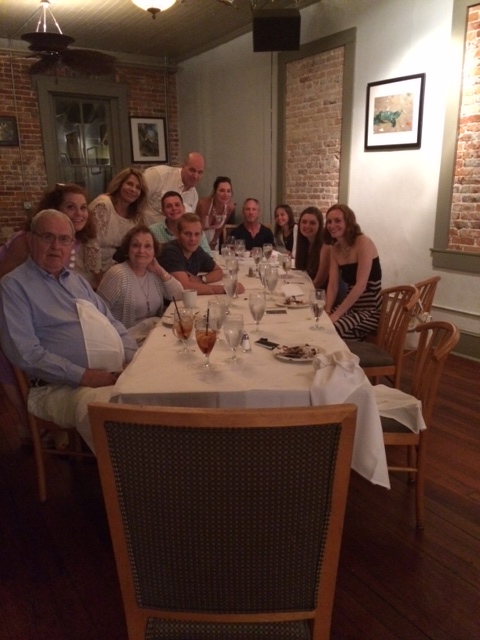
Eshrink’s grandchildren (left to right): Simon, Caroline, Carter, Emma, Sofia

cape san blas view from beachvacation 2015 cape san blas group croppedvaca 2015 group at dinnervaca 2015 fender bender caroline
This will be our second Christmas without Molly. She is missed even more at this time of the year as she was the personification of the joy of Christmas. This was her time. The season’s memories are often bitter sweet since those joyous times have usually been shared with those we love, many of whom may no longer be with us. With that in mind we will honor Molly’s memory by enjoying our family’s Christmas traditions, and thanking God that we had her all those years. 
Barb and I wish for you and those you love to make joyous memories to last a lifetime this Christmas., and peace and happiness throughout the coming year. Love Good.

WHAT’S IN A NAME

WHAT’S IN A NAME
It was with a great deal of satisfaction that I recently noted that the sign in front of our mental health center announcing it to be a “Behavioral Health Care Center” had been removed. I have long held that such terms trivialize and obscure the problems facing those afflicted with mental illnesses. It is true that those illnesses provoke behavioral changes in many, but are we to treat the behavior or the illness responsible for the behavior? In a similar manner, if someone is choking, should we instruct him in relaxation exercises or proceed directly to the Heimlich maneuver?

The term behavior implies volition, and I seriously doubt anyone would choose to endure the suffering of a mental illness. It was initially used in reference to addiction and drug abuse, but now includes mental health for reasons beyond my understanding.
Most linguists agree that not only does thought affect language, but perceptions are affected by language. The latter scenario is in my opinion likely to affect how we think about mental illnesses and consequently those who are mentally ill. The one which is likely to raise my hackles the highest is the word client. For the past several years I have been on a mission to expunge that word from the vocabulary of anything having to do with treatment of Psychiatric patients. Not only have my efforts fallen short, I could not even influence the nurses who worked under my supervision to give up that vile word. Some seem to think that my abhorrence of the use of the word client to describe my patients is simply the bias of an old foggy MD, and I do confess to that charge.
My bias has to do with the origin and meaning of the word patient, which was from the Latin, patientem, which is roughly translated as “those who suffer”. My bias also extends to the belief that there is no more honorable profession on earth than the alleviation of suffering, and that those who suffer should be categorized differently than those who have a strictly business relationship. The mantra I have used for several years as follows: “accountant, lawyers, and hookers have clients, but we have patients” has fallen on deaf ears. The word client has been absorbed into every aspect of the mental health movement. The electronic medical record I used prior to my retirement referred to patients as clients. Likewise, the word is routinely used in communications from our state department of mental health. Even advocacy groups use the term.
In response to Shakespeare’s question, I suggest that there is a lot “in a name”. Granted, a name change does not change a rose; however if the rose is repeatedly referred to as a weed it might well change one’s opinion about roses. One might ask, how did emotionally suffering people seeking treatment come to be called clients. Advocates for the elimination of the stigma associated with mental illnesses frequently present them as analogous to other medical illness, such as diabetes, hypertension, heart disease etc, yet insist on using a non- medical term such as client to describe those in treatment. Besides, it makes no sense to separate psychiatric problems from mainstream medicine when studies of the brain now clearly demonstrate most if not all such illnesses to be due to medical disorders. Such separation of psychiatric problems from mainstream medicine has also given license for third party payers to discriminate by providing less coverage for mental illnesses, and undermines attempts to correct those inequities.
In my opinion the key to eliminating societal stigmatization is understanding, and I believe that it makes more sense to call a rose a rose and likewise to call one who suffers no matter the cause a patient. Some may feel it will lessen the stigma associated with mental illness to place it in a separate category from other medical problems; however I suggest the opposite to be true. Throughout history those suffering from any malady for which the cause was unknown would often be persecuted and shunned. As knowledge accumulated concerning the etiologies of such illnesses, there was less reason to fear and to blame them. Unfortunately, this understanding has been slow to develop in the area of psychiatric disorders. It is interesting to note that in Ancient Greece there was no distinction made between diseases of the brain and those of the body, but in the middle ages, discrimination and persecution was rampant as ignorance prevailed.
The brain is easily the most complex organ in the human body. We are said to have on average of 86 billion cells in our brain all of which have multiple connections to each other. It is little wonder that we have difficulty figuring out how it works and how to fix it when it goes off on a tangent. Many such disorders result in unusual if not bizarre behaviors which will often result in avoidance by others. In my opinion the research of the early part of the last century also placed undue emphasis on psychological factors to explain even the more serious illnesses. This can be laid at the feet of Freud, who although he made gigantic contributions to our understandings of human behavior, attempted to blame the more serious illnesses on childhood traumas. We now know that the schizophrenias, severe mood disorders, and such are due largely to genetic factors even though stress may expose one’s vulnerability. With the serendipitous discovery of drugs which appeared to have a positive effect on these illnesses, researchers set out to understand the mechanisms involved, and the science of neuroendocrinology was born. Although there have been exciting discoveries, we have barely scratched the surface.
There are many who find the renaming process advantageous. Insurance companies whose goal sometimes appears to involve denying as many payments as possible, generally substitute the term consumer for patient and provider for those who treat them. It raises the question, what is provided and what is being consumed? The obvious answer is their profits. It is no wonder they treat our patients and their doctors badly.
In a previous blog, I have said I think a shortage of physicians is a major source of our problems with the current medical system. Nowhere is this more apparent than in the field of psychiatry. As of 2013 there were 50,000 psychiatrists in the United States, and another 45,000 is needed according to a government survey. Since there is a heavier concentration in metropolitan areas it is obvious that the shortage is even more acute in less populated areas. With development of effective treatments this need is expected to expand.
Psychiatrists were the first to adopt the strategy of introducing “doctor extenders” to help fill the void.
Now many from these disciplines (social work, nursing, psychology, and counseling ) have become licensed to practice independently. Nurse practitioners in our state are now licensed to prescribe, and psychologists are attempting to gain the same privilege. I am told there is even a move underfoot to allow pharmacists to essentially practice medicine as we know it. Social workers and clinical counselors can now be licensed to practice independently. In short those physician extenders have in many cases become physician replacements. In my opinion, this phenomenon has also contributed to the use of non-medical terminology such as client, consumer, provider etc.
Psychiatric research as to the causes and effective treatments for mental illnesses has lagged behind other specialties, but we are now on the verge of taking giant steps in the right direction towards unraveling those mysteries. America has a checkered past in dealing with mental illnesses. Early in our history the traditions of incarceration, cruelty, punishment, and abuse common in European countries were carried over to the new world. Often their treatment was equal or worse than that inflicted on the worst criminals. Families also suffered since such illnesses were thought to be caused by character flaws, spiritual weakness, or demonic forces. It was frequently assumed that this indicated a failure on the part of the family which brought shame upon them. As a matter of fact the statement: “where did I go wrong?” is one I frequently heard from parents of my patients.
There have been valiant attempts to correct the stigmata, but none have had a long lasting effect. Dorothea Dix was the heroine who devoted her life to improving the lot of the mentally ill. In the nineteenth century largely through her efforts, so called asylums were constructed throughout the country with an emphasis on humane treatment. Lack of funding and/or interest allowed these facilities to deteriorate into what some called “human warehouses”, and there were reports of abuse and neglect. The cause was once again taken up by the civil rights movement of the sixties, and President Kennedy signed The Community Mental Health Act in 1963, which was designed to provide intensive, comprehensive treatment in local communities. There were funds allocated for the building of facilities throughout the country, many of which were not built, and state legislators were no more inclined to fund these facilities after the federal money ran out than they had been for their state hospitals.
Fifty years later, most mental health centers still in existence are under -funded and under staffed. Meanwhile although the stigma of mental illness may be lessened it is still with us as evidenced by the language we use to describe it, and how we treat its victims. True, we have liberated them from those awful state hospitals so that now they can live on the street or in jail.
It reminds me of the old Peter, Paul and Mary song “When will they ever learn?”

HEALTHCARE GOES DIGITAL

HEALTHCARE GOES DIGITAL
In my last blog, I promised to delight you with my observations about the Electronic Medical Record (EMR). In accordance with the current custom of using anachronisms rather than words in the medical literature, I will henceforth use the term EMR in my discussion of the topic. Since early on in its development the computer has contributed much to medicine. Without it the various scanners routinely used to make instant diagnoses could not have been developed. It has become an essential tool in medical research. Without computers what many believe was the most important medical discovery of the century, namely the unraveling of the complexities of the human genome could not have happened. One can hardly imagine any area of medicine that has not been influenced by the so called digital age.

Considering all this, it is little wonder that the computer would eventually be touted as the answer to all the problems said to exist in the delivery of healthcare in the United States. The promise was that it would: 1) save money, 2) reduce errors, and 3) improve outcomes. The stick that The Department of Health and Human Services used to encourage adoption of EMRs was to penalize those non-compliant by reducing their reimbursement rates.
1) SAVE MONEY (?)
It is a bit difficult to imagine there could be significant savings when one considers the cost of the initiation and ongoing support for these systems. One study estimates the initial cost of a five physician group to set up a system to be $233,000, not taking into account an average of 600 hours needed for training in its use. Following the initial investment it is estimated maintenance costs would average $17,000 per year. Since the costs for a solo practitioner would obviously be higher, it is not surprising that many such individualists are either retiring, joining a group, or taking a salaried position.

1) SAVE MONEY (continued) / Too many zeros…
But physicians’ costs are chickenfeed compared to the costs of hospital computer systems. Perhaps the most outlandish was the $4 billion spent by Kaiser Permanente. They report however that this will result in a cost of only $444.00 per each of their insured. This came after an admitted $300,000 dollars was spent on a previous plan which was abandoned. The interviewee, CIO Philip Fasano, insists that the $4 billion expended for the current plan is well spent as he believes it will save 15 to 17 percent of costs by eliminating duplicate testing. It will be interesting to see if such savings will result in a reduction of premiums. In addition to the price paid by hospitals and physicians to set up and maintain EMRs, there is the $30 billion spent by the feds on these projects. In my research on this subject I did come upon more numbers, but by then I was so busy counting zeros that I became too dizzy to record them.

2) REDUCE MEDICAL ERRORS ?
As for the reduction in medical errors, the most obvious benefit accrues from the virtual elimination of handwritten orders, reports, prescriptions etc. From personal experience I can attest these are often illegible, and consequently subject to interpretation. Some may insist that poor handwriting is a prerequisite for graduation from medical school. If that is true, then I have been imminently qualified as penmanship was not my strong suite in first grade and it has gone downhill from there. In spite of the problems associated with writing, verbal orders and reports carry an even greater risk of miscommunication. It has been demonstrated time and again that the more steps through which information passes, the greater the likelihood of error.

2) REDUCE MEDICAL ERRORS / The disconnect between theory and application
When information is communicated digitally, it follows there should be fewer errors. If such information can be delivered automatically the risk should be even less. For example, hospital laboratories are largely automated these days, and it follows that if a machine delivers its report seamlessly i.e. without touching human hands it should be less likely to be misread, misplaced, or ascribed to the wrong patient. Unfortunately, Erin McCann of Healthcare IT reports that in a nationwide study 74% of nurses reported feeling burdened by the need to do data entry, which took time away from patient care. The impression left is that much data must be entered manually; consequently most systems are anything but seamless, and therefore still subject to error.

It is easy to imagine the scenario in which a patient’s electronic medical record could be lifesaving. For example, when an unconscious patient is brought to an emergency room his medical record may be critical in making a diagnosis in situations where time may be literally a matter of life and death. As a matter of fact there are many situations when the instantaneous availability of a patient’s record may save time, unnecessary tests, and even lives. It should no longer be necessary to spend time in hospital record rooms or doctor’s offices copying records, x-rays, scans and such. Not only written reports, but actual copies of films, EKGs and such could be called up in order to see if changes have occurred. Come to think of it, there would be no need for record rooms or the floor to ceiling racks stuffed with file folders we see in our doctor’s offices. Yes, in a perfect digital world Joe Patient would carry his entire medical record with him wherever he went and it would be accessible whenever needed, but anyone who owns a computer knows that we are some distance from perfection when it comes to this computer stuff (more about that later).

3) BETTER OUTCOMES ?
The third premise that EMR would create “better outcomes” is still up for grabs. It is noteworthy that, according to a report in FiercehealthIT, 17% of physicians surveyed thought EMRs actually worsened patient care. One might be led to think this group would consist mostly of old digitally challenged physicians like myself, but the disturbing fact is that the number of negative comments has increased since 2012.

According to a Patrick Caldwell piece in Mother Jones5, 75.5% of hospitals were using EMR programs by 2014, but I am not aware of any indications that quality of medical care has improved. Indeed, I don’t know if it would be possible to do such an assessment of an issue that complex. He goes on to issue a scathing report on the business practices of competing providers of EMR software. He contends that the various programs do not share information with each other in order to protect company secrets. This would prevent the seamless passage of information unless all his healthcare providers subscribe to the same system thus defeating a major purpose of the program. Thus Joe’s record would only be available to a consulting doctor or hospital ER if they subscribed to the same version as did Joe’s regular physician. Peter Pronovost MD, director for patient safety and quality at Johns Hopkins, was likewise critical with his statement that: “Medicine invests heavily in medical technology, yet the promised improvement in patient safety and productivity has not been realized.”
EMRs and Me
My own brief experience with an EMR tends to validate the premise that interoperability is a problem. When a facility where I was working adopted a program, I was able to sufficiently overcome my age related aversiveness to change and make a half-hearted attempt at compliance. I tried to hone my deficient typing skills (we had no typing classes in medical school), and dutifully began typing check marks in the boxes provided, which often resulted in a great deal of useless information. There were some advantages, such as the ability to send prescriptions on line rather than writing them on paper or calling the pharmacy. In addition to the convenience for both myself and my patients, it solved my penmanship problem, reduced errors, and prevented forged or altered prescriptions.

Maybe this EMR thing will work after all
With that in mind, I was heartened by the news that our local hospital was going digital. We were dependent upon the hospital’s psychiatric department as a place to send our patients who needed intensive treatment, and for the psychiatric department’s extensive outpatient diagnostic capabilities. I had visions of entering my patients’ identifying numbers in the computer and instantly being privy to every bit of medical information about him. No longer would nurses spend time on the phone calling about lab work, or waiting for the record room to respond to requests for discharge summaries, or reports from consults. The fax machine would no longer go through a ream of paper every couple of days. I would no longer be accused of nurse abuse because of questions like: “Where in the hell did you put that lab work?” As some of my younger, more verbal patients would say: “Dream on baby!” For as computer geeks would say their system was incompatible with ours (in plain speak, their system would not talk to ours) and we were forced to continue to rely on that older, but more reliable invention called the telephone.

Is our healthcare system broken?
The statistics available seem to confirm the premise that the U.S. healthcare system is broken. In an interview by PBS, Mark Pearson the head of the health policy division of the Organization for Economic Co-operation and Development (OECD) provided some discouraging statistics. Politicians have long trumpeted the fact that we spend over 17% of the gross national product (GNP) on healthcare, which is second only to defense spending.
Healthcare by the numbers
Pearson reported that we spent $8,233 dollars per person in 2010, which was two and a half times more than the average per person cost in 33 other developed countries. The average cost for a hospital stay in the U.S. is $18,000 which is three times that of the other countries, in spite of the fact that hospital stays were shorter in the U.S. The Commonwealth fund  reports that 25% of that cost is for administration. Drug prices in other countries are sometimes less than half the price we pay, in spite of the fact that the majority of new medications are developed in the U.S., often with financial support from the National Institute of Health. Of course the drug companies also get some help from their friends in congress who have without apology passed a law forbidding Medicare from negotiating prices. Oh yes, just another example of the perverse golden rule of the corridors of power, namely: “those with the gold make the rules.”

What are we getting for all this money?
After digesting all this information, you may be asking, what am I getting for all this money? The answer: not much. There is no doubt that we lead the world in medical research, and people come from all over the world to study in our institutions. We have been the absolute leader in the development of medical technology.  Then, why is my life expectancy over one year less than it is in 33 other countries? We might blame it on lifestyle, obesity and such, or could it be that our shortened hospital stays could have a deleterious effect?

Words matter, but true listening requires vision
Patients have complained to me that they are often told their doctor cannot see them in between appointments and they are told to go to the emergency room sometimes with even minor complaints. But the most frequently heard grievance was “my doctor doesn’t listen to me.” Not surprisingly, this was more commonly heard as the digital age invaded the consultation room and some physicians pecked away at their computers while the patient talked. Of course, there is much more to effective communication than the use of words, and no matter how attentive the listener, without visual cues much of the message is lost.
In my humble opinion, it is incredibly naïve to think that computerization could have a major effect in closing the gap between us and the OECD nations. After all we are undoubtedly ahead of them in implementing EMRs and management systems; consequently, any advantage gained would be countered as they would inevitably follow suit with similar technology. You may be asking what is the answer, if EMRs are not. I have long held the position that there is a shortage of medical doctors in this country, and OECD study tends to bear this out. They report the U.S. has 2.4 physicians per 1,000 people while the average for the countries scrutinized was 3.1 per 1,000. Thus we have fewer physicians, fewer hospitals, and shorter hospital stays at 2 ½ times the cost.

What we do have are more CT and MRI scanners along with lots of other expensive gadgets, and they are utilized much more frequently than in other countries. One disturbing bit of research by the Dartmouth Institute for Health Policy concludes there are very large differences in the rates of utilization of such diagnostic machines in different areas of the country.
Even more upsetting is their conclusions that the number of elective surgeries, cardiac interventions, and even open heart surgeries are all performed at vastly different rates in different areas of the country. Should we conclude from this that some areas of the country are over treated or that others are undertreated? Information obtained from the OECD study would suggest the former is likely true. Hospitals are required to have a utilization committee composed of physicians who look for outliers among their peers; however, in my experience they are not very effective in rooting out excesses.  Indeed, if they were one would not expect to see such disparities in diagnostic procedures and treatments.

Enter Managed Care
In recent years insurance companies’ managed care programs have gotten into the act. They exercise control by simply not paying for services they feel are excessive. I believe it is safe to say that they are universally hated by physicians. I share that feeling with more intensity than most of my colleagues because I blame them for the too early discharge of one of my patients which led to his death. It is interesting that the courts have ruled in such cases that the managed care company suffers no liability with the rationale that they are not denying treatment, only refusing to pay for it.

No doubt, many of the problems I have enumerated with The EMRs will be fixed eventually, and the concept can be of marvelous benefit, but it is also clear to me that computers will not fix everything that is wrong with our medical system.

So, what is the answer?
At this point, if you are still awake, you may be thinking: “OK wise guy, if you are so smart, what would you do about it?” And I would reply, “Thanks for asking for of course I have all the answers.” After all, I have been a participant and observer as medicine evolved into the current mess, besides I now have learned how to use Google.

The Age of Assembly Line Medicine
It may seem counterintuitive, but I am convinced that a significant part of the problem is due to a shortage of physicians. No, it is not merely a matter of competition although that is not necessarily a bad thing, rather it has to do with the pressure to be productive. Dealing with lives merits deliberation, and impulsive decision making is apt to lead to errors. The production processes of assembly line manufacturing Henry Ford developed may be advantageous for manufacturing cars, but completely inappropriate for treating human beings, especially those who are sick, in pain and in distress.

The lost art of LISTENING
One of my professors from medical school once said: “if you listen carefully to your patients they will make the diagnosis for you 80% of the time.” As I mentioned previously many of my patients complained that their doctor was not attentive, and always seemed in a hurry. Since there is a shortage of physicians, there will be a need to see more patients; consequently less time is made available to talk, and the doctor seems remote and uncaring. The patient may leave with unanswered questions and harboring a great deal of anger. When called upon to consult with hospitalized patients as a psychiatrist, I often found the problem to be the result of a doctor patient relationship gone bad. To the physician, the patient seemed unruly and uncooperative when they just didn’t feel they were being heard.

Litigation
Another downside of failed communication between a physician and patient is litigation. As a matter of fact, insurers report this scenario is a major cause of malpractice suits, and that the best protection from malpractice suits is a good doctor patient relationship. Of course the cost of these suits, which are less prevalent in other countries is also said to be a major cost factor. Some states have initiated procedures to help reduce the number of suits and to limit the amounts which could be paid; meanwhile refusing to search for reasons for why there are so many suits filed.

The Conundrum
A few years ago, after retiring from private practice, I began working part time at a public facility that had a very long waiting list of people needing to be seen. I was asked if I would be able see a patient every 10 minutes. I replied haughtily that I was not a prescription technician, yet afterward wondered how many of the people on that waiting list might be suicidal. These are the kinds of dilemmas facing doctors, especially those in primary care settings (i.e., if you spend adequate time with each patient, how many won’t be seen at all). In my small town, there are very few primary care physicians who are currently accepting new patients leaving many people to seek care at our ER which of course is much more expensive. The solution, which is currently underway, is to license those with lessor training to diagnose and treat. I am sure there is also the thought that these nurse practitioners, physician’s assistants and such will demand lower fees, although that may not have work out as expected. I also question the wisdom of solving the doctor shortage in this manner, especially during a time when the increasing complexities in medicine demand more knowledge than ever before.
Fee-based vs. appointment-based physicians
There is also, in my opinion, a maldistribution of physicians, with the shortage most acute among primary care doctors. Family doctors have always been the grunts in the healthcare domain, with the specialists commanding the most respect especially the surgical specialties. Those who do procedures are reimbursed based on a fee schedule while primary care docs are essentially paid based on time spent with the patient. This can lead to serious inequities in incomes. The days of the solo general practitioner are past, for most find they cannot generate enough income to pay their overhead. It requires a considerable staff to do billing, get authorizations from insurance companies, fill out forms, deal with managed care, medicare, medicaid, pharmacies etc. He is forced to accept insurance company fee schedules if he wants to be “on their panel”. Add his malpractice insurance to the mix and soon he will be looking for a salaried job or a group to join. Young doctors may be saddled with hundreds of thousands of dollars of student loan debt which can be a powerful motivator in choosing a career choice as he may look toward the more lucrative specialties.
Living History
In 1965, I had been doing general practice for a very few years and when medicare came in to being that year I was convinced that this was the beginning of the end, and Joe McCarthy was right when he said we were well on our way to being taken over by the communists. The precedent of connecting healthcare to employment had already become entrenched by corporations who used that fringe benefit to attract workers during the labor shortages of world war II, but in the 60s Blue Cross and Blue Shield were the only significant players and all that was necessary was to send a bill and receive payment. Of course it made no sense for health insurance to be tied to employment, but the labor unions were not about to give up that goody, and it remains in ObamaCare, which is one of the reasons why although better than nothing it is not by much.

Eating crow
Now, 50 years later, I have eaten so much crow that I regurgitate black feathers as I have become an unabashed promoter of a single payer system, that is medicare for everyone. Such an idea is certainly not new as it was first proposed by Teddy Roosevelt in 1912. I have dealt with a system that has become increasingly complex each year, and have done battle with giant corporations whose major function appears to be to find ways to deny treatment to those whom I feel are in need. I have this perhaps naïve view that with the insurance companies out of business and their lobbyists gone maybe our do nothing congress might do something beneficial for their constituents.

One frequently hears that socialized medicine would bankrupt the country due to the inevitable inefficiencies that would result. The reality is that medicare may be the only efficiently run federal program in existence with an administrative overhead of less than 3%. The affordable care act only allows health insurance companies 20% in administrative costs, whoopee. Of course this does not take into account the millions of dollars spent by hospitals and doctors which would be greatly simplified if they only had one entity with whom to deal. Even without taking this into account, we would reduce total health care costs by at least 15% if not more.

More savings could also accrue were congress to repeal that ridiculous law prohibiting medicare from negotiating drug prices. In addition to the effect on total costs, I find it repugnant that populations all over the world pay less than I do for my medications. This seems unlikely to change since Pharma seems to be especially adroit with their lobbying efforts. I would be very interested to hear from Congress their rationale for this law. It must be a dandy.
There is also the economic effect on businesses to be considered. Many industries report that providing health care for their employees is a rapidly rising expense that makes it difficult for them to compete internationally. One would think they would be busy lobbying for a single payer system. The digital movement in healthcare has spawned new departments in most institutions. In the mental health center where I had recently worked one person managed to keep all the computer stuff running, until the introduction of an EMR. It soon became necessary to hire 2 more people, and an IT department was born.

Longevity has its advantages, and in my case it has allowed me to witness and in a small way be part of the profession of medicine during a period of momentous discoveries. The 60 years of my involvement saw the virtual elimination of many illnesses which had been responsible for millions of deaths and untold suffering. When I began practicing medicine, if someone told me that it would one day be possible to transplant a human heart I would have laughed in their face. To confirm the suspicion of a brain tumor would require two or three days of tests some of which were dangerous, now an in depth picture of the brain is available in a matter of minutes. Even in my own field of psychiatry the study of the mechanisms underlying brain functions has revolutionized the field, and the complexities described often leave me wondering what the hell they are talking about. This paper is in no way meant to denigrate these accomplishments; rather it is an attempt to expose some of the factors which have resulted in an inefficient and costly system of providing them to the masses.

At the outset, I listed three goals that were hoped to be accomplished by the digitization of our medical records. The first was to decrease cost. From what I was able to glean from my research and personal experience I have concluded that the attainment of such a goal is unlikely. As for the other two, I am convinced that an all-encompassing computerized system has the potential to improve treatment outcomes and reduce errors. Unfortunately, the systems in play are too fragmented for that potential to be realized. It would appear that fixes are readily available. It remains to be seen if they will be applied.

Reminisces
As with most old guys I like to end my conversations with reminiscences of the good old days even though the current ones may be better. In spite of a lifetime in which I have witnessed the most exciting time ever in medicine, a time of more discoveries and progress made in the alleviation of suffering than had occurred in thousands of years, I sometimes feel nostalgic for the way things used to be even though without the miracles of modern medicine I would probably not be here today. I recall a time when the doctor patient relationship seemed much more personal than it does today, when doctors saw themselves as healers rather than fixers or technicians. I remember a time when one could even talk to one’s doctor on the phone. Now if I have a question for my doctor I must answer to the receptionist regarding my reason for calling, and if she considers it worthy of note, she will post a message to the doctor’s nurse or direct the call to the nurse’s voice mail, and if the nurse considers the question worth consideration she may consult with the doctor, but if not will devise her own answer. If she is not too busy, I may be fortunate enough to receive a call back with either the doctor’s or her answer to my question. In any event the doctor will be insulated from the stupid patient with his stupid questions. You might think that since I am a physician I would be more readily granted access, but you would be wrong for the fellowship of physicians is no longer a strong tradition.
How it used to work
I remember a time when most people had a personal physician, and usually their relationship was indeed personal. If admitted to the hospital your personal physician would see you daily even if he had referred you to a specialist, now you are apt to be followed by a hospitalist whom you are meeting for the first time. Were you to have surgery, your doctor would assist if possible. A visit to the emergency room would prompt a call to your doctor. If you were unable to come to his office, he would come to you. In short your doctor was in charge and responsible for your treatment. He would likely know your strengths, your weaknesses and usually knew most of the members of your family. In short the doctor patient relationship was very personal.

There have always been those dedicated to healing their fellow man even in prehistoric times and in the most primitive of cultures. Much of the science has been off track; however, there has been much learned about the art of medicine. It would be a great loss if that knowledge were abandoned in favor of purely digital solutions.
1. Health Affairs: Study puts a price on EMR implementation in small practices
2. Info World: tech’s bottom line May 2, 2013.
3. Healthcare IT News: Nurses blame interoperability woes for medical errors. March 15, 2015
4. FierceHealthIT: The cost benefit calculation of electronic health records systems.
5. Mother Jones: Epic Fail, November/December 2015.
6. PBS Newshour: Health Costs, How the U.S. compares with other countries October22,2012.
7. The Dartmouth Atlas of Healthcare: Reflections on Geographic Variations in Healthcare, May 12, 2010.

MY LEFT FOOT

My left foot is under assault by some nasty little microscopic creatures. I like both my feet, but my left one is my favorite. Since I am left handed, it naturally follows that I should be left footed; consequently, I find that such activities as kicking something or someone, stepping on an insect, climbing a stair, or putting on my pants are always led by my left foot. If I am dancing or tapping my foot to music, my left foot leads the way, and the right one follows. When I feel the need to show my anger at having been bested in an argument with Barb, it is my left foot which will be loudest as I stomp out of the room. Of course these are minor functions when compared with its utility along with its companion on the right in providing a convenient means of getting from point A to point B. For these and many other reasons, I would very much like to keep my foot as I do need it.

The problem first appeared two weeks ago when I noticed redness and swelling on the dorsum (that’s doctor talk for top) of my left foot. I thought it looked like a cellulitis, a condition which can progress rapidly with very serious consequences. With that in mind, I talked my way into a next day appointment with my doctor’s colleague (my doctor was on vacation). He agreed with my diagnosis, and started me on an antibiotic with instructions to return “ASAP” if there were any signs the infection was spreading. There was no change after two weeks so he changed antibiotics and informed me that he would admit me to the hospital for IV antibiotics if there was no improvement after a week on the new bug killer. I was a bit shaken by this new game plan.
You may be thinking: what is the big deal about going to the hospital for a relatively benign treatment? Surely I would submit to the harshest of treatments if I thought there was the slightest risk of losing that left foot of which I had become so fond. Although I had spent thousands of hours working in that hospital, I felt some trepidation about becoming a patient there, simply because a hospital is a dangerous place.

One study reports 440,000 preventable hospital deaths annually, making such errors the third leading cause of death in the U.S. I believe these numbers are inflated somewhat, as preventable does not necessarily mean they could have been foreseen in time to intervene. Even so, if these numbers are even half accurate, one must consider hospitals as dangerous. They are further contaminated by including hospital infection rates. We are currently experiencing an epidemic of infections in hospitals. The CDC reports 724,800 such cases in 2015. 4% of all patients admitted will contract an infection while in the hospital. This in itself is scary enough, especially when one considers that hospital infections are apt to be treatment resistant.

The problem of hospital infections continues to bedevil the medical community, and most experts believe that it has evolved due to the inappropriate use of antibiotics which results in the development of bacteria which have become smart enough to develop immunity to the effects of antibiotics. The most common of these organisms are: MRSA (methicillin resistant staphylococcus aureus) and clostridium difficile which is usually referred to as C. diff. The elimination of these bacteria from hospitals has been a daunting task on which most hospitals expend a lot of resources. Such infections do present a significant danger to those whose immune systems are impaired or patients who are weak and infirm. They appear to be spread throughout the hospital by caregivers who are at risk of carrying an infectious agent from one patient to the next.

The VA reported they were able to reduce hospital induced infections by 40 percent by the simple expedient of requiring all staff members to use an antibacterial lotion on their hands when leaving or entering a patient’s room. Compliance was carefully monitored in the study. It is now common practice to have antibacterial dispensers near the entrance of every room; however, there are always those who will not follow protocol. It is also true that lotions are ineffective against most viruses.

Sometimes the mode of transmission is less obvious, for example in one case a number of patients all belonging to a particular surgeon contracted a MRSA infection. Eventually the source was traced to the surgeon’s necktie after it was noted by a nurse that when bending over to examine his post op patients his tie came in contact. A culture confirmed that the tip of his tie was contaminated. Some post-surgical wound infections have been traced to closed circuit ventilation systems commonly used in surgical suites with a mechanism of spread similar to that seen in Legionnaire’s disease. The increase in the use of medical devices, and other invasive procedures, both in diagnosis and treatment, also undoubtedly increases the risk of infection. Although it seems probable that lack of caution is responsible for many of these infections, I submit that if an event is not predictable it is not likely to be preventable, and I don’t believe the statistics I have quoted take this into account. However; whatever the cause, the numbers are frightening.
A few years ago (I dare not say how many), my wife Barb’s first job after nurse’s training was what was then called private duty. As such, she was employed by her patient to provide nursing care exclusively for him, and therefore, except for very brief periods, was in constant attendance during her shift. I suppose such care is still enjoyed by the super-rich but is beyond reach for most of us. Besides, if one arranged for such a nurse, it is unlikely said nurse would be welcomed by the hospital.

Now, many wisely suggest that if hospitalized, one should arrange for an advocate. The wisdom of such an arrangement was brought home to me when I was hospitalized a few years ago. When I did not get an adequate response after pushing the nurse call button to get help for what I believed to be a serious problem, Barb channeled the tigress within her and attention was immediately forthcoming. It appears to me that the most highly trained of the caregivers, the RNs, spend much of their time with administrative functions, while the hands on care is delivered by others, yet the RN is in charge and is expected to know all about the patients under her care. As Barb says “I learned more about my patients while giving a back rub than from taking a formal history.” But alas, back rubs are mostly a thing of the past.

None of this is meant to disparage hospital nursing staffs, for I believe nearly all are fully dedicated to the most noble of all professions; however, many to whom I have talked complain they are not able to spend enough time with their patients, and consequently worry that they might miss something important.

There are several factors that may contribute to the problems of medical errors.

Due to cost cutting efforts by third party payers (a code word for insurance companies), the criteria for admission to hospitals are more stringent than they have been in the past, and there is intense pressure to discharge patients. The result is that the typical hospitalized patient is sicker and therefore more vulnerable to even minor mistakes.

Modern miracles in medicine require many people to get in on the act. Diagnostic and treatment procedures are much more complex and require the involvement of those with specialized skill sets and knowledge. In addition to consulting doctors there are therapists of many disciplines, and others trained in specific diagnostic procedures who are likely added to the mix. It is generally accepted that the more people involved in an activity the greater is the chance of a screw up.

The latest statistics on hospital errors suggest that those involving medication top the list. The most common as you might expect is due to misidentification of the patient, although errors in the pharmacy are certainly possible. Any who have been hospitalized in the past year or so probably noted that whatever was done to them was preceded by a question as to their name and birthdate, which was then verified by reading the hospital wrist band. The fact that mistakes still occur in spite of all these precautions confirm the impression that as humans we are all fallible.

Mistakes in the operating room can be especially disastrous. One of my closest friends, who also happens to be a retired orthopedic surgeon was forced to have back surgery twice because his surgeon picked the wrong vertebral level on the first try. This confirmed my impression that whatever status I thought was conferred on me as a doctor would do little to make me immune from an unwanted assault on my body.

Other mistakes can be even more serious. I recall hearing of an instance in which a person had the wrong kidney removed, necessitating her being put on chronic renal dialysis. There have been similar rare reports of people who have returned from surgery to find their good leg has been amputated, and the bad one remains. I once had a patient who was scheduled for X-rays, but realized she was taken to the wrong place when she found herself surrounded by people with caps, masks and long gowns. The transportation person insisted he was told to take the patient in bed two to surgery, and the charge nurse was equally adamant that she had instructed him that surgery was waiting for the patient in bed one. Fortunately, the surgery staff discovered the error at about the same time as did the patient, but the incident raises the issue of how important those repeated questions about name and confirming birth date can be. I also remember having three patients by the name of Smith in one room back in the days when most hospitals had a few four-bed wards. You can imagine the problems that situation could cause.

Now that modern medicine has contributed to an average longevity greater than nature intended, we have a much older population and since the prevalence of many illnesses is directly proportional to the amount of aging, hospital populations have become older, weaker, and susceptible to many problems which may interfere with their equilibrium. They are also more likely to be on medications that may affect their balance. Put these factors together and it is easy to see why falls are more common amongst the elderly. Since old folks are more susceptible to injury, falls are a serious problem and nowhere more so than in the hospital.

Recently, I visited an old friend who has had unsuccessful back surgery. He was in a rehab facility to get physical therapy, and has been unable to walk. It was a nice day so I got help and placed him in a wheelchair and took him out for some air and sunshine. As I got ready to leave, I noted that he was slumped over a bit in the chair and I was concerned about leaving him there without something to prevent him from falling out of it. I was especially concerned as he has had a couple of falls since his surgery, one time by falling out of bed. When I asked for something to keep him from falling out of the chair, I was told that I couldn’t do that as it would be considered a physical restraint which could not be used in their facility. I thought that was the dumbest thing I had heard since the last presidential debate, and decided to do a little research on the subject. What I have learned is that there has been a great deal of debate about the use of physical restraints, and that some courts have issued rulings about their legality. Some researchers insist that restraints cause more injuries than they prevent. They insist that even bedrails designed to keep people from falling out of bed are dangerous as patients will often try to climb over them and sustain serious injuries. They point to cases of strangulation by so called “soft” restraints often used to prevent confused patients from pulling out catheters, endotracheal tubes, chest tubes, etc. sometimes causing serious damage. I am always bothered by such research, for although it documents carefully the injuries caused by such restraints, there is no way to know what injuries if any they may have prevented. Of course the best solution would be for the patients to have someone in attendance constantly, which is unlikely to happen.
In the interest of full disclosure, I must confess that I have been guilty of using “full leather” restraints on a few occasions when dealing with severely agitated violent patients who are determined to do harm to themselves or others. It was never for very long and I was usually surprised at how well they tolerated it. It may have been because there was someone assigned to be with them, that they realized they had needed to be subdued, or simply that it gave the medication time to work.

Ordering such treatment always made me shudder for I am quite claustrophobic for which I blame my older brother, rest his soul. When we were kids he delighted in putting a blanket over my head and pinning my arms until I panicked. I have dealt with homicidal patients in the past without totally losing my cool, but find that anything which prevents free movement of my arms takes me all the way to the edge of a panic attack. The thought of being handcuffed with my hands behind my back fills me with dread. The only fear I have of surgery is that I will wake up restrained as is often the case when complications result in a patient being attached to a respirator. A couple of years ago l was forced to have my left arm pinned against my chest and to lie flat for 24 hours following a procedure. I, the one who feels nerve pills are for everyone else, begged for Xanax. And you thought psychiatrists didn’t have hang-ups.
No treatise on hospital errors would be complete without mentioning the current fad of electronic medical records, and as you can imagine I have a lot to say about that subject. In addition to reducing costs, and increasing the quality of care, these systems are touted to dramatically reduce hospital errors, but for now I will spare you my ruminations about that subject as Maggie has chastened me about making these things too long. As for my favorite foot the current medication seems to be working and hospitalization seems unlikely.

Meaningless Marathon

Meaningless Marathon

Yesterday, I was mesmerized by the food fight between the democrats and republicans as they spent eleven hours slinging mud at each other.  They were there ostensibly to determine what happened in Bengazi, but it seemed more like looking for someone to blame rather than finding a solution to the problem.  But of course the inquisition began with reassurances by the head hog at the trough that they were not there to blame Clinton, and then proceeded to question her as to how and why she had screwed up so badly and caused the death of four people.  Of course the democrat members of the committee were there to defend her and to point out what bad guys her interrogators were.  What a wonderful opportunity for the both sides to be on national TV and show the folks back home how tough they were.  To purchase that much time on TV would have cost enough to bankrupt even the most plush super- pack.   This must have surely been a factor in deciding to broadcast the debate in its entirety for many legislators have admitted that they spend more time raising money for their campaigns than they do legislating.  Although they complain, they oppose campaign finance reform once in office since incumbents are in a much better position to attract the big donors.  I guess a bird in the hand is worth one in the bush.

The committee in all fairness did allot equal time to each member; although one went over his time by four minutes which resulted in a lengthy debate about his breaking of the rule.  I was determined to watch this thing through in spite of my revulsion, but gave up after only eight or so hours.  I had to give Hillary points for endurance as I was exhausted just watching my tax dollars at work.   But then I was amazed to turn on the TV this morning to see her giving a speech to some women’s group only a few hours after her eleven hour trial by ordeal.   The procedure reminded me of the one described in the cop novels to which I am addicted called “sweating the perp”.   Since the use of the rubber hose is frowned upon these days, this technique involves two or more interrogators who take turns asking the same intimidating questions over and over for hours until he gives up and confesses.   After about seven hours, I was ready for Hillary to confess and get it over with, but she pretended to be unaffected.   I was amazed that she did not take the bait and say what she must have been thinking.

Pundits report that the political parties in Washington hate each other, and the exchanges I witnessed yesterday tend to confirm that impression.  There was a feeble attempt to maintain the traditional courtesies and decorum of the institution by addressing each other by their titles, but it was not long until the vitriol rolled out of the mouths of our esteemed representatives.   Questions were interspersed with accusations, and the democratic members responded in kind with their own dissertations about the republican’s alleged diabolical plan to derail Mrs. Clintons bid for the presidency.   As this charade dragged on the nastiness increased, and when it was over both sides agreed that nothing had been accomplished.   It is little wonder that nearly 90 percent of Americans disapprove of our congress.

The experience of watching this thing left me wondering:  what ever happened to statesmanship and “where is the love”?.